
A lot has changed in the world since we arrived in Libreville eighteen months ago, and so have I.
It’s noon on Saturday, and we spent the morning doing errands. We try to get most things done during the week so weekends can be for music and writing and cooking and each other, but oddly, the weeks fly by even though the days can be long, just as when my children were small.
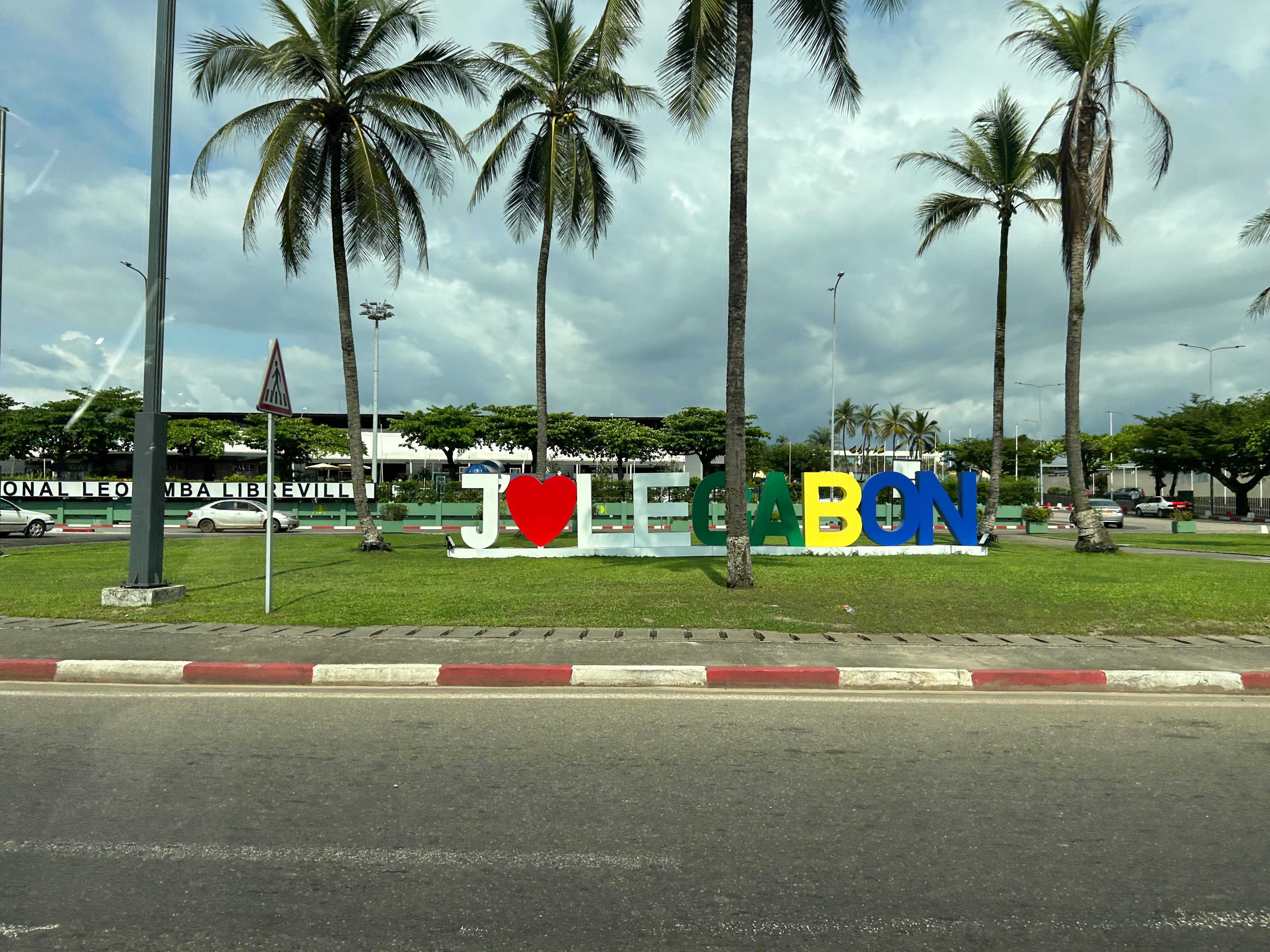
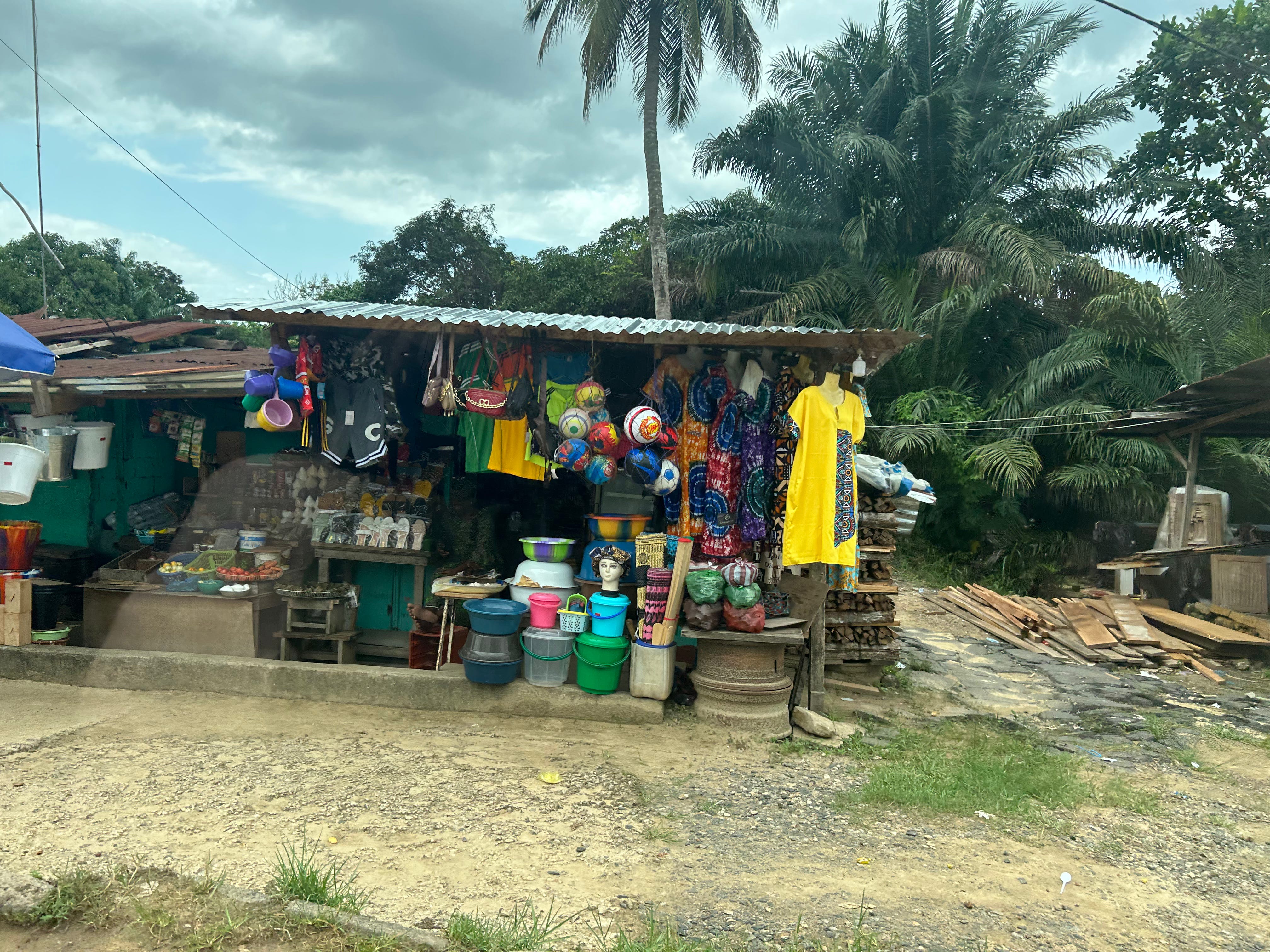
While we were out, I had a feeling come over me that I hadn’t yet experienced for this place: affection. Nate felt it, too. At the veggie market, we were just part of the crowd, Americans among the Chinese and Lebanese and Gabonese and several other third-country nationals because Libreville is like that. Today, we bought peanuts and limes and mint and cilantro and hot peppers. One of the vendors spotted us 800 CFA last week because we didn’t have small money; we made up for it today.
Driving here is ridiculous. Nate says that we could both be Boston cabbies now. It was bad enough after being in Washington, D.C. for a little while: when I drove back up to Maine during that time, I was aggressive on the road, rude, even. One time, coming off I-95 in Augusta, I needed to pick up some groceries at Hannaford; the left turn lane to get to it at that exit is close by the ramp and there was a long line of cars waiting there. I pulled up like I was going straight but then darted in when the arrow turned green, as you do in D.C.; the honking outrage was hilarious. Unfortunately for me, most of those drivers were also going to Hannaford.
Posturing ensued, like pulling up behind where I had parked and glaring at me, and long looks while we were all grabbing carts. Neutrally returning their eye contact took care of that because Mainers are generally very polite people, but they do need to let you know when you have stepped out of line. Once they are satisfied that their displeasure has been registered, they’ll go on their way.
In Libreville, what I did is absolutely necessary if you’re ever going to get anywhere at all. There are no rules, no getting in line, no waiting your turn. If you wait for someone to let you in or even to slow down, you’ll be waiting for the rest of your life. Driving into and out of rotaries is something you have to actually do yourself to believe: the first time a friend here drove me through one, I reflexively covered my face with my hands. She was just chatting away, one hand on the steering wheel, while other cars and trucks were centimeters from hers, children were darting into traffic, there were three lanes of cars where there was only room for two (I still do not understand the physics of that here, but it is a thing that just is, somehow), and motorbikes with helmet-less drivers were weaving in and out of it all.
She laughed at my wide eyes when I took my hands down and said “Oh this is nothing compared to Cairo.”
I can take a Gabonese rotary like a Gabonese person now, but I have no interest in ever driving in Cairo, thank you very much.
It turns out that March is hard in a lot of places in the world: Alaska, New England, and Gabon. We’re right in the middle of the rainy season here and there’s at least one good thunderstorm every 24 hours, usually, but not exclusively, while it’s still dark out. This morning it was getting light when the thunder rolled and Nala panicked. She’d always been either outside or in the generator room we think, before we came, so she, fierce Malinois that she is, really goes to pieces when it storms. She’s discovered, though, that being sandwiched between my legs when I’m trying to sleep helps a little (for a long time she would just climb on Nate’s head so we had to put her in the bathroom if we were going to get any rest).
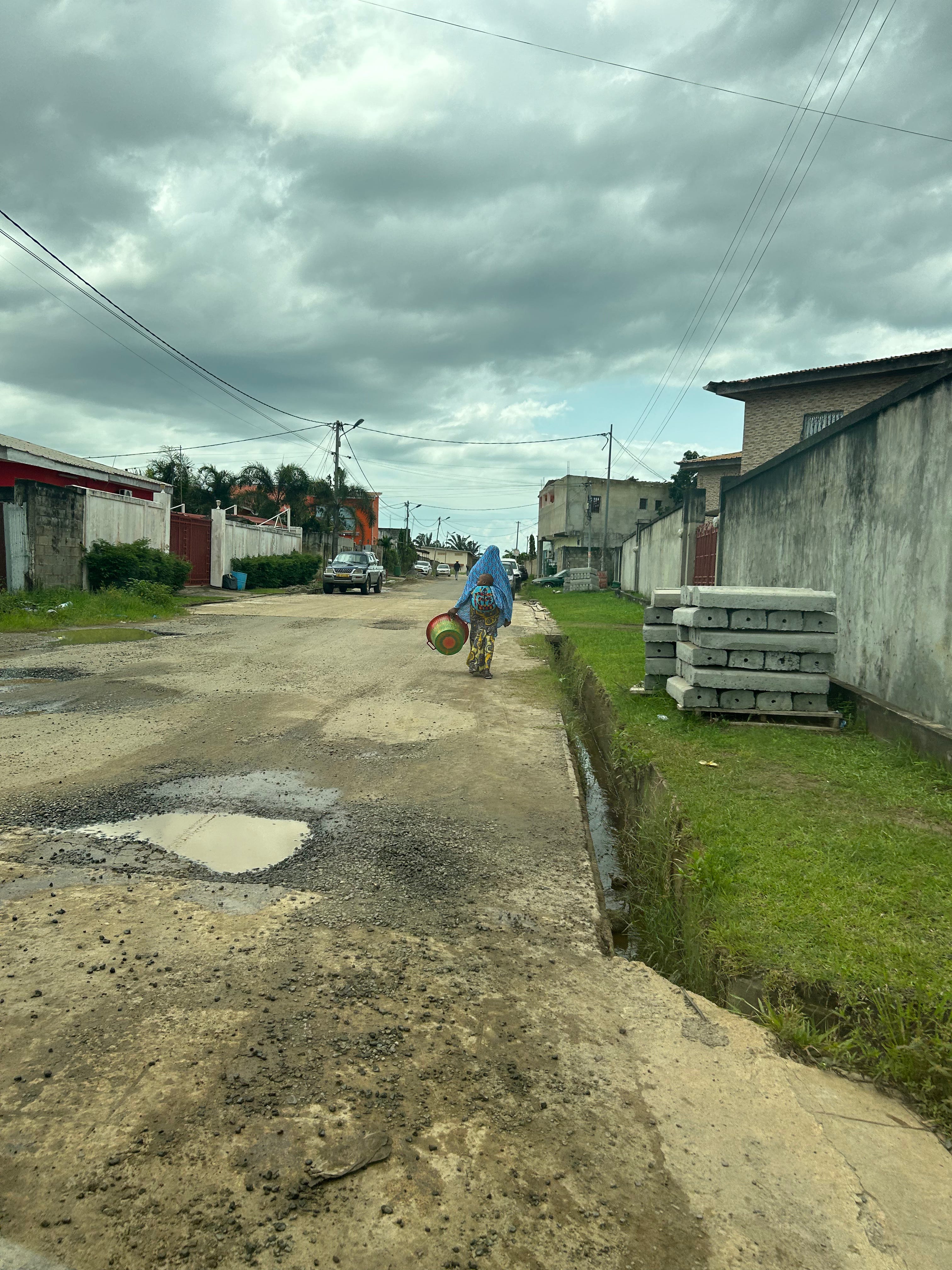
But of course the rains make a beautiful place even more beautiful, if you can keep your eyes on the flowers and the trees and not on the sewage and the trash. It is a green so thick and vivid you can almost feel the earth breathing. The flowers, so impossibly saturated with color, bloom and drop and bloom and drop and bloom. There is a twittering birdsong I haven’t identified yet that, along with the deep, throbbing tempo of the Red-Eyed Dove, makes me love this place the way loon call made me love Maine.
The time here hasn’t been easy; I’ve grieved and mourned and healed and grown, all of which has been as painful as it was necessary. But I am moved to tears, as my father often was, at how very fortunate I am to have this life, to love and be loved as I have been, as I am.
In these last few months that I get to be in Gabon, I’ll make it as much a part of me as I can, except maybe the driving. That, I’ll do my best to leave behind to avoid future encounters with wrathful Mainers needing to set me straight. But I am determined to keep the unbothered unhurried-ness, to throw a party at every opportunity no matter how small, to remember that the earth breathes, what that looks like, and how it feels. Living where there is constant death and renewal, growing things seem even more miraculous to me now.
It’s odd, isn’t it, that a place that seems timeless is the place that is teaching me how to let go.
Thank you for reading; to receive new posts and support my work, please consider becoming a free or paid subscriber.
You can listen to me read this post (and Nala trying to break the door down) here:
Comments
Nothing yet. Say the first thing.
Sign in to join the conversation.