

We’ve just run the first of our ‘The World We Want’ focus groups, where a small group of Avaaz members came together in deep conversation to share their visions of a thriving future. I found the process of sitting with people from all over the world and all walks of life as they connected to their deepest dreams humbling, moving - and surprising.
One of the biggest surprises for me was where the group landed on technology. I’d assumed, after years of Big Tech scandals - the disinformation, data-mining, attention-hacking - that there would be a broadly skeptical attitude to the emergence of AI.
But a much more nuanced picture emerged. One member described a future “where technology is in the centre, and it’s more of a tool that helps people”. Another described AI being “used primarily to decrease work, and we still make the same amount of money”.
Others spoke of a future where technology helps us “figure out how to cure cancer” and where we have “very efficient use of energy…renewable energy-based” and “integrated systems, smart grids.”
In sum, the group spoke not just about risk, but of the potential they saw in AI to support human flourishing: improving disease survival, creating more free time, and helping democracy function better.
We’re Not on Track For That Future
So what will it take to actually make this future a reality? To answer that, first we need to acknowledge how far we’re drifting in the opposite direction.
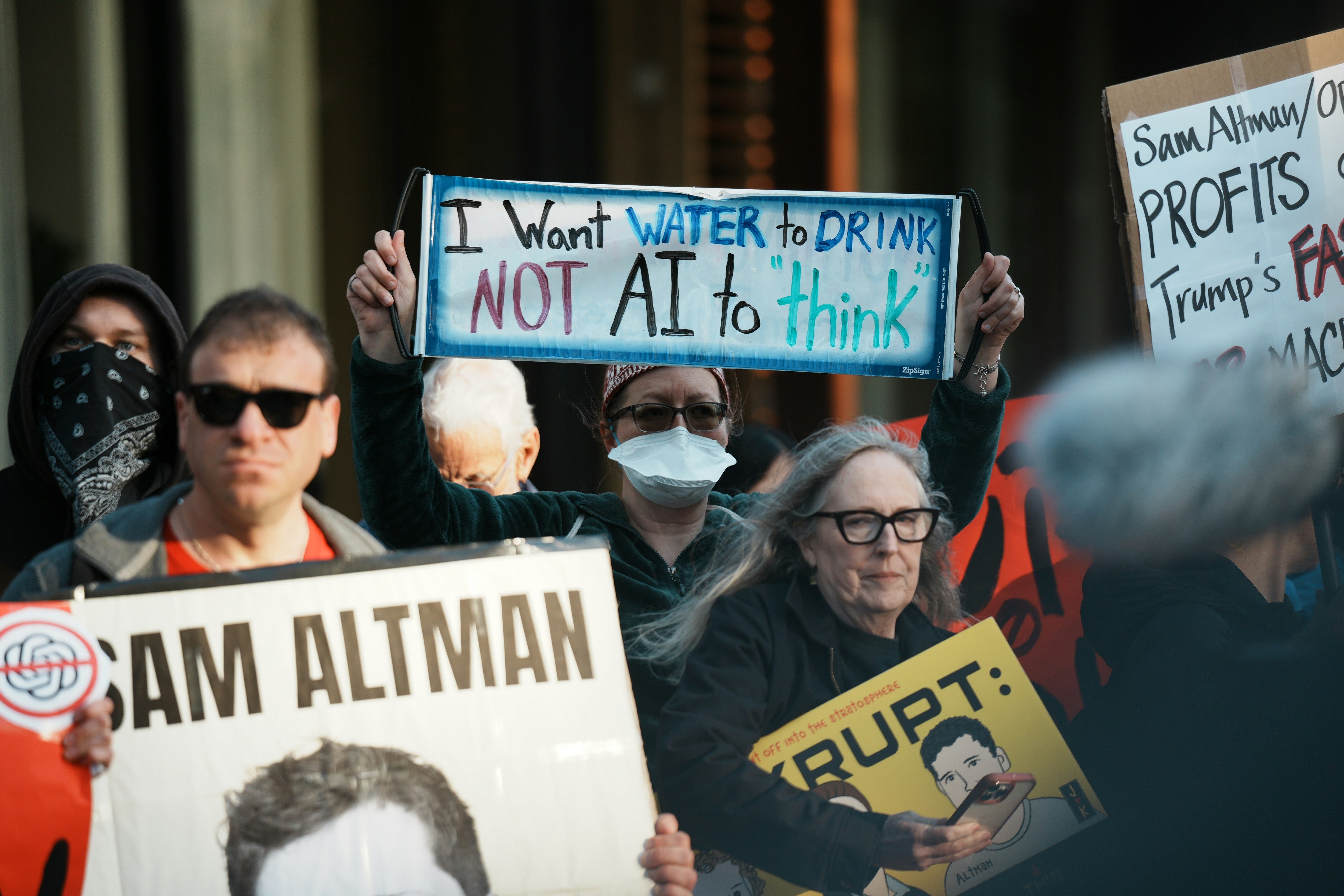
We’re locked in a profit-driven AI arms race, with very little in the way of meaningful regulation. The technology gets more powerful by the month, and the risks are growing. Recently, both OpenAI, and their biggest rival, Anthropic, have reported AI agents escaping from supposedly secure test environments and hacking real-world companies. We’re facing the prospect of models that are too powerful to even test safely.
Meanwhile, as vast swathes of Europe and North America bake in prolonged drought conditions, water-hungry data centres housing the chips needed to power the models are being built out across the world, often in the face of massive community opposition. The costs are eye-watering, and the electricity demands even more so.
But governments feel forced to build them. The alternative means relying on infrastructure in the US or China. This creates real risk. In June the US government ordered Anthropic to deny all foreign nationals access to two of its new AI models, citing national security concerns. In an AI-driven economy, losing access to the most powerful models could be ruinous for those left behind.
And that’s to say nothing of the graduates struggling to find employment, the workers watching their jobs being replaced by machines, the people pushed into psychosis by manipulative ‘relationships’ with chatbots, the cognitive capacities being lost as more and more thought is outsourced, the women being sexually abused by men using AI tools (for more on this, check out last month’s Avaaz campaign). And we haven’t even mentioned the prospect that these things might eventually wipe humanity out!
Awaiting the Aliens
Humanity is in a kind of weird in-between moment, on the cusp of an encounter with a new form of intelligence. It is as though we have discovered aliens on their way to Earth. We don’t know much about them - what they want, when they will arrive, what they will do when they get here, how smart they are. We’re frantically trying to make sense of this encounter with the ‘other’ without even knowing if this ‘other’ really is an ‘other’. It’s smoke and mirrors stuff.
But AI isn’t coming from space. It’s coming from Earth, made of sand and rocks and electricity arranged in a specific configuration. It’s not being inflicted upon humanity. Humanity is building it. And that means we have choices, even if many of us don’t feel empowered to make them. Those choices will have consequences.
Threading the Needle
So how do we make choices that thread the needle of creating AI that respects human dignity, furthers human flourishing, and supports human wellbeing? It is an indictment of our governments that one of the most serious attempts at answering this question has come not from them, but from the Pope in a recently published encyclical, Magnifica Humanitas.
In it, the Pope writes at length on AI’s impacts on human dignity, truth, work, and peace, calling for strict international oversight, bans on AI weaponry, and protections for workers.
Now I don’t agree with everything that comes out of the Vatican. But I can get on board with this. Because if we want technology to support a flourishing future, we need to be clear what that future is, and what we want the technology to do. We also need to protect against the things we don’t want.
So here’s some of what I think we need to do. (For a full and excellent list, check out The Pro-Human AI Declaration, to which I am a signatory).
Firstly, we need regulation. There are lots of excuses made by governments about why regulating AI isn’t possible. Some argue the technology is moving too fast for any of us to fully understand, or that we won’t be competitive if we tie ourselves up in red tape. But these are not good reasons not to regulate - and there is precedent for how to do it.
Very few politicians understand the details of drug development, but there is still a clear regulatory framework for any company that wants to bring a new drug to market. They have to prove it is safe and are held accountable if it is not. The same should be true for AI products, which are even more dangerous on a collective scale than novel medicines.
Secondly, we should prioritise deployment of AI for the public good. Computing power is limited, and demand is outstripping supply, which is why there is this mad rush to build data centres everywhere. There is a real risk computing power simply goes to the highest bidder. But there are so many collective challenges where AI breakthroughs could benefit millions. This is where we should be spending our precious computing power.
One way to do this might be putting aspects of AI infrastructure in public ownership. Imagine publicly-owned computing capacity allocated to public-interest problems decided by a citizens assembly. What if data centres were only allowed to be built if a clear allocation of their output was put to good public use?
Thirdly we need to rewire our economies so we can cope with a massive employment transition in the next 30 years. Work won’t end, but it will change. AI might do for knowledge work what automation did for manufacturing. But for advanced economies where many jobs are about knowledge work, that spells trouble - because work is the national tax base. If fewer people work because more jobs are done by non-tax-paying AIs, we will soon see massive holes appear in public finances, and rapidly widening gulfs in inequality. We will need innovative taxation models to fill the hole and redistribute that money to those in society who need it. We could tax for-profit use of data centres, or the companies, or likely both.
Finally, we need a kill switch. AI systems should never escape ultimate human control. Ever.
Fighting for The Future We Want
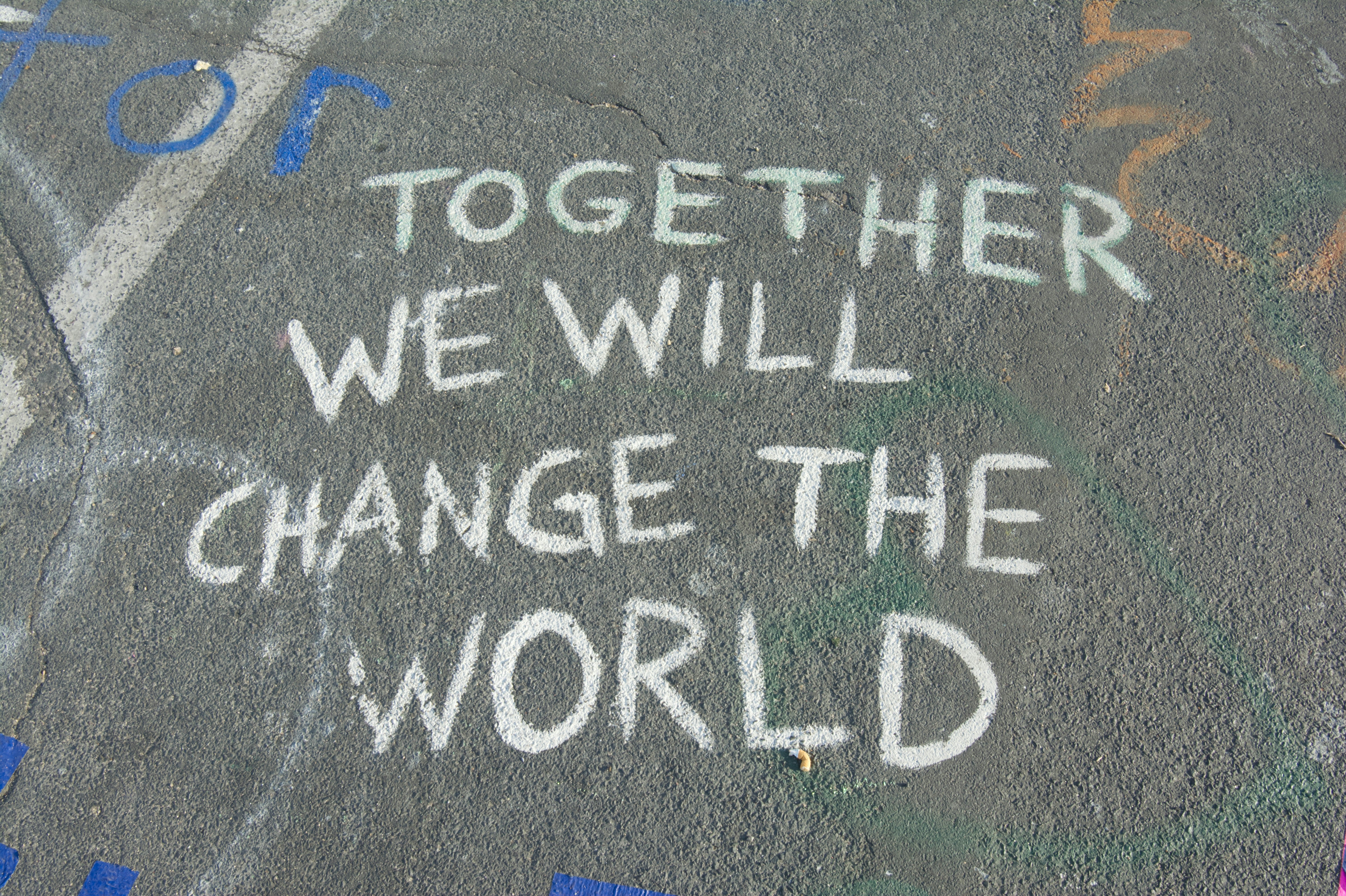
You’ve probably noticed by now that these are each huge changes, and they won’t happen on their own. They will require massive citizen engagement and a massive public mandate. Which brings me back to the Avaaz members taking part in our ‘The World We Want’ project. I’m almost certain that their hopes and dreams for how tech will show up in our lives in the future are not unique. And they are under no illusions that those dreams are under threat. As one of them said: “AI is going to make a revolution in everything, and I think that governments are not taking this change seriously.”
I agree. We’ll only get the future we dream of if we fight for it, starting now. AI was trained on the sum total of human knowledge. It should belong to and work for all of us, promoting dignity, liberty and the thriving of all life on Earth.
We can’t afford to sit this one out.
Until next time, Bert
PS: I’m on holiday so I might be a bit slow to respond to comments - sorry!
No posts
Comments
Nothing yet. Say the first thing.
Sign in to join the conversation.