
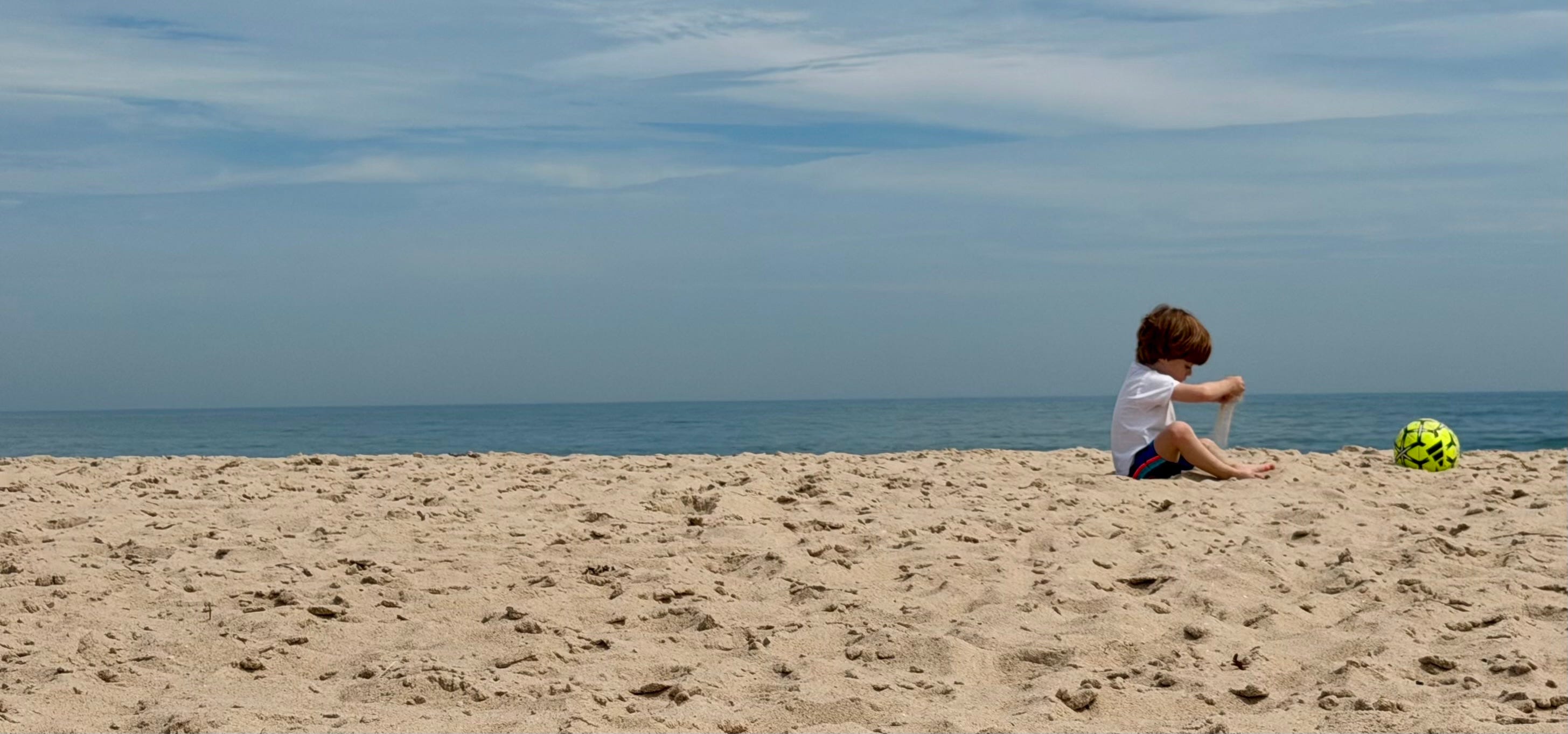
© Photo by Dani Bregman
One complaint I hear frequently from patients is anxiety about the state of the world. Politics. War. The economy. Technology. Climate. After screening to make sure I don’t miss something that needs to be treated with medication or therapy, I offer a modest proposal. Before scrolling or checking the news in the morning, spend some time reading something timeless. Literature. Philosophy. Scripture. History. Even mathematics. Timeless subjects tap into patterns, principles, and questions that run deeper than the news. The goal is not distraction. It is perspective.
My daughter Noa finished her first year of medical school last week. She is spending the summer working with one of her professors on a research project involving interleukin signaling in inflammatory bowel disease. By coincidence, the day before I asked her what her professor was investigating, I had just read a New England Journal of Medicine study on the same topic.
The research began with a simple observation. Some children with severe inflammatory bowel disease have a rare genetic disorder that impairs the activity of IL-10. Investigators wondered whether a similar reduction in IL-10 activity might also be present in adult patients with inflammatory bowel disease who did not have the genetic condition. The answer turned out to be yes.
The biology interested me, but the process interested me too. Someone noticed a resemblance between two disparate populations and asked whether they might be further connected. Most such intuitions lead nowhere. Occasionally they reveal something important.
Human beings seem drawn to the possibility that things which appear separate may, at some deeper level, belong together. We look for recurring themes in history, common structures in mathematics, themes in literature, and larger meanings in our own lives. Sometimes the connections are real. Sometimes they are false. The scientific method is only one way of distinguishing between the two.
The fact that I happened to be reading about interleukins on the eve of learning what Noa would be working on proves nothing, of course. Yet it is hard not to notice. Not because the coincidence demonstrates anything, but because it points toward a habit of mind: the suspicion that beneath the surface of events there may be underlying patterns that are not immediately visible.
Timeless ideas serve a similar function. They direct our attention away from the endless succession of daily developments and toward deeper structures that shift slowly or not at all. Both the search for hidden connections and the study of enduring ideas arise from the same intuition: that reality may possess a coherence that is not obvious from moment to moment.
That’s the mindset I’m trying to encourage. When patients feel overwhelmed by the latest headlines, I am not telling them to ignore the world. I am proposing that they first spend time attending to something deeper than the news cycle. To tap into the current beneath the waves, as it were.
Annie Lighthart, in a poem titled "The Second Music," puts it beautifully:
The Second Music
by Annie LighthartNow I understand that there are two melodies playing,
one below the other, one easier to hear, the otherlower, steady, perhaps more faithful for being less heard
yet always present.When all other things seem lively and real,
this one fades. Yet the notes of ittouch as gently as fingertips, as the sound
of the names laid over each child at birth.I want to stay in that music without striving or cover.
If the truth of our lives is what it is playing,the telling is so soft
that this mortal time, this irrevocable change,becomes beautiful. I stop and stop again
to hear the second music.I hear the children in the yard, a train, then birds.
All this is in it and will be gone. I set my ear to it as I would to a heart.
No posts
Comments
Nothing yet. Say the first thing.
Sign in to join the conversation.