
Video: Seth // Edit: Curtis // Words Below: Daniel
Crashes happen, and we’re all basically just between crashes. If you ride enough, you’re going to hit the ground at some point. Some of that comes from pushing yourself, some of it comes from bad luck, and some of it is simply part of doing something fun on uneven terrain at speed.
But minimizing risk is different than avoiding crashes, and it’s something all of us can get better at.
That becomes especially important when our decisions affect more than just us. Sometimes that means the friends riding with us. Sometimes it means the people who have to come looking for us. Sometimes it means search and rescue crews, volunteers, or land managers getting pulled into a situation that probably didn’t need to happen in the first place. Sometimes it even means reinforcing the idea that mountain biking is reckless chaos, whether that’s fair or not.
I keep seeing smart riders get hurt in dumb ways. I’ve done the same myself. So I wanted to revisit a few ideas I care about, because I think this stuff matters now more than ever.
Spoiler: Like Seth, I have not always managed risk well. But, also similar, I’ve learned a few things.
I’m trying to do better.
I’m not against safety gear. Far from it.
Always wear a helmet. Wear a full-face helmet. Wear pads. Wear whatever helps you feel confident and keeps you riding longer. I mean that sincerely. I’d rather see someone protected than hurt.
But there’s a difference between protection and risk management, and sometimes we act like they’re the same thing.
They aren’t.
A helmet can help in a crash. Pads can help in a crash. A full-face helmet can absolutely protect you better than a half-shell in certain situations. Good gear matters.
But none of it changes the fact that if you aren’t in a managed bike park, and especially deep in the woods where some of the best trails are, you might still be miles from the nearest road, out of cell service, with weather moving in, daylight running out, and no easy way to get yourself or a friend out if something goes sideways.
That’s where risk management matters.
Modern gear is better than it has ever been. Phones can connect to satellites. Maps live in our pockets. Protection is lighter, cooler, and easier to wear all day than it used to be. Those are all good things.
But convenience can create false confidence.
Just because help is easier to call does not mean help is easy to receive. Just because technology lowers friction does not mean consequences disappear.
Sometimes it feels like riders are no longer carrying risk so much as transferring it. Transferring it to riding partners, rescue crews, or whoever has to stop their day because somebody wanted to play downhill racer six miles from the trailhead.
Public lands, legacy trails, and remote backcountry areas are rarely managed like bike parks. In many places, they can’t be, and they shouldn’t be.
That’s part of what makes them great.
These places often support a wide variety of users and a wide variety of experiences. You might be there for a hard ride. Someone else might be there with their kid, looking at wildflowers. Someone else might be trail running, birdwatching, fishing, or walking their dog.
If you were out with your family and a train of riders dressed for Rampage blew by with zero regard for anyone else, you probably wouldn’t be thrilled. It happens constantly around where we live on multi-use trails. Then we wonder why there can be tension between mountain bikers and other trail users.
That’s not criticism of bike parks, padding, or riding fast where it makes sense.
Bike parks are great. They’ve done a ton for mountain biking. They give riders a place to progress, session features, take calculated risks, and build skills in an environment designed for that style of riding. And, an environment designed to keep other users safe from riders and vice versa. They have been an entryway into the sport for people who may have not ever ended up in the forest otherwise and made the sport far more approachable and accessible than before - they’re awesome.
They also create certain expectations: predictable trails, repeated laps, signage, access roads, nearby riders, and a reasonable path to help if things go wrong. They’re where many in the latest generation have cut their teeth and learn how to ride well and that’s a good thing but it also creates a gap in knowledge.
That bike park mindset doesn’t always transfer well to “legacy” public riding areas that are managed dramatically differently.
When we bring bike park expectations into remote terrain, small mistakes can grow teeth quickly. A minor mechanical becomes a long walk. A rolled ankle becomes a rescue problem. A wrong turn becomes a night in the woods. A crash that would be inconvenient somewhere else becomes serious very fast.
At a bike park, someone may be able to reach an injured rider with a UTV and get them to an access road quickly. Deep in the forest, it could be hours before anyone even knows there’s a problem. Extraction is a whole different story.
How we ride today shapes where we’re welcome tomorrow. And while bike parks and designated areas are popping up in more places, public lands stewarded for many uses, just like Pisgah National Forest near where we live, are becoming more and more misunderstood by our passionate, well-resourced, and quickly growing user group of riders.
This matters, especially when roughly one out of every three acres in America is public land.
To be abundantly clear, I do not think the answer is making the backcountry feel more like a bike park. Nor do I think the answer is managing public lands the way they have always been just because, but change takes time…decades of time. And trust. Trust that is earned, not given through entitlement.
Not every trail needs to be sanitized, signed, reshaped, or made predictable. Not every trail should be open to bikes. But bikes, along with all of their technologoical advances are now part of the public lands equation. Part of what makes wild places meaningful is that they are still wild. They ask something of us: awareness, patience, humility, self-reliance, and judgment. And those are all things that can be practiced and exercised on foot, horse, and bike.
Honestly, those are qualities society could use more of.
I believe that we should protect bike parks as bike parks and public lands as public lands. They are different experiences, and both matter. To keep them all happily growing together, it often takes two different mindsets and two different styles of risk management. Of course, there’s plenty of middle ground and different ways to interpret this and that’s alright too.
The real risk-management tools in the more wild places and our public lands aren’t full-face helmets, body armor, UTV’s and response numbers on maps that rescuers can use to pinpoint locations, they’re usually the less exciting ones: turning around, walking a feature, checking the weather, leaving earlier, bringing enough knowledge, tools, food, and water, knowing the route, keeping the group together, and knowing when to call it a day.
That’s not fear.
That’s experience. It’s a different experience. And it’s incredible.
There is no honor in having a terrible day going blindly into a feature that’s way above your skill level just as there’s none in an epic day in the forest because of your own bad planning and questionable judgment.
And from what I’m seeing, both in bike parks and in the forest, a lot of riders aren’t doing the best job of managing these risks.
They’re just dressing for it and hoping for the best.
There’s another idea that goes hand in hand with all of this, and it’s one I’ve believed for a long time. It’s one that helps bring that risk down to where the half-shell helmet feels more appropriate and the day feels less intimidating.
Most of the time, especially outside of a race course or bike park, we probably shouldn’t be riding at 100%. We probably shouldn’t be riding at 90% either.
For most rides, 80% is the sweet spot.
That’s also where a lot of the fun lives.
It doesn’t mean timid or scared. It means leaving a margin. It means riding in control with enough left over for the unexpected. Enough focus to notice changing conditions. Enough composure to correct mistakes. Enough energy to deal with a mechanical or get yourself home if the day starts to unravel.
When riders talk about progression, they usually focus on peak ability.
Can I clear this?
Can I hit that line?
Can I ride this feature?
Those are fine questions.
Unless you’re on the clock, when riding, especially in remote or challenging terrain, the better question is whether you can do it not just cleanly and consistently, but also with a lot of room to spare.
That extra 20% matters more than people think. It’s where balance lives when the corner is looser than expected. It’s where judgment lives when you come in too hot. It’s where patience lives when you’re tired and still have an hour to go. And it’s where the less curated experience has room to thrive without ruining your ride, or worse.
When you use everything you have on every descent, you leave nothing for the variables.
And trails are full of variables. The forest is full of variables. It’s what makes it special, it’s how it builds character, and helps us all become better - as riders and beyond.
Roots are slicker than they looked. Leaves hide holes. Brakes fade. Hands get tired. Light changes. Focus drifts. Weather moves in. A line you rode perfectly last month rides far differently today.
That’s why the best riders often look calm.
They’re carrying reserve.
The 80% rule applies to the whole day, too. If you burn all your matches early, the last third of the ride becomes the dangerous part. Fatigue makes average terrain feel technical, and easy decisions become harder than they should be.
Sometimes the smartest rider in the group is the one who looks the least dramatic.
They’re not proving less.
They’re managing more.
Not every ride needs to be a performance. Most rides should be about flow, judgment, scenery, conversation, and coming home with something left in the tank.
Because if you need 100% to make it work, you’re already too close to the edge.
Save that for racing, not riding with your friends.
It’s easy to write about judgment in theory. It’s harder when your own plans are on the line.
I’m not writing any of this as someone who has always made the smart call. Quite the opposite. Some of these opinions were earned the hard way.
For example, for the last 20 years, I’ve dealt with a number of shoulder dislocations, and one of the strange things about injuries like that is how convincing they become once the pain fades.
It starts to feel normal again. Strength comes back enough. The range of motion comes back enough. Confidence comes back much faster than stability does…especially the more it happens.
That’s a dangerous combination.
You start negotiating with yourself. You tell yourself it feels fine. You tell yourself you’ll be careful. You tell yourself you know your body.
Sometimes that’s true.
Sometimes it’s just wishful thinking wearing a rational tone.
Years ago, I dislocated my shoulder (for the fourth or fifth time) during a ski mountaineering trip up Mount Shasta. We got it back in, then I promptly popped it out again, skiing down.
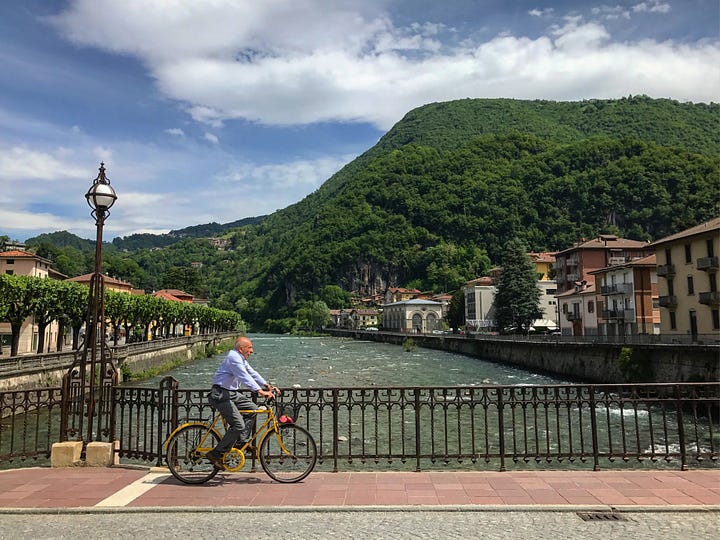
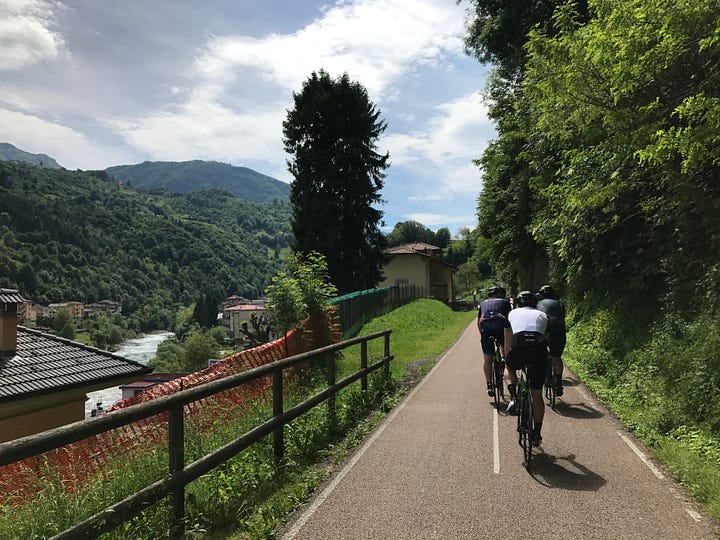
Not exactly a masterclass in decision-making for a myriad of reasons…I was underprepared, underskilled, and exhausted, having just flown to California straight from a three-day trip of testing road bikes outside Milan. I had a few days I could go do something rad before needing to be at Mountain Creek, NJ, to attend a mtb launch and then straight back to Milan and Aosta for yet another MTB launch - never mind catching up on sleep or staying healthy to do my job well. I was ready for adventure.
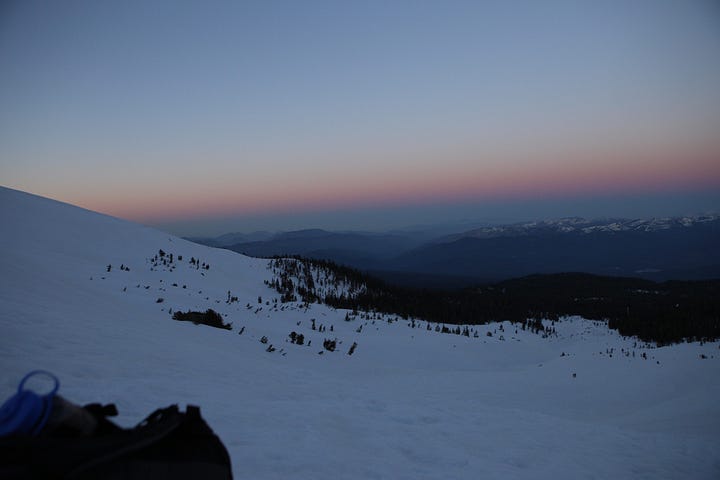
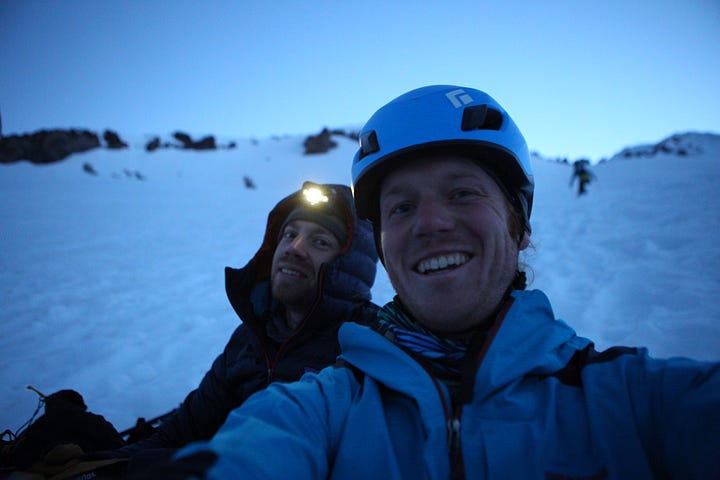
After popping my shoulder out on the mountain, I should have canceled the next several trips. However, I just did what I had done before. I called a PT friend, got taped up, braced up, and did my best to pretend momentum was the same thing as wisdom and that I could do it all. And I did…and it was a memorable trip, but I’m still paying the tax on that now with a shoulder that doesn’t work all that great.
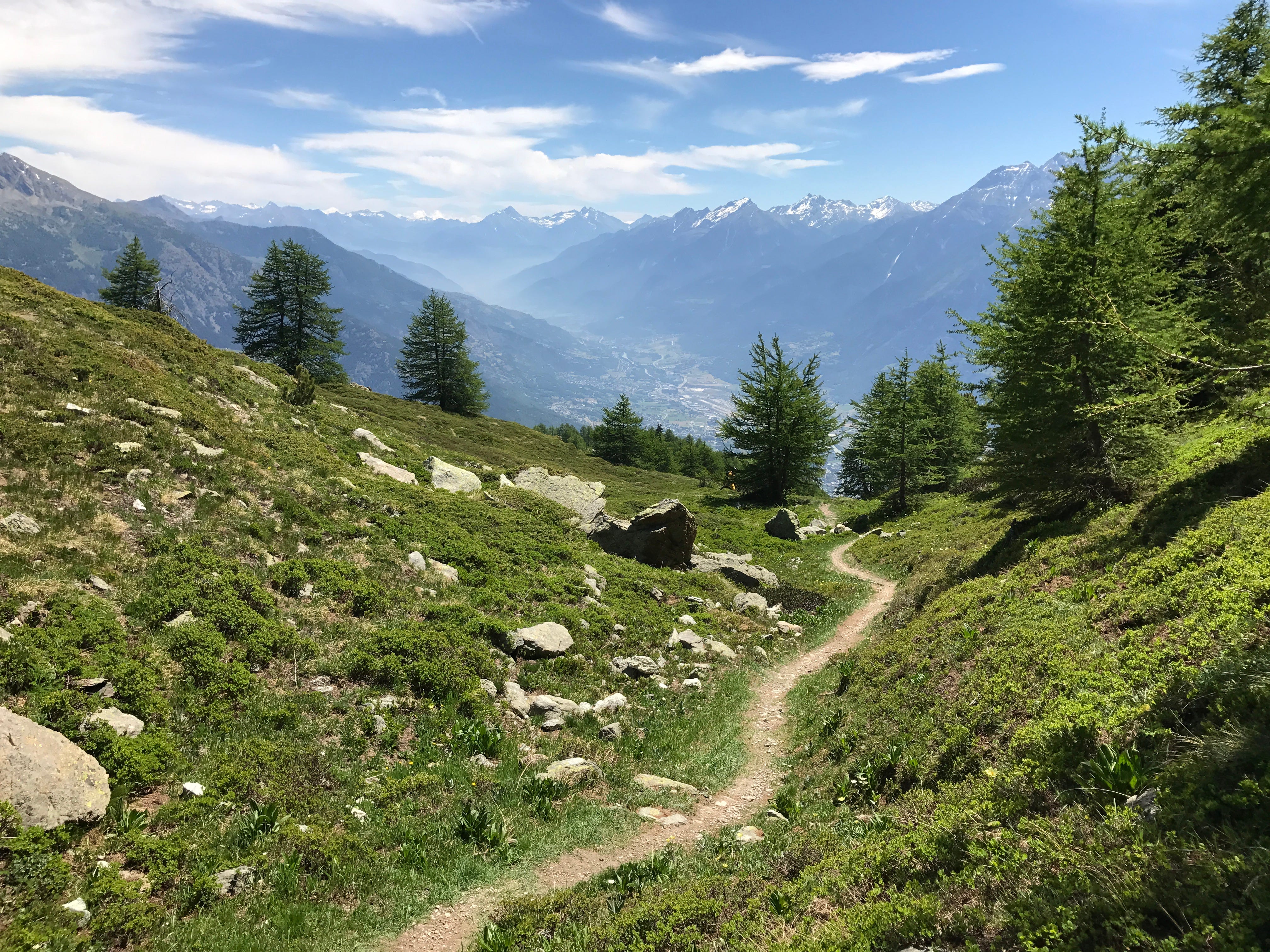
More recently, I pulled that same shoulder out again, doing something far less glamorous: holding lumber over my head in the car because I was in a hurry, trying to finish my daughter’s treehouse before her birthday.
Turns out impatience travels well across disciplines.
So I made a decision that I actually feel pretty good about this time.
I dropped out of two upcoming races, the first I’d signed up for in years…two weekends I was really looking forward to.
Not because I wanted to, but because I think I’ve finally realized that there’s a limit. It’s not smart to be deep in the backcountry on a loose shoulder, especially on big days where I’d be asking for closer to 100% when I don’t currently have 100% to give.
Nobody likes backing out of something they were excited for. Nobody likes feeling limited. Nobody likes admitting that the smart version of themselves disagrees with the motivated version.
But that tension is the whole point.
Sometimes maturity in riding and life doesn’t look like sending harder lines or adding bigger goals.
Sometimes it looks like scratching plans, healing properly, and being honest about the difference between what you can do today and what you should do today.
I’m still learning that, and I hope I always will be.
I’m not racing World Cups…never have, never will. The backcountry isn’t a bike park. And crashing myself into a bad situation because I wanted to prove something doesn’t make me a better rider.
It just makes me another dude who knew better and did it anyway, and there’s nothing special about that.
I’m trying to do better, and I hope to see you out on the trails soon.
I’ll be the one riding at 80%.
As always, thanks for reading, following along, and supporting us.
Comments
Nothing yet. Say the first thing.
Sign in to join the conversation.