
The morning started with temperatures in the mid-sixties as we crossed the bridge from Natchez, Mississippi into Vidalia, Louisiana.
Louisiana has a way of announcing itself immediately.
The landscape changed almost instantly. As we rode through the small town of Vidalia, I wondered if there was bayou water sitting quietly just beyond the trees. As we rode south on Louisiana 15, the road twisted along a levee with farmland stretching out on the opposite side.
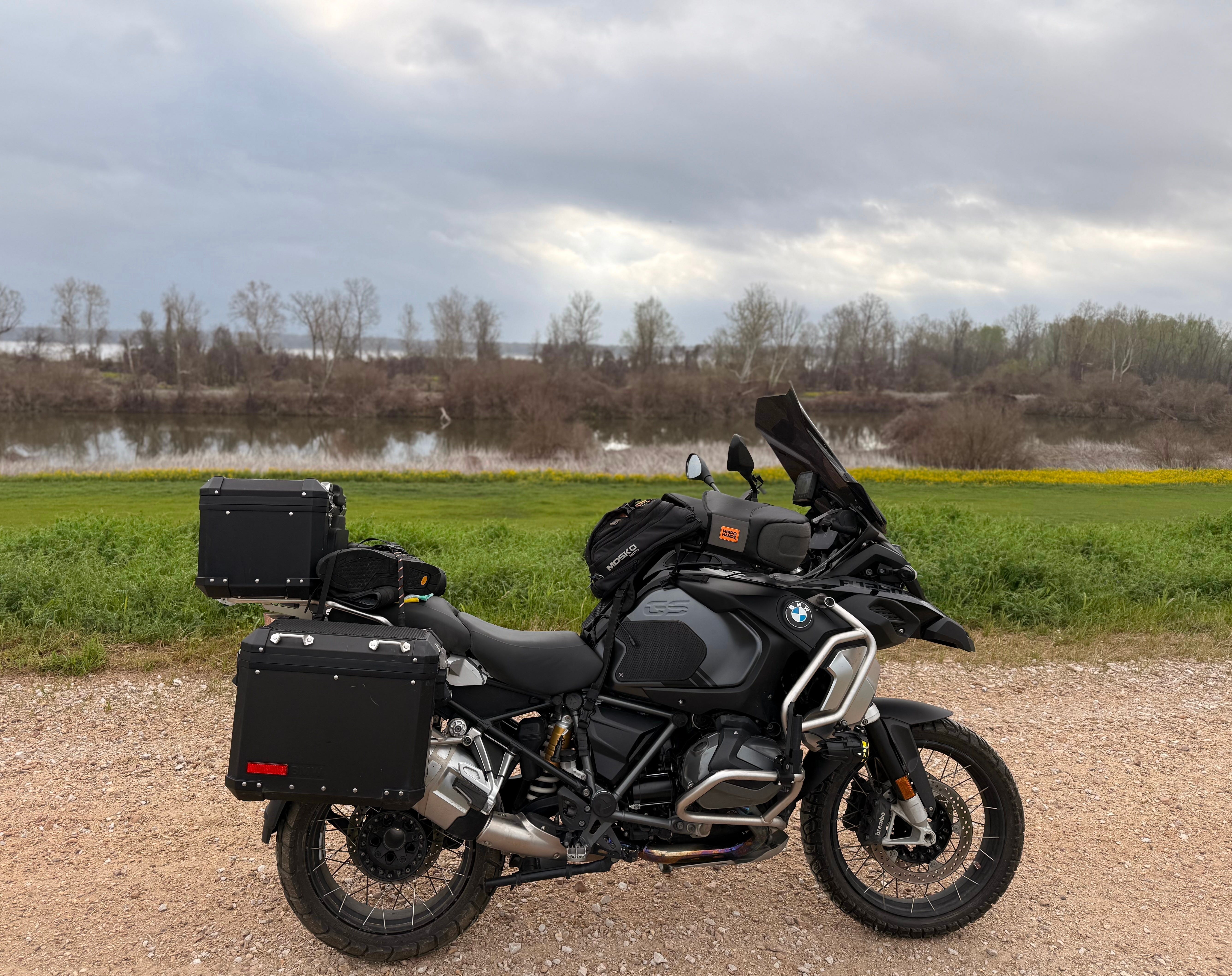
It felt less like entering another state and more like entering another country. A flat endless landscape is not the normal riding I experience back home where I’m nestled between the Catskills, Adirondack, Green, and Taconic mountain ranges.
At one point I rode up onto the levee in enduro mode while Jesse stayed on the highway below on his K1600. For a few minutes we rode parallel to each other—one bike high above the road, the other cruising steadily along the pavement.
It was one of those absurd travel moments that feels perfectly normal when you’re in it.
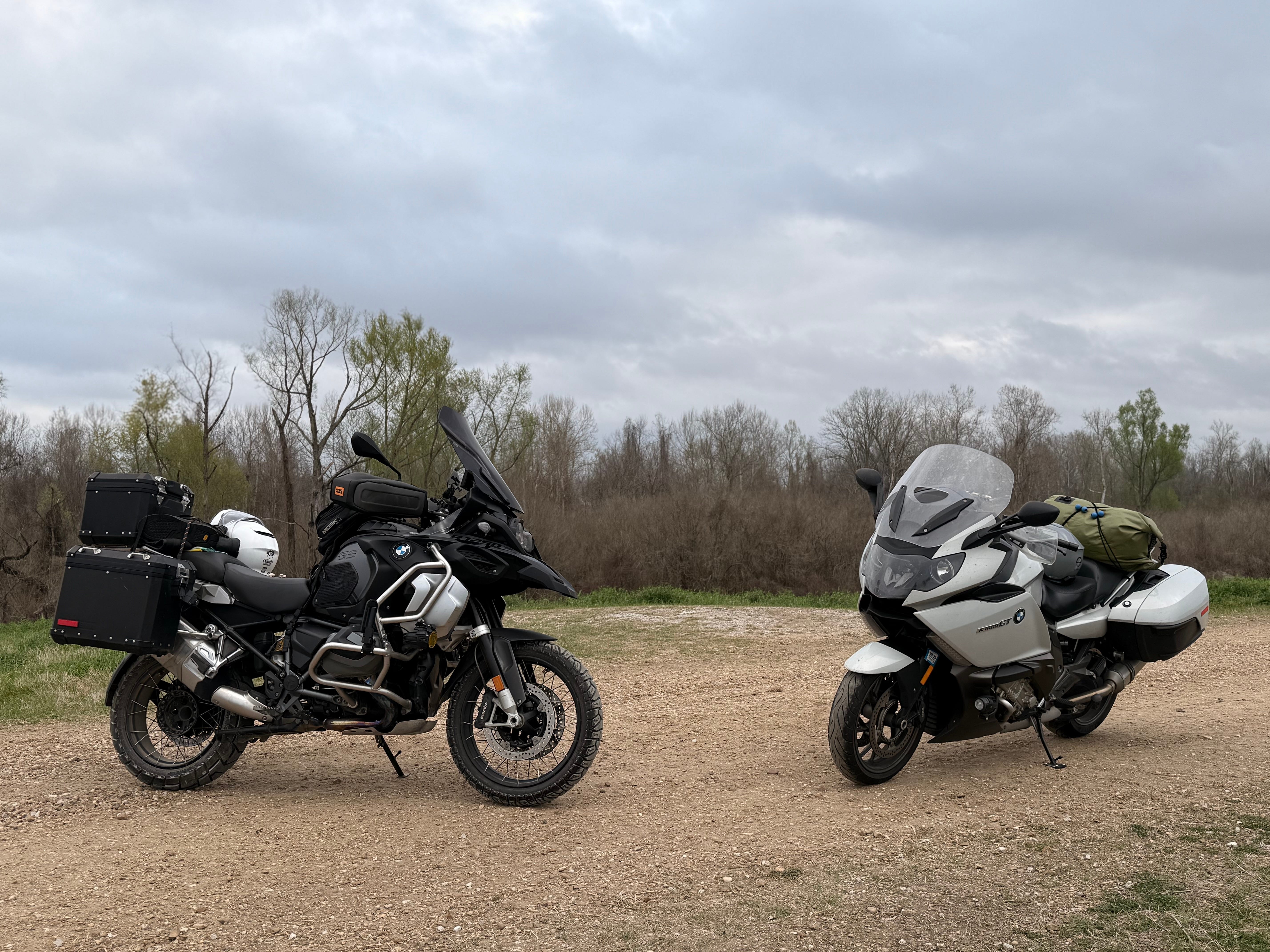
Eventually we reached Lafayette where we stopped at Cycle Gear so Jesse could grab gloves and some body armor. Afterward we grabbed a quick lunch of fried catfish, shrimp, clams, and okra before continuing south.
From there the road carried us through the Rockefeller Wildlife Refuge along the Gulf of Mexico.
The air was cool and humid, the kind of heavy coastal air that sticks to your skin. What surprised me most was how rural the area was. Houses stood elevated above the ground, prepared for the floods that inevitably come with living this close to the water. Even the schools were raised high above the land.
There’s something admirable about the people who choose to stay in places like this.
If there is one thing we have managed really well on this planet, its resilience and survival through determination. If your fellow man or wild animals haven’t tried to take you out, you can count on mother nature to throw a curve ball your way every few years. When we find the place we truly call home, we’ll do anything to keep that dream alive. Seeing the resilience of people still claiming their piece of the American dream on flood lands, engulfs me with hope that with the right attitude anyone can stay afloat in the face of adversity (no pun intended).
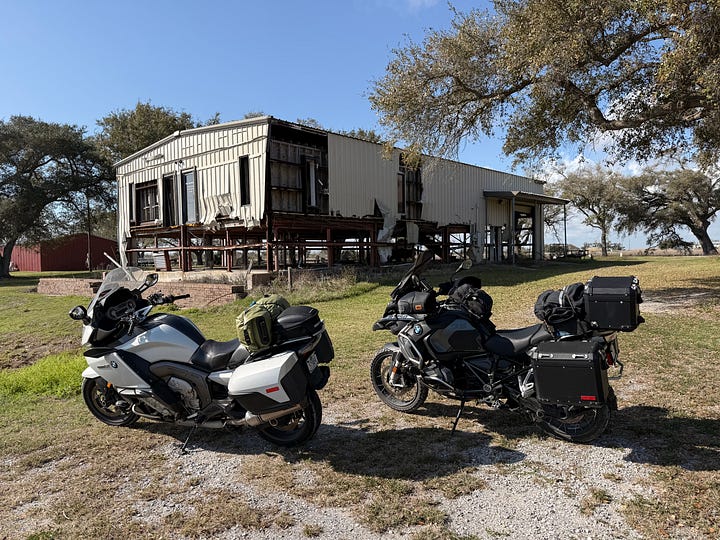
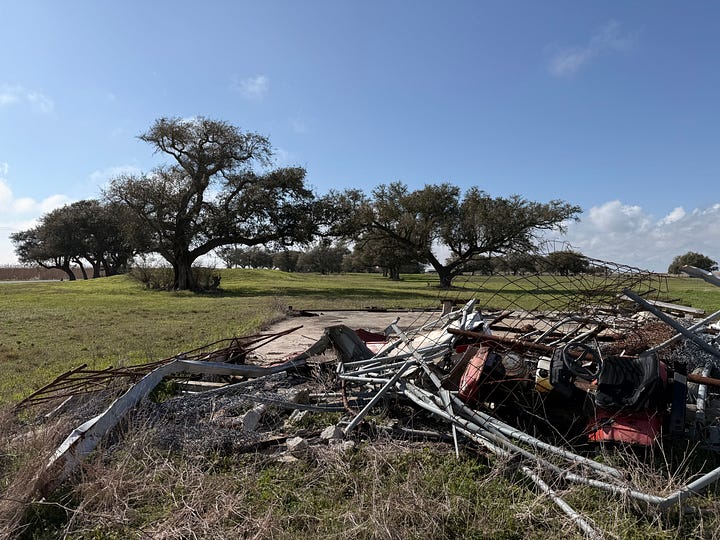
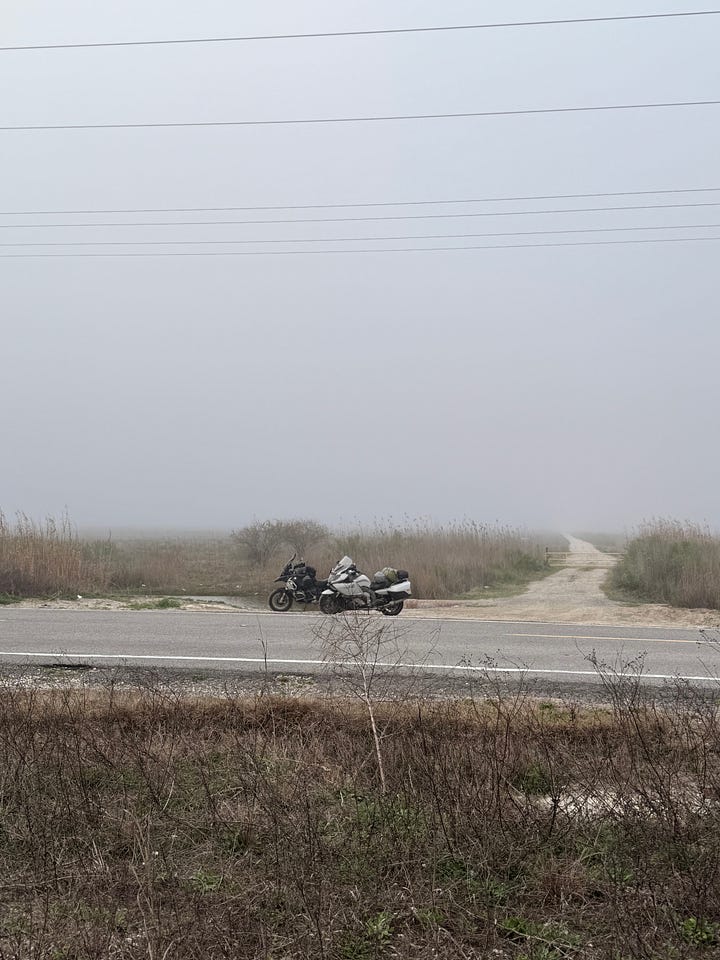
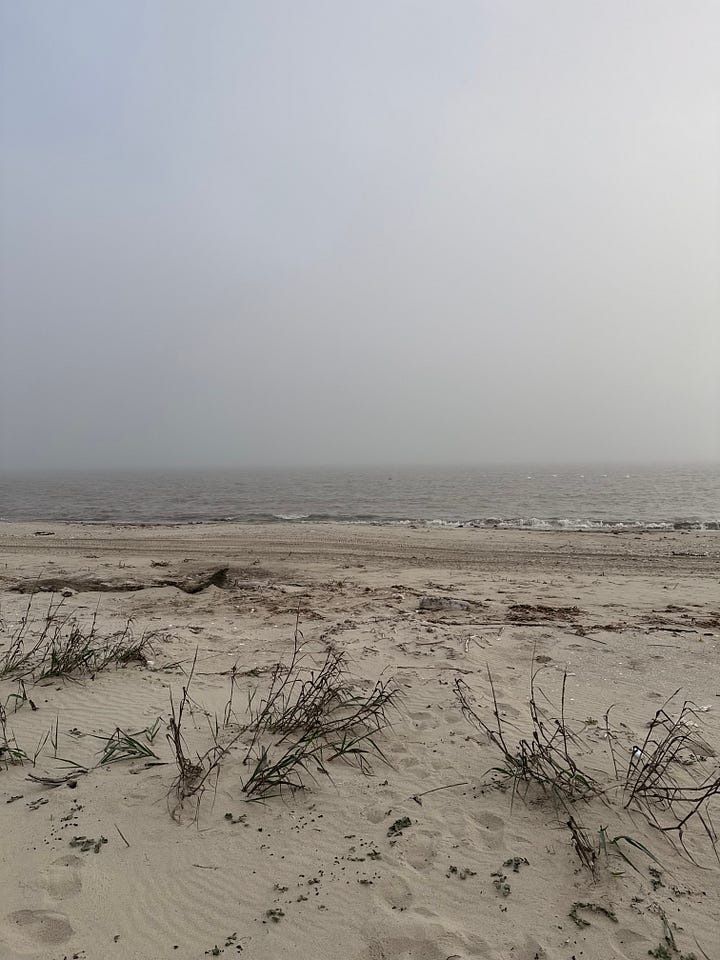
As we continued west, a dense fog rolled in and slowly swallowed the road ahead of us.
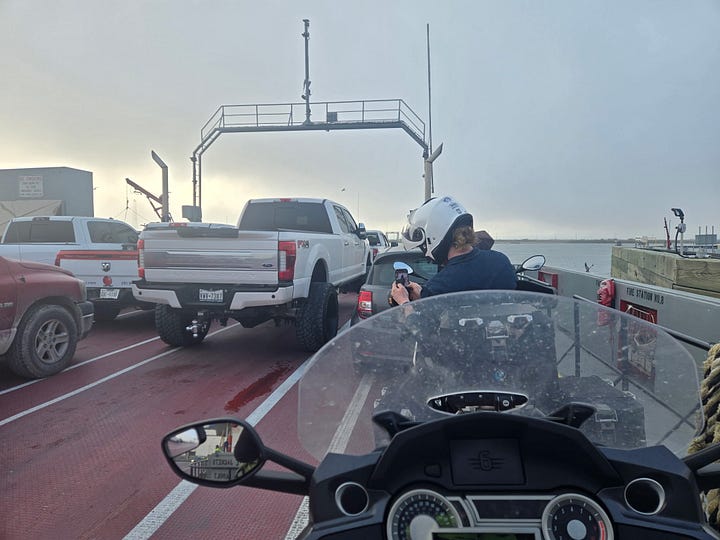
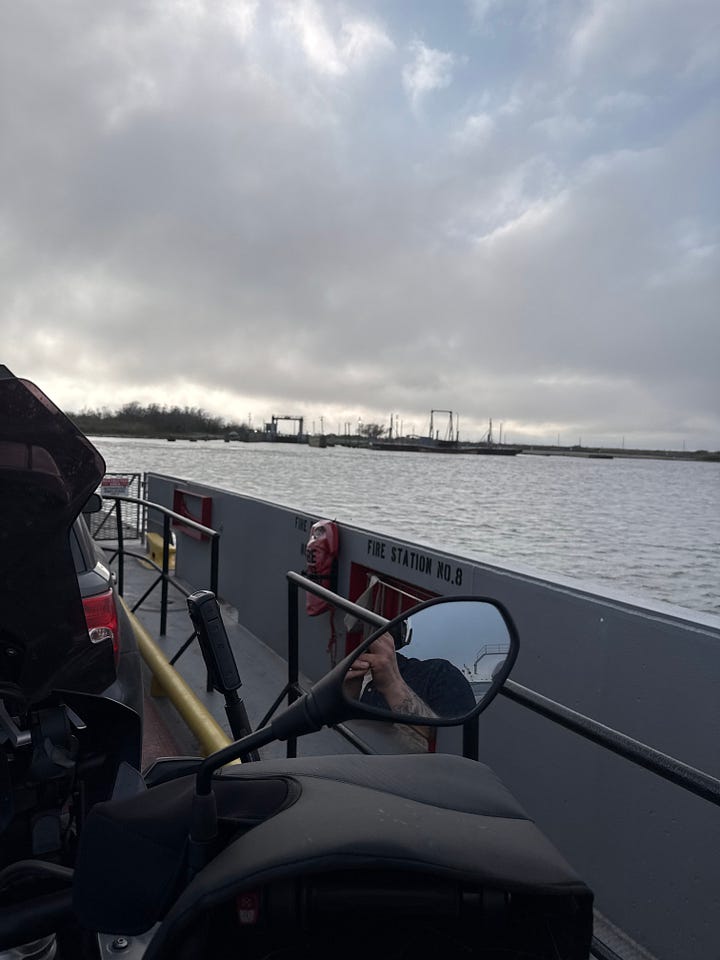
By the time we reached Cameron, LA we found ourselves waiting for a ferry before continuing along the Gulf. The fog gave everything a strange, quiet mood. It felt almost surreal riding through it.
The Lost Highway soundtrack played in my helmet for that stretch of road. How fitting it ended up being.
As we approached Port Arthur, Texas the mood shifted again. The calm coastal landscape gave way to massive oil refineries rising out of the lowlands. Towers burned gas into the night sky while pipes and steel structures stretched in every direction.
The glow of the refineries lit the clouds above us like something from a post-apocalyptic movie.
I had spent plenty of time in Texas before, mostly for work and in Houston, but seeing the region from the saddle of a motorcycle changed the feeling entirely.
It was eerie. Beautiful in its own industrial way.
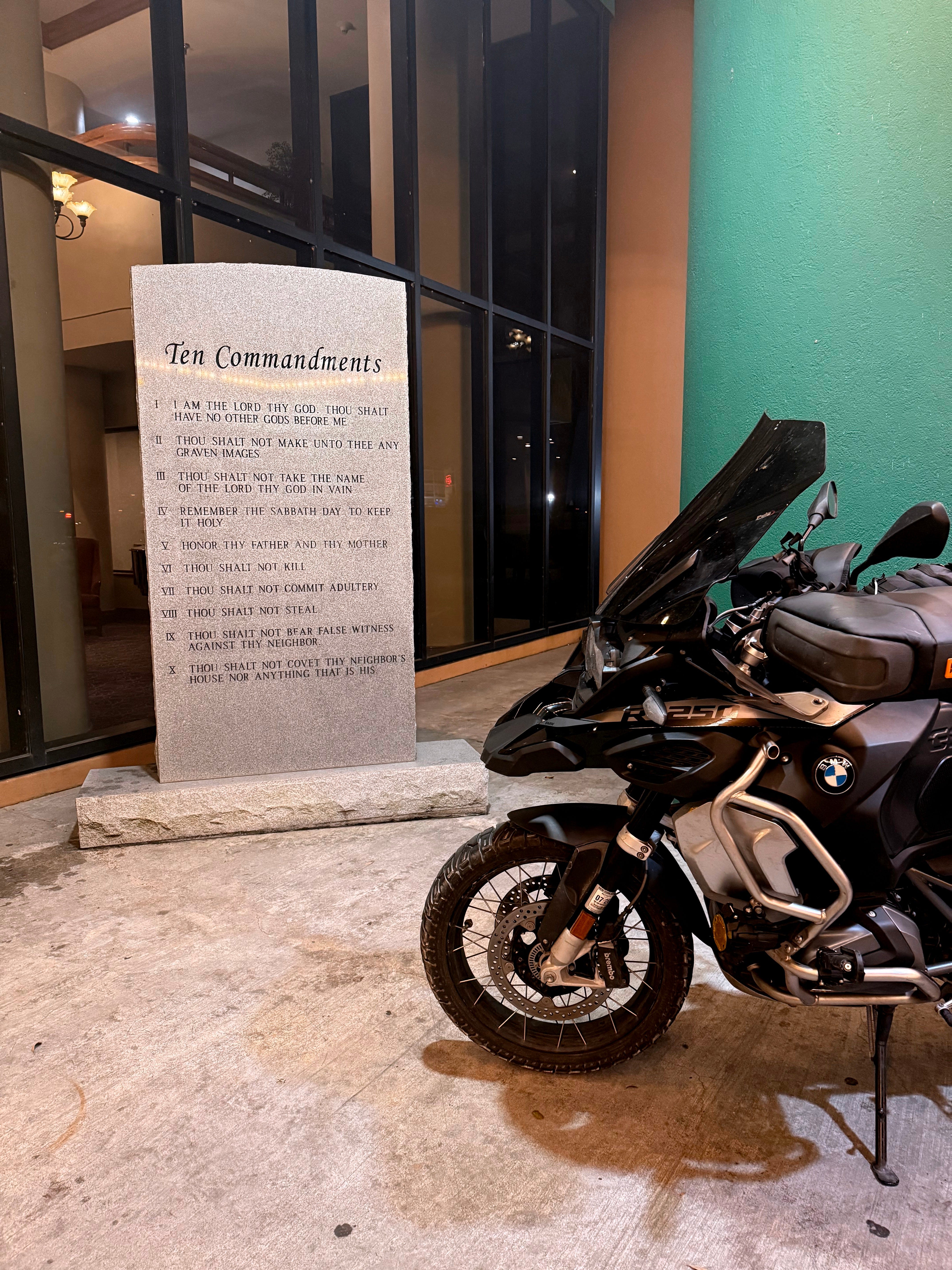
We eventually reached Beaumont after sunset, checked into the hotel, grabbed dinner, and retreated to the room.
In the parking lot a few night workers moved quietly around their trucks, preparing for long shifts ahead.
Somewhere during the ride that day a thought had stuck with me.
We tend to remember the difficult days more clearly because they are rare. The same is true with travel. The unusual moments; the fog, the strange towns, the unexpected conversations. They are the ones that stay with us long after the trip ends.
This is part 4 of the Six Days South series. The final part, 5, The Long Way Home drops later this month.
No posts
Comments
Nothing yet. Say the first thing.
Sign in to join the conversation.