
Welcome to the Dyer’s Almanac—a monthly log and exploration of natural dyes set in a seasonal and ecological context. Each month around the full moon, I share a new Almanac (“the calendar”) exploring a different theme, partly inspired by engagement with my home ecosystem, yet with plant stories, ecology, natural dye recipes, and inspiration for anyone inclined to creatively engage with natural cycles and the land where they live.
Paid subscribers receive full access to this month’s Almanac—focusing on dyes in the Rose family of plants—and all past entries. I appreciate your support of this project and I hope you enjoy!
It was always an austere land, generous but not lush, not soft, not gentle. It always had two seasons: one wet, one dry. The rains and the heat can be fierce, frightening. Growing things go through their sweet slow steady order of flowering, ripening, resting as they do anywhere, but the turn from one season to the other is less transition than reversal. A few dark-grey, pouring days when the burnt and sodden brown hills brighten suddenly into the aching, piercing green of new grass… A few cloud-flurried, shining days when the orange poppies, the blue lupine, the vetch, clover, wild lilac, brodiaea, blue-eyed grass, daisies, lilies are all in bloom, whole hillsides white and purple and blue and gold, but at the same moment the grass is drying, turning pale, and the wild oats have already sown their seed. Those are the times of change: the greening into winter, the dying into summer.
- Ursula K. Le Guin, Always Coming Home
July in California. We are in the times of change. The former ranchland between my home and the Ventura River is full of whispering dried wild oat stalks, and over the river, along one of its shaded tributary creeks, the poison oak climbing the true oaks’ trunks is already donning its near-dormancy crimson-colored leaves.
Every day the water in the swimming holes creeps lower, leaving old tidelines on the rocks and revealing an edgeland of algal mats and shallow spring-fed pools of oddly colored liquid—light turquoise, milky lavender, black—clustered like globs of mineralic paint on an artist’s palette.
Afternoons are hot and cloudless, and people crowd the edges of the pools still deep enough to swim in. Overnight—“less transition than reversal”—a dense gray mass of fog descends and blots out the mountains, casting a spell of stillness and silence. The mist meagerly waters the garden, teases leaf tips with dew, until morning comes and dissolves it into blue day.
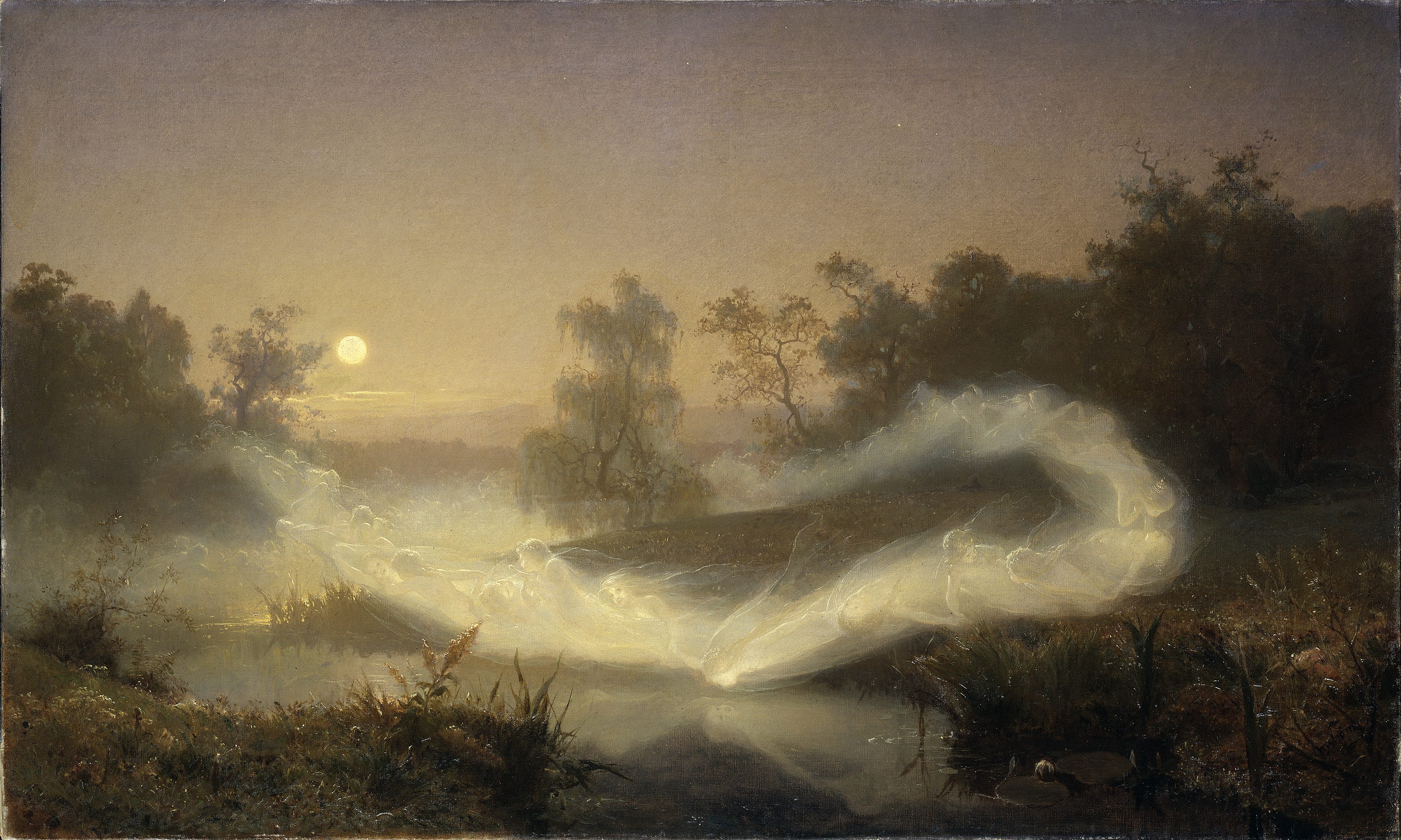
But I imagine a moment before dawn, when the low cloud briefly meets the river’s surface; dry fog greeting dormant stream. Even water seeks itself in the dry season.
The Dyer’s Almanac: Rose
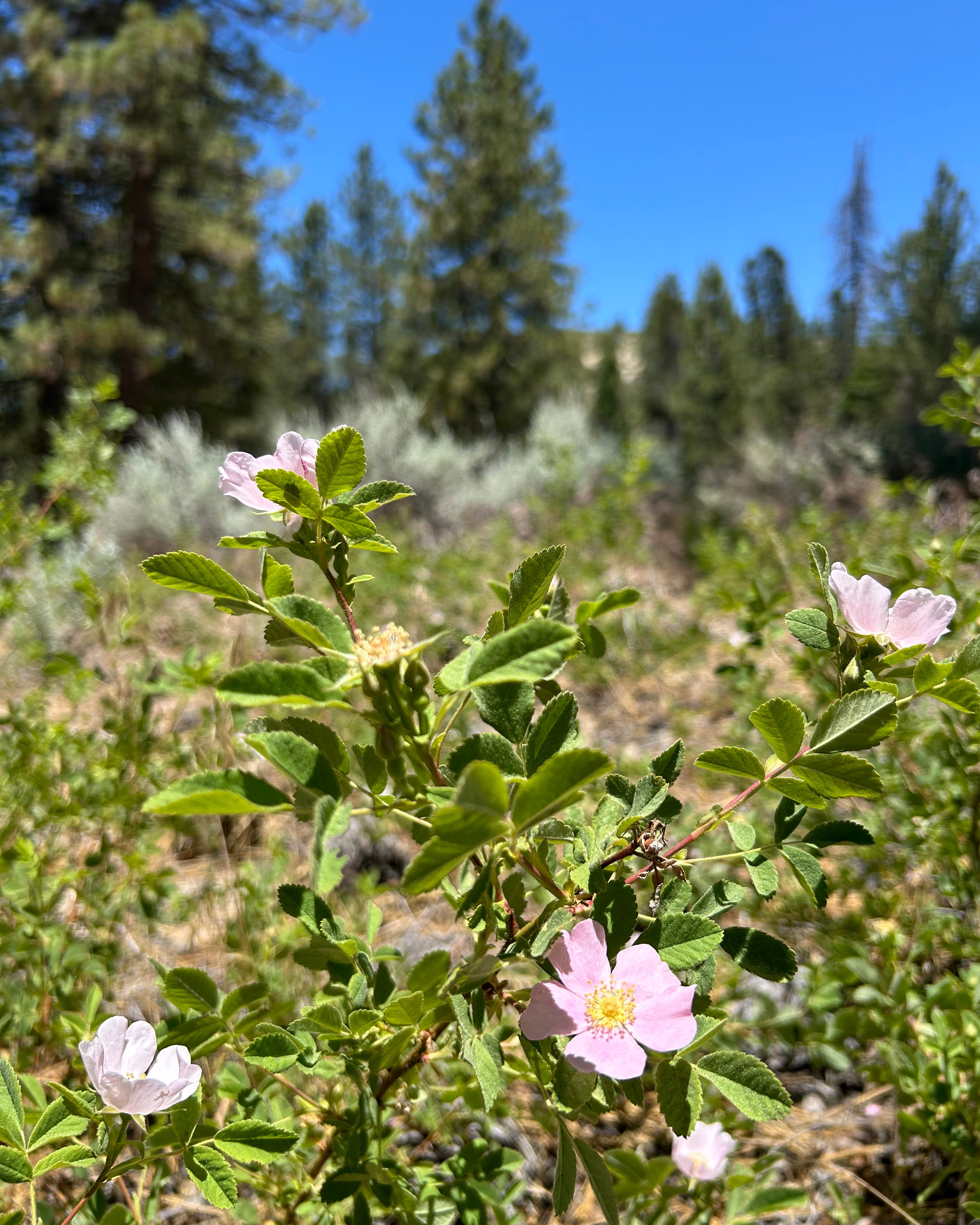
Wild roses—Rosa californica—line the banks of the shaded creek, the thorned bramble like living barbed wire guarding passage to the water. The scent of stagnant stream water mixes with delicate rose bloom, and open faces of flowers emerge from the thicket’s deep green—pink cups angled just so to hold the sunlight streaming in from a break in the deep shade.
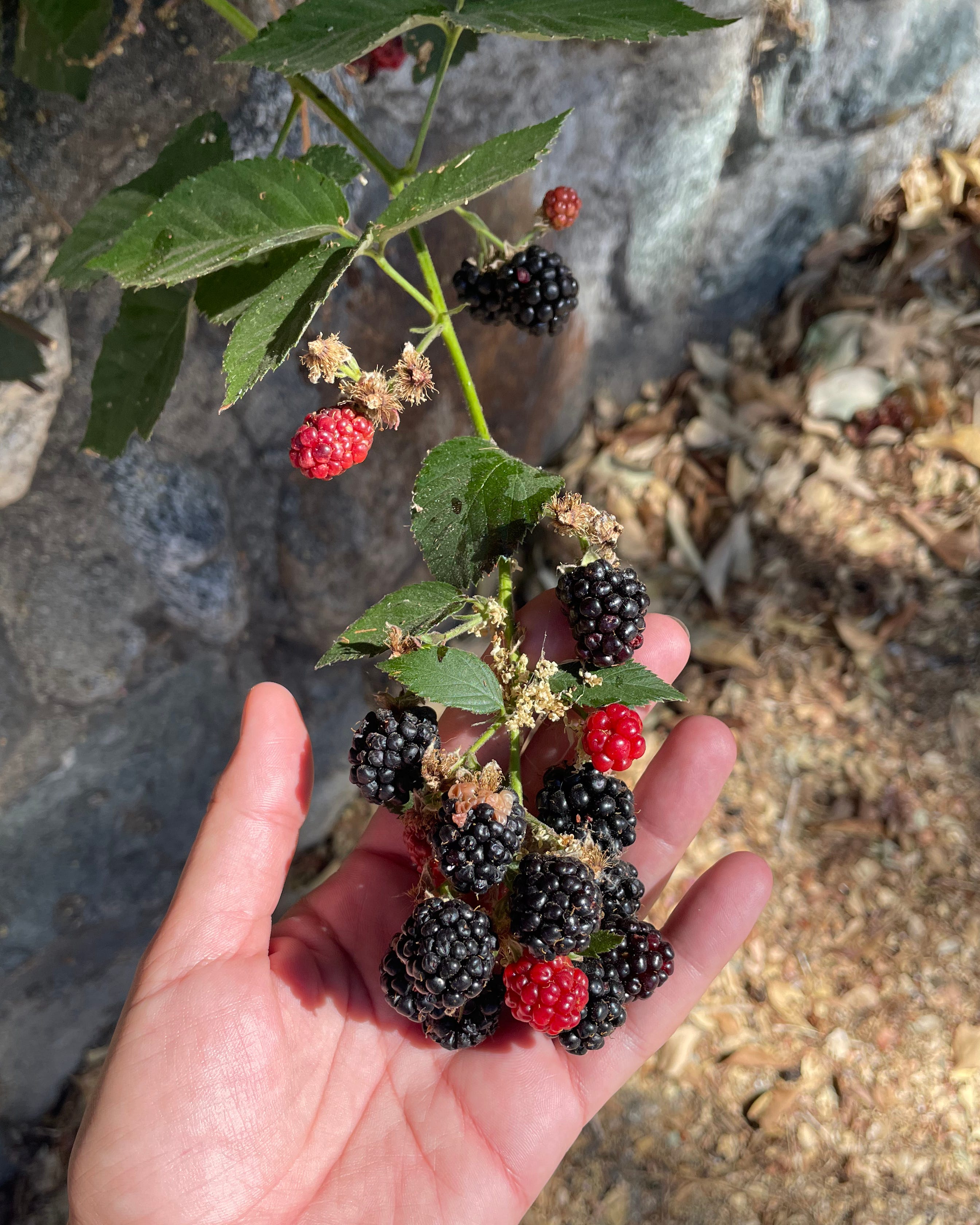
Nearby, the blackberries create briar homes of their own, braiding thorny canes into cages to protect their not-yet-ripe fruit from hands and paws (Rubus ursinus, “blackberry of the bear”). Winged ones—beetles, bees, butterflies, others—may still come and go, pollinating the white flowers, five-petaled and many-stamened like their fellow Rose family kin.
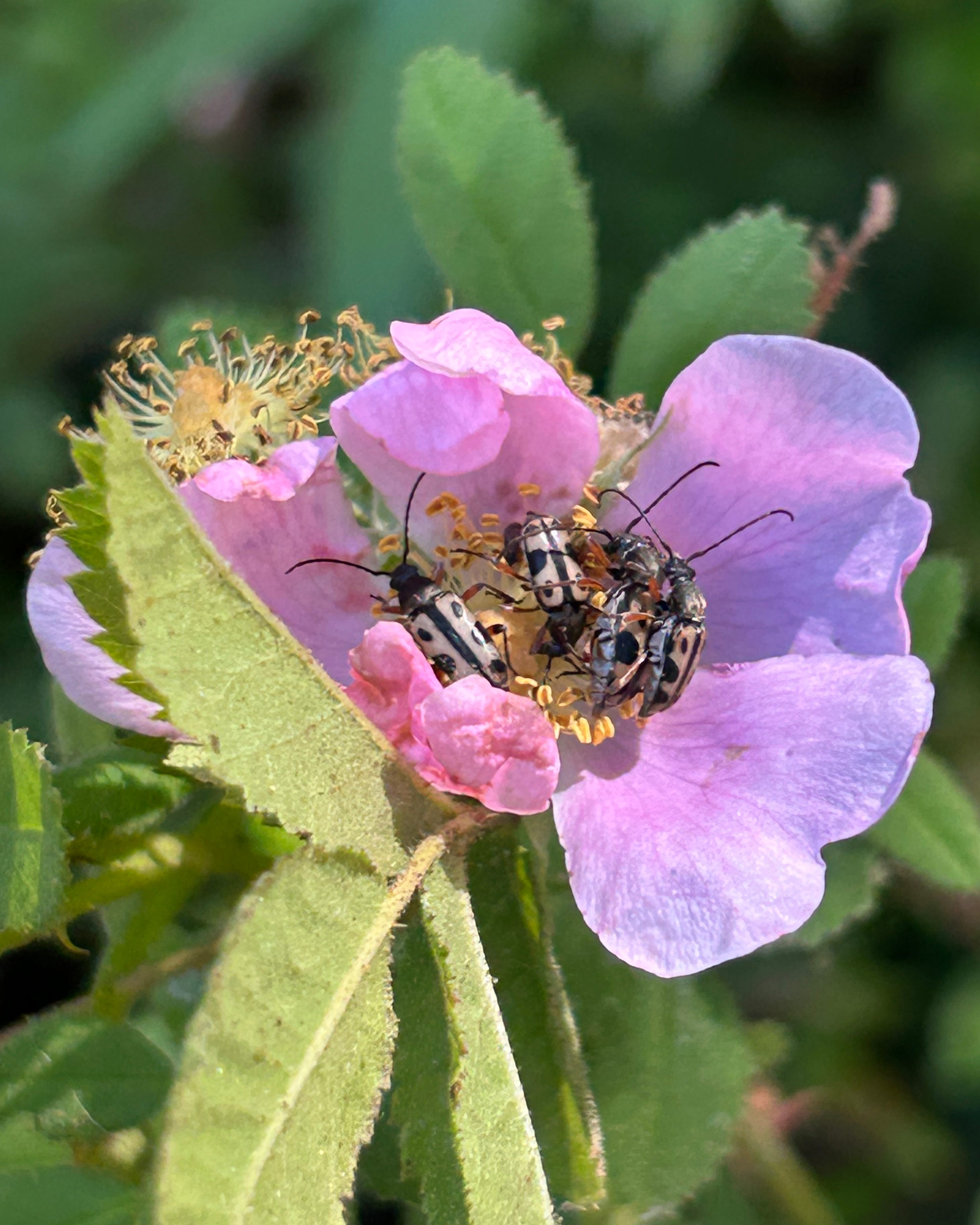
The Rose family of plants—Rosaceae—contains thousands of species, including those in the genus Rosa, the wild and cultivated woody perennials which produce some of the world’s most ubiquitous flowers.
Also in the family are many famous fruits: the stone fruits—peaches, apricots, cherries, plums, nectarines; pomes such as apples, pears, and loquats; and aggregate fruits like blackberries, raspberries, and strawberries. Almonds are seeds from fruits of a Rosaceae tree (Prunus dulcis), and California natives hollyleaf cherry (Prunus ilicifolia) and toyon (Heteromeles arbutifolia) are in the family, too.
The inner woods of some Rose family trees—known as fruitwoods—are desirable in woodworking for their warm, rosy hues. This coloring is due in part to the presence of polyphenolic compounds in the wood, including condensed tannins, which darken to warm, golden- to rosy-brown tones as they age and oxidize.
Tannins are secondary metabolites1 produced by plants to protect them from herbivory, pathogens, and other environmental stressors. Plants generally prioritize protecting their more vulnerable outer tissue, so concentrations of these compounds are often highest in bark, stems, and leaves—which are also typically the most dye-potent parts of plants.
Rose family plants like raspberries, blackberries, and strawberries have tannins and various organic compounds useful for natural dyeing in their leaves, stems, and roots. The fruitwoods (cherry, apple, pear, peach, plum) contain tannins and other polyphenols (like yellow-tinted flavonoids) in their bark, branches, and stems.
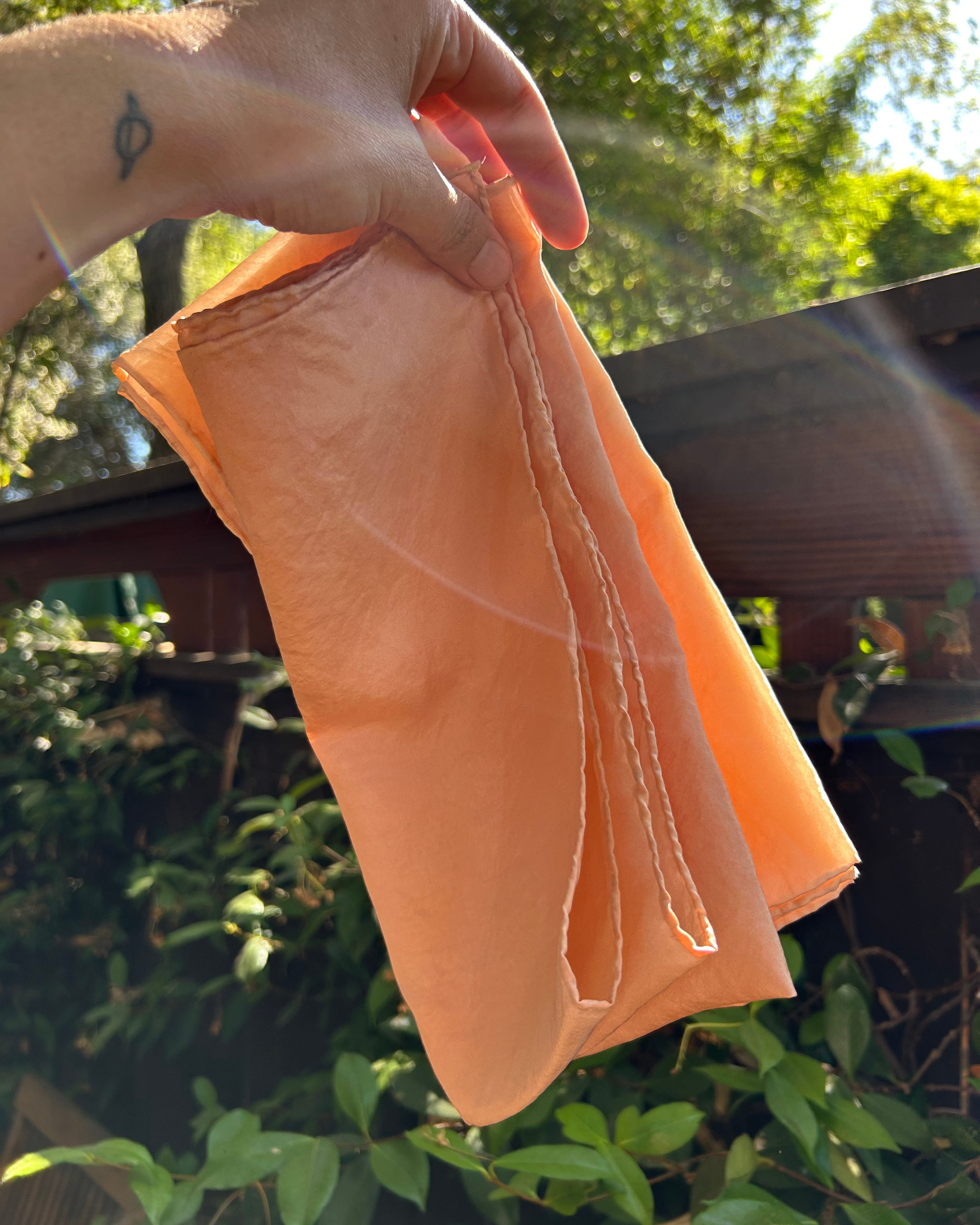
At the end of this Almanac entry you’ll find a list of dye-potent Rose family plants and a recipe for creating dye extract with rosehips (and a little bit of kitchen chemistry). The result is a shelf-stable extract with a warm, rosy-tan dye color.
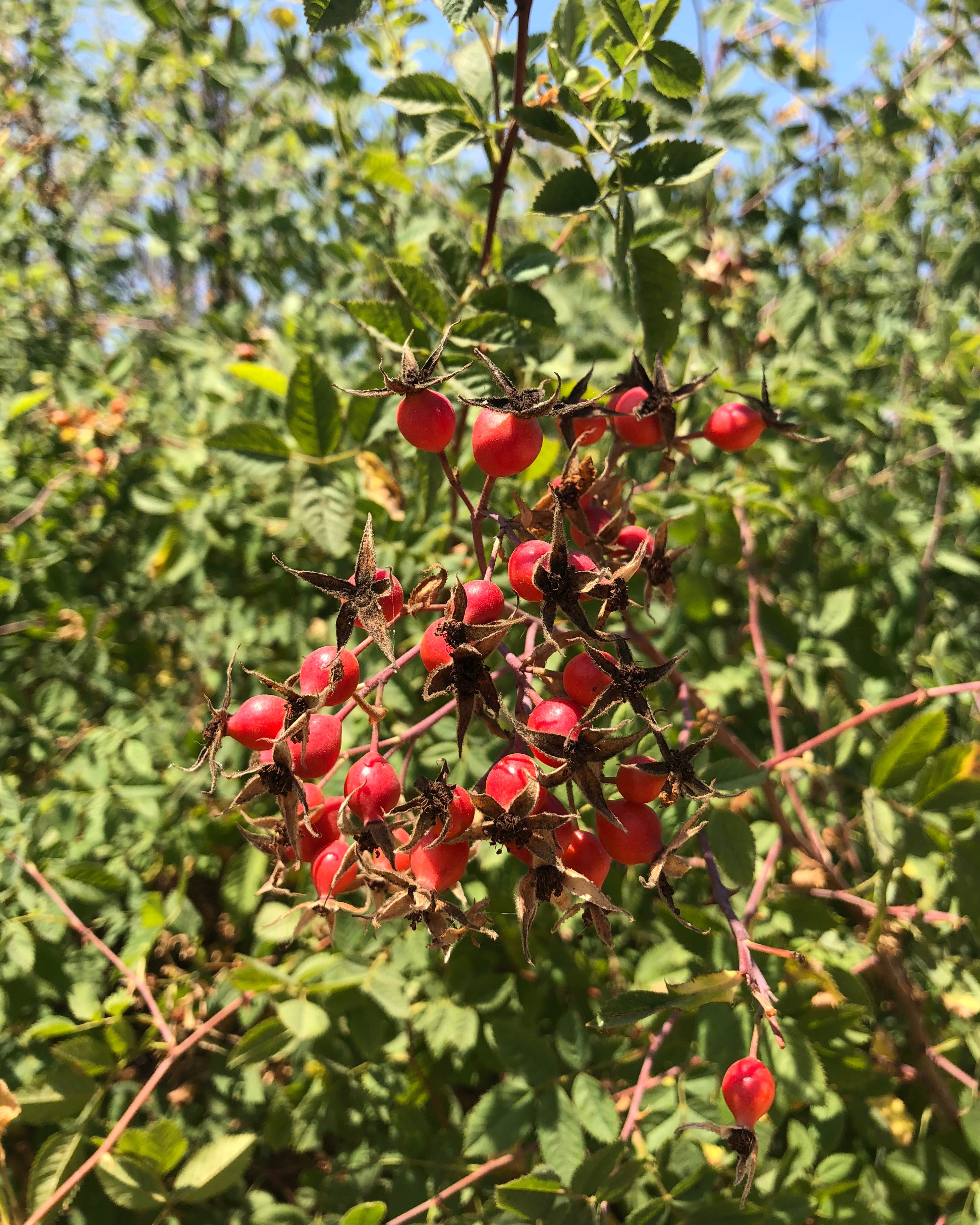
By the end of summer, the rose thickets by the creek will be in full fruit, with rosehips tinged red-orange from flavonoid and carotenoid compounds. The ripe fruits are medicinal2 and are essential food for wildlife. They may also be used to brew a natural dye—although not by the usual method, as their primary colorants are not soluble in water.
Like the precious fruits protected by thorny brambles, rosehips’ dye color is not so easily accessed. We must find a different route—a creative way around the thicket’s natural border, to the stream where natural color flows.
Rosehip Dye Extract
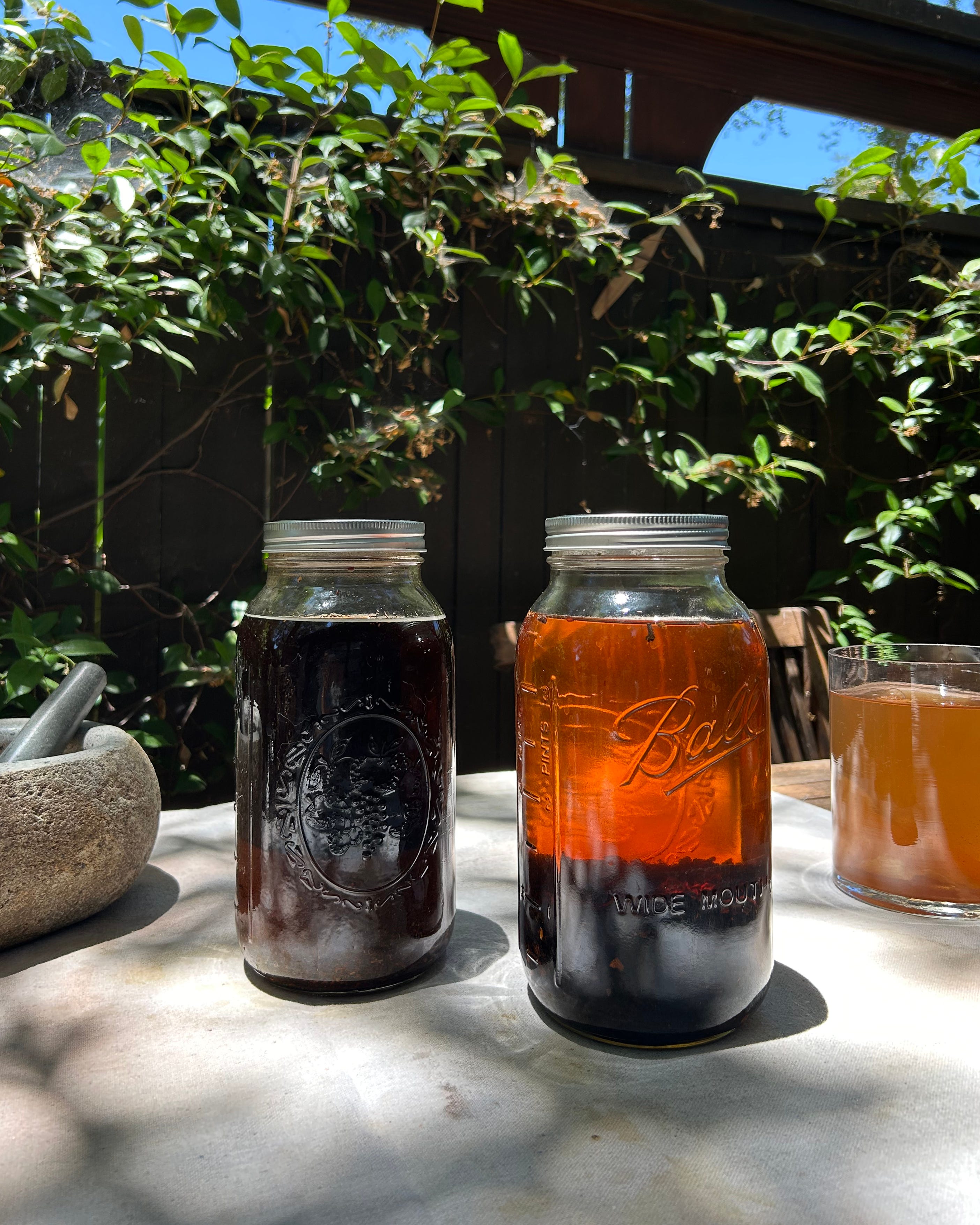
Brightly colored rosehips are rich in carotenoids, a class of pigment with yellow-orange-red hues. These compounds are not water soluble, so working with them as dye is slightly more complex than simmering the plant material in water.
Carotenoids are fat soluble, so their color may be extracted in oil and used as a natural dye for food or body products. They may also be extracted in alcohol and used as a textile dye, as in the recipe below. The results are hues of warm rosy-tan on animal fibers—silk or wool—which are the most suited to this process.
Comments
Nothing yet. Say the first thing.
Sign in to join the conversation.