
Some summers ago I grew a bed of indigo at the community garden. At the height of the season, wilder country called, and I left town to meet it. The garden and I both grew divergently wild during that time—me, hiking and swimming and camping; the indigo, spilling its stems, heavy with succulent leaves, over the edges of the raised bed.
Each morning and evening, the garden plot was watered on an automatic timer. At night, I slept under densely starry skies and was visited by dreams—the indigo bed beckoned me silently back. While I was gone, the timer’s batteries had died, and the indigo’s plush green leaves were withering, their dried edges curling and turning brown and dusty blue under the unrelenting sun.1
High season gardening requires steadier attention than I can summon when there are rivers to swim in and sand dunes to climb. In fall, the garden moves more slowly, and I find our paces aligning. I scatter seeds, hand-water and hope for rain—it comes after the nearly cloudless heat of early fall in southern California, when plants in the wild also await the change of season.
Summer ripens seeds; wind and birds and time disperse them. Fall’s first good rain starts the cycle of a new season for native Californian plants. We can synchronize with this cycle, sow seeds in anticipation of the coming rains, and witness a garden grow on its own native time.
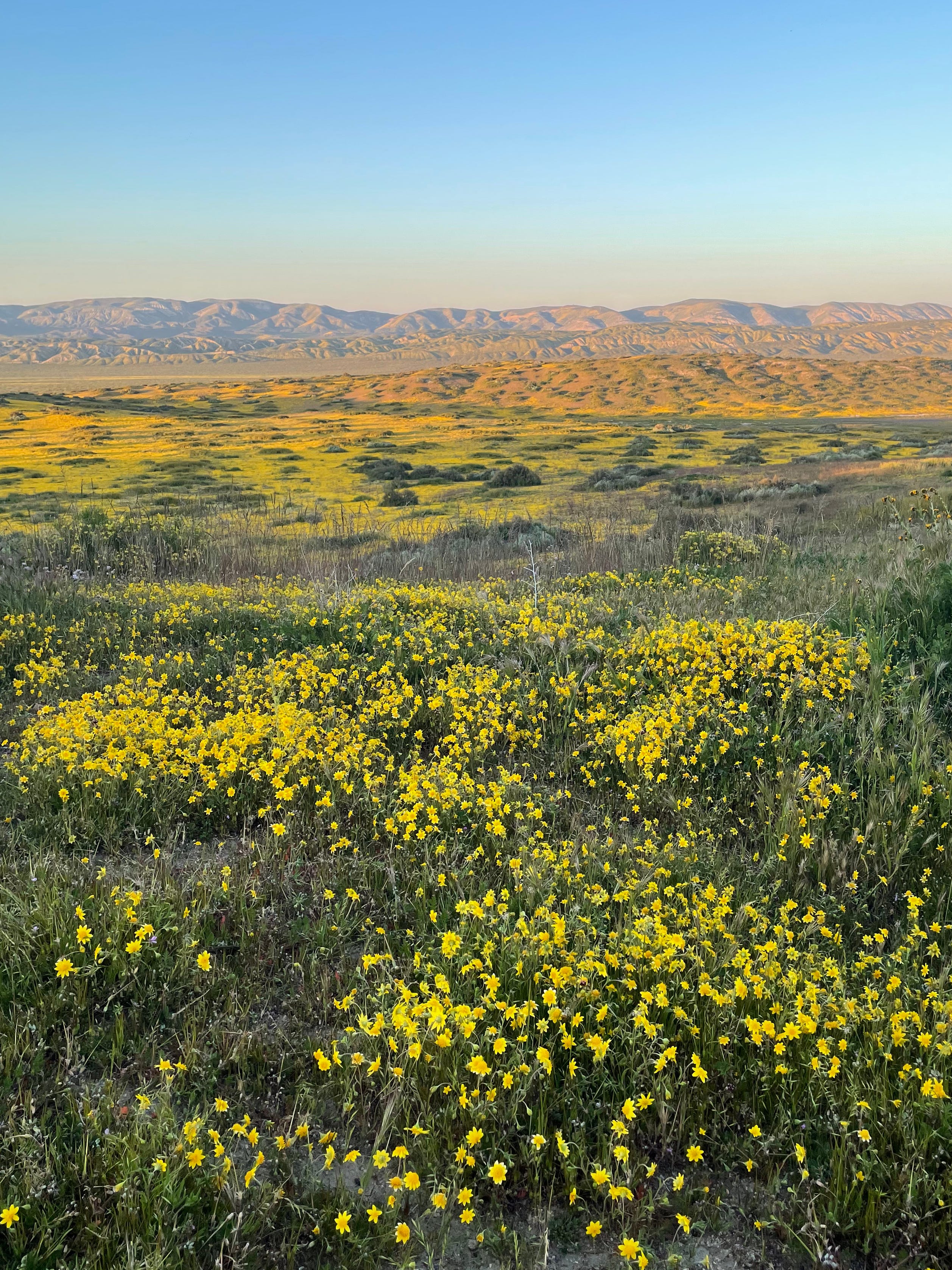
This season I’m experimenting. In one of my garden plots I’ve sown an assortment of all native seeds, of plants I suspect to be potent with natural color.
I’ve been compiling a list for years—of resinous, strong-smelling plants; of drought-adapted, chemically active and medicinal plants. Of the many Asteraceae (sunflower family) plants with saturated yellow blooms; those which I would not remove from their wild habitats, but which light up some dyer’s intuition in me akin to their radiant blooms, attracting pollinators. Treasured texts from botanist and naturalist friends: This plant stained my hands! They all get added to the list, and if I can source and nurture their seeds to germination, I’ll try their dye content and share my findings with you.
This Almanac is my first log of progress—and recommendations—for growing a dye garden with all native Californian flora.
Native Dye Plot Highlights: yellow-flowering Asteraceae: brittlebush, goldfields, tickseeds • plants with promising chemical profiles: desert bluebells, vinegarweed, woolly blue curls • container-loving dye plants: alumroot, coffeeberry, toyon
Comments
Nothing yet. Say the first thing.
Sign in to join the conversation.