
Imagine beings at the end of time looking back. What decisions would they think were most important? What events would they care about most?
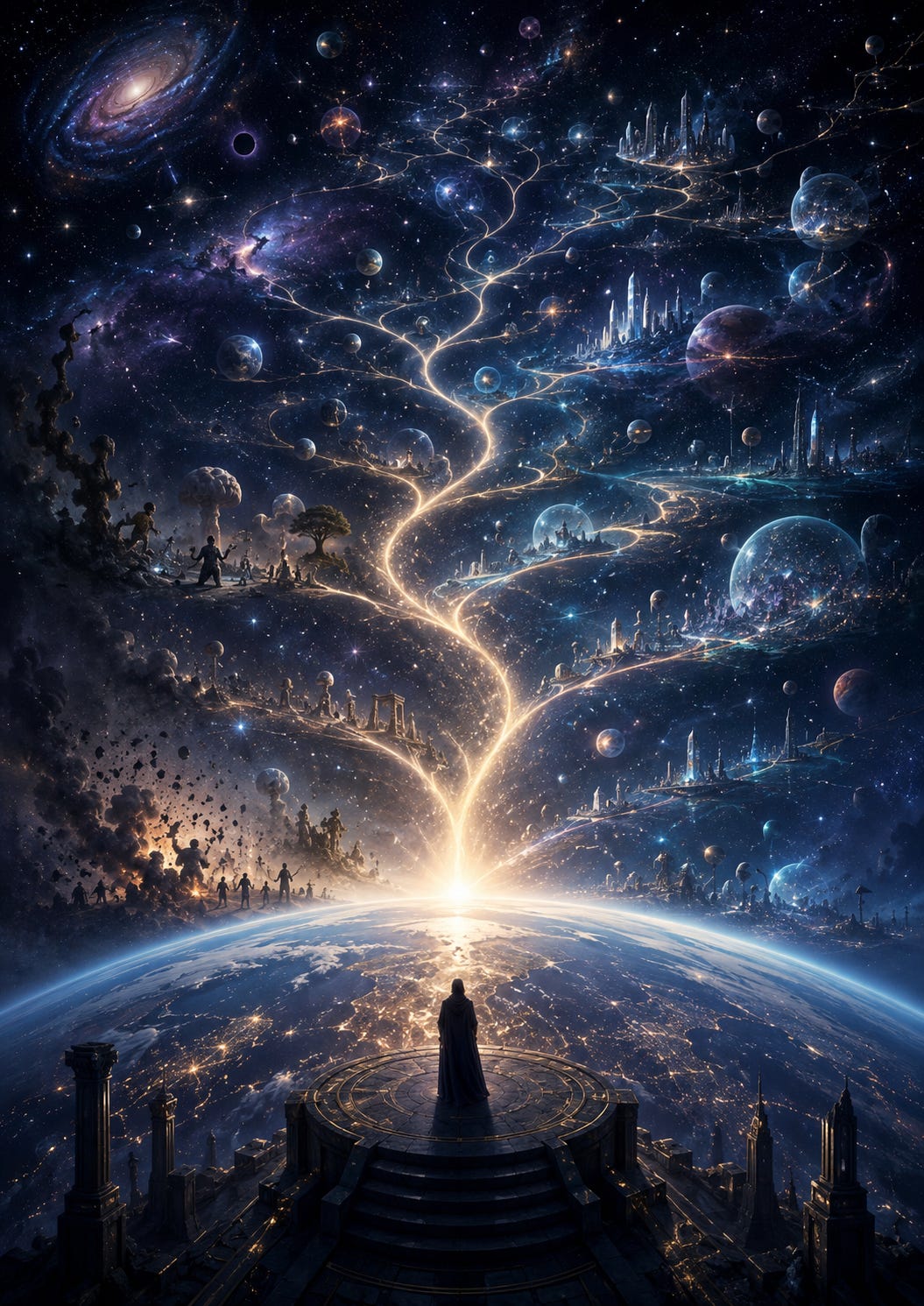
Some actions have very long-term effects. The creation of democracy may have shifted the long-term state of humanity. Similarly, if humanity went extinct, that would be the end. We would never recover. It would be far more significant than any other event in history.
These are the actions that those beyond time would look back on as significant. Short-term tragedies are, of course, tragic. In the year 2 billion, tragedies that only lasted fifty years would pale in significance compared to bad things whose deleterious effects stretch out across eternity. Against trillions of years, anything with merely short-term effects begins to look like a rounding error.
This is, in a nutshell, why I’m a strong Longtermist. A strong Longtermist isn’t a Longtermist who goes to the gym a lot—it’s one who thinks that the most significant effects of our actions are those that affect the long-term future. Insofar as some of our actions have effects that persist through time, over long enough time periods, those effects will be the most significant.
The black plague was a catastrophe short-term. It killed tens or hundreds of millions of people. But across all of time, it’s just a footnote. An action with an effect that persists throughout history is very likely to have much greater effects than the black plague.
There is a blindness of history that comes from looking back on it. It is easy for a historian to regard deaths as statistics, rather than stories that have ended. But there is an opposite and more significant blindness of history that comes from living in the midst of it. We wrongly overestimate the importance of short-term happenings and ignore long-term states. For an event that lasts 1,000 times longer than another to be of equal or greater significance, it only needs to be at least a thousandth as significant per year.
To correct this presentist bias, we should try to look at tragedies from the perspective of a careful and morally conscientious historian looking back through history after it has ended, trying to comparatively tally up the significance of different events. If we did that consistently, we’d be Longtermists.
We’d also be Broadtermists—to borrow a phrase from Toby Ord. Just as Longtermists regard what happens in the distant future as of primary significance, Broadtermists regard what happens in distant space as most significant. Nearly all the stuff in the universe is outside of Earth. If humanity spreads out, there could be tens of trillions of inhabited worlds, with Earth no more intrinsically significant than any other world.
Factory farming is a hideous blot on society. But if it occurs only for a short time on one world, it will only be a footnote in the grand cosmic story that would be written at the end of it. Same with wars and other present injustice. In contrast, if we go extinct, lock in bad values, or permanently enshrine some sentient beings as second-class citizens whose interests are ignored, the horror would ripple out for all of time. Evils that persist forever would not be limited to one chapter; they would be a central defining characteristic of the whole narrative.
A tragedy that occurred between, say, 1900 and 2200 would be tragic. But a tragedy that occurs between 2100 and 1 trillion AD is far more tragic. For this reason, if our aim is to make the world better, we should primarily focus on making the far future go better. If one thing is billions of times more significant than another, then if you want to maximize your positive impact, you should aim to affect the first over the second. That is the Longtermist thesis, and it is correct.
No posts
Comments
Nothing yet. Say the first thing.
Sign in to join the conversation.