
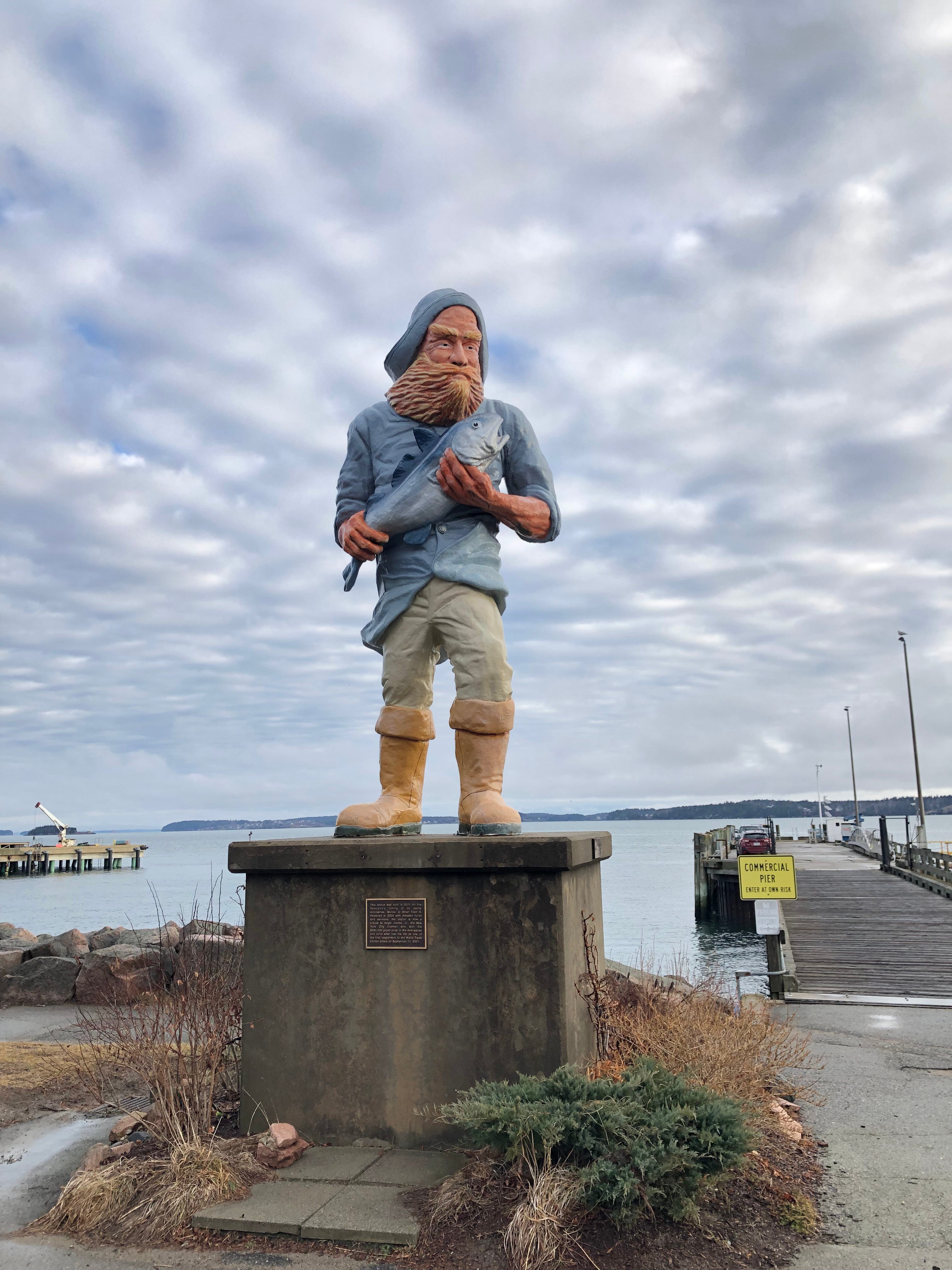
I think of Eastport, Maine, the easternmost city in the United States, often.
Nearly 10 years ago, Michelle and I had been talking about wanting to go there — particularly on New Year’s Eve. Why? Because Eastporters, being the ones farthest east in the eastern time zone, lay claims to being the first to bid farewell to the old year and welcome the new. (As a couple who made it a point to see ‘the tallest filing cabinet on Earth’ in Burlington, Vermont, when we visited in 2015, we love these kinds of local claims and attractions.)
In late December 2021, with our then 12-year-old travel-pro pup, Remi (who’s now over 14 and an even more seasoned travel pro) we finally made it to Eastport. We saw residents stringing up a painted-and-lighted wood cutout of a sardine (homage to the 13 sardine canneries that once dotted the shoreline, making it once the ‘sardine capital of the world,’ that have come and gone) to be lowered like the New Year’s Eve Ball in Times Square as the final seconds of the year are counted out in unison by those gathered and watching.
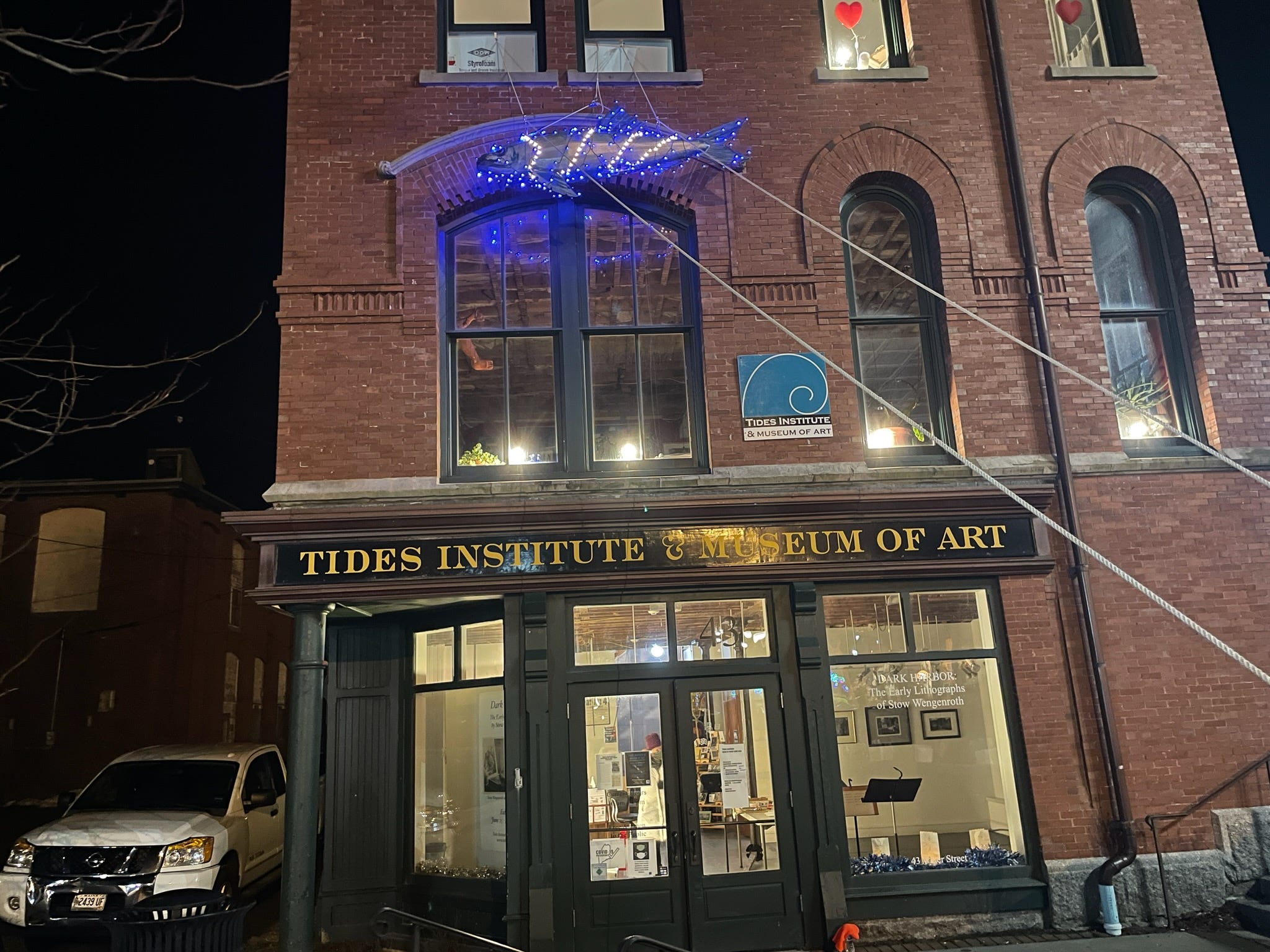
We also saw the painted wood maple leaf lowered an hour earlier (midnight Atlantic Time) in solidarity with their neighbors to the north in Canada — the last in that time zone to turn the yearly page. A countdown at 11 p.m. ET, and again at midnight, both with fireworks, both with folks gathered on Water Street (the city’s Main Street, so to speak) singing and cheersing. What’s not to like?
In fact, there’s a lot to like about Eastport — home to some 1,300 residents that slims down during when some snowbirds fly south during the sometimes-challenging winters, as the Bay of Fundy produces 20-foot tides along the deepest harbor in the continental United States (only Valdez, Alaska is deeper, and only slightly). We lucked out: When we visited, it was warm (upper 20s, lower 30s), and barely any flurries.
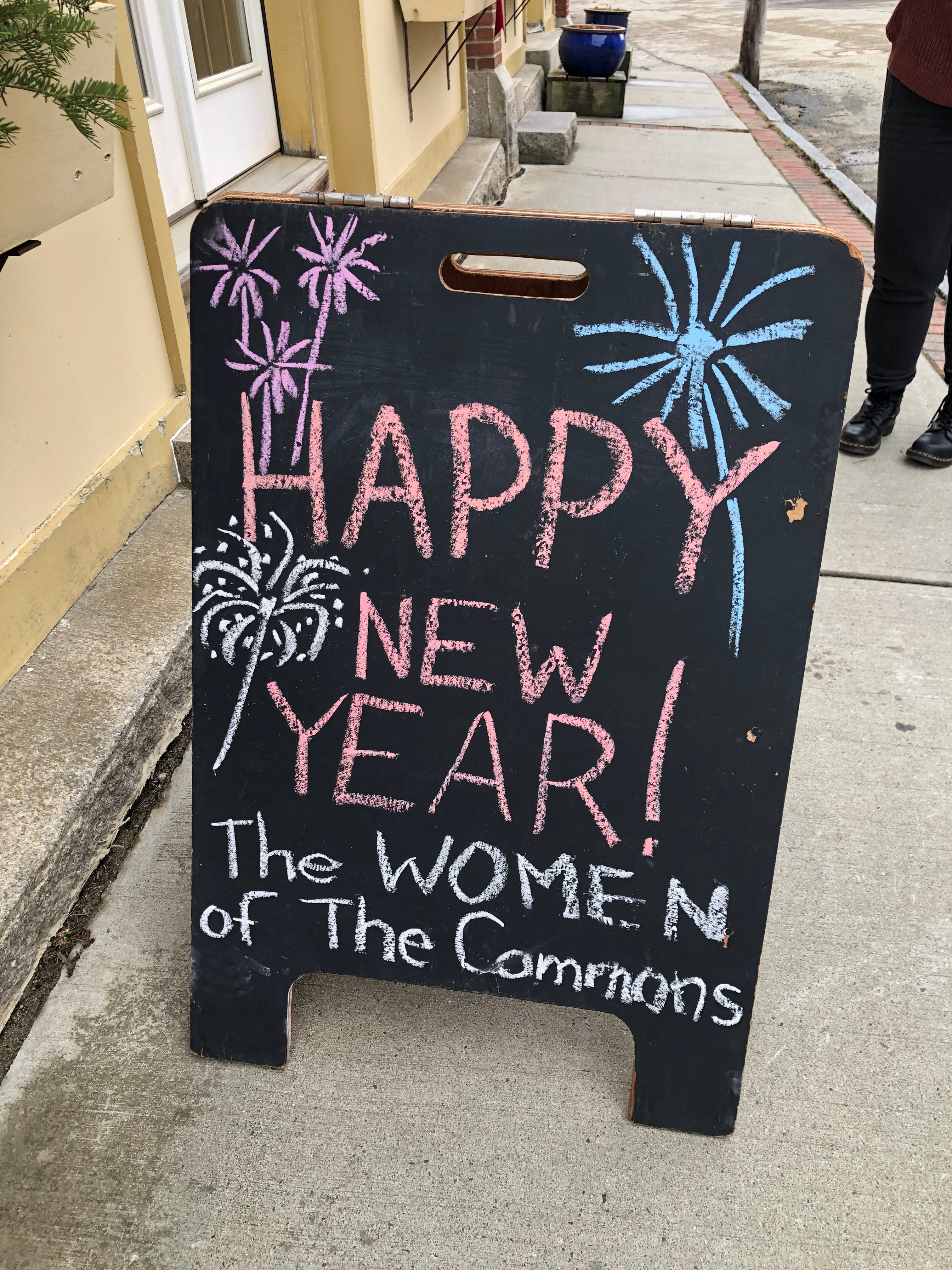
While there, we got to visit places like The Commons, a mixed-use space with a gallery on the first floor featuring local (an estimated 90% came from Washington County, we were told) and regional arts and crafts for sale, and condo rentals on the second floor with views just 20 feet from the shoreline.
We met editors and writers of The Quoddy Tides, a newspaper that publishes a print edition every other week, and is rich with local stories, features, and more that has a satisfying thud when tossed on the coffee table (which I can attest to, as we have since become subscribers and receive our copy in the mail).
We had some of the best seafood chowder at The Happy Crab (where we also pinned a dollar to the wall, as is customary), enjoyed a brunch at the Waco Dinner (pronounced wacko), had a few growlers filled at Horn Run Brewing, shopped at other locally-owned stores in the downtown, and met Elijah Brice, a then-19-year-old lobsterman, who I had the chance to write about for Craftsmanship Magazine.
When traveling, there are the places that I am grateful to have visited and recognize seeing it once will suffice. Then, there are those, that when I think about them again, I begin wondering: When can I plan a return trip? Clearly, Eastport, for me, is in the latter camp.
I live in a larger metro today, but I come from a small town. In high school, I remember opening an essay I had to write when applying for a summer camp with the line, “I may be of a small town, but I am not of a small mind.”
Of course, I did not mean that I am from a town where others’ minds might be small while mine is not. Rather, I intended to convey that just because only a fewer number of people may live there, it doesn’t mean that big ideas aren’t present (for the record, I grew up in an even smaller village outside of the small borough that has some 425 residents today, and remain proud of my hometown).
When we use terms like “small” or “major” around towns and cities and metro regions, it’s nearly always hitched to population size. Coming from a smaller place, I continue to have the small-doesn’t-mean-less chip on my shoulder, and I am guilty of writing about places with fewer residents doing big things as punching above their weight. It’s in the same vein as, If it can happen here… (which the intended response to the call is, It can happen anywhere! — which, can, at times, come off as a, Surely, if we, in this backwoods, lowly place can pull this off, or do that, certain you, in bigger places, with better resources, can do it, too!
So, why am I writing about Eastport?
Because I was excited to see a new big idea in Eastport: An effort to bring passenger flights and cargo services to the city via the Eastport Municipal Airport, as reported on Jan. 27 by Joyce Kryszak for The Maine Monitor. (I’ll acknowledge here that, as an outsider, I am disconnected from local politics and discussions occurring around this news. But, as an outsider, I am heartened to see this idea as big thinking in a ‘small’ city.)
The reporting (linked above) is worth reading, as it both outlines the plans (what’s the blueprint for turning this idea into action) and captures the spirit of let’s do this! (‘This’ being a focus on the future while valuing existing assets that can be further invested in.)
It also reveals the “vital” nature of airports — especially in farther-flung places (read: Through the airport, a family is able to get their daughter necessary medical treatment in Boston in a fraction of the time it prior took to drive). And it has a healthy dose of realism (looking to link with regional carriers to build up traffic).
That realistic outlook extends to the obvious: We, of course, don’t know the outcome yet, and whether these plans will succeed and what any given definition of success may be, as “much remains to be done and there are seldom funding guarantees,” the airport’s new manager, Peter Lehman, admitted to Kryszak.
But I do really like and admire his hopeful confidence present through the story.
“I’ve been called obnoxiously optimistic,” Lehman told Kryszak. “But that’s okay. It’s a slipper I feel I should wear to the ball.”
Who yet knows where this will lead. But, to me, it’s putting Eastport’s best, slippered foot forward in the name of progress, and serves as an example and inspiration for other cities and towns looking to build, develop, and grow their airports from the local level up.
No posts
Comments
Nothing yet. Say the first thing.
Sign in to join the conversation.