Cambridge’s emergence as a global innovation powerhouse was not the result of a single policy or institution, but decades of interaction between government intervention, infrastructure, institutions and local networks. Julia Wdowin traces some of the historical developments behind the ‘Cambridge phenomenon’, and what it can teach policymakers about enabling sustainable, place-based growth across…
England is undergoing a major re-organisation of local government. Universal basic infrastructure provides the framework needed to ensure that this is not just an administrative reshuffle, but a rare moment to re-imagine the relationship between the state, citizens and the places they call home, write Owen Garling. The post Local government reform: what role for universal basic infrastructure?…
Andy Burnham’s premiership will be shaped by how successfully he can turn his ambition for a less centralised model of English governance into reality. Owen Garling and Prof. Michael Kenny explore the leadership, knowledge and institutional capacity needed to make devolution work— and improve the economic prospects and opportunities of the regions it serves. The post What Burnham should do on…
The new Prime Minister is expected to turbocharge devolution. But to fulfil its promise, strategic authorities — led by mayors across England — must operate at scale. In this blog, Jack Shaw argues that many existing or planned strategic authorities are currently too small, and that the Government will need to work with them to build institutions capable of operating across larger regional and…
In this episode of Crossing Channels, Richard Westcott talks to Sander van der Linden from the University of Cambridge and Marion Hoffman from the Toulouse School of Economics about how social connections shape our lives. The post How do social connections shape us? appeared first on Bennett School of Public Policy .
A major new study reveals that the notorious “iron grip” of the UK Treasury on public spending is a myth. The existing arrangements contribute to inefficiencies. Cash control from the centre does not translate into effective service delivery locally, with short term fixes and little evaluation of outcomes. The post Burnham government must break with decades of centralised control to fix public…
The race for AI is not simply a contest between the US and China. Dr Siyi Liu argues that middle powers can gain influence by building trusted partnerships around complementary strengths rather than pursuing unattainable AI independence. The post Away from the AI superpower arms race, towards trusted minilateral coalitions appeared first on Bennett School of Public Policy .
The cost of reaching orbit is now falling faster than that of steamship freight during the 1800s, a shift that economists say will once again transform global commerce. The post Space cargo costs could fall more than 90% by 2040 appeared first on Bennett School of Public Policy .
According to groundbreaking new research led by Alessio Terzi (Bennett School of Public Policy) and co-authored with Francesco Nicoli (Politecnico di Torino) in PNAS Nexus, the answer is a resounding yes. The post Is space trade the next global transport revolution? appeared first on Bennett School of Public Policy .
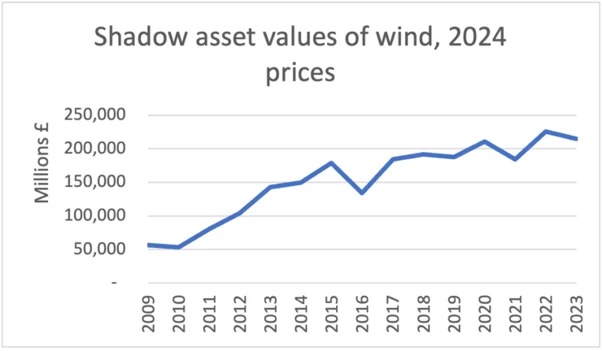
Natural capital should be valued for more than its market price. In this blog, Julia Wdowin and Diane Coyle argue that incorporating the social value of avoided carbon emissions provides a more complete way to estimate the value of wind as a renewable energy asset. They present a new methodology that supports the Beyond GDP agenda and could help strengthen natural capital accounting and…