
If you’re living in NYC or have been following the political rise of our new mayor, Zohran Mamdani, you may be aware that “fast and free buses” is one of the core tenets of the new administration’s affordability agenda. It’s a compelling political statement, but what does it really mean for New Yorkers? And what would be required to make it happen?
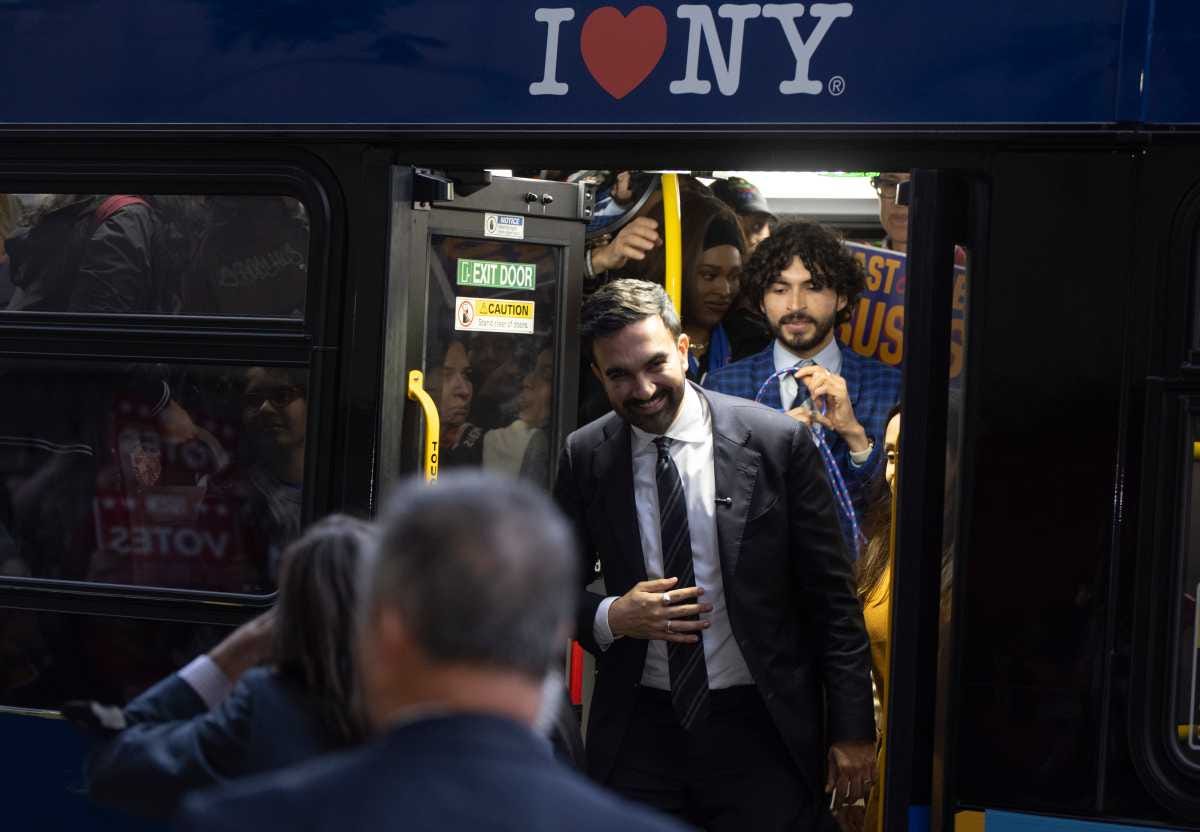
The idea that the bus could (or should) be free in major metropolitan systems has entered mainstream planning discourse with a shocking rapidity. I first encountered fare-free bus systems during my time at Via, when small agencies began dropping fares after COVID. Many systems found that, with reduced ridership and increased risks of driver-passenger contact during the pandemic, it wasn’t cost-effective to continue collecting fares. In the years following the pandemic, some large agencies also allocated funding from federal, state, and municipal sources to pursue free-bus pilots. The Massachusetts Bay Transportation Authority (MBTA) in Boston and the Metropolitan Transportation Authority (MTA) in New York City each ran time-limited pilots on a small number of routes. The Kansas City Area Transit Authority (KCATA) made its entire system fare-free from 2020 to 2025. And now, fare-free buses are a key policy priority for the mayor of New York City, which hosts the most extensive transit system in the United States.
Despite its political prominence, I’ve found this issue quite polarizing, even in progressive urban planning circles. To supporters, removing fares is a no-brainer, essential to building an equitable transportation system and ensuring economic empowerment for New Yorkers at all income levels; to detractors, it is a colossal waste of money that will hamper transit agencies’ ability to provide reliable service; and to many, the fare-free bus proposal has devolved into such a tangled mess of discourse that they don’t know what to think. It’s no surprise that the issue has become a political logjam at the state level.
As a complex, politically sensitive, and provocative planning topic, it is the perfect subject for a deep dive in City Speak. Together, we’ll look at the topic of fare-free buses from a series of different angles, such as:
The responsibilities of politicians vs. transit agencies for fare-free bus service
What it costs to operate bus service in New York City and how it is funded
The nuances of the bus network in NYC
Governance structures of the MTA and other similar transit agencies
The social, economic, and environmental impacts of fare-free buses
The political coalition behind fare-free buses
The successes and lessons learned from recent prominent fare-free bus pilots
Models of free municipal social services and how they apply to transit
Other stuff that I realize is super important as I write this
I’ve developed my own opinions on fare-free buses over the years, but I’ll keep them to myself to avoid muddying the waters. However, I will credit much of my thinking on the matter to professional experience with transit agenceis and work undertaken during my Master’s Program, particularly in the Urban Transportation Planning and Policy class with former MA Secretary of Transportation (and free-bus advocate) Jim Aloisi. All opinions expressed in this substack are my own, but I hope to do justice to these discussions in my writing.
There’s much more to explore together, but as a starting point, I will offer an initial explanation for why the concept of fare-free buses is so maddeningly controversial. The concept of fare-free buses is inherently paradigm-shifting.1 In other words, making fare-free buses work is not just about finding a new funding source to replace lost farebox revenue; it requires us to fundamentally rethink how we manage, prioritize, and value bus transit in our cities.
City Speak #52
Bennett Capozzi
For the wonks in the house, I’ll offer a slightly more nuanced definition of a paradigm shift. I’m leaning on Thomas Kuhn’s definition in The Structure of Scientific Revolutions, which argues that scientific fields typically operate under a consistent disciplinary matrix, or “paradigm”, in which theories, instruments, metaphysical assumptions, etc., are fixed. A paradigm shift is an event in which a mounting body of scientific evidence shows that one (or several) of the underpinning aspects of the disciplinary matrix must be changed or redefined to accommodate the new finding. Put simply, these are cases when observations are “wrong” in relation to theory, but it is not the observations that are wrong but rather aspects of the theory itself.
Kuhn puts it quite elegantly when describing how Einstein’s Theory of Relativity prompted a paradigm shift: “To make the transition to Einstein’s universe [from Newton’s], the whole conceptual web whose strands are space, time, matter, force, and so on, had to be shifted and laid down again on nature whole.” (1962/1970a, 149).
The provocation here is that transit agencies do not just charge riders; they operate under a paradigm that riders should pay for rides. This is not only about the act of putting a dollar into a slot when you ride the bus, but also a larger “conceptual web” that governs a transit agency's funding, operations, and politics (both internal politics and those of the governing city/county/state). The paradigm of fare-based transit systems includes a series of tacit expectations, including: that fareboxes cover a significant portion of operating costs, that bus operators do double duty as fare collectors, that governments should devote resources to combating fare evasion, that riders should expect a certain level of timeliness and trip quality commensurate to fare prices, that fares inevitable rise, and so on. To propose a fare-free bus system is to require a change to this conceptual web.
No posts
Comments
Nothing yet. Say the first thing.
Sign in to join the conversation.