
To call “What’s the catch” a series on this substack would require me to commit to a regularity of publishing that I clearly am not able to commit to these days, but the intention of this post (and hopefully some future ones) is to provide a glimpse into the bonkers tradeoffs inherent in attempting to buy an apartment for less than $400K in Brooklyn in the year 2025.
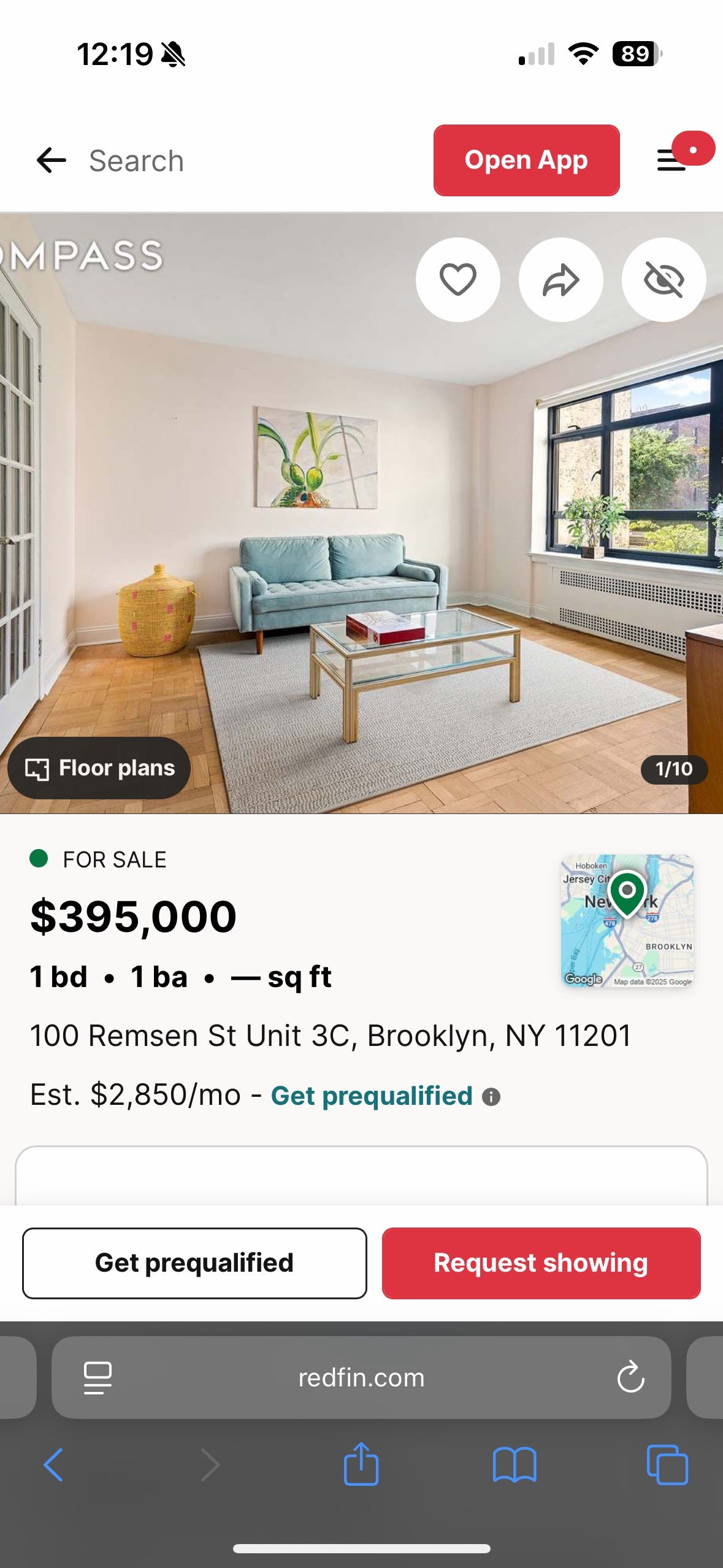
As my followers know, I’ve been on the hunt for the perfect co-op in Brooklyn, and by “perfect” I mean something that a single-income 30-year-old earning less than $100K annually can afford. And in the last couple weeks, a seemingly perfect 1-bed 1-bath co-op in Brooklyn Heights appeared on my Redfin searches. And the algorithm was pushing this one hard. I got at least 3 automated emails about a “$395K Brooklyn home for you”.
Looking at the listing, this listing has all the classic signs of being too-good-to-be-true. It’s two blocks from the Borough Hall station in the original gentrified Brooklyn neighborhood, Brooklyn Heights. The unit is on a sunny southwest facing corner with windows on two sides. Not only is there a “king-sized” bedroom but also a small home office connected to the living room by French doors. The broker took the time to list the brands of all the light fixtures in the apartment (Serena and Lily, West Elm) and the kitchen even has a dishwasher, which is a luxury so preposterous I would never even dare to list it as a must-have. The entire thing reads like a stream of consciousness real estate literotica.
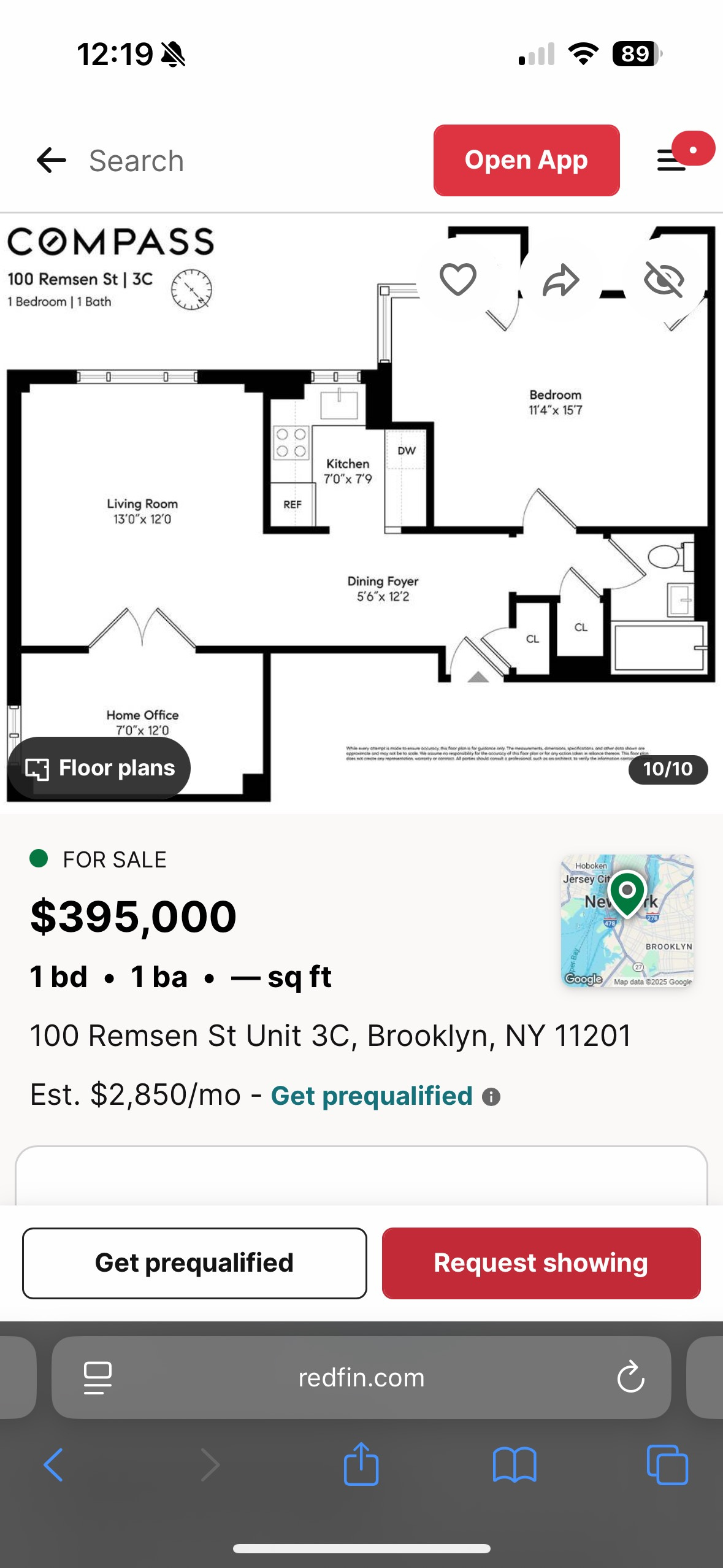
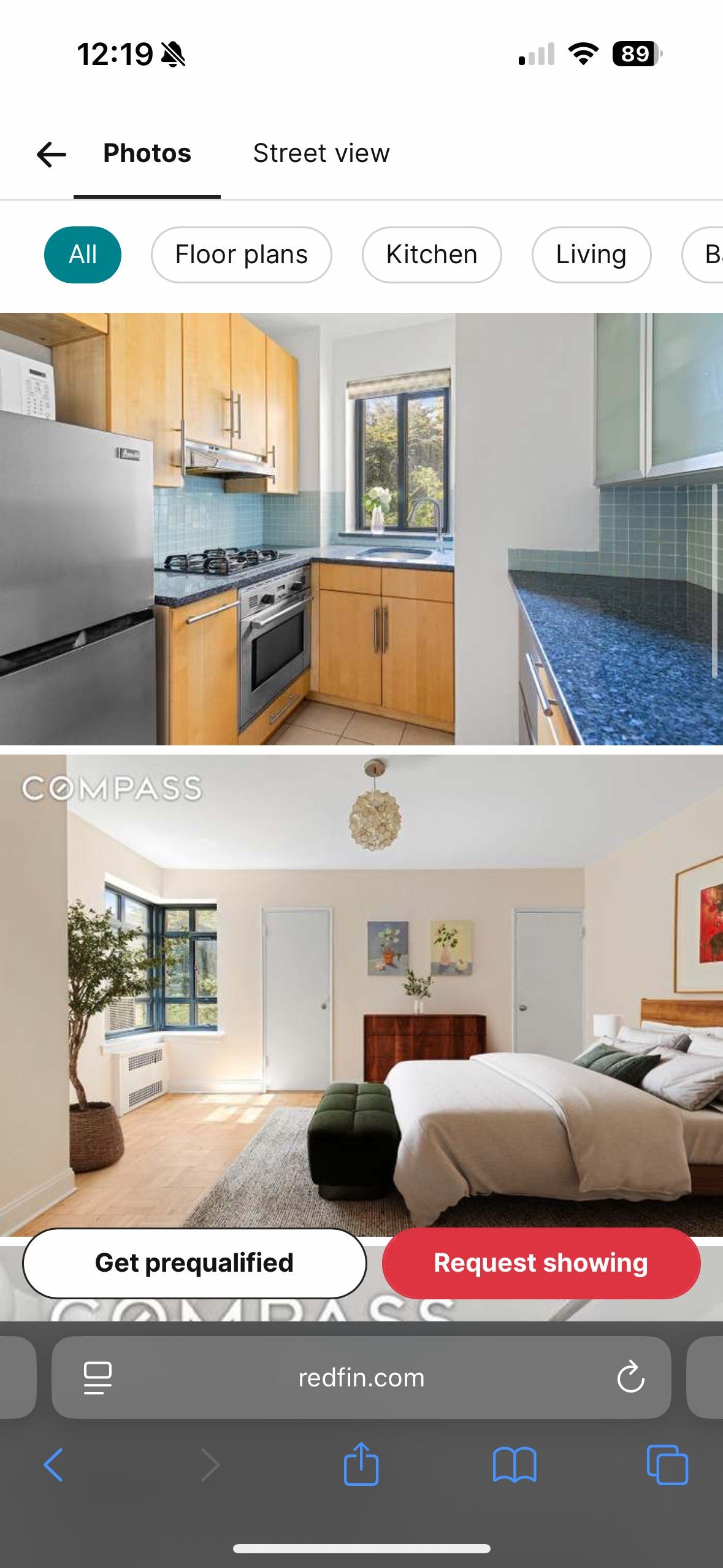
But the Faulknerian density of the list of benefits for the apartment reads like a warning sign: hidden in that dense paragraph of apartment perfection is the catch: “The co-op's land lease expires in December 2043 and is reason the apartment is priced so far under-market for a typical one bedroom.” Excuse me, what? The expiring land lease means that the owner of the unit does not have a guaranteed right to live in the unit after 2043. More than that, a bank will not issue you a mortgage to buy this property because of the short timeline for occupancy (you can’t get a 30-year mortgage on a home you can only live in for 18 years). So if you want to prepay your rent for the next couple decades, I’ve got the spot for you :)
But this raises the question - what is a land-lease? This is an arrangement in which the co-op shareholders own the building that they live in but not the land underneath, which belongs to a separate owner. The land lease is an agreement between the two entities that allows the co-op to occupy the site for a very long lease term (typically 50 - 100 years).
Even for the crazy world of New York real estate, this is quite rare - there are roughly only 100 land-lease buildings in the city. However, it appears that the expiration of the lease terms on these buildings does not necessarily mean the co-op owners need to vacate. Like most things in life, it is the opening of a negotiation. According to StreetEasy, there have been no instances of co-op owners becoming tenants or evicted after a land-lease runs out in NYC, but solutions to the land-lease question can come at a high cost. One co-op on the Upper West Side had to cobble together $185 million to buy the land underneath their building.
So it seems like the right buyer could take a calculated risk here: if you have the full purchase price sitting around, you could get a great deal on an apartment in Brooklyn Heights (amortized over 18 years, it comes out to $2K a month, which is much better than rent for a 1-bedroom in that neighborhood). And if the lease renegotiation is successful, you could have a much more valuable asset in 20 years.
It appears that the best way to get a deal in Brooklyn Heights is to already be rich. So THAT’S the catch…
City Speak #49
Bennett
No posts
Comments
Nothing yet. Say the first thing.
Sign in to join the conversation.