
Sometime around December 31st of 2023 or January 1st of 2024, I wrote the following in a list of resolutions: “Send newsletter monthly.”
Unfortunately, I have simply been too busy going to the gym (3x a week); learning Spanish, Russian & Aramaic; and maxing out my Roth IRA to hit that mark.1 But I am hereby inaugurating a new era in From The Last Archive with some research on the 1936 Olympic Games…
Thanks for reading From the Last Archive! Subscribe for free to receive new posts and support my work.
The Nazi Games
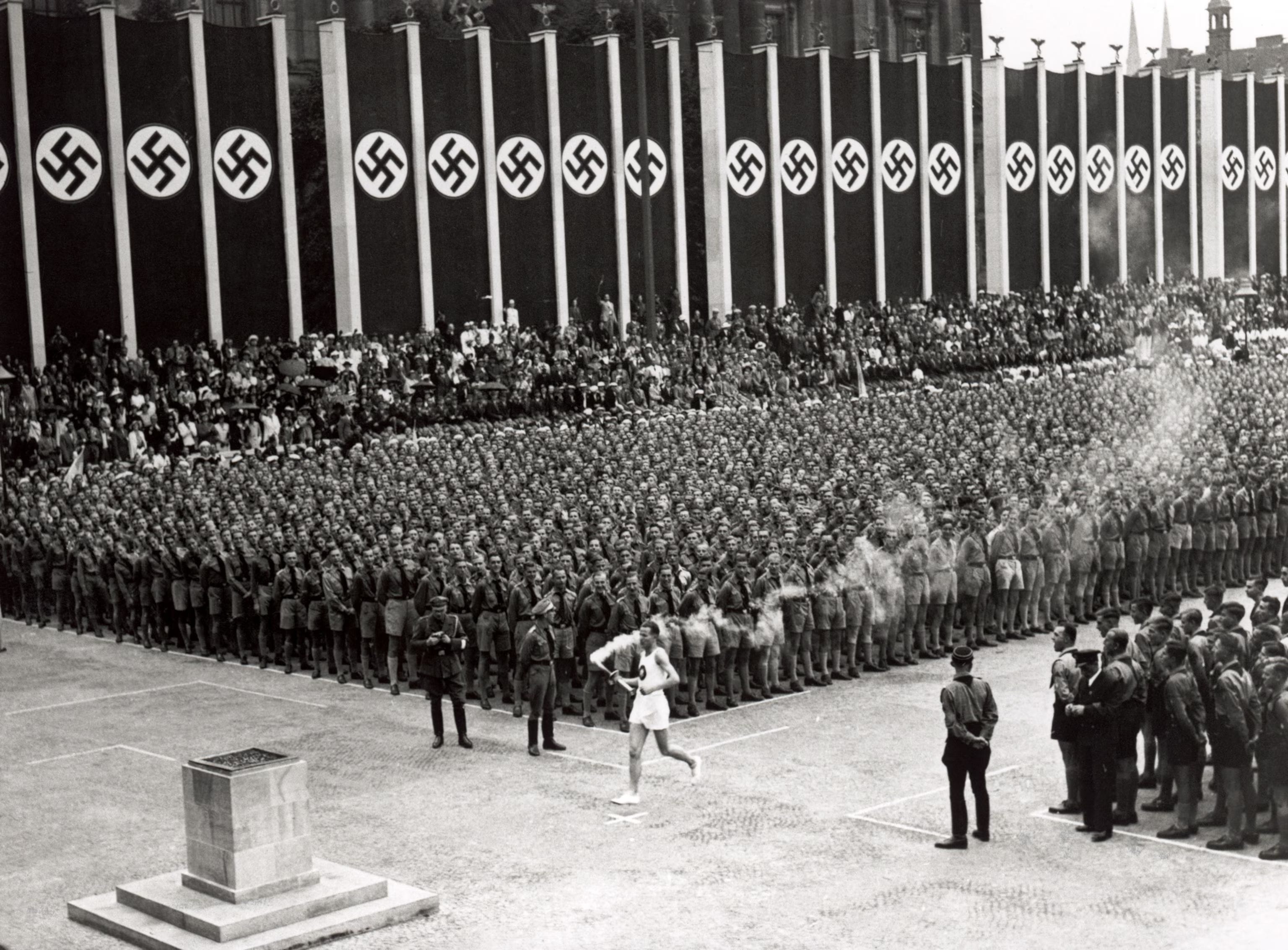
Earlier this year, I was assigned to co-write a project on the 1936 Olympic Games. Other than going to the gym (3x a week), I’ve never been much of an athlete or a sports fan. It was an odd fit, but I quickly became fascinated.
The 1936 Games were held in Nazi Germany. They’d been assigned to Berlin in 1931, two years before Hitler came to power. When he did, the Olympics forced a question: How would the world relate to Nazi Germany, and vice-versa?
Unfortunately, the burden of that question fell primarily to the International Olympic Committee — precisely the worst organization to call upon when faced with a tricky question of morals.
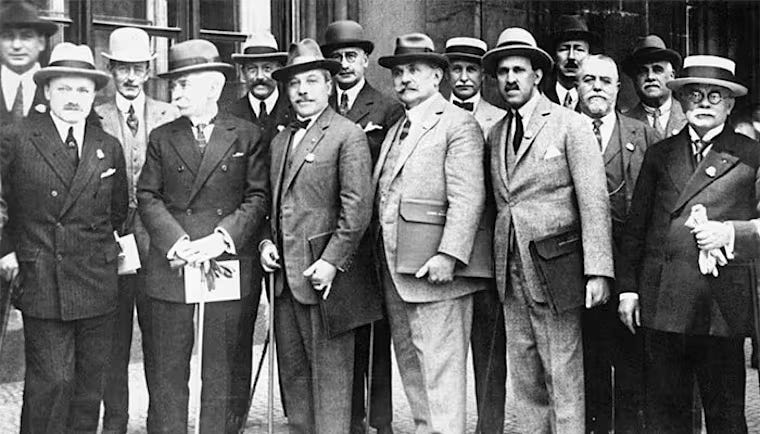
The IOC was essentially a gentleman’s club comprised primarily of the fuddy-duddiest members of Europe’s fading aristocracy. It was an artifact of the late-19th century European attempt to resurrect the ancient Games. They saw in their quadrennial sporting a chance to travel widely with like-minded men while providing each other with good excuses to avoid the wife. Rarely in their globetrotting did they meet an autocrat they didn’t admire. Strength, hyper-nationalism, and a strict hierarchy of power was baked into their concept of what it means to be human.
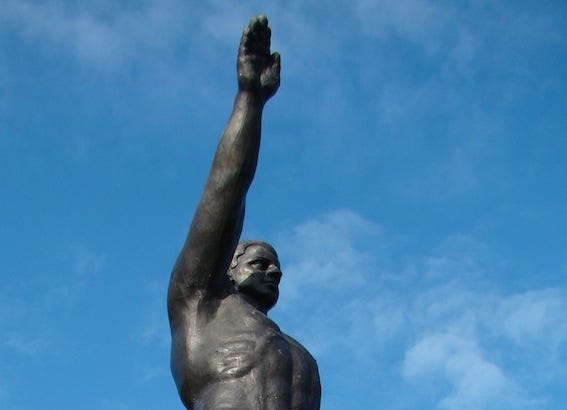
They were, in short, a group of men from around the world who were specifically inclined to miss the point when confronted with Nazism. Or, worse, to like what they saw. We cover all that in the first three episodes of our Revisionist History series here. But I think Jesse Owens inadvertently summed it up best when he reflected: “The official olympic salute is very similar to the Nazi salute, depending on the angle from which you happen to be watching.”
The IOC was how I found my footing in the 1936 Games. Not as a piece of sports history, but as an interesting case study in how people outside the geographic boundaries we typically associate with 1930s fascism responded to it early on. After the war, thinkers and writers tried to make sense of fascism’s rise using different lenses. Various methodologies yielded different analyses, but what emerged was a broader sense that this phenomenon was not specific to 1930s Europe. There is a certain type of person who, in the writer Dorothy Thompson’s words, “goes Nazi.” And the 1936 Olympics revealed that a lot more people around the world were willing to make compromises with Hitler’s regime than we typically allow.
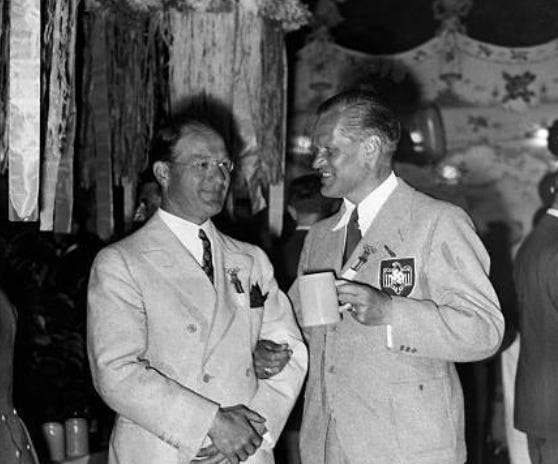
The story of those Olympics is almost always told as a prescient, miniaturized version of the WWII legend. It’s a tale of Americans triumphing over Nazism — as in bestselling books like Triumph: The Untold Story of Jesse Owens and Hitler's Olympics or The Boys in the Boat.
The true story of the 1936 Olympics, the one preserved in archives of the IOC, is a story of moral compromise. It’s about the kind of person unwilling or unable to see evil for what it is. I focused on this question specifically in a two-part biography of Avery Brundage, who rose to power in the Olympic movement by making sure the Nazi games went ahead. Bonus — if you listen, you’ll be treated to an extended exegesis of the 1912 Gold medal-winning poem: “Ode to Sport.”
Next up: A made-up story about Jesse Owens’s friendship with a Nazi.
If you’re looking for other things to listen to / watch; I highly recommend 60 Songs That Explain the 90s for a listen & La Chimera to watch.
There was some question from a test reader as to whether others would think I was simply bragging. I can assure you I’ve done none of these things, nor was ever actually intending to.
Comments
Nothing yet. Say the first thing.
Sign in to join the conversation.