
I wanted to write something about the news last week. Nazi analogies are only so helpful for understanding what’s happening today, but I’ve been thinking about the ‘36 Olympic Games again watching how differently athletes are responding to Trump this time around. The useful comparison, for me, is: How do people respond to authoritarianism at a point when no one knows exactly how bad it’s going to get?
**
On April 14, The Ohio State football team visited the White House for a celebratory meeting with President Trump. On January 20th of this year, they won the national College Football Playoff. "Turns out Jan. 20 was a big day for all of us,” Trump said in a speech. The crowd chuckled.
It was all pretty straightforward. Particularly considering, just hours earlier at the White House, Trump received Salvadoran President Nayib Bukele, who joined the President in defying the Supreme Court by refusing to free & return a mistakenly deported Maryland resident from El Salvador, where he’d been held in its infamous megaprison.
Before that meeting, Trump said to Bukele: “Home-growns are next. The home-growns. You gotta build about five more places. It’s not big enough.”

Anyone looking for a bellwether of where we’re at re: normalizing Trump should pay attention to how differently professional athletes are treating him in his second term than in his first. NFL players kneeling in protest of racial injustice seemed to enrage him like little else in those years. “Wouldn’t you love to see one of these NFL owners, when somebody disrespects our flag, to say, ‘Get that son of a bitch off the field right now’,” he said, in his signature combination of bile and wistfulness. He mused on whether protesting athletes should stay in the country. Athletes returned fire. When Trump announced he wasn’t watching the NBA any more, Lebron James said good riddance. In 2018, when the Boston Red Sox won the World Series, MVP Mookie Betts didn’t go to the White House.
But now, things have changed. Earlier this month, Betts was there with the Dodgers. His team mate, Kike Hernandez, said the President had a “hell of a grip.” One month earlier, the Trump administration removed a Defense Department website honoring fellow Dodger Jackie Robinson. When it was restored, the letters ‘dei’ had been added to the URL.
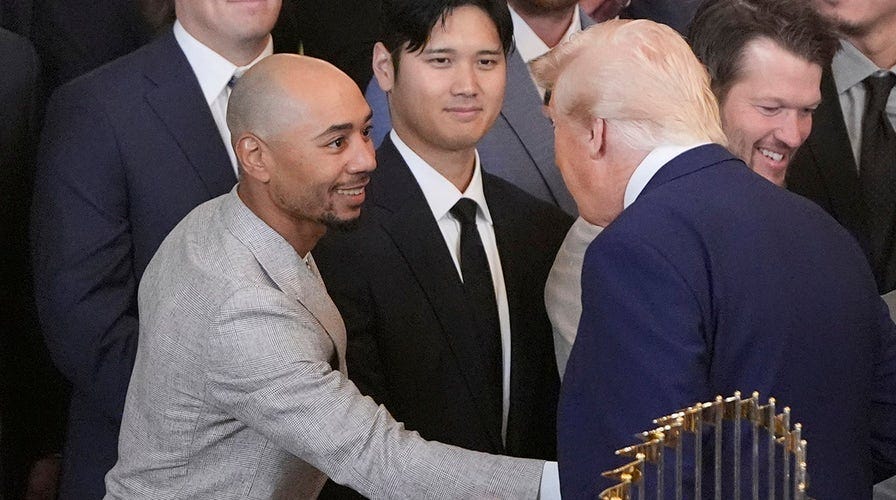
Betts shook Mr. Trump’s hand. “No matter what I choose, somebody is gonna be pissed,” he told the Los Angeles Times, in the verbal equivalent of a shrug. “This is not about me. This is not about politics.”
There is no such thing as an apolitical visit to the White House right now. It matters how any public figure or institution responds to the administration as it tests the limits of our democracy. A good case study of why is the 1936 Olympic Games.
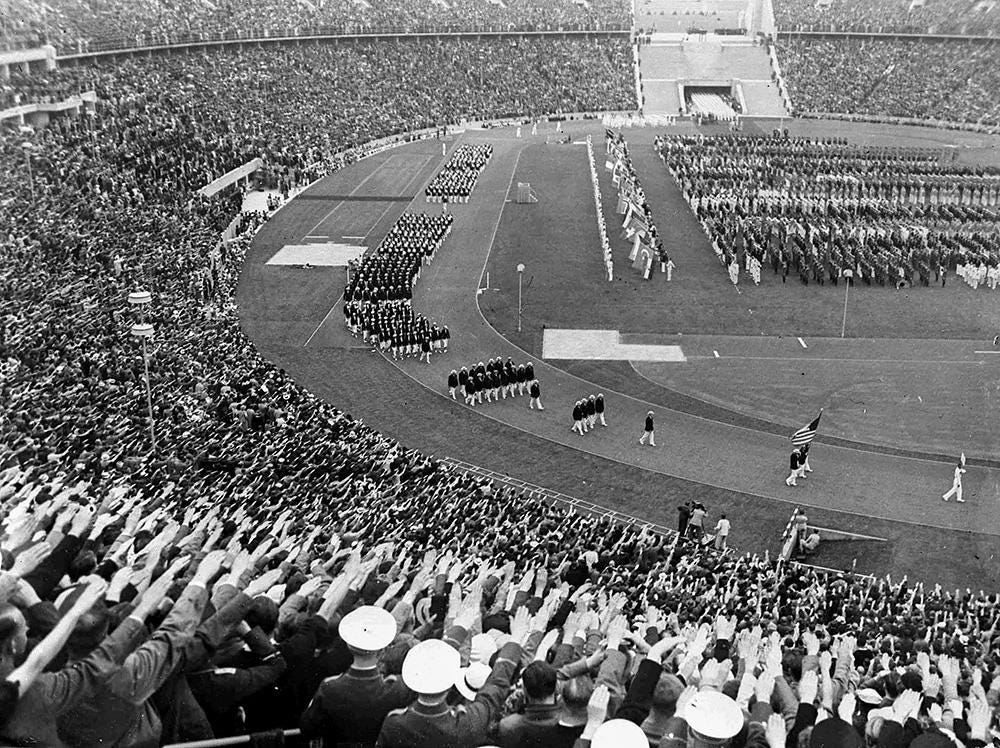
Last summer, on the Revisionist History podcast, we did a nine-part series about those Games. Those were the Olympics awarded to Germany before the rise of Adolf Hitler. When he came to power, the world had to reckon with what it would mean to go to the Nazi Games. One opponent declared that going ahead with the games as planned would mean “giving American moral and financial support to the Nazi regime, which is opposed to all that Americans hold dearest.” The International Olympic Committee — and the Americans in particular — engaged in sleight of hand attempts to whitewash the Games. Promises to include a token Jewish athlete were secured from the Nazis. Jewish sport leaders were interviewed under duress while Nazi handlers looked on. And the Nazis engaged in a rigorous campaign to present a false front to the rest of the world, which they largely pulled off thanks to the complicity of a few Americans who were less bothered by Nazi racial policies than they were by the idea of stymying their own ambition. The Games went ahead.
In the lead-up to the Games, athletes were forced to reckon with a heavy moral burden. People who had trained their whole life for one sporting event suddenly had to weigh the impact of their conferred glory on geopolitics. One of them was a young man who, like the 2025 College Football Playoff National champions, attended Ohio State University. His name was Jesse Owens.
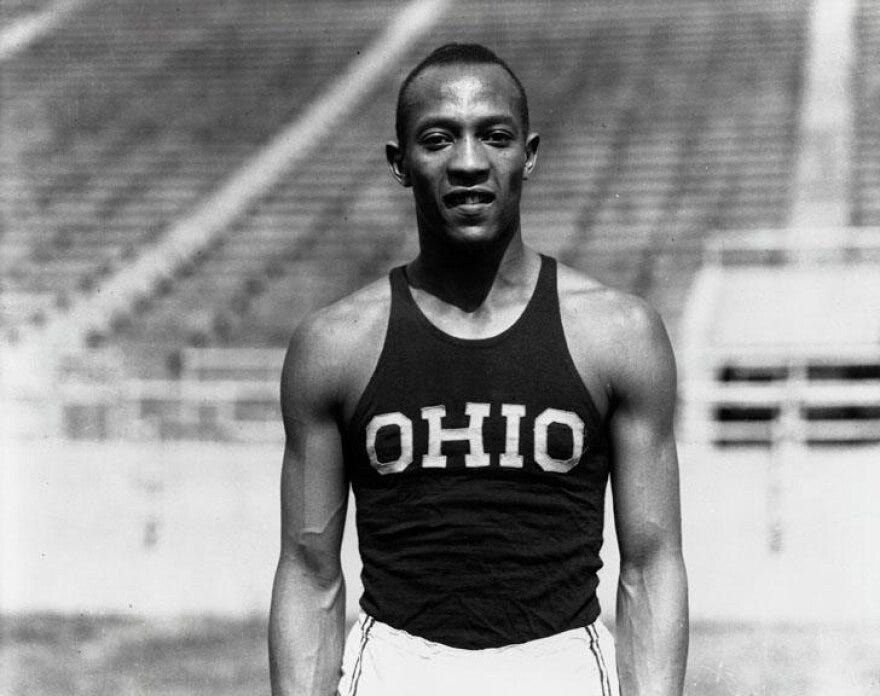
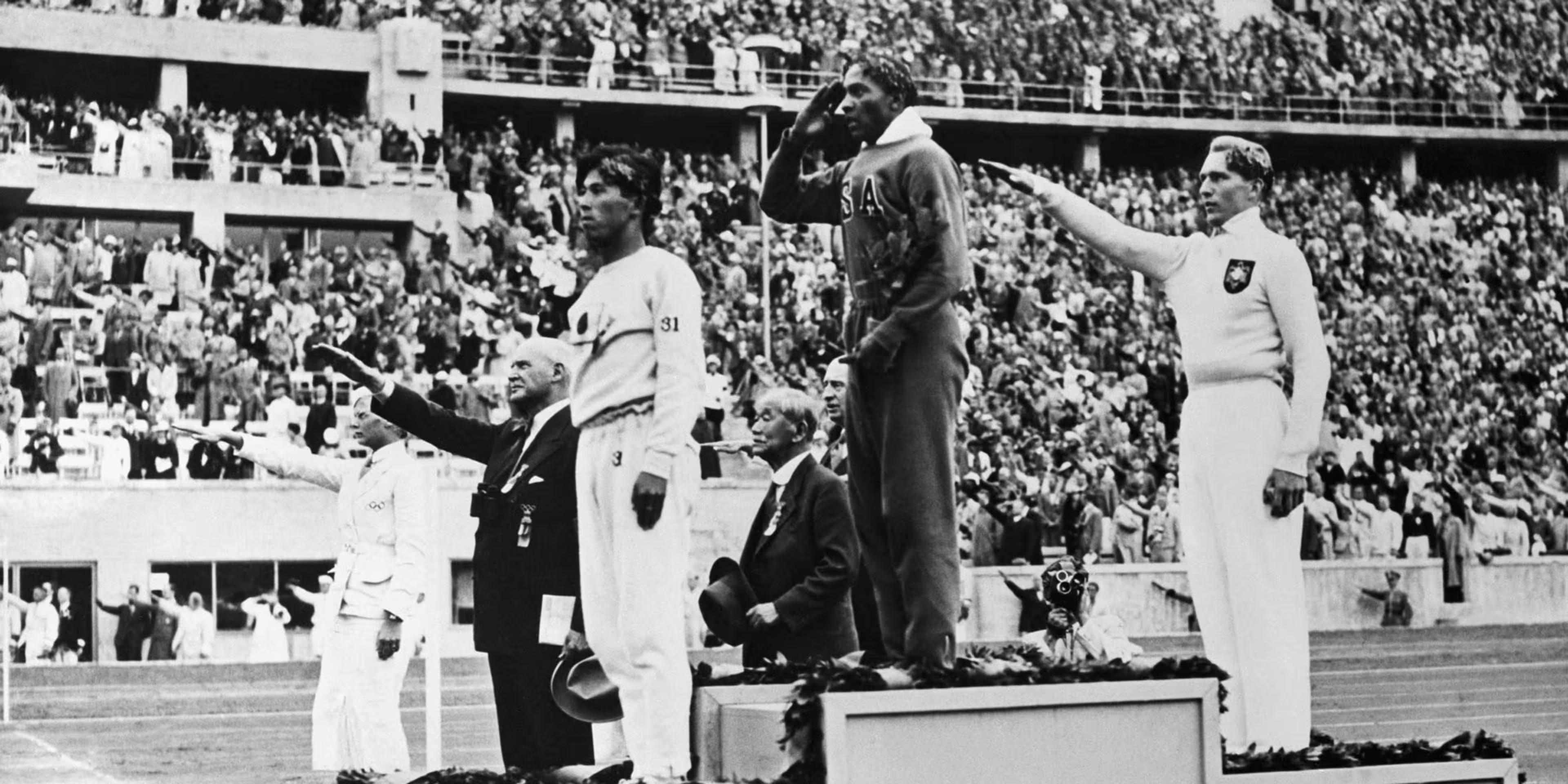
Jesse Owens was already a star before the 1936 Games. On a single day in 1935, while suffering from a bad back, the 21-year-old track star had set three world records in the span of an hour. He was also Black. All this made the question of his participation particularly fraught. At first he seemed willing to boycott. “If there is discrimination against minorities in Germany then we must withdraw from the Olympics,” he said, early on in a radio interview. But his coach implied that he would become a “forgotten man” if he boycotted the Games. In the end, he went.
Walter White, the President of the NAACP, learned of Owens’s intention. “I fully realize how great a sacrifice it will be for you to give up the trip to Europe and to forego the acclaim which your athletic prowess will unquestionably bring you,” he wrote in a letter. “On the other hand, it is my firm conviction that the issue of participation in the 1936 Olympics, if held in Germany under the present regime, transcends all other issues…If the Hitlers and Mussolinis of the world are successful it is inevitable that dictatorships based upon prejudice will spread throughout the world, as indeed they are now spreading.”
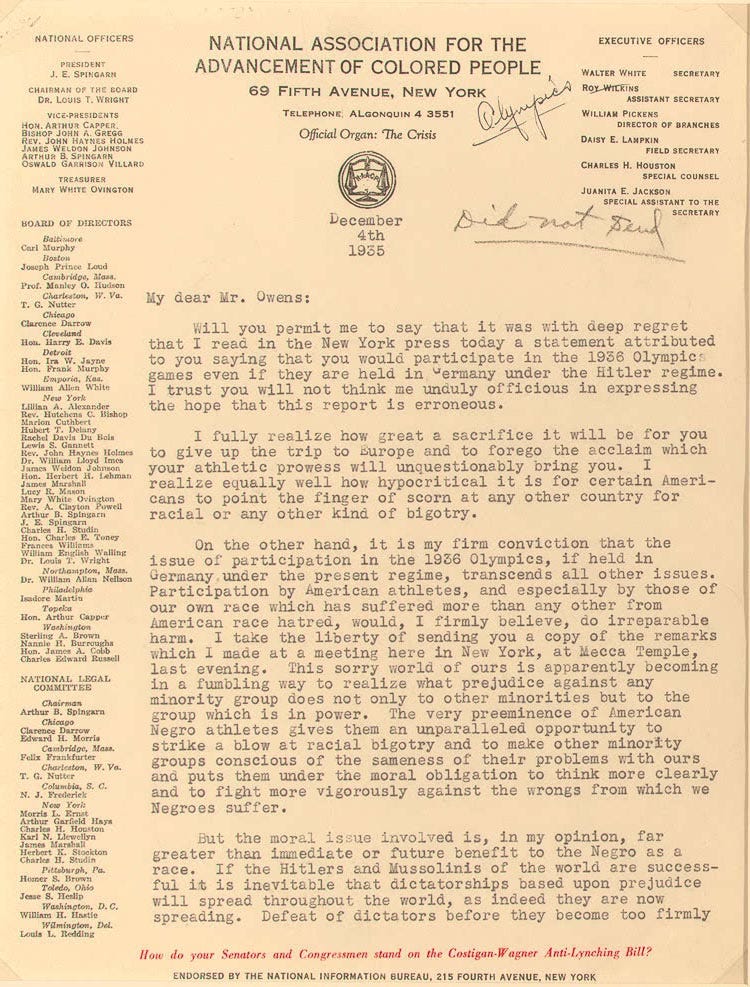
White didn’t send that letter to Owens, opting for a shorter telegraph instead. Owens went to the Games and made history. And the athletes who refused to participate fulfilled Owens’s coach’s promise — they were forgotten. Have you heard of Milton Green or Norman Cahners? They boycotted on principle. And it cost them.
The Olympics went on without them. They gave the Nazis meaningful cover for early military aggression. And they were a huge propaganda coup for Hitler’s regime. “Foreigners who know Germany only from what they have seen during this pleasant fortnight can carry home only one impression,” one journalist wrote in the New York Times. “It is that this is a nation happy and prosperous almost beyond belief; that Hitler is one of the greatest, if not the greatest, political leaders in the world today, and that Germans themselves are a much maligned, hospitable, wholly peaceful people who deserve the best the world can give them.” We all know what happened next.
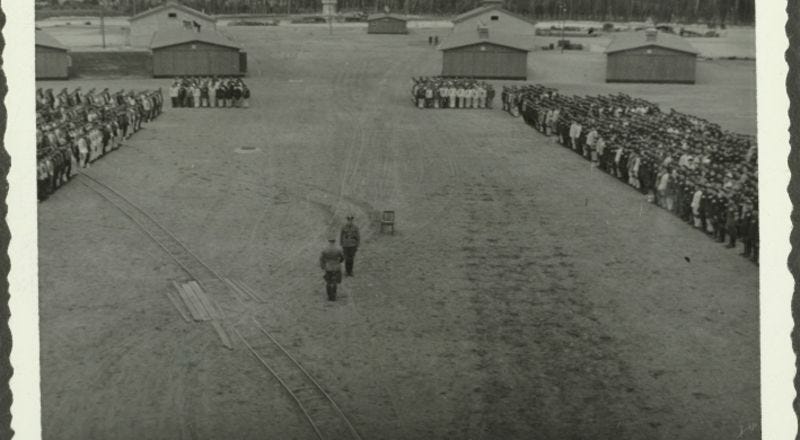
The stakes of skipping a White House visit in 2025 are different than refusing to attend the Olympics in 1936, just as our situation now is meaningfully different than Germany’s in the 1930s. Athletes who missed the ’36 Games would have had to wait until after the war for another — at which point, they’d likely be past their prime. Athletes like Betts, by comparison, would risk reputational hazards, possibly major endorsements like his Jordan Brand deal, and, as Betts pointed out, detracting from his team’s accomplishments by drawing media attention to himself. That’s all significant, too.
It’s a lot to ask of anyone. But showing up to the White House as it conducts its daily business of stomping out our civil liberties, defying the courts, and toying with the idea of deporting citizens is at best an act of willful ignorance. At worst, it is an act of complicity that is dire precisely because it appears so low stakes. It seems to accept an administration that is unmaking this country. That doesn’t make it easy to resist. But it stands for the kind of choice many of us may soon have to make. Jesse Owens or Milton Green; Columbia or Harvard; uneasy complicity or giving up something you want — maybe something you’ve worked for your whole life.
Jesse Owens’s post-Olympic career can be read as a long effort to rationalize his decision to participate in the Nazi Olympics so enthusiastically (among other things, he’d called Hitler a “man of dignity”). He embarked on a lifelong career of retelling the story of those Games as a pure victory (we did a two-part episode on this, starting here): How his triumph at once flew in the face of Hitler’s racism (this wasn’t strictly true — the success of Black athletes encouraged Nazi ideas about their “jungle inheritance”) and how his friendship with a Nazi long jumper proved that even Nazis could be redeemed (this story was largely a fabrication). This suggests, I think, some lingering inner turmoil about exactly how glorious any participation in a Nazi Games could be. What does a gold medal mean when it’s held in the hands of a regime whose instinct is to tarnish and demean?
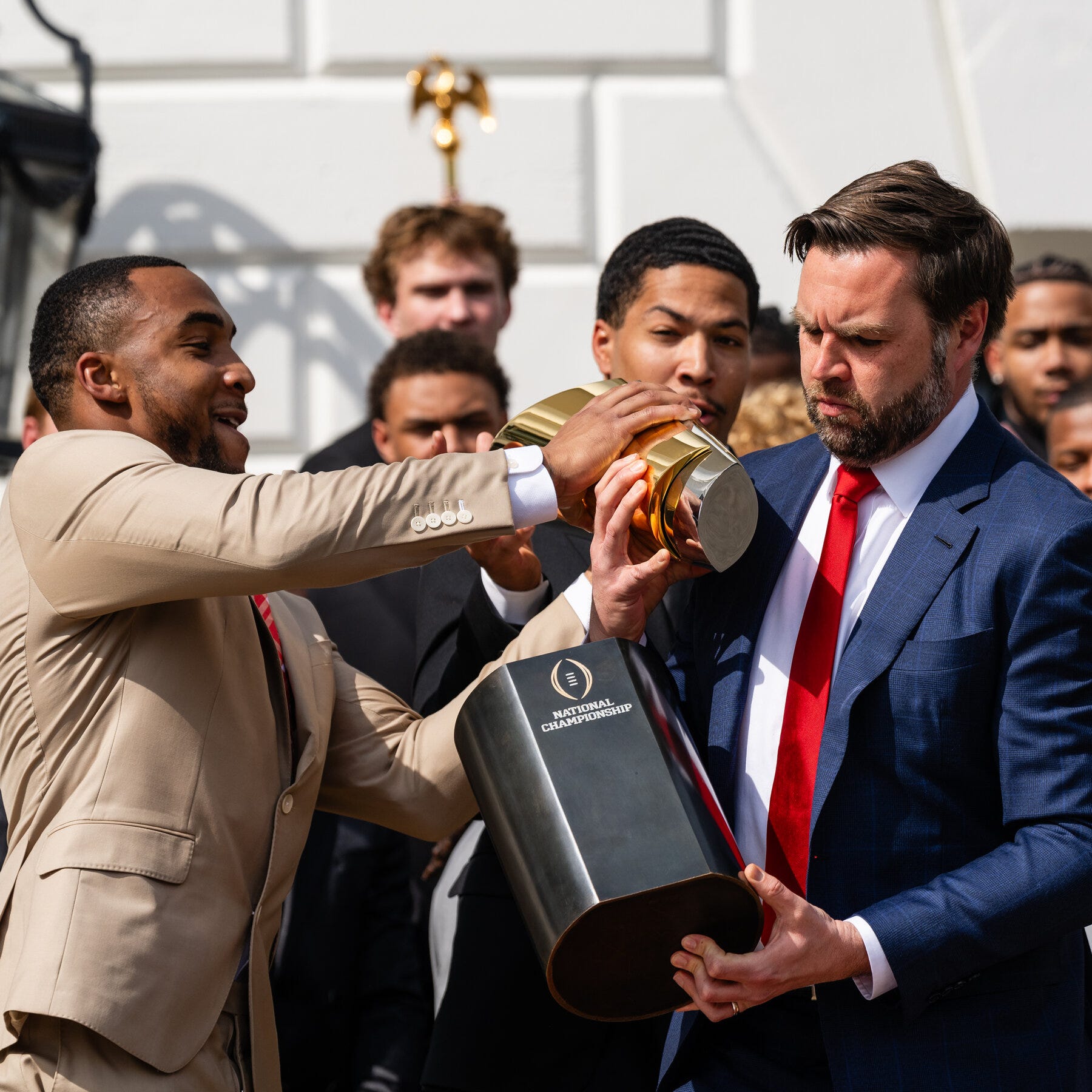
The Ohio State football team looked proud to be at the White House, standing behind the President of the United States and their national trophy. At the end of their visit, they let Vice President J. D. Vance hold it. He hoisted their trophy aloft for a photo. It came apart in his hands.
No posts
Comments
Nothing yet. Say the first thing.
Sign in to join the conversation.