
I work with real estate investors every day. Investors in Chicago, across Illinois, and all over the country. And right now there is one thing coming up in almost every conversation I have.
Home equity lines of credit on investment properties.
Here’s why. Most investors bought or refinanced during COVID and locked in rates at 3%, sometimes lower. They’re not giving those up. And they shouldn’t. So when they want to buy the next property, a cash-out refi is basically off the table. That would mean wiping out the rate they worked hard to get and replacing it with something two or three points higher.
A HELOC solves that. You pull equity out, the existing loan stays exactly where it is, and you use the cash to fund the next deal.
The problem is most banks make this way harder than it needs to be. Long timelines, stacks of paperwork, W-2s and tax returns that make investor income look terrible on paper. And after all that, a lot of investors are getting denied anyway.
I had a client come to me who had spent three full months working with another bank on a simple $150,000 HELOC for a rental property. Three months. They couldn’t get it done. We closed in less than two weeks.
If you’ve been sitting on equity and wondering how to access it without wrecking your existing financing, this is worth reading.
Why the Traditional Route Keeps Failing Investors
The standard bank process for a HELOC was built around W-2 employees. Salary comes in, taxes are straightforward, underwriting is easy. Investors don’t work like that.
Depreciation lowers taxable income on paper. Multiple properties create complex returns. And if you hold in an LLC, a lot of lenders won’t even touch it. So what ends up happening is investors get pushed through a process that was never designed for them, and then they wonder why it falls apart.
There’s also the timeline problem. Traditional banks drag underwriting out for weeks. By the time you get an answer, the deal you were trying to fund has already moved on.
The options I’m working with right now are built differently. Faster approvals, flexible income documentation, and in some cases no appraisal at all.
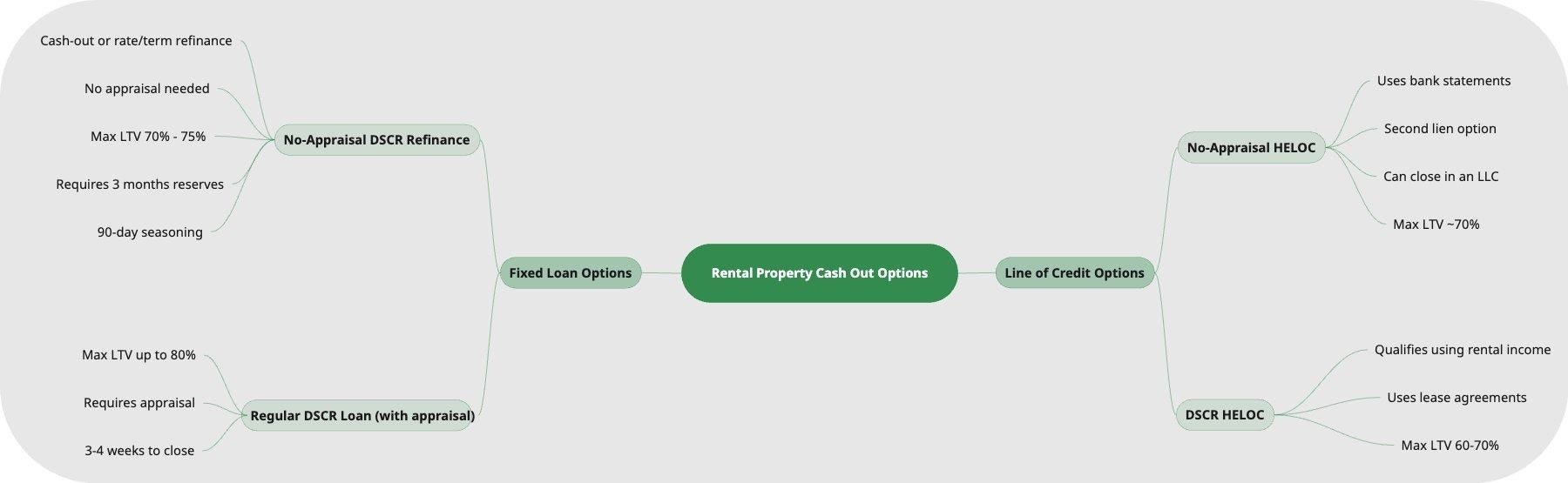
Overview of rental property cash-out options — fixed loan and line of credit side by side.
The Two HELOC Options I’m Placing Right Now
There are two main options I’m using for investment property HELOCs, and they work differently depending on your situation.
No-Appraisal HELOC
This one qualifies using bank statements. No tax returns, no W-2s, no pay stubs. It can close in about a week. Max LTV is around 70%, and it can close in an LLC, which matters a lot if that’s how you hold your properties.
There’s also a soft credit check upfront, so you find out almost immediately if you qualify. No waiting days in underwriting to find out the answer is no.
DSCR HELOC
This is basically a DSCR loan and a HELOC combined into one product. Instead of your personal income, it qualifies based on the rental income the property generates. We use the lease agreements and existing rent. Max LTV is around 60 to 70%. Really useful if you have a lot of rentals but your personal income looks complicated on a tax return.
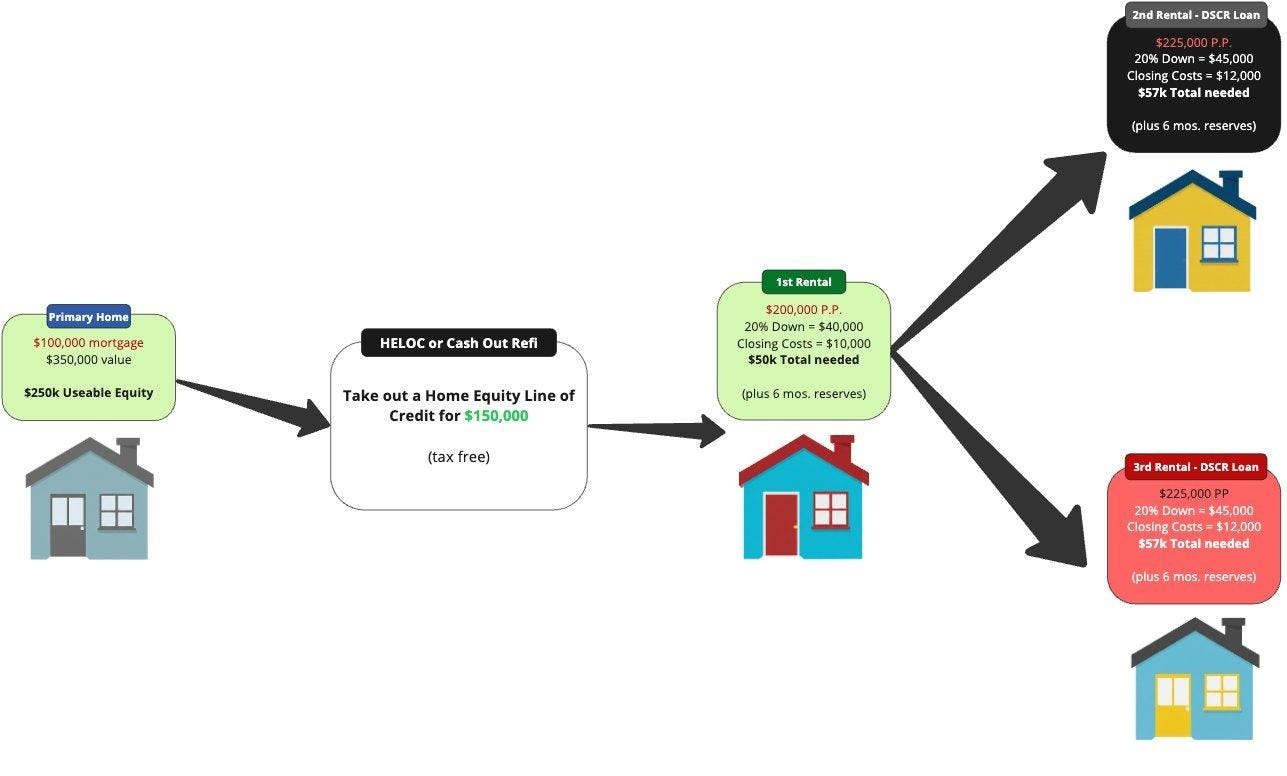
How a $150K HELOC from a primary home can fund the down payments on multiple rental properties.
How Smart Investors Use This to Keep Scaling
Equity sitting in a property isn’t doing anything. It’s not cash flow. It’s not another door. The investors who actually build wealth are the ones who figure out how to keep recycling it.
The loop works like this:
Buy a property in the right niche for your market
Study the market so you know what actually adds value
Force appreciation through smart, targeted improvements
Pull equity out through a HELOC and keep the original loan intact
Use that capital to fund the next deal, then repeat
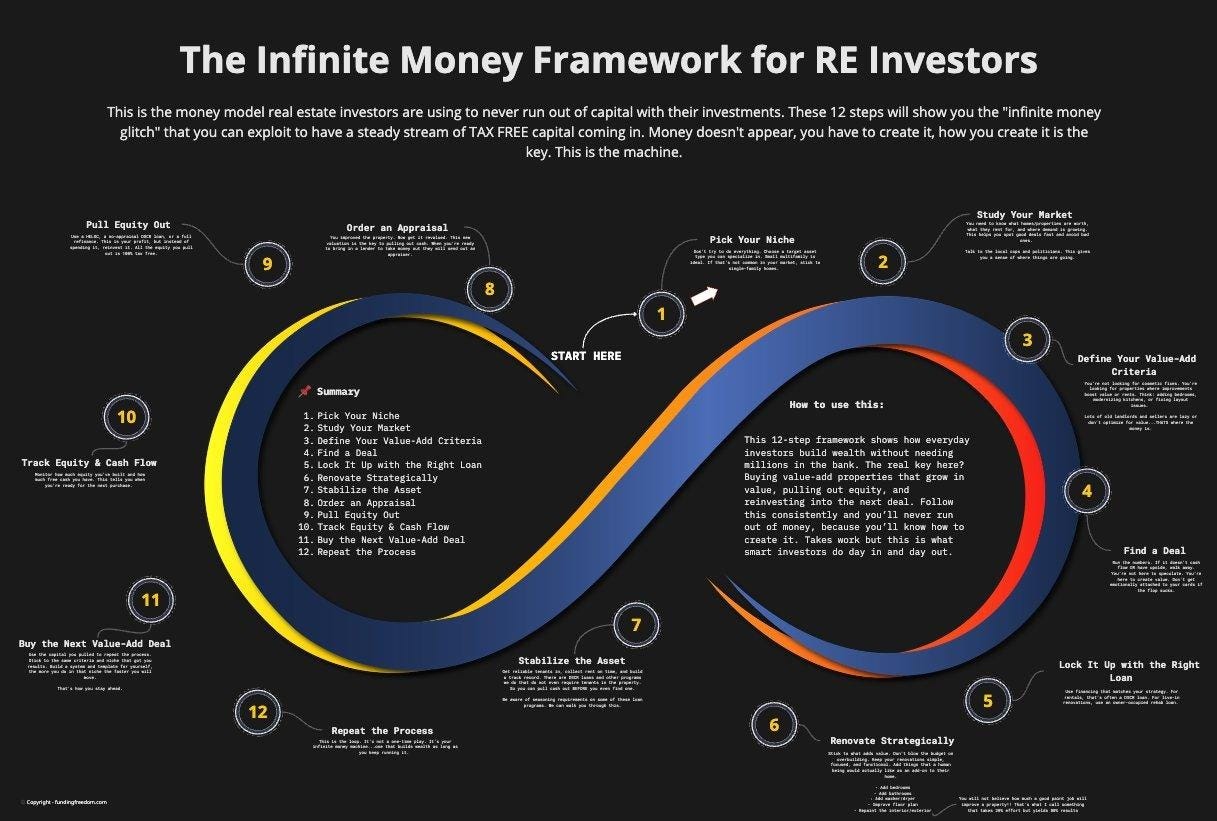
The 12-step framework investors use to never run out of capital, the equity loop in action.
The HELOC is the engine in that loop. It lets you access what you’ve already built without resetting your financing every time. So instead of starting from scratch on every deal, you’re compounding off what you already own.
That’s why this is the conversation I keep having. Investors who bought right during COVID are sitting on significant equity. They have the asset. They have the leverage. They just need a clean way to access it.
Two Ways to Move Forward
If you have a property with equity and want to talk through what your options actually look like, reach out and we’ll figure it out together. No pressure, just a straight conversation.
And if you want to see right now if you qualify for the HELOC, here’s the link to check: HELOC Application Link
The soft check at the front means you’ll know almost immediately if it’s a fit. No month-long underwriting process just to find out the answer is no.
Talk soon,
Ben Stef
Mortgage Advisor | NMLS# 2018674
Comments
Nothing yet. Say the first thing.
Sign in to join the conversation.