
This is one of those DSCR scenarios that sounds made up until you actually see how the loan works.
We’re about to close a loan right now for an investor buying a roughly $600,000 three-unit property
And here’s the crazy part…
He has a job.
He makes money.
But he’s paid mostly in cash.
So on paper?
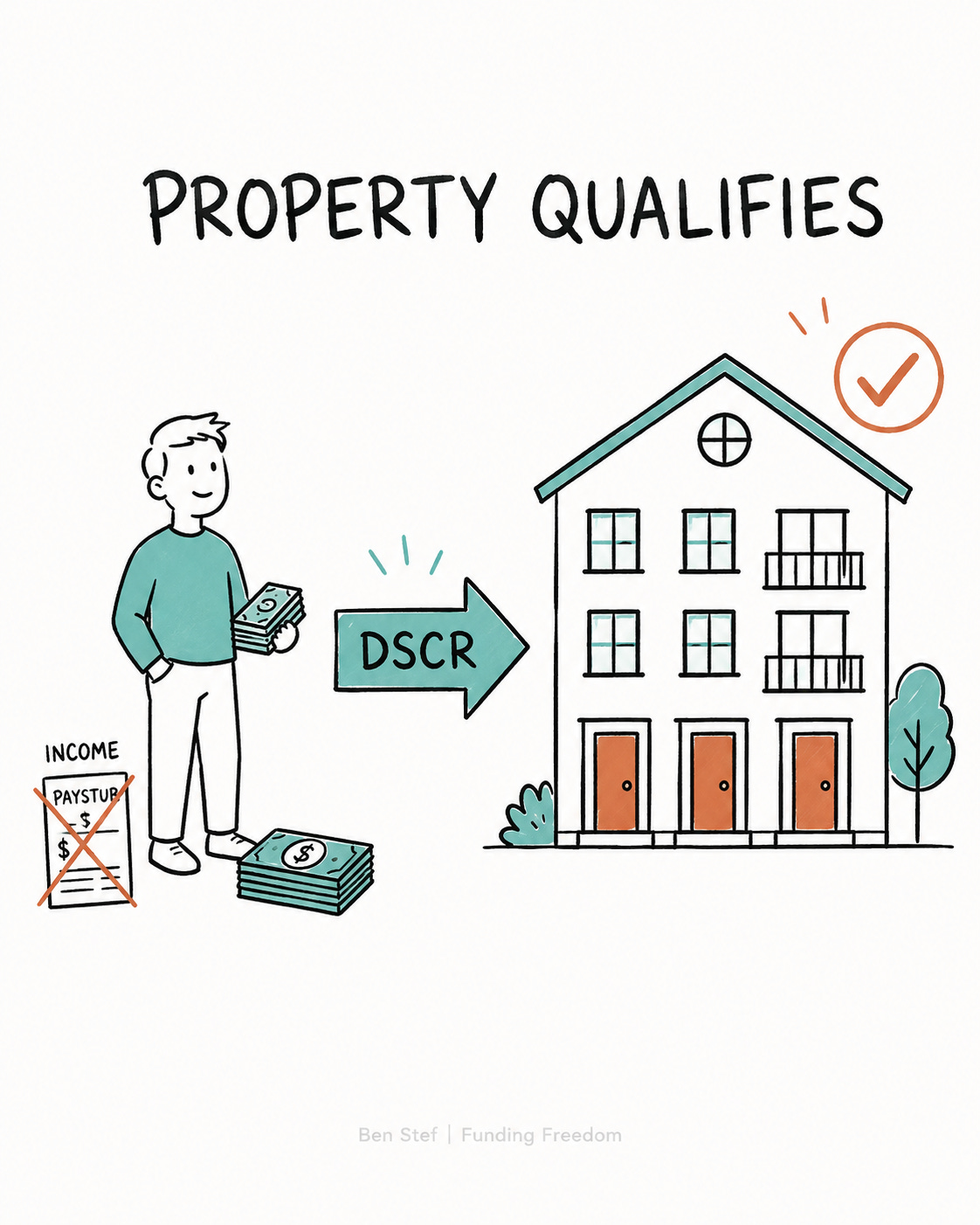
His income basically doesn’t exist.
With a normal mortgage, that’s obviously a huge problem.
With this DSCR loan, the lender isn’t qualifying him based on his job income.
They’re qualifying the property
This is probably the part most investors don’t realize.
When you’re purchasing a rental property using a DSCR loan, the lender can look at the market rents from the appraisal
The appraiser goes out and says:
Based on comparable rentals in this area, this is what these units should rent for
That’s the number the lender can use to calculate whether the property qualifies.
So if one or more units are vacant?
That doesn’t automatically kill the deal.
You don’t necessarily need every unit occupied before closing. And the current tenant’s rent may not be what matters
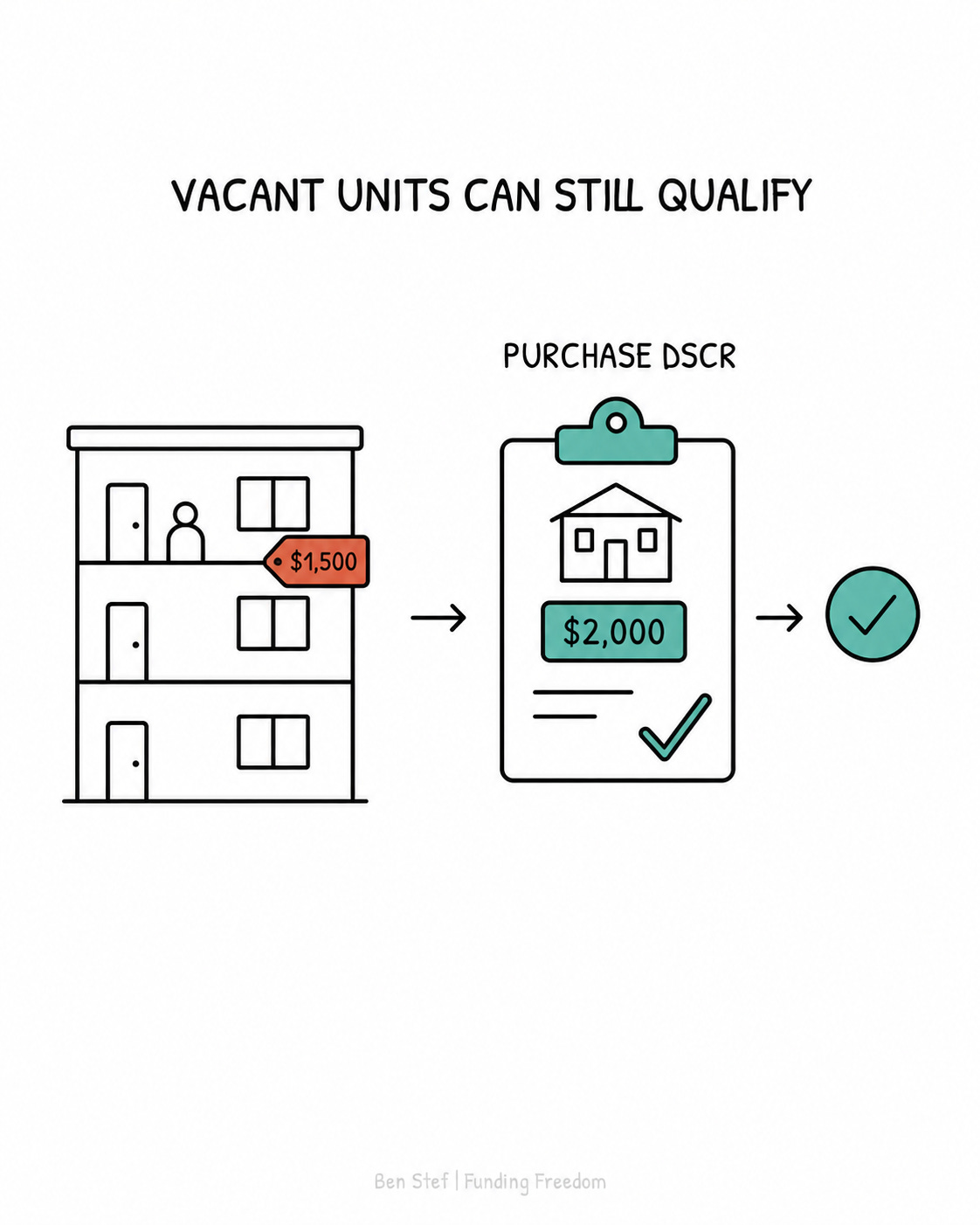
Let’s say a tenant is currently paying:
$1,500/month
But the appraisal says market rent is:
$2,000/month
On a DSCR purchase, the lender can qualify the deal using the appraiser’s market rent.
That’s a HUGE distinction.
Because investors sometimes look at an occupied property and immediately think:
“There’s no way this qualifies because the tenant is paying too little.”
Maybe.
Maybe not.
You have to look at the appraisal.
This is where you have to be careful.
On many DSCR refinances, the lender is going to compare the actual lease to the appraiser’s market rent and typically use the lower qualifying amount, subject to the specific program guidelines.
So don’t take the purchase rule and automatically assume it works the exact same way on a refinance.
The loan type matters.
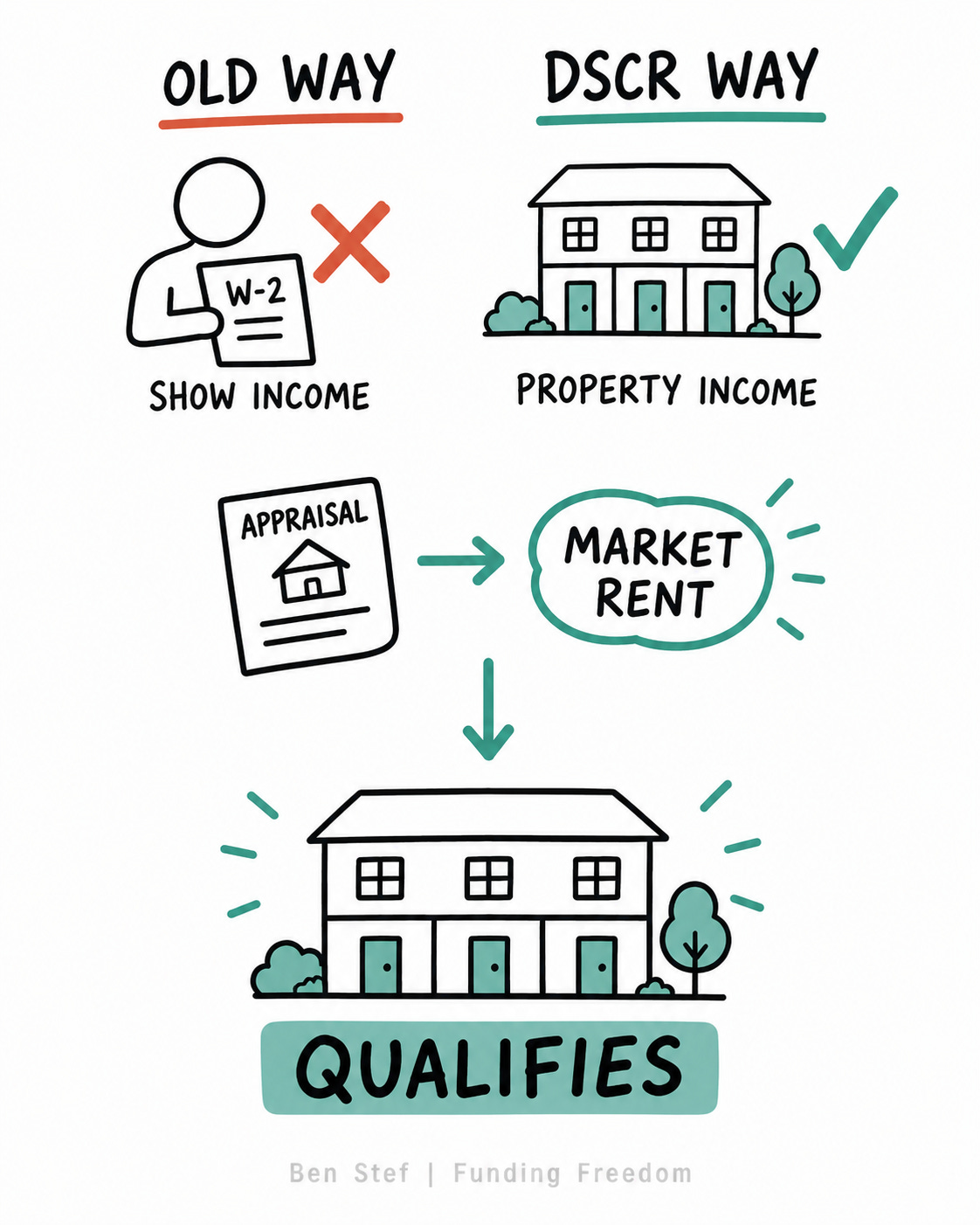
This borrower couldn’t walk into a normal conventional lender and show them nice W-2 income or beautiful tax returns.
It’s just not how he gets paid.
But he’s buying an income-producing property.
So instead of asking:
“How much money does this guy show on his tax returns?”
The DSCR lender is basically asking:
“Does this property produce enough rental income to support the mortgage?”
Very different question.
And in this case, the appraisal provides the market rent needed to qualify the property.
That’s how we’re able to get this deal to the finish line.
And I get it.
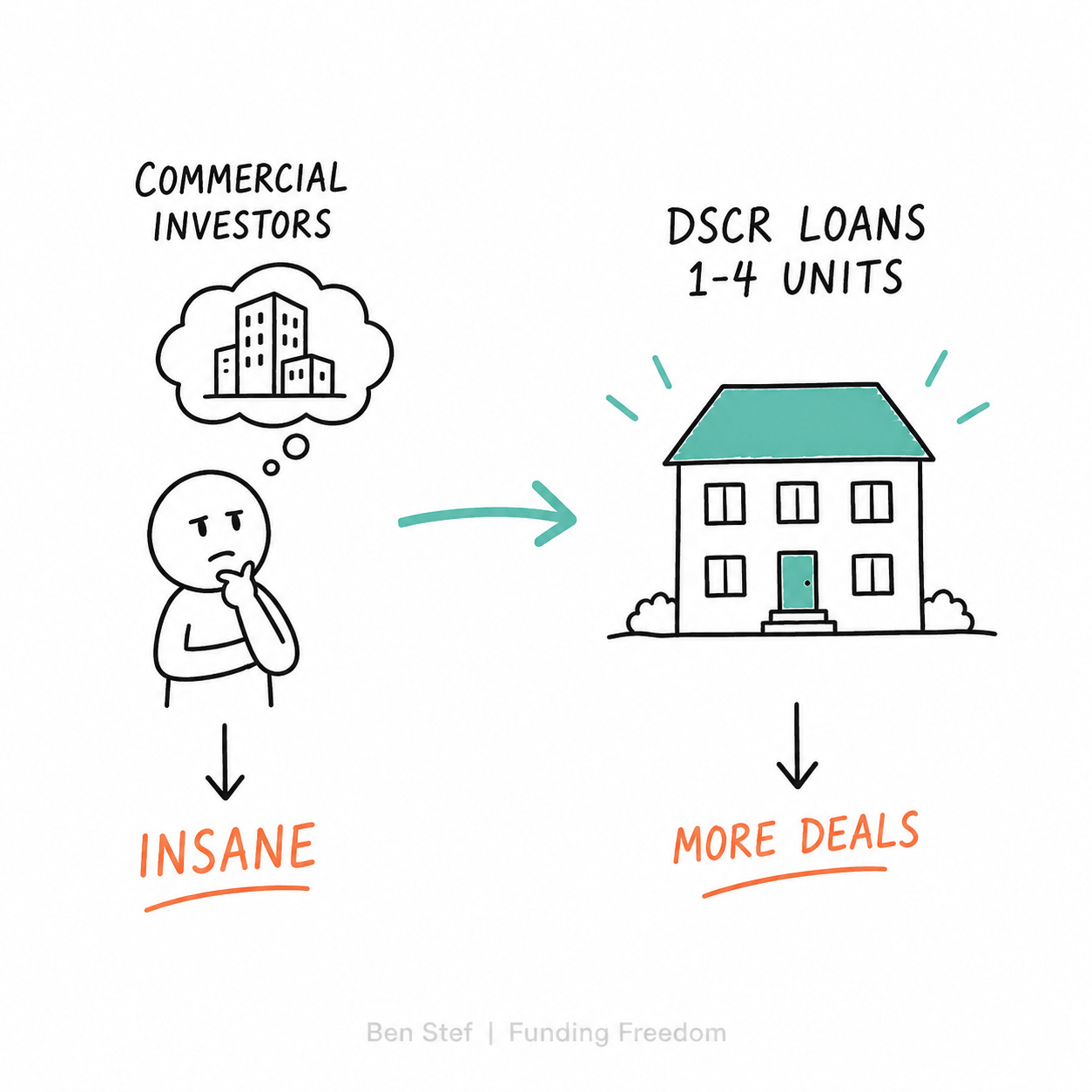
If you’ve spent most of your time around larger commercial loans, some DSCR rules can sound ridiculous.
Vacant units…
No traditional personal income qualification…
Using residential appraisal market rents…
Borrower buying a $600,000 property even though his income situation would be extremely difficult for a conventional loan…
Seriously?
But these are the rules of the program.
And if you’re buying 1-4 unit investment properties, understanding these little rules can completely change which deals you think are financeable.
Don’t look at a property and immediately assume:
“The rents are too low.”
Find out what the market rent is.
Don’t immediately assume:
“I can’t qualify because my tax returns don’t show enough income.”
Find out if the property can qualify.
And don’t immediately assume a vacant property can’t get financed.
With the right DSCR program, it absolutely can.
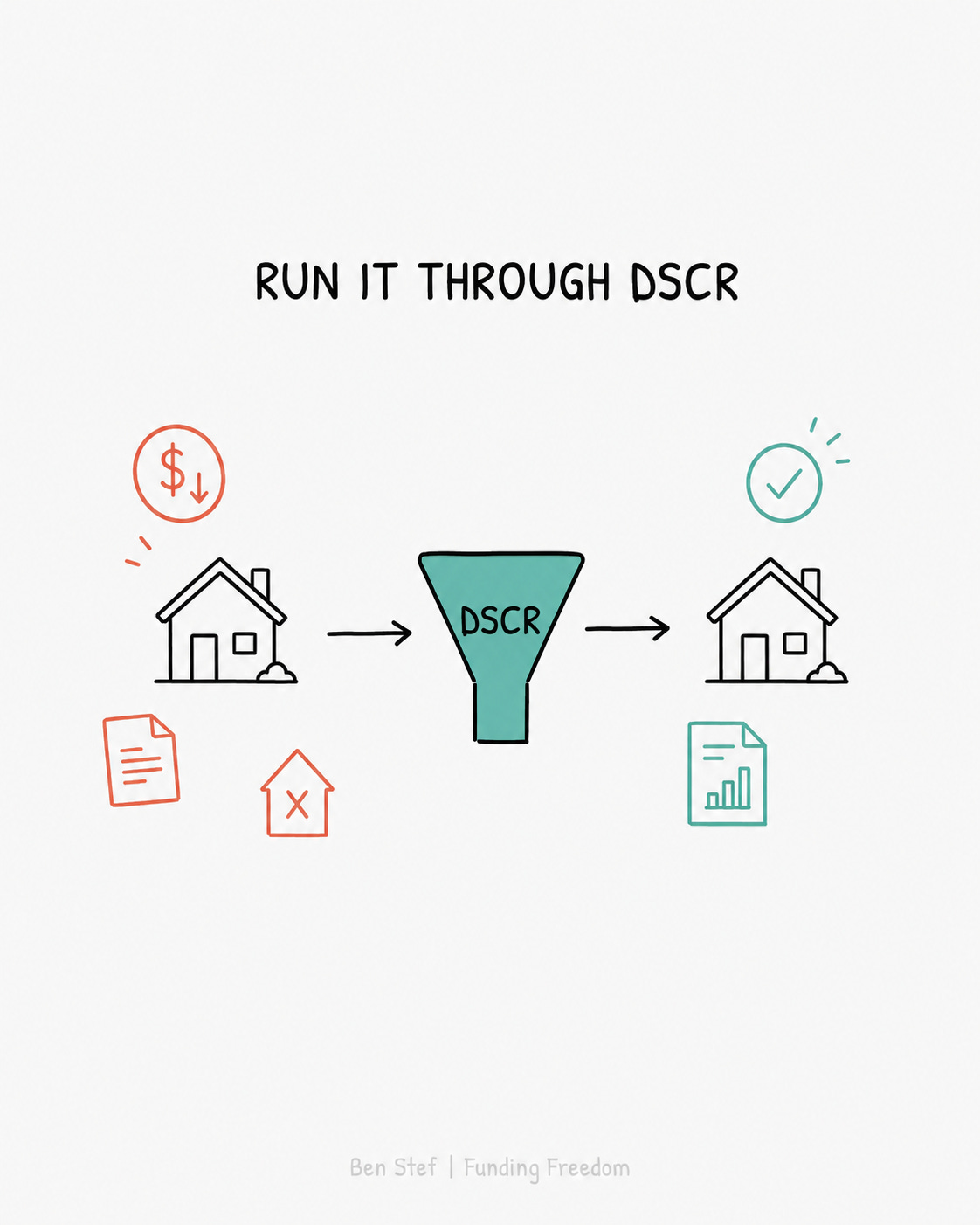
Sometimes a deal that looks impossible under normal mortgage rules looks completely different once you run it through DSCR.
If you have a DSCR scenario you’re trying to figure out, just reply to this email and send me the basics.
Or if you want to talk it through, you can book a quick call with me here:
And if you want a deeper breakdown on DSCR loans, here’s my most recent YouTube video:
By the way, I was recently featured on American IRA’s Webinar. Huge thank you to their team for having me on.
We covered how investors are using DSCR loans, DSCR HELOCs, and hard money to buy properties, access equity, and keep deals moving without relying on traditional income or tax returns. We also broke down what lenders actually look at and how investors can tap equity without giving up a low-rate first mortgage.
No posts
Comments
Nothing yet. Say the first thing.
Sign in to join the conversation.