
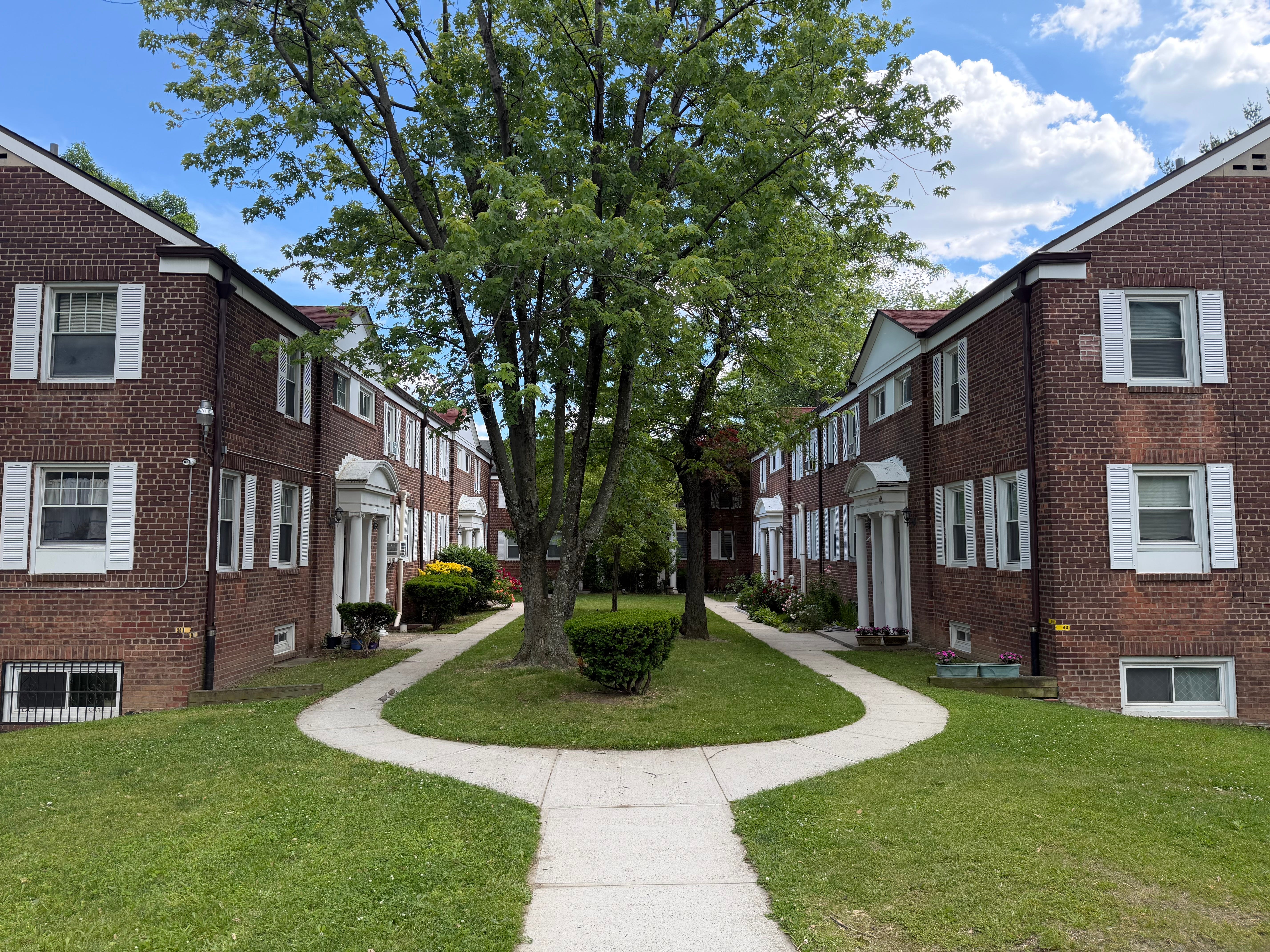
Look closely at the peripheral neighborhoods of practically any major American city — the inner-ring suburbs built out in the 1940s and ’50s — and you’re likely to see a distinctive type of apartment complex.
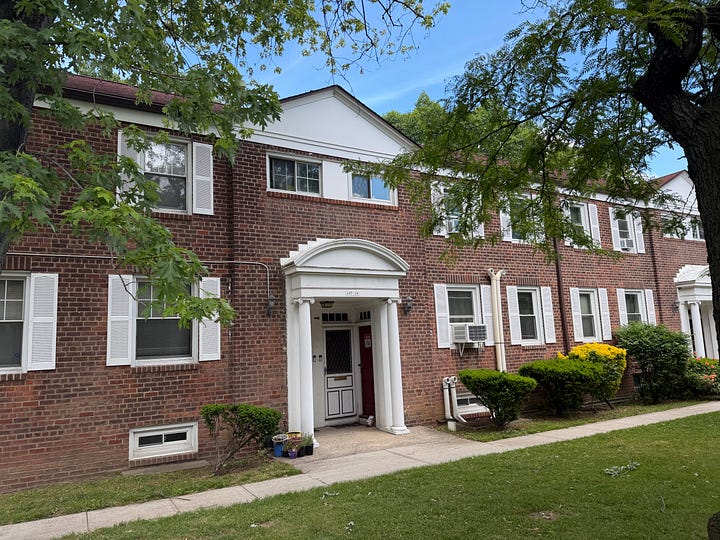
Its two-story buildings are arranged geometrically in a campus environment around landscaped paths and courtyards. The architecture is usually plain and uniform, subservient to the open space that surrounds the buildings. Each entryway typically has two to six doors, giving every unit direct access to the outside
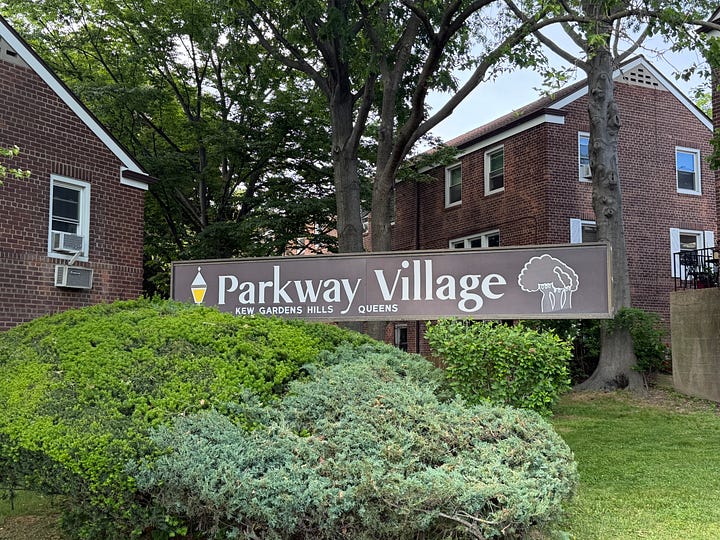
These are garden apartments — perhaps America’s least appreciated, least theorized common housing typology. Quintessential examples include Colonial Village in Arlington, Virginia; ParkMerced in San Francisco; and Parkway Village in Queens (pictured above).
These complexes have finally gotten their due in a new book by historian Joshua Freeman called Garden Apartments: The History of a Low-Rent Utopia. Freeman and I had a long conversation about his research and its implications for the present day published in text and audio forms in Remapping Debate. We discussed the political and economic forces that ushered in the spread of these complexes, as well as the impacts of their design on their livability and longevity. Read or listen here.
To me, the most interesting thing about garden apartments is not their architecture but their financial engineering. The unremarkable design of these complexes belies a unique economic arrangement that is worthy of greater study.
While a significant proportion of these complexes were constructed by the government as public housing, and some were financed and built entirely by the private sector, the majority of them were made possible by a little-known federal mortgage insurance program.
Known as Section 608, the program helped produce some 469,000 rental housing units from the mid-1940s through the mid-1950s, most of them in garden apartment complexes. Section 608 played a significant role in ending America’s postwar housing shortage. In the historical narrative of that era, it remains an unsung sidekick to parallel programs that provided mortgage insurance for the developers of suburban single-family homes.
Section 608 is a valuable case study as financing emerges as one of the most important frontiers of housing policy. Through the program, the FHA insured 90% of the cost of constructing apartments for veterans and their families, requiring developers to contribute very little equity, 10% or less in some cases. These projects were also subject to special depreciation schedules that lowered developers’ tax bills.
In exchange for these favorable terms, the FHA capped 608 developer profit margins at 6.5% annually, and the agency reserved the right to keep projects under rent control. This “combination of public risk and private profit is perhaps the only way an apartment building boom could have got started under rent control,” Freeman quotes from a 1950 issue of Architectural Forum.
All told, the program made possible by a $5 million initial capitalization helped produce nearly half a million homes and generated a net profit for the federal government as developers paid back their mortgages and very few projects defaulted.
There was some chicanery in the program, however. A significant minority of developers, including Fred Trump, took out larger mortgages than they needed to construct their projects, which they used to pad their profit margins. This practice, called “mortgaging out,” caused a major scandal in 1954, making it more difficult for liberals to push for other government housing programs. Yet, in the halls of the FHA bureaucracy, a little graft was seen as a small price to pay for getting a lot of housing built quickly.
Section 608 serves as a reminder of the range of financial tools available to the federal government (and, in some cases, state governments) to stimulate housing production. It illustrates the mechanics of successful inclusionary zoning and social housing policies, where social goods, such as rent control, are offset by more favorable financing, tax, or zoning terms. And it shows that building big things, fast, requires a high risk tolerance for petty corruption.
As Freeman writes, “The proliferation of 608 rental housing was an example of government assistance and sharp financial practices together resulting in both windfall profits and genuine social advances.”
Read more on this overlooked episode of America’s housing history here.
No posts
Comments
Nothing yet. Say the first thing.
Sign in to join the conversation.