
" ...luck isn’t some mystical energy that dances around the universe randomly bestowing people with satisfaction and joy. You create your own luck."
Most SQL engineers think the only way to make money is through traditional jobs. You apply online, compete with hundreds of applicants, grind through interviews, and hope someone gives you a chance. But there is another market hiding underneath all of that. A quieter market where businesses are actively paying people who can solve data problems without caring much about titles, certifications, or whether you know the latest trendy framework. And the interesting part is this: many of the people making money in this hidden market are not famous online, do not have massive portfolios, and are not working at massive tech companies. They simply know how to make data work.
A surprising number of companies are still running critical operations from spreadsheets, disconnected CRMs, outdated databases, and manually updated reports. The systems are messy. The reporting is slow. The dashboards are unreliable. And nobody internally knows how to fix it properly.
That is where SQL engineers quietly step in. You can help businesses migrate data between systems, clean inconsistent records, optimize reporting pipelines, automate repetitive workflows, or improve slow-performing queries. Many organizations do not even realize they "need a SQL engineer." They just know something feels broken. Reports take too long. Numbers do not match. Dashboards fail every Monday morning. Employees waste hours manually exporting CSV files and updating spreadsheets. You can solve those problems. And businesses pay well for clarity.
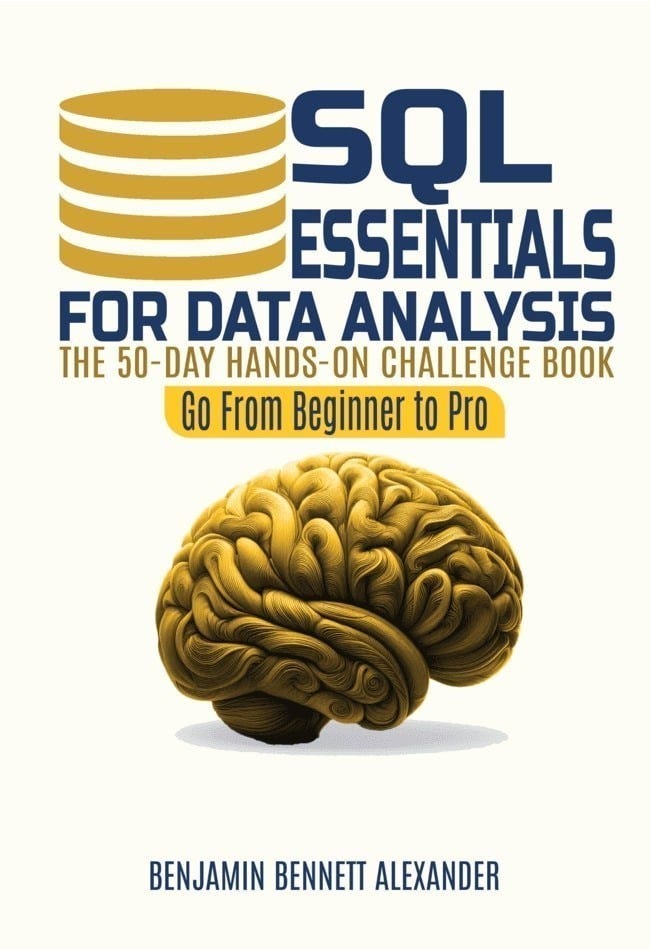
SQL Essentials for Data Analysis is Now Available
Learn the #1 skill in data. If you’re tired of hopping between tutorials and want a clear, guided roadmap, this is the step that finally gets you unstuck. You can grab your copy today and start the 50-day journey.
SQL Essentials for Data Analysis: A 50-Day Hands-on Challenge Book (Go From Beginner to Pro).
Master Data Analysis with Python: 50 Days of Data Analysis with Python: The Ultimate Challenge Book for Beginners
Want to learn Python fundamentals the easy way? Check out Master Python Fundamentals: The Ultimate Python Course for Beginners
Challenge yourself with Python challenges. Check out 50 Days of Python: A Challenge a Day.
100 Python Tips and Tricks, Python Tips and Tricks: A Collection of 100 Basic & Intermediate Tips & Tricks.
Contract and Freelance Data Migrations & Reporting Builds
One of the hottest freelance and contract niches right now is helping organizations organize and move data properly. You can help companies migrate from spreadsheets into real databases. You can clean duplicate records before a CRM switch. You can build reporting systems that automate work employees normally do manually every week.
A lot of businesses are terrified of touching their own data because they know one mistake could create operational chaos. That fear creates opportunity for you. And these projects often happen quietly through referrals or local networks rather than public job boards. A simple reporting project can turn into long-term consulting work very quickly.
Retainer Work via MSPs or Small Teams
Another hidden path is becoming "the SQL person" for small agencies, MSPs, or consulting firms. Many small IT teams constantly run into database issues for their clients but do not have someone deeply comfortable with SQL optimization, reporting logic, schema reviews, or ETL troubleshooting. You can fill that gap. One week you may optimize queries for a retail business. The next week you could fix reporting pipelines for a healthcare client. Another day you might clean up broken stored procedures after a migration.
The work is often outcome-focused rather than meeting-focused. And over time, these relationships stack. One successful project becomes recurring monthly support. One client referral becomes another. Before long, you are effectively operating as an external database department for multiple businesses at once.
Some engineers quietly build full-time income this way without ever working traditional employment again.
Niche Industry Side Gigs
Google and Facebook are not the only game in town. One of the smartest things you can do is stop looking only at big tech companies. Some of the best opportunities exist in industries most engineers completely ignore.
Therapy clinics. Casinos. Logistics companies. Small healthcare providers. Local retail chains. Manufacturing businesses. These industries often have massive operational data problems but very limited technical talent. You can design schemas for specialized data collection systems. You can build custom reports for organizations with poor analytics infrastructure. You can review legacy databases and fix years of inconsistent data before vendor migrations.
And because these industries are underserved technically, competition is usually much lower. Most businesses do not care whether you have a glamorous title. They care whether you can fix the problem.
Direct Outreach to Startups and SMBs
One of the biggest lessons from people already doing this work is that opportunities often come from direct conversations, not applications. You can reach out to founders, small businesses, startups, or operators directly. Many of them are still running large parts of their operations from spreadsheets and manual reporting systems.
You do not need a complicated pitch. You simply identify a painful problem and explain how you can help solve it.
Something as simple as:
"I noticed your team still handles reporting manually. I can probably automate that and save your team several hours every week."
That gets attention, because businesses care about outcomes, not technical jargon. And small pilot projects often turn into long-term contracts once trust is established.
How to Break Into the Hidden Market (Even If You’re Not Famous)
Social Media/Website/Blogs/Meetups: You do not need a huge LinkedIn following, thousands of followers online, or a perfect consulting website to break into this market. Many people started by helping one small business or one person from an online SQL community. That is it. There are people who have landed gigs simply for commenting intelligently under a post. People post problems in SQL forums; answer the questions and build your credibility. Small technical problems often turn into paid opportunities when businesses realize you can solve larger ones too. If there are meetups in your area, attend and introduce yourself.
Target the right problems, not the right titles: Businesses are not buying “SQL skills.” They are buying faster reporting, cleaner data, reliable dashboards, fewer operational mistakes, less manual work, and better visibility into their business. Focus on business outcomes (“Save 20 hours/week on reporting” or “Fix slow queries costing downtime”) rather than just technical skills.
Start small to build proof. Money will come, but first focus on building proof and trust. You can offer a quick database review, a small reporting fix, or a short data audit that identifies inefficiencies. A two-hour fix that saves a company several hours every week creates trust very quickly. And once businesses trust you with one problem, they usually come back with more. This approach works far better than sending cold applications into crowded job boards.
Use the right platforms strategically. Everyone talks about Upwork and Fiverr, but the consensus is they pay poorly unless you niche hard and have strong reviews. Do not limit yourself to these platforms. Try Guru, PeoplePerHour, Contra, Braintrust, etc. Other better options: direct outreach, SQL community events, and industry-specific forums.
The good news is that you do not need mastery in all of them immediately. Many engineers learn those supporting skills while already getting paid for SQL work. It’s more about practical problem-solvers than perfect resumes. If you can save businesses time, reduce confusion, improve reporting, or organize messy data, you already have something companies are willing to pay for.
A lot of engineers also hold themselves back because they think they need to master everything before charging for their skills. Of course, adding adjacent skills helps. Basic Power BI. Python skills. Simple ETL pipelines. Excel automation. Light dashboarding. Those skills make you more marketable. But many engineers learn them while already getting paid for SQL work. The important thing is starting before you feel fully ready.
Wrap-Up
If you already know SQL well, you may be sitting on a skill that businesses desperately need right now. Businesses everywhere still struggle to make sense of their data. And most of these opportunities are never posted publicly. They move quietly through referrals, local networks, community groups, side projects, consulting relationships, and direct outreach.
So instead of spending all your energy chasing crowded job applications, you can start much smaller. Reach out to one former colleague. Message one small business. Offer to help solve one reporting problem. Participate in one SQL community discussion. You already have the skill. What is needed now is for you to show up and solve the problem nobody else wants to touch.
And in the famous words of Sean Carter, "Luck isn’t some mystical energy that dances around the universe randomly, bestowing people with satisfaction and joy. You create your own luck. " Yes, luck happens when you act, not when you sit back and wait. Thanks for reading.
The Data Analyst Bootcamp Bundle (SQL + Python) 100 Hands-On Data Analysis Challenges
These are the best hands-on materials that teach how to use the important libraries in data analysis: pandas, Matplotlib, seaborn, NumPy, etc. You will also learn to write SQL queries by answering questions that data analysts face in the world, using real datasets. Get the bundle if you want real, practical learning.
Python and Data Analysis Insights is a reader-supported publication. To receive new posts and support my work, consider becoming a free or paid subscriber.
Comments
Nothing yet. Say the first thing.
Sign in to join the conversation.