
☕️ on my mind
A few weeks ago I tore my ACL playing soccer and immediately started physical therapy. I had decided to postpone surgery until winter-time, focusing on strengthening my muscles and getting back to the most active life possible without an ACL (apparently you don’t need an ACL for a lot of basic activities).
At least that was my plan until a couple weeks ago, when a friend told me about a procedure called BEAR, which allows eligible candidates to repair their existing torn ACL (instead of replacing their ACL with a graft).
The main pro of BEAR seemed to be a faster recovery at the risk of a higher re-tear rate. I wanted to understand it better and it seemed there was a very limited window of 35-50 days from the injury to undergo the BEAR procedure. The clock was ticking.
So I scheduled three consultations over the course of three days with orthopedic sports surgeons to understand my options. I met with two NYU Langone surgeons and at the behest of a couple people who I trust, I thankfully scheduled a third consult with an HSS surgeon.
The first two NYU surgeons left the decision to me but recommended traditional ACL replacement with a graft. The third HSS surgeon said he doesn’t even do the BEAR procedure because the failure rates are too high (once we have more years of data, he estimates the published 12% re-tear rate would likely land more in the 15-25% range).
If 1 in 4 people who do BEAR are back within a few years for traditional ACL reconstruction, I didn’t want to be one of them. He strongly suggested a traditional patellar tendon ACL replacement because it’s the “gold standard”.
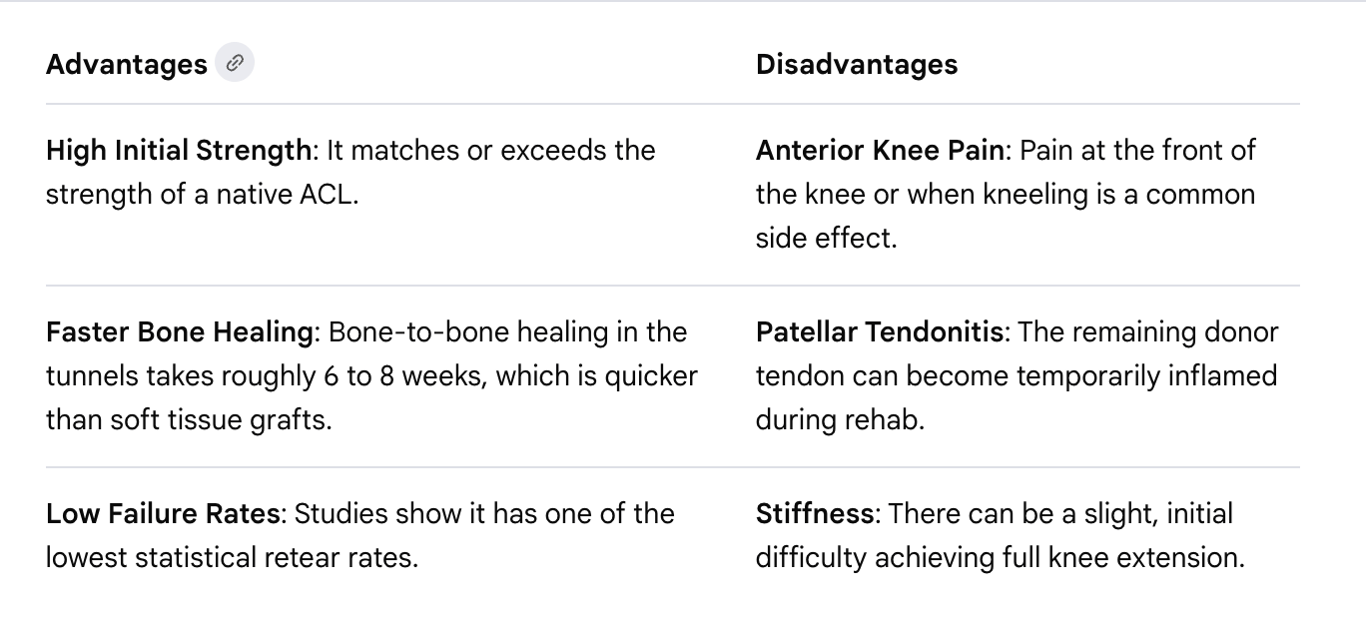
The conviction of the HSS surgeon made me confident that BEAR would be the wrong move for me, leaving ACL reconstruction with patellar tendon as the obvious move. The remaining question was just when.
I considered waiting but ultimately decided to accelerate the timeline and had a successful ACL reconstruction on Friday and I’m now recovering at home. Three and a half weeks from injury to surgery.
The main reasons I went for surgery now vs later:
There’s data that shows increased risk of arthritis without an ACL
The instability caused by lack of ACL increases risk of additional knee injuries
The sooner the operation is done, the sooner I can be back to 100%
The recovery timeline is long but there’s a clear path to being fully active again. It starts with roughly 2-3 weeks on crutches, 1-2 months to comfortable walking, 3-4 months to jogging, and 9-12 months to “good as new” and back to business.
At every step of the way, the key to rehabilitating the knee is dedication to physical therapy, not rushing into activities before I’m ready for them, and overall trusting the process. I’m committed to the process and really don’t want to find myself back in an injured position for a long time.
This likely means my soccer days are behind me. I might still kick around casually but I don’t trust myself to get on the field for a “competitive” 7v7 pickup game. I might change my mind but I’m leaning towards hanging my cleats and doubling down on gym and exercises with more controlled ranges of motion.
I could write a whole post about my grieving process around the end of my soccer days. I stretched soccer to the age of 36 and I’m really proud of the way I was balling leading up to this injury. But living on a 2nd floor walk up with a 3yo daughter, a dog, and a busy life in a walking-centric city like NYC... this injury has been a massive inconvenience to put it softly. I just can’t risk another one of these setbacks.
We are getting some help thankfully: my mom flew up from Florida to be with me at the hospital and take care of me for the first weekend post-surgery. Also, our dog sitter Russell has agreed to watch George until I can safely walk him again... hopefully once I’m off the crutches.
I’m on the mend (and meds), taking things one day at a time. Really appreciate everyone who reached out after my last post with stories about their own injuries and subsequent recovery journeys with tons of success cases. It made me feel a lot less alone and more optimistic about my future 🫶
🎉 Celebrating wins
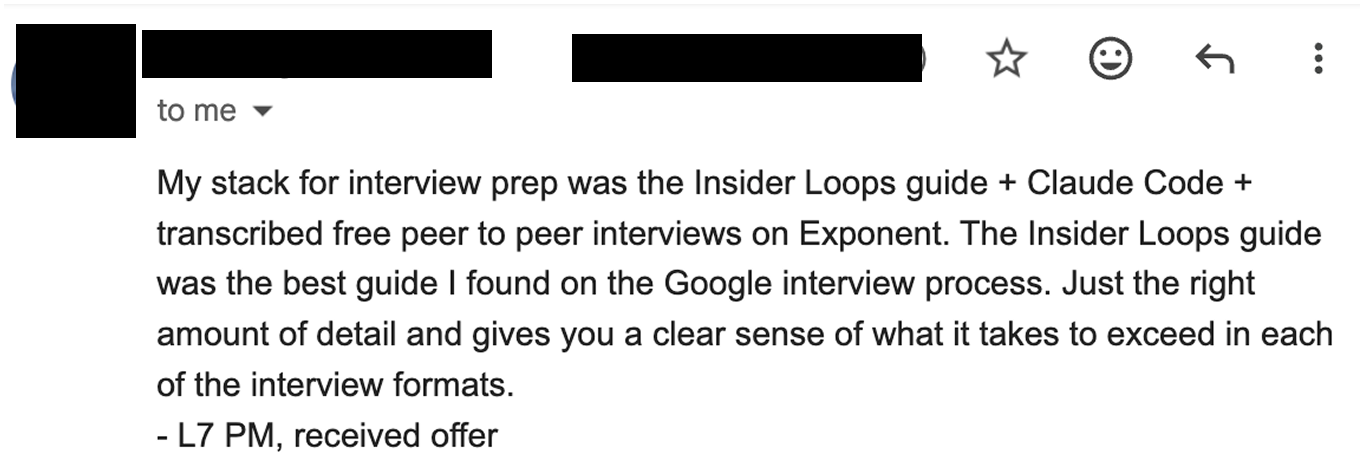
There's no more rewarding work than helping someone land their dream job and I’ve never been more bullish on Insider Loops because my days are filled with emails like this 😍
🤝 My Maven instructor peer group
Last fall I brought together some of my favorite people to form a peer group that meets every 4-6 weeks for 90 minutes. My group includes Hilary Gridley, Tal Raviv, Colin Matthews, and Aman Khan. Each time we meet, we deep dive into our respective careers and we discuss a couple of top-of-mind challenges in the context of our Maven courses and solopreneurship journeys.
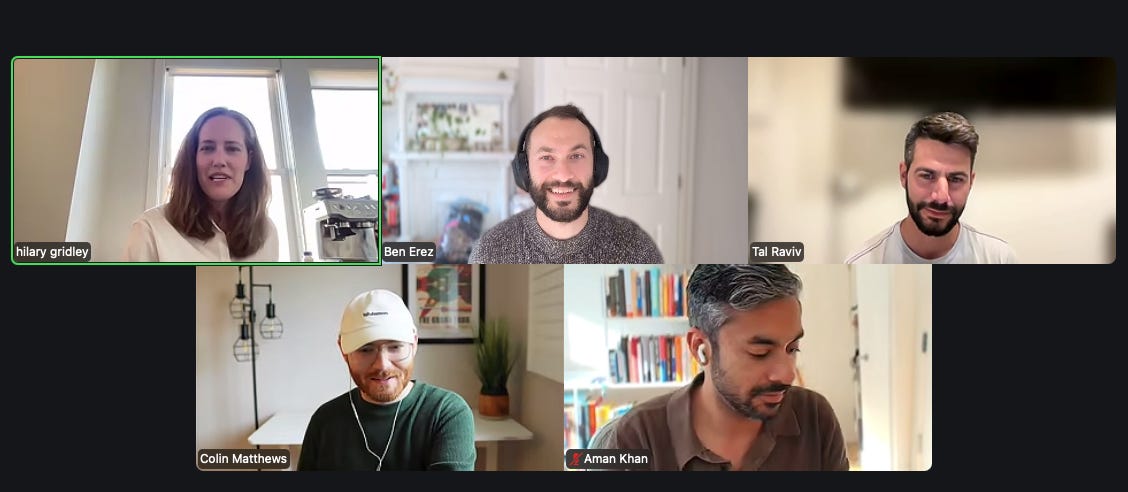
I’ve absolutely loved seeing how every person in this group thinks about their careers and it’s been a pleasure to play a small part in their journeys. I genuinely look forward to each of our sessions and learn a ton each time we meet.
If you don’t have a peer group, I strong encourage you to create one. It’s awesome.
Special thanks to Marc Baselga; our group formed through association with Supra and the way we’re self-facilitating the sessions heavily draws inspiration from Supra’s programming..
🚀 Recently shipped
Meta PM interview guide from Insider Loops is now live
There's a big Meta layoff coming on May 20th (expected to impact >10% of the company) but hiring is still underway as of this week. I literally know multiple people with interviews on the books in the next couple weeks.
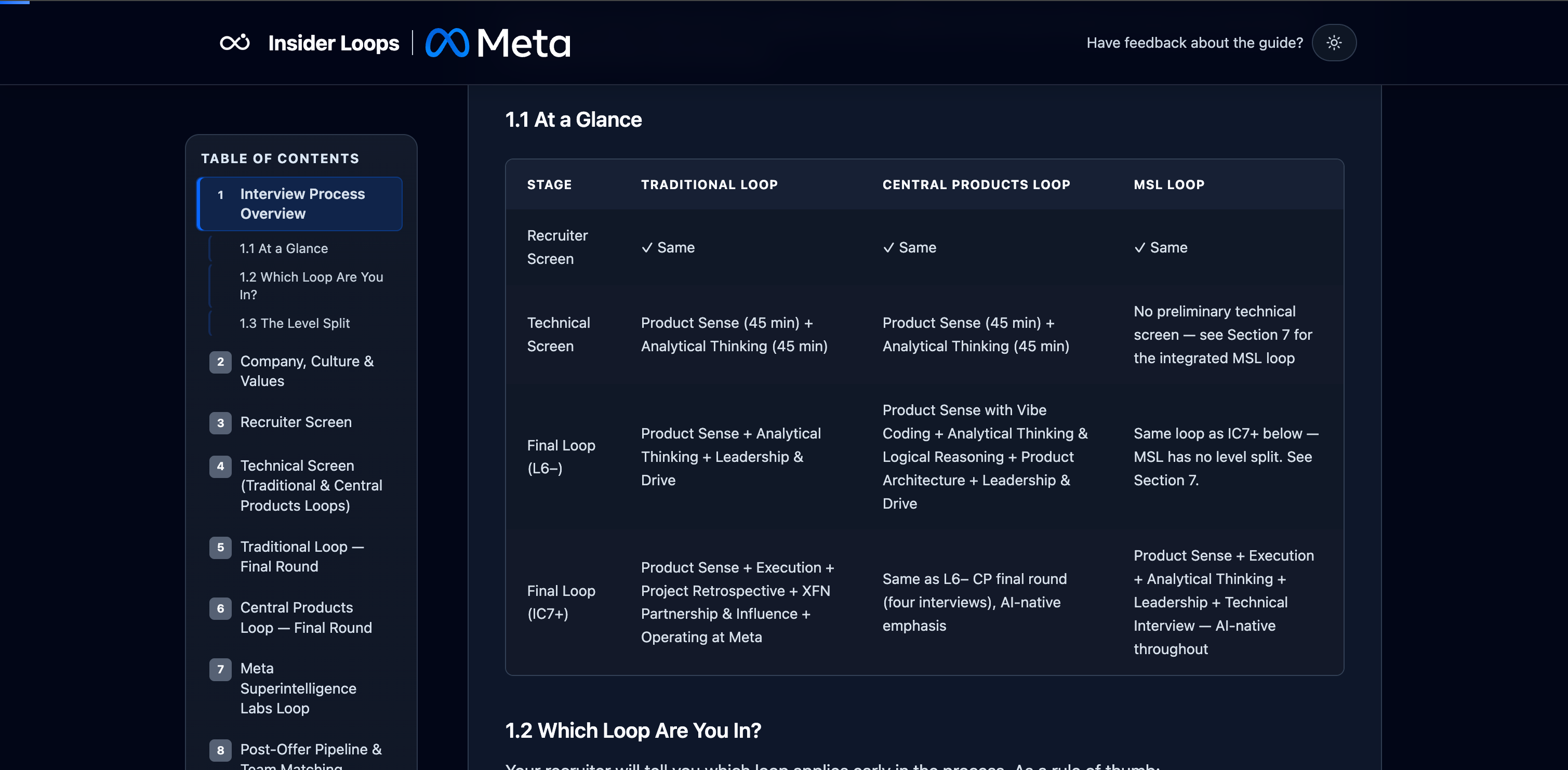
If you're a PM interviewing with Meta, make sure you confirm with the recruiter which loop you’re actually going through bc they've now split their PM interview process into three loops: Traditional, Central Products (CP), and Meta Superintelligence Labs (MSL).
(1) Traditional
The long-standing Meta PM loop, the one most public prep materials still describe.
Two rounds: a preliminary round (Product Sense + Analytical Thinking) and a final loop.
5 interviews total for L6 and under, 6 for IC7+.
AI tools are banned across the loop.
(2) Central Products (CP)
Same two-round structure as Traditional, but the final loop is restructured.
The headline difference is a 60-minute Product Sense round that includes a live AI prototyping segment called Vibe Coding (about 20 minutes building a working UX prototype with v0, Figma Make, Claude Code, or Lovable).
It also adds a Product Architecture interview and a logical reasoning section to Analytical Thinking.
AI is required in Vibe Coding and banned everywhere else.
(3) Meta Superintelligence Labs (MSL)
The only single-round loop with no preliminary round.
Candidates go straight into the full MSL loop, which includes a dedicated LLM Technical Interview with a senior engineer who will move quickly across embeddings, RAG, evals, and inference economics.
If you want to understand the full PM interview process at Meta, Marc Baselga and I just shipped our eighth Insider Loops guide! I've coached PMs through Meta loops for years and we built this with intel from active Meta PMs and calibrated interviewers across all three loops.
I’m biased but I believe this is the only Meta guide that breaks down all three loops at this depth. We also update every guide within 24 hours of receiving new insights from insiders (candidates or interviewers). We're built for speed and accuracy.
Want to see how top companies evaluate PMs in interviews?
🎙️ Supra Insider podcast
Here are episodes Marc and I published since my last post. Subscribe here to get them in your inbox every week 👇
🎥 #109: Inside Maven’s shift from EPD specialists to flexible builders | Rishin Banker (VP Product @ Maven)
What happens to the product development process when the lines between who builds, who designs, and who decides start to disappear?
P.S. I’m told the YouTube intro I recorded for this one with a special guest is the cutest intro ever…
🎥 #110: Why AI makes systems thinking the most valuable skill for PMs | Apurva Garware (ex-VP Product at Upwork, ex-Amazon)
What if the most important skill for building AI products has nothing to do with evals, technical background, or knowing how to write a prompt? What if it is the ability to design systems that can handle what you never planned for?
💡 Content I’ve enjoyed
Organizational shape is the new AI moat (NotebookLM audio overview)
🛣️ On the horizon
Lots of physical therapy, continuing to record podcasts, and exploring some new collaborations in the PM interview space. Excited to share more.
🫶 Go deeper with my work
🕵️♂️ Insider Loops. Company-specific PM interview guides for Anthropic, OpenAI, Google, Meta, Stripe, DoorDash, Uber, and Figma. Verified intel, rigorously researched and continuously updated.
📚 My self-paced PM Interview Bootcamp: Product Sense & Analytical Thinking. Selected by Lenny Rachitsky as a top product course on Maven (rated 4.9/5.0 with ~90 reviews).
🤖 My AI Practice Copilot for PM Interviews. Unlimited practice reps with calibrated feedback on Product Sense & Analytical Thinking questions. It’s like having a calibrated interview coach available 24/7. Over the past year, my Copilot has helped hundreds of PMs land roles at Meta, Google, OpenAI, Stripe, DoorDash, Uber, Datadog, Monday.com, and more. Testimonials on the site.
My most popular free resources:
🧠 My Product Sense Interview Template. Google sheet template for practicing product sense questions. Make a copy and get as many reps as you’d like with my frameworks. Updated regularly and fully compatible with my AI Copilot.
🔥 My guest post on Lenny’s Newsletter: The definitive guide to mastering product sense interviews.
📊 My Analytical Thinking Interview Template. Google sheet template for practicing analytical thinking questions. Make a copy and get as many reps as you’d like with my frameworks. Updated regularly and fully compatible with my AI Copilot.
🔥 My guest post on Lenny’s Newsletter: The definitive guide to mastering analytical thinking interviews.
🎥 Useful lectures and panels I’ve hosted as lightning lessons on Maven.
Comments
Nothing yet. Say the first thing.
Sign in to join the conversation.