
When I was a graduate student, I thought career growth was simple: choose a field, earn the degree, get hired, and keep moving upward.
It wasn’t until my first time on the job market that I truly understood the challenges of positioning yourself for a job you want and later that building expertise in a field exists at the intersection of opportunity and ambition.
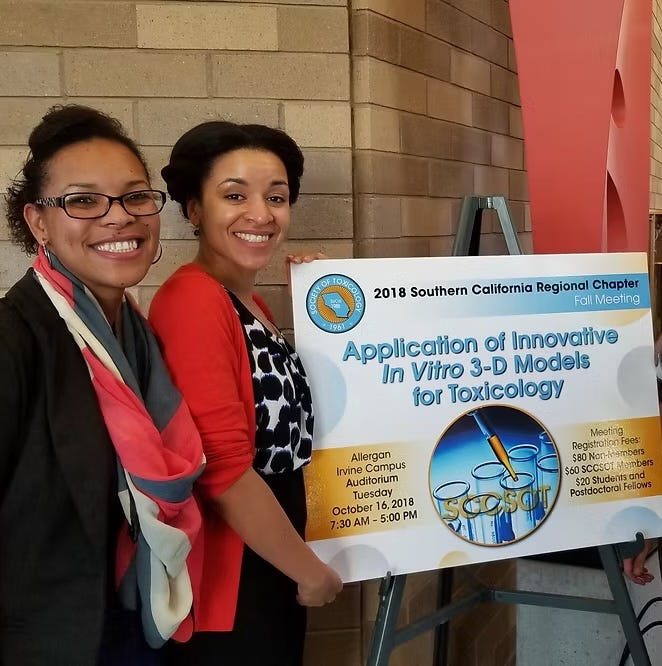
Connecting with the broader toxicology community at SoCal SOT, 2018.
Like many people, I grew up hearing a simple formula: do well in school and a good career will follow. This isn’t inherently bad advice, though it is a bit disingenuous. Technical skills matter but they are only one piece of the puzzle. Careers are built through a combination of expertise, opportunity, and deliberate decision-making. You have to be strategic about building them.
“Degrees create opportunities. They do not create careers.”
Today’s job market presents challenges at both ends of the experience spectrum. Early-career professionals struggle to gain experience, while seasoned professionals may find themselves labeled as too expensive to hire or overqualified for a role.
Years ago, I believed that landing the first job was the hardest part of your career. After that, promotions, new responsibilities, and growth would naturally follow. What I learned is that career development requires just as much intentionality as getting hired in the first place.
The biggest shift in my thinking came when I stopped viewing careers as a linear progression and started viewing them as the product of accumulated experiences, relationships, and opportunities.
These three lessons continue to shape how I approach career development today.
The purpose of your graduate school education is to teach you how to think like a scientist. While your thesis serves to contribute new knowledge to your chosen field, its primary value is as an exercise in critical thinking and experimental design. Through trial and error, you learn best practices and limitations of research while building an educational foundation in your field.
Your PhD or Master’s degree will not automatically jettison you into the job of your dreams, but it will set you on your way. Degrees create opportunities. They do not create careers.
If you’re a student reading this, use your time wisely to learn as much as you can about your field, including past and current trends. Talk with more experienced people in your field like your advisor or people in roles that you’d one day like to occupy:
Questions Worth Asking During Graduate School
Why is this work important?
How is it applied outside academia?
What careers use these skills?
What trends are shaping this field?
At the start of my graduate career, I knew that toxicology aimed to protect people, animals, and the environment but not how toxicology research was conducted. Now as an early career professional, I seek to understand the different ways toxicology is applied beyond the research lab.
Job descriptions often list “x years of experience in y” to narrow the applicant pool to candidates who are most likely to have the expertise that the hiring team needs.
Despite this, an applicant could have 2 years of industry experience and not be considered experienced enough for a role asking for 0-3 years. Why? Experience isn’t measured by time. It’s measured by judgement.
Years in a role does not equate to expertise. True expertise is defined as using sound judgement within a given context to make decisions. Having sound judgement means that you can tell the difference between when a strategic move is correct and when it is dangerous. Two individuals can occupy the same role for the same period of time and vary in judgement due to differences in hands-on experience.
This is why I now endeavor to stay open to new experiences—whether that means working in different sectors, tackling unfamiliar technical challenges, or taking on projects that build soft skills. Often, the judgment needed to make sound decisions is shaped by experiences that may, at first glance, seem entirely unrelated.
“Experience isn’t measured by time. It’s measured by judgement.”
When I was a teenager, I hosted a sports day and health fair at a local elementary school for my Girl Scouts Gold Award project. The event kicked off with a karate demonstration and nutrition class, followed by short rotations where students learned how to play different sports like volleyball and soccer. I developed the event after learning that this particular school didn’t have the resources for after school sports programs.
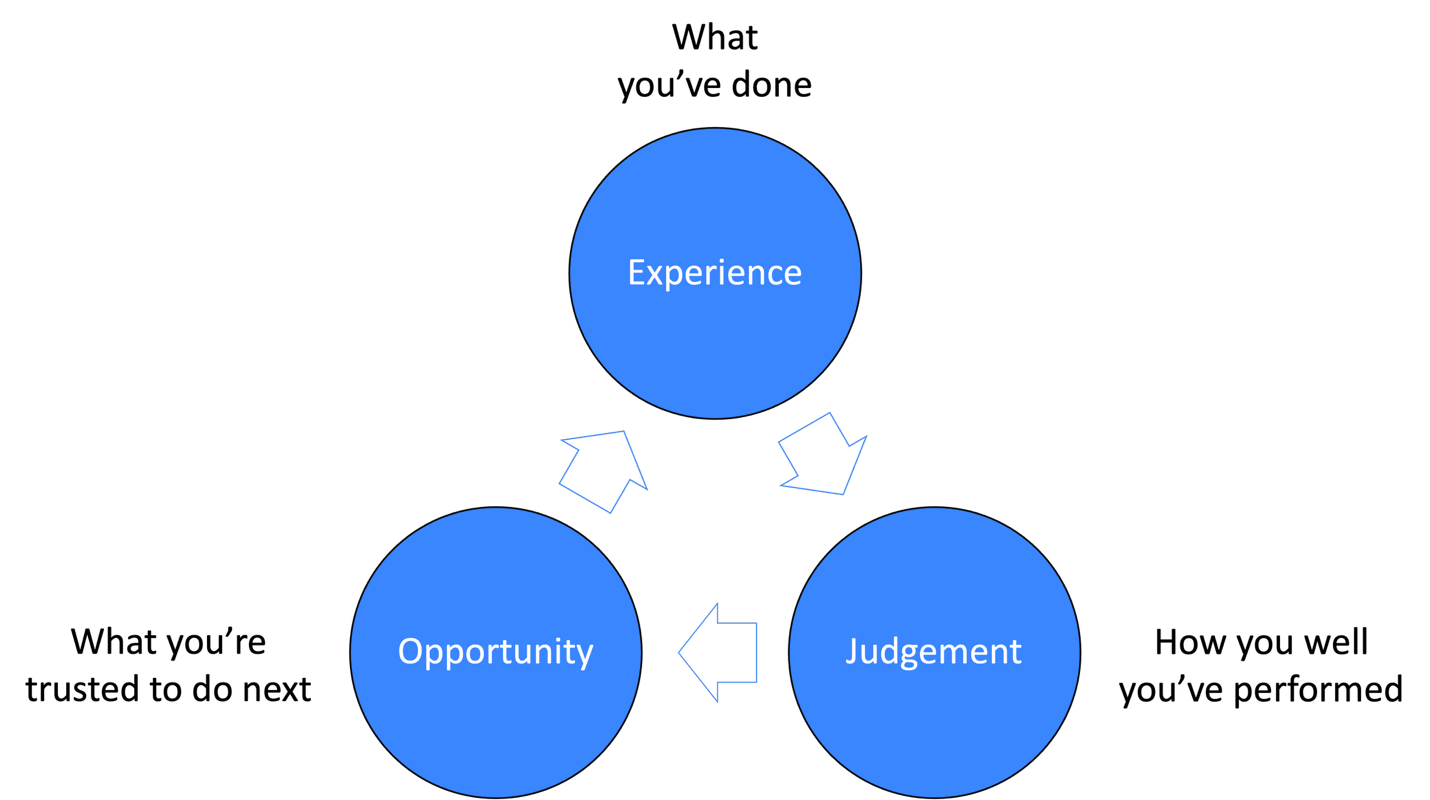
Career Progression Loop
At the time, I didn’t think that the event would have future implications in my career. Fortuitously, the experience built a core skillset including project management, stakeholder engagement without formal authority, and interpersonal communication. In the years since, I’ve repeatedly returned to that skillset as I navigated graduate school and the early stages of my career.
Managers matter. A good manager will give you opportunities to build your skills and expertise. A great manager will mentor you. Skilled managers also measure their effectiveness in how well their team performs. While it’s important for you to be open to opportunity, much of what you’ll get to do in your career is driven by approval from management.
You can’t fully judge a manager before working with them, but you can learn a lot by asking the right questions. Think of every hiring manager interview as a two-way evaluation and ask questions accordingly. They aren’t just hiring you; you are choosing a manager.
Questions To Evaluate a Potential Manager
How do you develop people on your team?
Can you tell me about someone’s growth on your team?
How do you support employees interested in advancement?
What feedback have former direct reports given you?
Great managers can list specific ways they coach and advocate for their team as well as adapt their management style to fit individual needs. They also are transparent about things they could have done better in the past and are open to growth. Poor managers express frustration at people moving on to new roles and lack professional accountability.
Additionally, the best managers have “alumni” who praise them behind closed doors. Asking mutual connections who are former colleagues or direct reports can give you additional insight into whether a manager would be a good fit for you.
Not all career advice holds up in practice, especially in a rapidly shifting job market.
What I’ve learned is that no single perspective is enough. The best way to reduce uncertainty is to talk to more people, compare experiences, and do your own independent research. That’s why informational interviews and mentoring conversations matter.
Try This 👉 Run an “Opportunity Audit” to map your next career steps.
If you’re a student:
Map three careers connected to your field of study.
Talk to at least one person in each role using the questions above.
Look across responses for shared skills, experiences, and decision points.
If you’re exploring new roles:
Choose three target positions you’re interested in.
Look at the backgrounds of people currently in those roles.
Reach out to one person and ask which skills matter most in their role.
If you’re already working and building toward the next step:
Choose one role you want to grow into.
Ask someone in that role about the experiences that shaped their expertise.
Identify the experiences you’re currently missing.
LinkedIn and scientific society directories are useful places to find potential connections. Reaching out to individuals at different career stages can also give you a more complete view of how careers actually evolve in practice.
Degrees teach you how to think, but careers are built through judgment, relationships, and opportunity. None of those develop automatically. They grow through curiosity, initiative, and a willingness to keep learning long after formal education ends.
The people who grow fastest are often those who actively seek experiences, learn from others, and position themselves where opportunity can find them. The sooner you start doing that intentionally, the more options you’ll create for yourself.
I’m currently exploring new tactical content for this community—from downloadable resources to live Q&As and workshops. If you could shape what comes next, what would you want to see more of?
I’d love to hear your feedback.
Thanks for reading From Bench to Beyond!
Subscribe for free to get weekly curated toxicology roles plus practical career insights to help you navigate the field with intention.
© 2026 Lauren Walker. All rights reserved. No reproduction without permission.
Disclaimer: This content is for informational purposes only and reflects personal opinions, not professional or legal advice.
No posts
Comments
Nothing yet. Say the first thing.
Sign in to join the conversation.