
The Toxicology Networking Challenge (Week 2 of 4)
✓ Week 1: Join a Scientific Community
✓ Week 2: Define Your Networking Goals
□ Week 3: Build Your Outreach List
□ Week 4: Start Conversations That Get Responses
“You should network” is a core tenant of classic professional career building advice.
Every career panel focuses on the “you should” but rarely addresses the question on everyone’s mind: “why bother?”
My first full toxicology conference was the 2016 Society of Toxicology annual meeting. I remember walking through the convention center surrounded by thousands of toxicologists and realizing I had no idea where to start.
There were sessions on every topic imaginable, dozens of networking events, and countless people I could potentially connect with and I felt in over my head.
Looking back, I now realize that the problem was a lack of direction. Of why I wanted to meet anyone at the meeting.
I wasn’t asking the most important question: Why was I networking in the first place?
Simply put, everyone’s “why” is different.
Students network to learn more about career paths in the fields. New grads network to find leads for landing their first job. Early and mid-career scientists often network to exchange ideas or learn about developments in a specific area related to their current work.

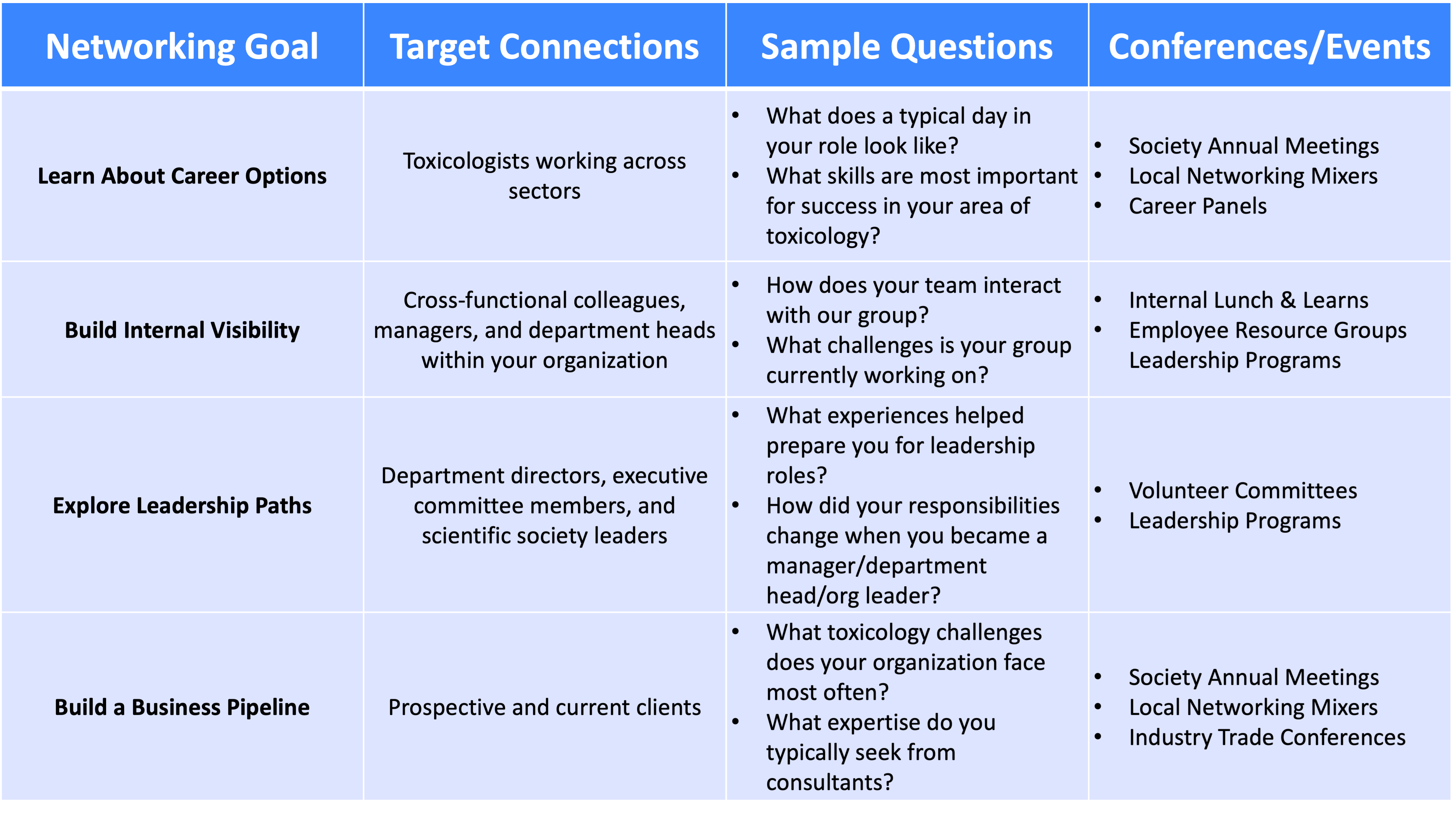
Before you start reaching out to people, get clear on what you’re hoping to learn, accomplish, or explore. Understanding your professional development and knowledge goals will dictate:
Who you should reach out to
What questions you need to ask, and
Which events you should attend.

Understanding your goals will help you build your networking strategy.
For instance, if you’re interested in learning more about careers in ecotoxicology and environmental quality guidelines, you would want to reach out to environmental toxicologists working in academia, government agencies, and nonprofits as well as attend your local SETAC meeting.
Reflecting on your “why” and assembling your reasons for networking can expedite building your professional network as people are more likely to respond positively to a message clearly intended for them—whether you reach out virtually or in person.
Try This 👉 Brainstorm your “why.”
Step 1: Write Down Three Questions
What career questions do you have? Jot them down—you don’t have to stop at 3.
Some examples:
How do toxicologists transition into regulatory affairs?
What skills are most valuable in product safety?
What does a typical consulting career look like?
Step 2: Identify Five People
Find five people who may have answers to those questions. Possible sources include:
Society membership directories
Conference programs (e.g., speaker bios, abstracts)
LinkedIn
Former colleagues
University and lab alumni networks
Step 3: Identify One Place to Meet Them
Examples:
Society annual meetings
Local chapter event
Webinars or virtual meetings
LinkedIn
Internal company seminars
A strong professional network starts with curiosity. Once you’re clear on what you want to learn, the right connections become easier to identify. Ask yourself: “what am I trying to learn?” Once you know the answer, you’ll know exactly where to start.
Your goal isn’t to meet everyone—it’s to meet the right people.
What’s one question you’re hoping your professional network can help you answer?
Coming Next Week: Now that you’ve identified what you’re hoping to learn, it’s time to find the people who can help answer those questions.
In Week 3, we’ll turn your networking goals into an action plan by building a targeted list of people, organizations, and events that can help you get where you want to go.
Thanks for reading From Bench to Beyond!
Subscribe for free to get weekly curated toxicology roles plus practical career insights to help you navigate the field with intention.
© 2026 Lauren Walker. All rights reserved. No reproduction without permission.
Disclaimer: This content is for informational purposes only and reflects personal opinions, not professional or legal advice
No posts
Comments
Nothing yet. Say the first thing.
Sign in to join the conversation.