
Last week I covered the initial stage of the interview process—the HR recruiter interview. As a recap, the recruiter screening interview isn’t evaluating whether you’re the smartest scientist. The HR recruiter interview is designed to determine whether the hiring manager should meet you.
The recruiter assesses high-level fit, while the hiring manager digs deeper into your technical expertise, problem-solving approach, communication style, and potential fit with the team.
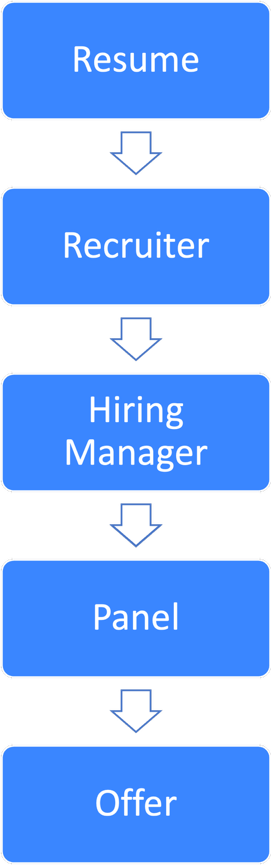
Overview of the interview process
The second interview round is typically a 30-minute virtual meeting with the hiring manager for the role. This person is usually—though not always—who you would report to if hired. Thus, this interview also gives you your first real opportunity to evaluate the person who may become your manager.
As I mentioned in a previous post, the right manager can accelerate your growth while a poor manager may stifle it. Though you can’t fully assess a manager’s effectiveness before working with them directly, you can learn a lot by asking the right questions during an interview.
Just like with the recruiter screening interview, the hiring manager interview is a two-way evaluation. They aren’t just assessing your skills, you’re also evaluating a potential future manager. Strong managers should be able to describe specific ways that they coach and advocate for their team and individual career development.
Questions To Evaluate a Potential Manager
How do you develop people on your team?
Can you tell me about someone’s growth on your team?
How do you support employees interested in advancement?
What feedback have former direct reports given you?
In addition to asking them questions about their management style, you should also ask questions about the role itself. As with the recruiter screen, use the hiring manager interview to gather information to evaluate whether the opportunity is a good fit for you and to demonstrate why you’re a strong fit for the role.
You should review the job description and organization’s website for each role you apply to so that you understand the role’s technical requirements, the team’s work, and the organization’s broader culture. Remember the questions you asked the recruiter about the role? Use that information to further tailor and refine your STAR responses for the hiring manager interview.
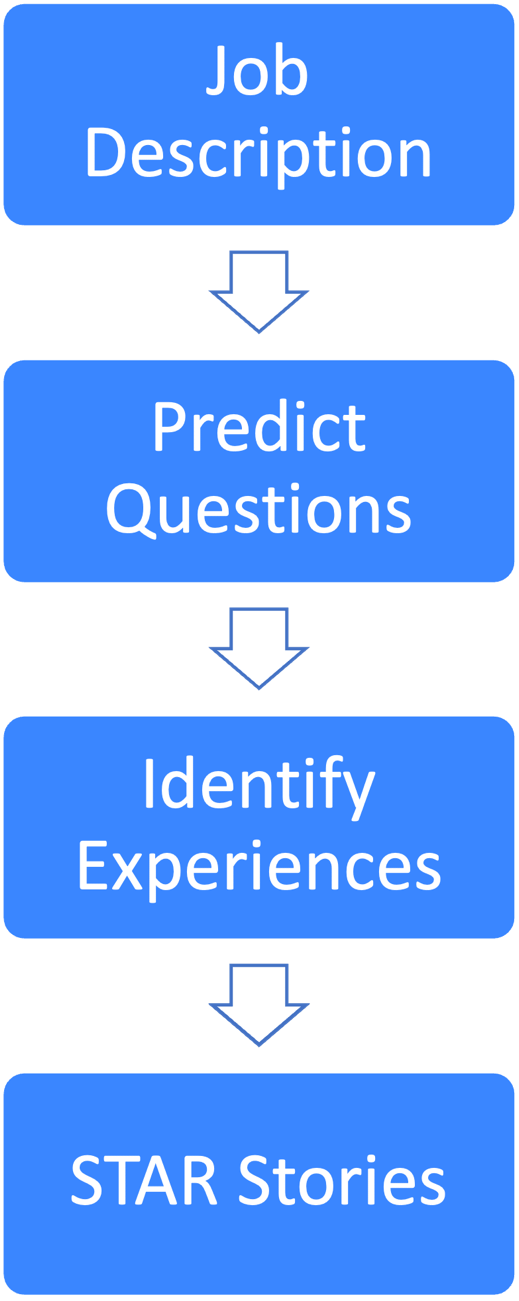
Use the job description to draft concrete examples of your technical expertise.
Review your CV again and brainstorm concrete examples of real events to back up each bullet point in the STAR format. The key difference between the recruiter screen and hiring manager interview is that the latter is more technically focused. This is the first interview where you’ll need to demonstrate the breadth and depth of your expertise—while keeping your responses concise and on topic.
💡 Pro Tip: Focus your interview prep.
Don’t memorize answers to generic interview questions. Start with the job description, predict the technical questions, and prepare one concrete example for each major responsibility.
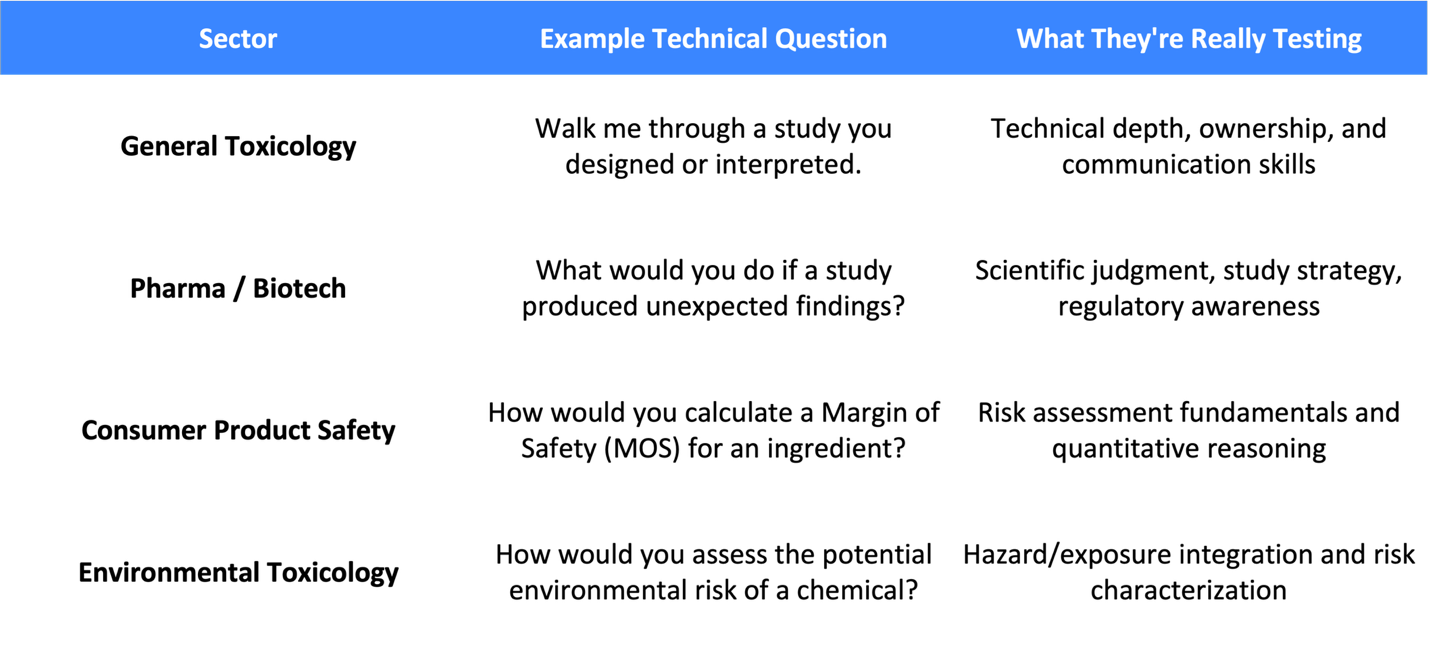
The types of technical questions that hiring managers ask are specific to the role and sector. Generally, though, hiring managers will ask about your experience conducting the kinds of technical work specified in a job description. The responsibilities listed in the job description are your best starting point for predicting technical questions. Use each responsibility to identify a relevant experience and build a STAR response around it.
Below is a table with examples of sector specific questions:
Using the STAR format, your technical questions responses should answer these four questions:
Situation: What problem or opportunity were you working on?
Task: What was your responsibility?
Action: What did you do?
Result: What changed because of your work?
For this round, your responses add answer one additional question: So what? As in, “how does this experience relate to the job that you’re applying for now?” Your experience is only half of the story. You should also be able to translate your experiences to demonstrate the value that you would bring that specific team.
For example, if you developed an assay during your thesis or postdoctoral work, you could say “I developed an XYZ assay to solve problem X, optimizing Y to achieve Z result. With my strong background in assay development, I am confident I can support investigative toxicology and optimize diagnostic validation pipelines.” The ability to make the connection between previous experiences and the ability to hit the ground running in a new role is what distinguishes strong candidates.
Even if the hiring manager has read your resume, don’t assume they know the full story behind it. As with the recruiter screen, the hiring manager interview is an additional opportunity to advocate for yourself.
Because the hiring manager may become your future supervisor, they are evaluating more than whether you can do the work. They’re also evaluating if you will succeed on the team. Use the information that you gathered about the role from the job description and recruiter screen to highlight why you’re an ideal candidate. By the end of the conversation, you want the hiring manager to be able to answer yes to three questions:
Can this person do the work?
Your technical examples should demonstrate relevant expertise, scientific judgment, and problem-solving ability.
Can this person communicate and collaborate?
Show how you have worked across functions, handled disagreement, communicated complex science, or influenced a decision.
Can I see this person succeeding on my team?
This is where your questions, curiosity, professionalism, and understanding of the role matter.
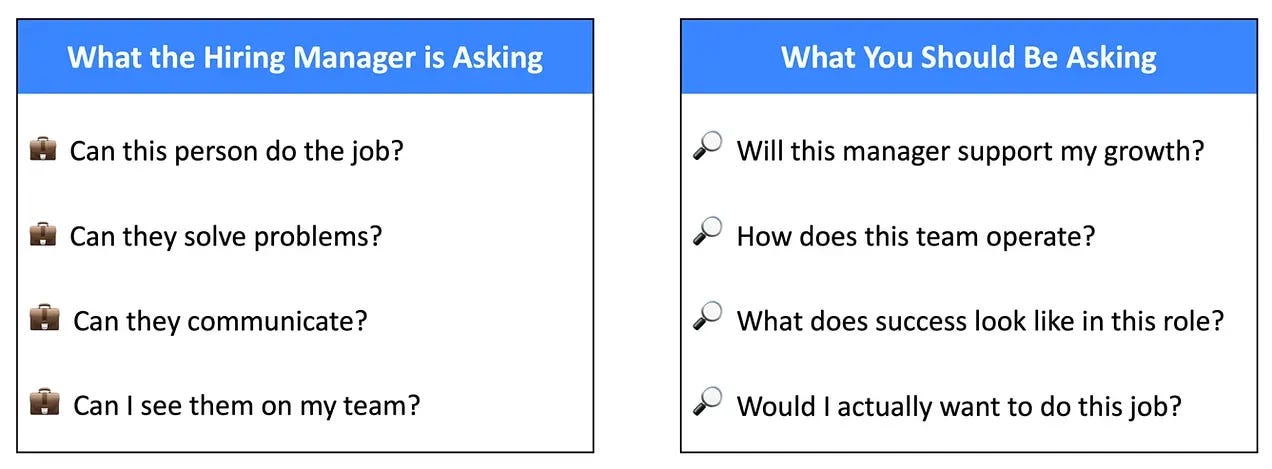
Interviews are a conversation, not an interrogation.
Ask thoughtful questions to emphasize your interest in the role and use the hiring manager’s responses to assess if the role and organization would be a good fit for you. Some recommended questions to ask during this stage include:
Can you tell me a little about the team and who this role will work with most closely?
What qualities would a strong candidate for this role possess?
What opportunities are available for professional development and career growth in your team?
💡 Pro Tip: Do your research!
Once you know who the hiring manager is, do a little additional research. Use LinkedIn to review their career history, professional network, and public recommendations. If you have trusted mutual connections or know former colleagues, their perspective can also provide useful context about the manager’s leadership style and personality.
Taking a few minutes to send a thoughtful thank-you email is a great way to demonstrate your professionalism, gratitude, and genuine interest in the opportunity.
Immediately after the interview, jot down the key topics you discussed with the hiring manager as well as specific aspects of the role that excited you. Use those details to write a personalized note thanking them for their time and reinforcing your enthusiasm for the position using one or two highlights from your conversation.
A personalized note gives you one final opportunity to reinforce your interest and leave the hiring manager with a positive impression.
Hiring managers are looking for people who have the technical expertise and work style that complements their team. As with the recruiter screen, the more intentionally you prepare, the more confidently you’ll interview.
Try This 👉 Turn one resume bullet into an interview story.
Choose one bullet from your resume or CV. (If you’re a student, choose a research project, volunteer role, or leadership experience.)
Then answer these four questions:
Situation: What problem or opportunity were you working on?
Task: What was your responsibility?
Action: What did you do?
Result: What changed because of your work?
Then add answer one additional question: So what? How does this experience relate to the job that you’re applying for now?
The hiring manager interview is your opportunity to move from “meets qualifications” to “can succeed here.” Prepare specific stories that demonstrate your technical expertise and team skills ahead of time but don’t forget that this is your chance to evaluate the manager too.
Next week we’ll cover the final round of the interview process: on-site visits, panel interviews, and the job talk. Stay tuned!
Thanks for reading From Bench to Beyond!
Subscribe for free to get weekly curated toxicology roles plus practical career insights to help you navigate the field with intention.
© 2026 Lauren Walker. All rights reserved. No reproduction without permission.
Disclaimer: This content is for informational purposes only and reflects personal opinions, not professional or legal advice
No posts
Comments
Nothing yet. Say the first thing.
Sign in to join the conversation.