
Featured by: Belouga
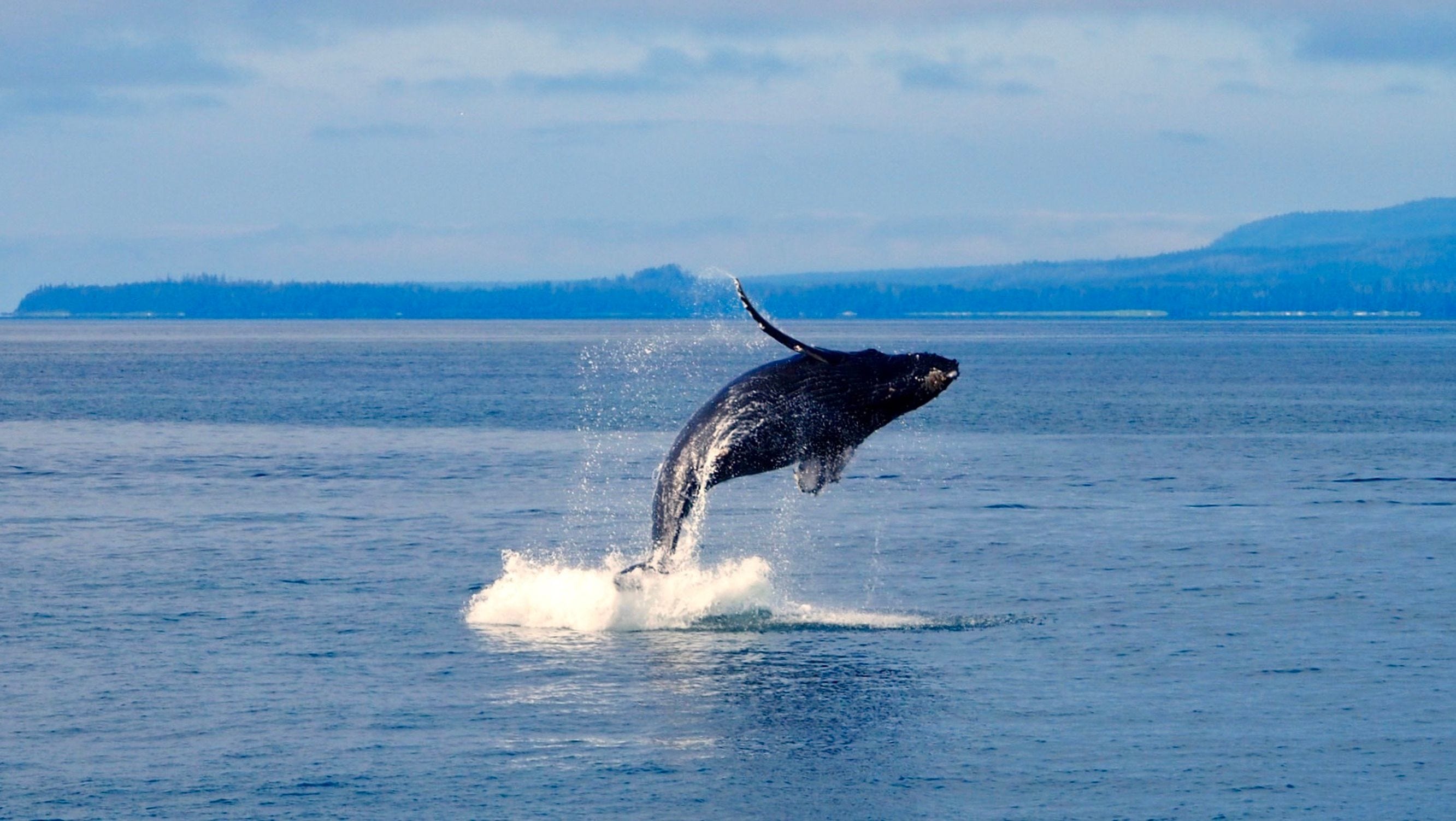
The ocean can feel like another world…
It is vast, constantly moving, and filled with animals we may only ever see from a distance. For students who are curious about wildlife, science, or the natural world, that sense of mystery can also be the beginning of a career pathway.
This When I Grow Up experience goes to Long Island, New York, where a day of whale watching becomes something much more than a search for whales. Alongside a marine biologist, we get a closer look at how scientists observe animals in the wild, understand marine ecosystems, and turn curiosity into meaningful work.
The experience begins with a simple question, “What would it be like to make a living studying the natural world?”
This is where the learning begins.
Out on the water, there is no guarantee of what will appear. A whale might surface nearby, or a bird might pass overhead. The water may look completely ordinary until something changes in an instant. That uncertainty is part of the science.
In this lesson, Michael Schwartz joins a marine biologist on the water and begins to see whale watching differently. Instead of simply looking for an incredible animal, he is learning how observation becomes a tool for understanding the ocean. The experience offers students a glimpse into a profession where curiosity is part of the work.
Marine biology brings together biology, ecology, environmental science, field research, communication, and problem-solving. It also requires patience, as scientists may spend hours observing before discovering something meaningful. For students, that can be an important shift in perspective, with a career in science beginning with being willing to keep looking.
Students are often introduced to careers through job titles, such as a doctor. engineer, teacher, or scientist. But a title does not tell us much about what a person actually does all day. Career exploration becomes more meaningful when students can see the habits, questions, environments, and skills that shape the work.
Marine biology is a particularly useful example because it sits at the intersection of many interests. A student fascinated by animals may discover ecology. Someone interested in data may find themselves drawn to research. A student who loves being outdoors may discover field science. Another might become interested in conservation, environmental policy, education, or ocean technology. There is no single route into the field. What connects these pathways is a willingness to observe the world carefully and understand how it works.
There is a difference between learning about an animal and studying one. A textbook can tell us about whale species, anatomy, migration, or behavior. Fieldwork asks scientists to encounter those concepts in the real world. That means paying attention to conditions that cannot always be predicted, such as watching carefully, recording observations, and communicating what you see. These are scientific skills, but they are also human ones:
Observation helps researchers notice details.
Curiosity drives better questions.
Communication allows discoveries to be shared.
Problem-solving becomes essential when conditions change.
Patience makes room for evidence to emerge.
It is easy to make an experience like this about the whale itself, but the larger story is about the ecosystem surrounding it. Whales exist within complex marine environments connected to food webs, migration patterns, ocean conditions, other species, and human activity. Studying one animal can therefore lead to much bigger questions about how an ecosystem functions.
This is one of the reasons marine science can open so many different doors, which is often how a career pathway begins.
This experience is built around three interconnected ideas:
Curiosity as a career skill: Asking questions and wanting to understand how the natural world works can be more than a personal interest. It can become part of professional practice.
Skills travel across careers: Observation, communication, research, critical thinking, and problem-solving are useful far beyond marine biology. They form a foundation for many pathways in science and conservation.
Interests can become directions: Students do not need to know their future job title. Paying attention to what they enjoy exploring can help reveal possible directions worth pursuing.
This is the deeper learning architecture behind the experience.
Core Subject Areas: Science, Biology, Environmental Studies, Earth & Ocean Science, Language Arts, Career Education
Sustainable Development Goals: Goal 4. Quality Education, Goal 13. Climate Action, Goal 14. Life Below Water, Goal 15. Life on Land
Age Bands
Elementary (8–11): animal behavior, observation, curiosity, and career awareness
Middle School (12–14): ecosystems, field science, scientific skills, and career exploration
High School (15–18): marine biology, ecology, conservation, research methods, and career pathways
Skill Development Focus: Observation, Questioning, Communication, Scientific thinking, Problem-solving, Research, and Career exploration
In a classroom, this experience can begin with students thinking about what a scientist actually does on a daily basis. Students may initially picture laboratories, microscopes, or complicated equipment. The experience gives them another image: a scientist on a boat, watching, listening, recording, waiting, and asking questions.
From there, educators can invite students to think about the skills behind the work, such as what makes someone good at observing animals?, why might patience matter to a scientist?, and what happens when researchers cannot control what they encounter?
Students can then begin connecting those skills to their own interests. A student does not need to already want to become a marine biologist for the experience to be meaningful. It fully takes shape when students recognize that careers often grow from the things we are naturally curious about, and the skills we choose to develop around those interests.
This Belouga experience also includes downloadable educator and student resources designed to bring career exploration, marine science, animal behavior, and scientific thinking into classrooms and learning environments. These resources help educators move beyond simply introducing a profession and instead invite students to explore the skills, questions, and interests that make different career pathways possible.
Continue into the full educator guide and student experience pack below.
Comments
Nothing yet. Say the first thing.
Sign in to join the conversation.