
I’ve had a thing for red-winged blackbirds for some time now.
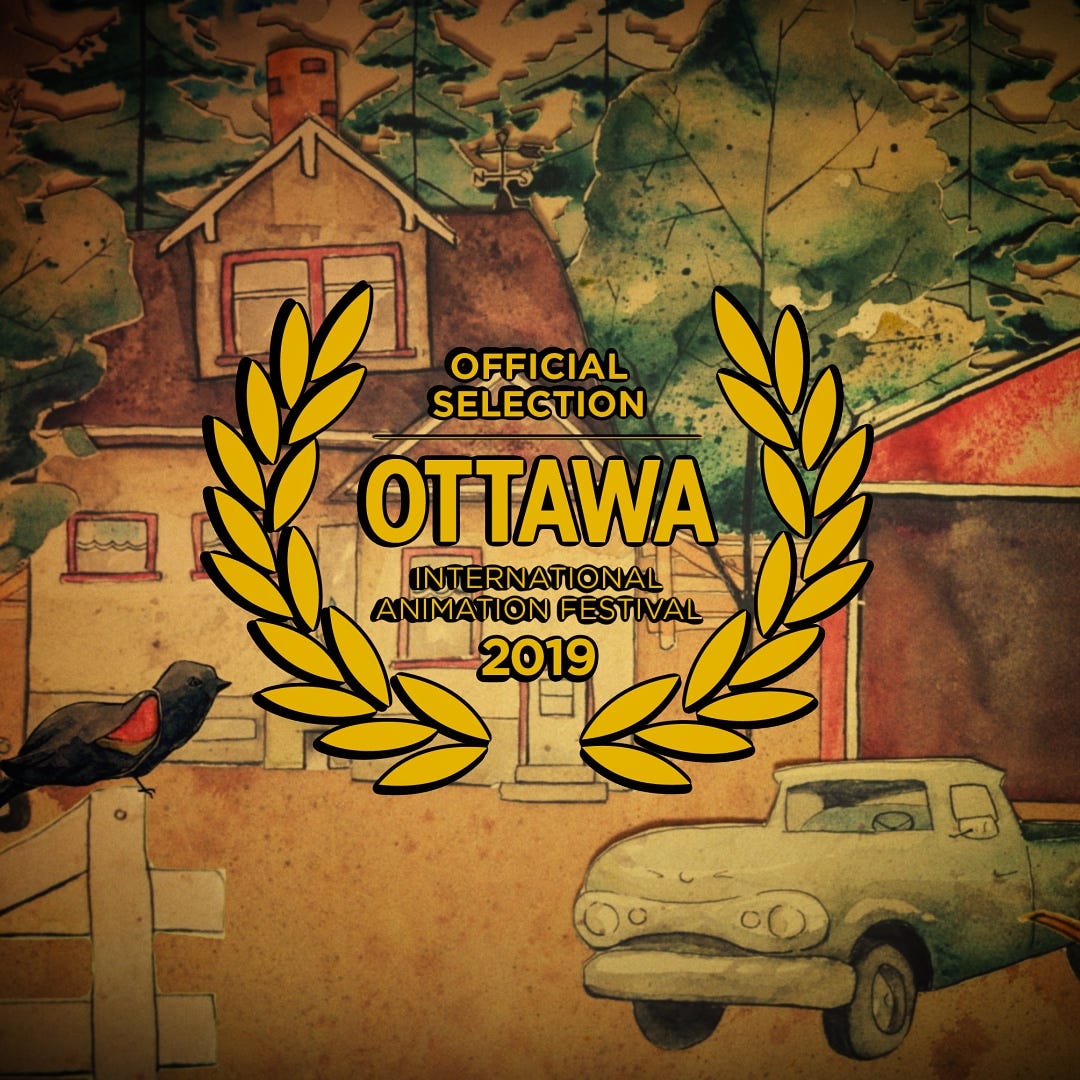
They first appeared in the Belle Plaine universe in the stop animation video for “Laila Sady Johnson Wasn’t Beaten By No Train”. A paper puppet of my favourite guy is in the opening frame and takes the viewer, through flight, from my grandparents’ farm to Laila driving her silver half-ton Ford.
Then I worked with designer, Matthew Donnelly, on stagewear that embodies the red-winged blackbird’s colouring and has two-foot-long fringe, because fashion.
Despite these two defining choices, I hadn’t written anything for the bird. However, in 2022 I was asked by Dr. Charity Marsh to mentor youth via a songwriting group. The gig was this: I had 60 minutes every Saturday over May and June to impart some nugget of wisdom that might assist a young songwriter in their creativity.
I went deep on day one by explaining the diatonic chord structure of a major key. Like, obviously, right?
I’m still shocked and thrilled that this was my approach. It’s ambitious! Aside from a free writing exercise and some group strumming, it was the only thing that I focused on for the duration of the time I spent with these writers. I figured the participants would either understand its workings and build on it, or they wouldn’t grasp it and just carry on in their own way. In the case of the latter I could at least rest easy that I gave them my best tool.
So… a quick explanation: A major scale has eight notes. Think: Do, Re, Mi, Fa, Sol, La, Ti, Do.
An easy major scale to start with is the C Major scale, notated as:
C D E F G A B C.
Each of these notes is a number on the scale from one to eight. C=1, D=2 and so forth. We make triads (chords) by combining three notes. Triads are made of every second note: C Major triad is CEG or 1-3-5. D minor triad is DFA or 2-4-6 and so forth.
NOTE: The triad built on B is not covered in this lesson. That’s a 200 level course, as are what makes chords major and minor. Ironically, if you took any theory through the Royal Conservatory of Music these points would be covered in Preliminary Rudiments. Knowledge is arrived at from so many paths! Don’t sweat the process.
You could hire a music teacher to grill you on theory OR you could save yourself some bucks and become a paid subscriber to the newsletter!
Anyway, from here we will consider what is commonly called the Nashville Number System. Taken at its simplest, triads become chords. In the C Major scale C, E, and G comprise the one chord, or simply just the “one”. F Major is the four and G Major the five. These are the three biggies! When written, chords are generally denoted in Roman Numerals. (In addition to being responsible for the Colosseum and the Pantheon, the Romans also engineered the hieroglyphics you’ll scrawl on a bar napkin for the bass player who forgot his iPad. Incredible.)
Many, many songs are some combination of I, IV, V (aka three chords and the truth).
Ok. The diatonic chord structure lesson ends here for all intents and purposes. I hope you’re still with me. I just wanted you to hear what these young folks were hearing from some granny who graduated from jazz school before they were born.
I told the participants that they could easily write a song if they utilized the framework of diatonic chords, in addition to combining it with a topic and a loose adherence to a musical style. For example:
Diatonic Chord Structure that uses the I, IV, V.
Colour and make of a car.
Classic Rock.
Congratulations! You might have just written “Pink Cadillac”.
After this brilliant lesson I went home and realized over dinner that I had never written a song employing this method. Huge oversight. I had to test the method that I confidently recommended. I set to work. My topic was the red-winged blackbird. The style was a Marty Stuart-esque bluegrass tune.
And I darn well wrote it! I played it the next week in class while admitting my failure in delivering an untested method.
From the jump, I played it a lot with the fellas. It was a fun song and an easy sell for the set list. When I presented it to Paul Rigby for the new album, my bluegrass song got a little gentler; a bit more Mother Maybelle Carter than Marty Stuart. Paul coaxed out the love song that was hidden inside. They were my recollections of staring into a slough and watching tadpoles grow by the day from clusters of eggs. Of sitting on a culvert at the edge of cattails, seeing their fluff get caught in the wind. Of the quiet-busy sound of nature: insects buzzing, the splash of a startled mallard, the song of frogs. All of this was happening while my dad’s tractor did rounds in the fields surrounding the wetland.
My friend and Naturalist, Trevor Herriot, told me that the first time he heard me sing it he leaned over to his partner Karen and whispered in surprise, “Did you hear what she just said?! She said marsh.”
Trevor and Karen are exactly the people who understand what’s most important to me about this song. Preserving and protecting native species is an act of love. History is simply awash with human folly in regards to the natural world, some intentional, some out of benign ignorance.
I’ve indeed had a thing for red-winged blackbirds for a long time, but moreso I’d say I’ve had a thing for maintaining a connection and awareness of the natural world. Recognizing and identifying a species, plant or animal, in any region, feels a triumph: angophora costada, red-breasted nuthatch, saguaro, arbutus, great blue heron, sequoia, galah, yarrow. It’s the best souvenir and one that leaves no trace.
“Little Black Bird” can, at first blush, be deemed a simple, cheery song about spring and the migratory return of a common creature. To me though, it’s a love song to the prairie and for allowing natural habitats to exist for their own sake. It’s a gateway to learning more about the incremental ways we can defend and advocate for the natural world.
The studio recording of “Little Black Bird” was released to streaming platforms on March 17 (with the exception of Spotify) and a live performance video was released this past Monday. If you haven’t heard it, please cue it up!
Thanks for coming along for this ride. I’m grateful to each one of you reading these words.
Comments
Nothing yet. Say the first thing.
Sign in to join the conversation.