
*The points and topics shared in this article are largely informed by the work of historian Ríona Nic Congáil and her article, “Looking on for Centuries from the Sideline”: Gaelic Feminism and the Rise of Camogie
It’s GAA season. The All-Ireland Senior Men’s Hurling and Gaelic Football finals are nearly upon us, and I want to say something about Camogie—the female variant of (the male game of) hurling—and its fascinatingly subversive history.
Except, I haven’t the first clue about Camogie. I’m entering what is, to me, an unknown territory and, to be honest, I’m a bit nervous. It just doesn’t do to get your facts about a sport wrong. There is nothing more annoying to a person who knows and loves a sport than having to listen to someone who feigns an interest or, worse, pretends they know what they are talking about.
So, full disclosure, when it comes to the world of Gaelic sports, I am an outsider. I mean, there’s being Irish, and then there’s being into ‘The GAA’—it’s its own complex of culture and tradition, and I don’t speak the language.
Is there a reverse version of a Plastic Paddy? Or, what do you call an Irish person who moves abroad and suddenly becomes the greatest advocate for everything Irish?
Once transposed onto new shores, we emigrants invariably become mini-tourist boards, expounding the beauty and wonder of Ireland wherever we go, or sit ready to pounce on any mention of Ireland, and course correct the poor person who, on hearing your Irish accent, only wanted to say something about ‘Potatoes,’ or ‘Temple Bar,’ or their ‘Irish great-grandmother’ as a way to connect.
But, in more recent years, as a self-confessed Irish-mini-tourist-board-person living in Britain, I have experienced what could only be described as an ‘out of body experience’ as I puff out my chest and listen to myself say things like:
“Oh yeah, it’s the fastest field sport in the world,”
or,
“Yeah, it’s an amateur sport… Great, isn’t it? Not like all these overpaid soccer players.”
Who is this woman? Saying things she would never say if she were still living in Ireland? But ‘Reverse Plastic Paddy’ and all that—it has to be done.
Somewhere post Sky Sports getting the hurling and Connell’s chain glinting on the Gaelic-Football field of the BBC’s adaptation of Sally Rooney’s novel, Normal People, Gaelic sports became a topic of interest in Britain. And I’ve had to defend my position as ‘expert on all things Irish’ and feign some knowledge ever since. ‘Yes, hurling is the fastest field sport in the world’ and yes, ‘players really do get paid nothing’ (which, obviously, means Gaelic sports are superior, and I have, once again, triumphed in defending Ireland’s honour—job done).
More generally, though, and as I’ve written about in other articles, Irish culture is having a bit of a global moment. Living abroad, especially in Britain, I think you notice it more acutely. While, to an older and very specific class of English person, I am still automatically filtered into the category of ‘uneducated,’ to a younger generation, my Irish accent sparks comments like, “Ohhh, Paul Mescal is so sexy,” and “Oh my God, I love CMAT,” and the vast difference between those two groups speaks volumes about why being an Irish emigrant these days is a much easier experience than it was in the past (or at least, that’s how I’ve known it). And, as part of this global and growing interest in all things Irish, Gaelic sports are also in the spotlight.
Just last week, the Dutch MEP, Jeroen Lenaers, knew exactly what he was doing when he made “Mayo for Sam” part of his speech to acknowledge the pairing of The Netherlands and Co. Mayo for Ireland’s turn at EU Presidency. While the FIFA World Cup has somehow created a platform for GAA-related memes to reach a whole new and, by all accounts, enthralled international audience.
However, Sport (with a capital S), is not politically neutral. As the World Cup is currently reminding us, it remains one of the most powerful ways to reinforce and convey a national identity. And, in Ireland and beyond, despite it being a national (although increasingly international) and amateur sport, there really is nothing that does a better job at ‘Show me you’re Irish without saying you are’ than a pair of O’Neill’s shorts, a GAA kit bag, or a reference to someone scoring a goal at “the town end.”
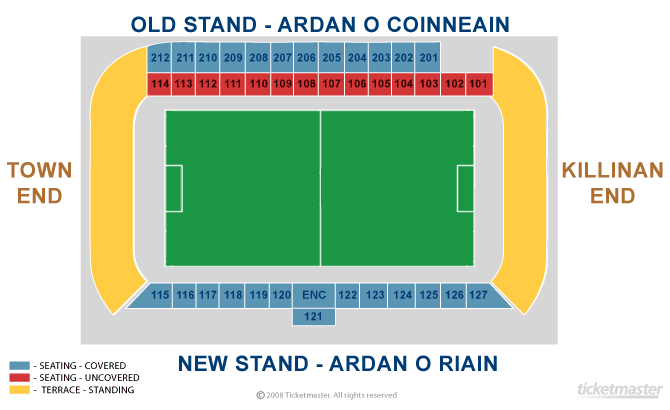
Gaelic sports are a cornerstone of Irish identity, and my admission that I am an uninitiated outsider is tantamount to saying I’m not really that Irish at all (and, to be honest, quite rightly revealing that I was sent to a Protestant school where, still in the 2000s, only hockey, basketball and soccer were offered on the team-sports menu—and before you write me off entirely, please also allow me to clarify that said school was neither ‘private’ nor ‘boarding’).
But, the general sense that Gaelic sports and ‘Irishness’ go together is not coincidental but intentional.
If you have read my work before, you know that I repeatedly use phrases like “the construction of modern Irish identity” and harp on about the wide-ranging yet inter-woven elements of the Irish nationalist and cultural revival movements of the late 19th and early 20th century.
You can read about all of that in-depth here, but the reason why I refer to this part of Irish history so often is because it is when the complex of images, sentiments, symbols, and ideals we today call “Ireland” and “Irishness” were, for all intents and purposes, invented and cemented. What made Ireland ‘Irish’ and what defined that ‘Irishness’ didn’t really exist before then, at least not in the form we know them today.
The establishment of the GAA in 1884 was a huge part of that national identity construction process. As expert in the history of Gaelic sports, Cathal Billings writes, the GAA “played a central role in the formation of Irish national identity” and, from it’s early origins in the 19th century, would go on to play a “central role in the definition of Irishness.”1
What was this definition of Irishness to be, however?
Well, like the many nationalist movements emerging across Europe in this time, it was all about engaging with the past and reclaiming an older, superior, culture believed to have been lost to modernity and, in its darker elements, a version of a ‘purer national race’ unpolluted by outsiders. For Ireland, several centuries of English colonisation meant that the past Irish nationalism sought to reclaim was the ancient ‘Gaelic’ Ireland of saints, scholars, myths and heroes believed to have existed before the Normans arrived in the 12th century. The intertwined Gaelic Revival and Irish Nationalist movement was all about the idea of connecting “the present with the past… with the ages of Irish saints and heroes.2”
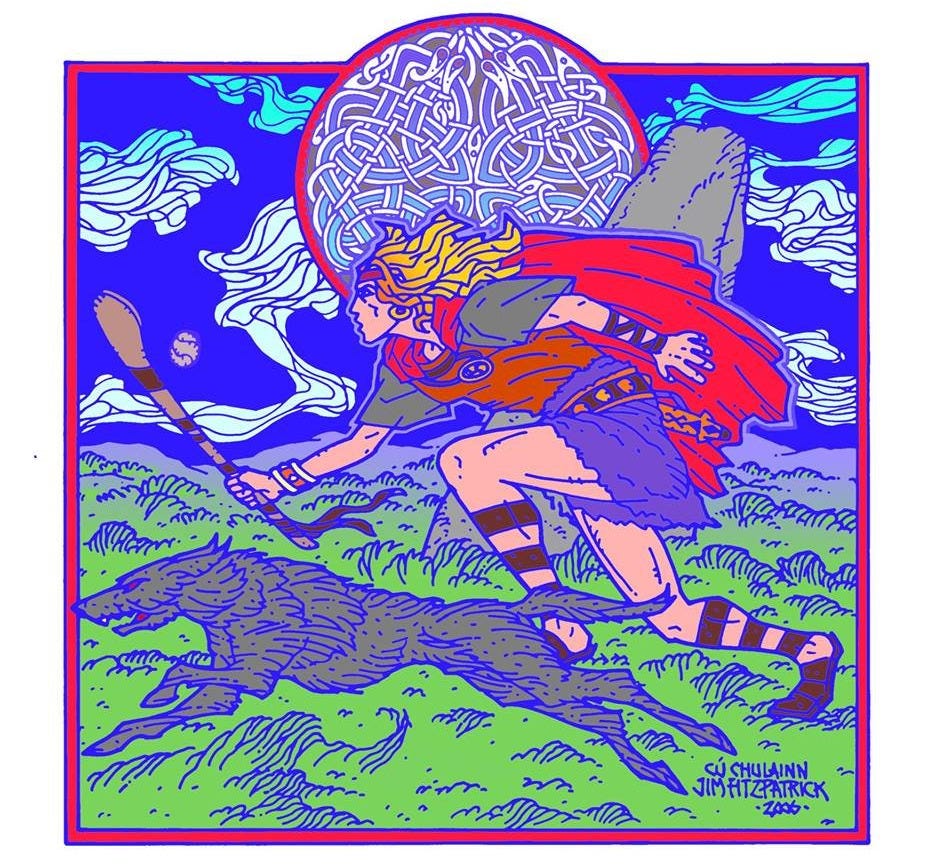
And how better to do this than through the ancient game of hurling, a game played by none other than the mythical hero Cú Chulainn.
However, there was more motivating the establishment of the GAA and the standardisation of Gaelic Games than the reclamation of a perceived older and truer Irish culture. It was also driven by anxieties about the ‘degeneration of the Irish race’ or, more directly, the emasculation of Irish men.
Colonial playbook 101 is the feminisation of the colonised nation and its men. According to the mutually supporting logic of colonial and patriarchal ideologies, rendering the subject peoples ‘feminine’ enables the ‘masculine’ colonial power to justify their control over, and subordination of the colonised peoples. By the end of the nineteenth century, Irish men had been subject to a concerted feminisation and dehumanisation project that invariably presented them as ‘drunken, simian ruffians’ or the ‘overly-emotional, misty-eyed, begorrah, stage-Irishman.’ The message to the world was simple: Irish men lacked the necessary masculine qualities of rationality, strength, and logic to run their own country—England would have to do that for them.
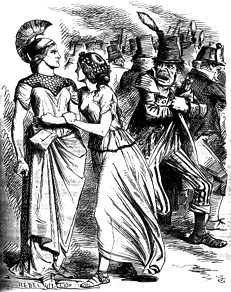
Re-asserting Irish masculinity was thus a central concern of the Irish nationalist and cultural revival movement. As scholar Declan Kiberd explains, a “surprising number of militant nationalists accepted [the] diagnosis” presented by their colonial “masters,” that Irish men could be “written off as feminine.” If Irish men were ever to prove their ability to govern their own country and legitimise their claims to independence, then proving their masculine prowess—body, mind and soul—became imperative.
In response, as Kiberd explains, nationalist leaders “called on the youth of Ireland to purge themselves of their degrading femininity by a disciplined programme of physical-contact sports.” It is in this context that “the GAA was founded to counter such emasculation and to promote the game of camain (hurling) beloved of the young Cú Chulainn.”3
That connection between the mythical Cú Chulainn, and other legendary figures such as Fionn MacCumhaill, and hurling was not accidental—it was a story actively fostered and promoted by the the GAA. Such macho, muscular and heroic figures embodied so many of the ideals the nationalist movement was seeking to promote among Irish (male) youths: camaraderie, heroism, martyrdom, muscularity, and prowess in mortal combat. And, better still, they were figures of ‘native masculinity.’
As historian Aidan Beatty (author of Masculinity and Power in Irish Nationalism, 1884-1938) writes, Michael Cusack, the founder of the GAA “defined sports as a means of communing with a lost Irish masculinity and claimed that in his dreams ‘I was living with the men of Erin of pre-Christian times. In spirit I hunted and fished with Fionn’s invincible hosts from Antrim to Kerry. I hurled with the Fenians of sixteen centuries ago from Tara to Killarney. I resolved to bring back hurling.”
Beguiling and poetic as that is, such sentiments were both a reflection of the ‘Irish-Ireland’ ideologies emerging at the time, rooted as they were in the idea of restoring a glorious and ancient Gaelic past, and the careful construction of a narrative which made the past malleable and, therefore, useful. Like most nationalist and cultural revivalists movements, the GAA’s engagement with the past and notions of tradition was ‘strategic.’ As Susan Stewart explains, such movements require the erasure of the “actual past in order to create an imagined past which is available for consumption.”4
In the GAA’s case, regenerating Irish masculinity through Gaelic sports meant erasing the numerous local and varying ‘stick and ball’ games found across the country and standardising a strict and ‘rationalised’ form of hurling. As Cathal Billing’s writes, “the history of other games played in Ireland was whitewashed” to the point of creating a “historical amnesia,” thus enabling cultural revivalists and nationalists to codify hurling as an ancient game with an “unassailable antiquity.”5
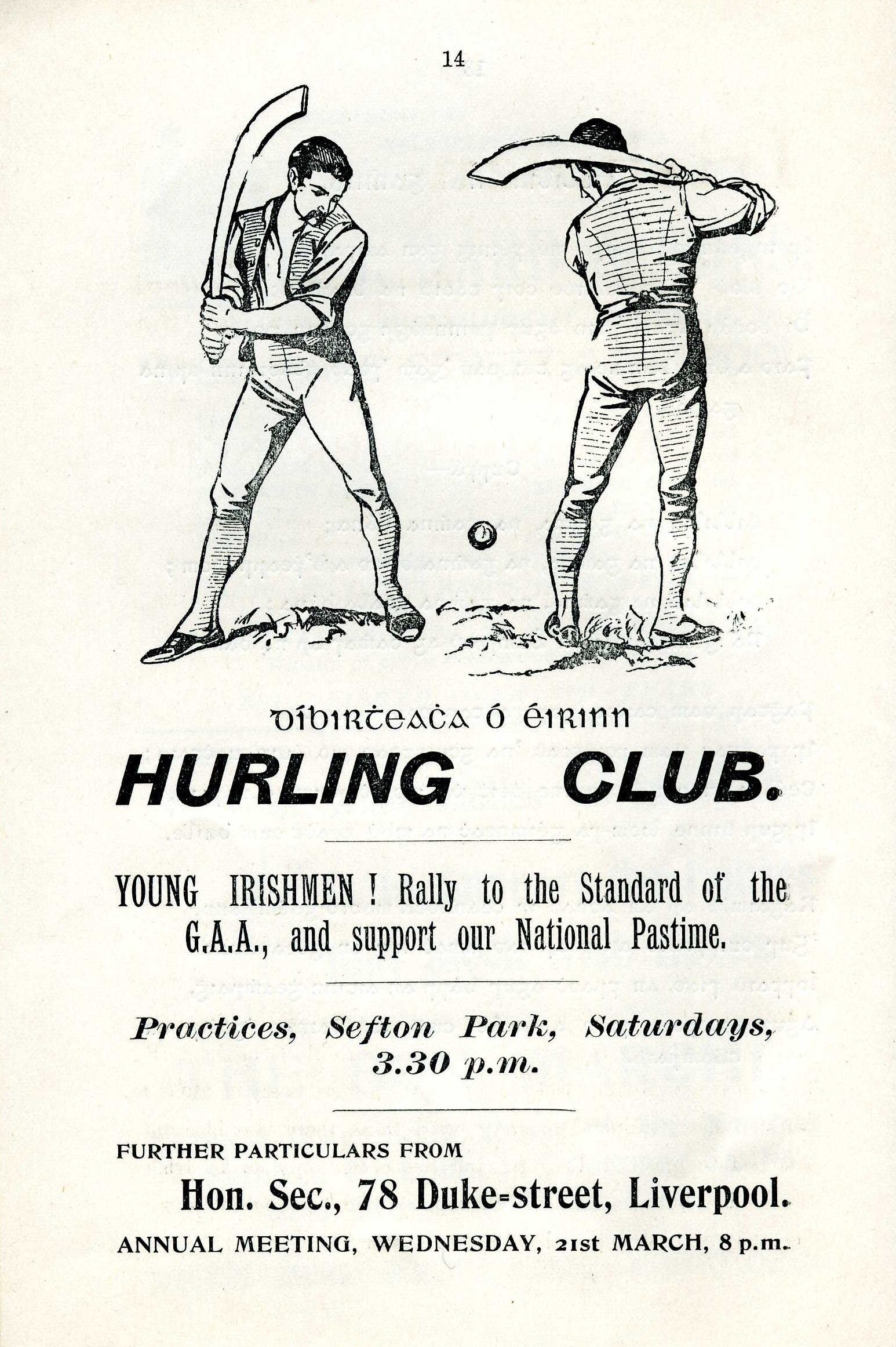
And, in fairness to it, the GAA was (and is) a hugely successful organisation. It played a notable and significant part in engendering a new-found pride in an ‘Irish-Ireland’ in the early 20th century, and in encouraging a new generation to think about their fitness and physical wellbeing (something which, in the post-Famine years, must have felt psychologically and somatically vital). As the Irish nationalist and cultural revival project gave way to a militant fight for independence, and eventually the establishment of the 26-county Irish State, the GAA remained at the forefront of the promotion of Irish culture and identity across the island. And, most importantly for our interests here, whatever the era, it never quite lost focus on it’s original vision and purpose—to make Irish men men again.
As the historian Patrick McDevitt explains, “Gaelic games… provided the Irish with a novel form of self-expression through which they were able to foreground the differences between themselves and the British and to fashion a masculine identity which they viewed as uniquely ‘Irish.”6
However, for women, the desire to ensure that “muscular visions of reborn Irishness remained at the heart of the [GAA’s] project”7 meant they were largely excluded from the outset of its development. Unlike other cultural revival organisations like the Gaelic League, which opened its membership to all genders, classes and religious denominations, the GAA never set out to be so inclusive. ‘Gaelic’ was code for Catholic, and ‘Athletics’ was code for masculinity.
Patrick McDevitt, in coining the phrase “Muscular Catholicism” to describe the idealised man the top-brass of the GAA were seeking to create, describes how the revival of Gaelic Sports had been triggered by a desire for “gender differentiation and Irish male fears of the effeminate.”8 To include women in the development of Gaelic sports would have been viewed as antithetical to its mission; that of reclaiming a muscular Irish masculinity out of an imagined past of mythical warrior heroes.
Not including women in sporting developments was also fairly standard late Victorian and Edwardian practice. Demonstrations of female skill, fitness, speed, and strength didn’t exactly fit in with the preferred vision of women as passive, modest and gentle. For Irish nationalists, the place women should hold in the emerging ‘Irish-Ireland’ national identity was also very clear—they would be the home-makers, the ‘Mothers’ of a new nation, and cultural revival movements largely encouraged women to take up ‘traditional crafts’ like weaving, spinning and embroidery.
But several key women had very different ideas about womanhood and Irish identity. If the men could reclaim their bodily pride and place in society through sport, why couldn’t they?
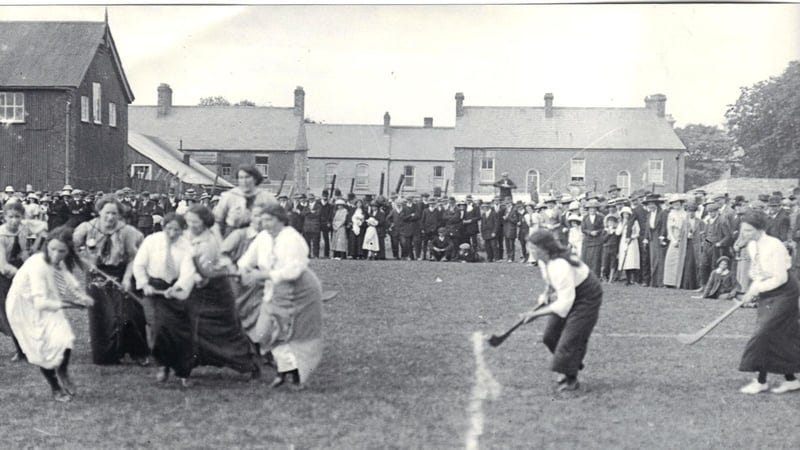
The origins of the game we today call Camogie are a bit vague, but most credit the Irish language enthusiasts and cultural activists, Máire Ní Chinnéide and Cáit Ní Dhonnchadha with its creation.
A female variant of hurling, originally called “camoguidheacht” and played with a lighter ball and on a smaller pitch, they first wrote down it’s official rules in 1904. From the get-go, although supported by the input of several key men (especially Cáit’s brother Tadhg) it was a female-founded and independently run sporting movement.
Reflecting my ignorance, I had always assumed that Camogie came under the umbrella of the GAA—but no. Likely as a result of the GAA’s original disinterest (and even hostility) towards the development of women’s Gaelic sports, still to this day Camogie is governed by its own independent organisation, The Camogie Association. Instead of developing as a sub-set of the Gaelic-sports movement in the early 20th century, Camogie proliferated throughout the country through the support of branches of the Gaelic League, the organisation at the centre of the Irish language revival movement.
However, from the get-go, the sport drew the negative attention of the male hierarchy, especially the clergy. As historian Ríona Nic Congáil9 explains in her account of Camogie’s genesis, “early antipathy toward the sport was initiated by certain members of the clergy, who viewed the game as detrimental to morality and female purity.”
The female leaders of this burgeoning sport rightly called out the hypocrisy of such anxieties. Many women already played sports like tennis and hockey, why couldn’t they also play Camogie?
Reflecting the ‘anxieties of the effeminate’ identified by Patrick McDevitt in his characterising of the development of the GAA, the issue with the Camogie players appeared to be their ‘masculinity.’ They were displaying the kind of physicality, aggression, strength and competitiveness on the pitch which men (and only men) were supposed to have. There was also an underlying tone of ‘we can do it better than the lads’ which may also have irked the men of the GAA. No longer willing, as women’s rights activist and Camogie ambassador Agnes O’Farrelly wrote, to look on “from the sidelines at the men of their race perfecting their physique and their stamina in games of skill and strength” women were now doing it for themselves.
Recounting the fierceness with which women had played in a match she had just attended, O’Farrelly said:
“Each player wielded her Camóg at her own sweet will, without any reference to her colleagues, just to show how far she could put the ball; the proud wielder of the Camóg felt she had gone one better than her brothers on the hurling field.”10
I have to admit, on reading such accounts of these early Camogie players I couldn’t help but think, ‘Glad to see nothing has changed.’ Anyone who has spent a night out with a bunch of Camogie players knows that energy! They are a force-to-be-reckoned with and play as hard off as on the pitch.
Emulating the GAA’s poster-boying of mythical manly heroes like Cú Chulainn and Fionn MacCumhaill, many early Camogie teams also drew on myth and folklore for powerful female icons. Clubs were named after figures like the legendary Gráinne O’Malley, who many women of the cultural revival movement held up as a representative of an older history of Gaelic female power, strength, military prowess and gender equality. In essence, Camogie was a physical manifestation of an early form of what Ríona Nic Congáil calls “Gaelic Feminism.”
This position of Camogie, as a means through which women could counter the narrow definition of their role and identity within Irish nationalism, took on an even greater importance in the gender politics which characterised the Irish Free State. Following the introduction, in the 1930s, of legislation aimed at curtailing women’s employment prospects and participation in the public sphere, the 1935 All-Ireland Camogie Congress voted to prevent men from attending as delegates in future Congresses (i.e. limiting their influence on the sport’s development) and male referees were later banned entirely. While such male-banning measures were never completely enforced, it demonstrated the countervailing and public platform Camogie offered women in a society increasingly focused on subordinating women at large.
However, Ríona Nic Congáil argues that the early pioneers of Camogie never quite managed to turn it into the feminist and subversive force it might have been. From the outset, it was somewhat dogged by inconsistent views on what women’s roles in the new ‘Irish-Ireland’ should be and how women’s sport could contribute to that.
While some women, like Agnes O’Farrelly, were keen to build on Camogie’s potential to counter dominant gender hierarchies and a nationalist idealising of women as passive, modest and gently ‘feminine,’ others felt Camogie should reflect and develop these very same qualities in women. Consequently, many of its early promoters chose to frame Camogie as a ‘hobby’ or a ‘past-time’ rather than a ‘sport,’ the latter being too strongly associated with the masculine qualities of ‘competitiveness’ and ‘physical exertion’ for their liking.
In a story that continues to play-out in so many different areas of life today, disagreements over where women should fit on the ‘feminine-masculine’ qualities continuum divided them. Consequently, while, as Nic Congáil writes, “establishing the sport was an act of feminist and cultural-nationalist defiance…as camogie became more popular among young Irishwomen, and its members more embroiled in cultural-nationalist controversies, its potential as a feminist force faded away.”11
Ignorant as I am to Gaelic sports in general, this is not a history I had any knowledge of until I stumbled upon it. And, in many ways, it’s left me feeling a wee bit sad. I mean, there are all sorts of issues I could focus on here, including the ongoing barriers impacting women’s sports, from lack of funding, to lack of media attention and participation and so on, never mind how this history explains so much about the whole ‘Camogie skorts’ debacle that came to a head last year, and how it revealed the legacy of older concerns about ensuring the ‘femininity’ of female Gaelic players were still informing the sport. However, that is not what is really making me sad.
What is making me sad is that when people in Britain get excited about Gaelic sports, and when I get up on my mini-Irish-tourist-board soap-box to wax-lyrical about ‘hurling being the fastest field game in the world’ or impress its (cough cough) 2000 year antiquity on them, its coming from this very visceral ‘proud to be Irish’ place. But those symbols I have been given to express that Irish identity are completely void of women—they are the legacy of a cultural movement which never really wanted to include them.
Commenting on the continued position of sport in 21st century Ireland, Kate Liston writes, “sport remains a relatively unchallenged area in which an Irish male can develop his identity in opposition to a rigid and narrow perception of what an ideal Irishwoman should be.”
Sport is never politically neutral and in Ireland, as elsewhere, it carries with it a complex history shaped by gender ideals, cultural identities and national aspirations.
What do we make of this and, more importantly, to all the Gaelic sports enthusiasts and Camogie players out there, what did I get wrong? (Educate me. Please do).
Thanks for reading The Women of Ireland Project! This post is public so feel free to share it.
P.S. I have largely focused on the ‘stick and ball’ form of Gaelic sports here in the form of hurling and camogie. There is also Gaelic-football and women’s Gaelic-football (which was established in the 1970s). If you are London based, there is currently an exhibition about Gaelic women’s football in the London Irish Centre in Camden (details here) which, notably, explores themes of Irish masculinity within that history too.
Pledges: I won’t be moving to a ‘paid’ model. Here’s why
Quite a while ago, I turned on the ‘Pledge’ option here on Substack, allowing readers to ‘pledge’ their monetary support in the form of a monthly monetary subscription. I was truly blown over by how many people were willing to pledge €5 per month to support my writing and research. As someone who is near-pathologically incapable of asking for or accepting support, it was mindbogglingly lovely. However, I never converted those ‘pledges’ into actual subscriptions and have now turned that pledge option off. If you did ‘pledge’ your support, I am unbelievably grateful and, as helpful as your patronage would be, I cannot, in all good conscience, allow your money to be processed through this platform (Ali Isaac explains the issues perfectly in this recent piece). As such, I am turning off the ‘pledges’ option for good.
If you do still want a way to support my research and writing in the way that a ‘Pledge’ would have offerred:
I have created a dedicated ‘Tip Jar’ via PayPal below (Thank you!)
For full disclosure, any such patronage and support I receive at this time will be used to ‘buy time’ at a co-working space. I am usually at my most creative when I am around people and, as someone who exclusively works from home, having the opportunity to be around others in a dedicated work space is something I am hoping to enable more regularly. One day costs £8 (GBP)
Upcoming talks and workshops:
I have had quite a few inquiries recently about giving talks and running short-courses on my research into the socio-cultural and historical forces that have shaped women of Ireland. This is my favourite part of the work and, delightfully, I am now completely booked up until mid-November. If you were thinking of me for something along those lines, please do get in touch soon so I can get you in the diary. Further details about what I offer can be found here on my website.
Podcasts and chats:
I recently spoke on the CLAIRITY Unspoken Podcast about Ireland’s deep history of shame and secrecy, you can find the full episode here on Spotify if you would like to listen. Also, if you have not yet had a chance to listen to my conversation with the inimitable historian, Dr. Gillian Kenny, on women in medieval Ireland, it is still available here.
Ó Conchubhair, Fin de Siecle na Gaeilge, p. 22.
Pg. 25 in Kiberd, D. (1996). Inventing Ireland: The Literature of a Modern Nation. Vintage.
Beatty, A. (2016). Masculinity and Power in Irish Nationalism, 1884-1938. Palgrave Macmillan.
Nic Congáil, R. (2013). “Looking on for Centuries from the Sideline”: Gaelic Feminism and the Rise of Camogie. Éire-Ireland, 48(1), 168–190.
Nic Congáil, R. (2013). “Looking on for Centuries from the Sideline”: Gaelic Feminism and the Rise of Camogie. Éire-Ireland, 48(1), 168–190.
Pg. 190 in Nic Congáil, R. (2013). “Looking on for Centuries from the Sideline”: Gaelic Feminism and the Rise of Camogie. Éire-Ireland, 48(1), 168–190.
Comments
Nothing yet. Say the first thing.
Sign in to join the conversation.