
Home · Book · Start here · About · Pricing · Careers · Galleries · Archive . Collecting
Related reading:
The Collapse of Small Art Galleries: Why the Artist Career Ladder is Breaking
10 Reasons Your Gallery Submission is Rejected
Can any gallery meaningfully represent 135 artists? Recent events suggest not.
For decades, growth has been treated as an unquestioned good within the gallery world. More locations, more staff, more artists, more art fairs, more visibility. The underlying assumption has been simple: scale is strength. Larger galleries possess greater resources, broader international networks, and greater influence over the careers of the artists they represent.
Yet Pace Gallery’s decision in 2026 to remove approximately fifty artists from its roster has raised an uncomfortable question about the limits of that logic. Announcing the restructuring, Marc Glimcher argued that the contemporary mega-gallery model was “not only broken, it’s unfixable”. Rosters had become so large, he claimed, that galleries could no longer provide meaningful support or maintain a coherent programme. At a certain scale, “you start losing touch”.
The significance of this shift extends beyond Pace. It challenges a core assumption of the contemporary art market: that bigger galleries necessarily offer better representation. While scale expands reach, it also dilutes the attention available to each artist. The question is no longer whether galleries grow, but whether growth eventually undermines what galleries are meant to do
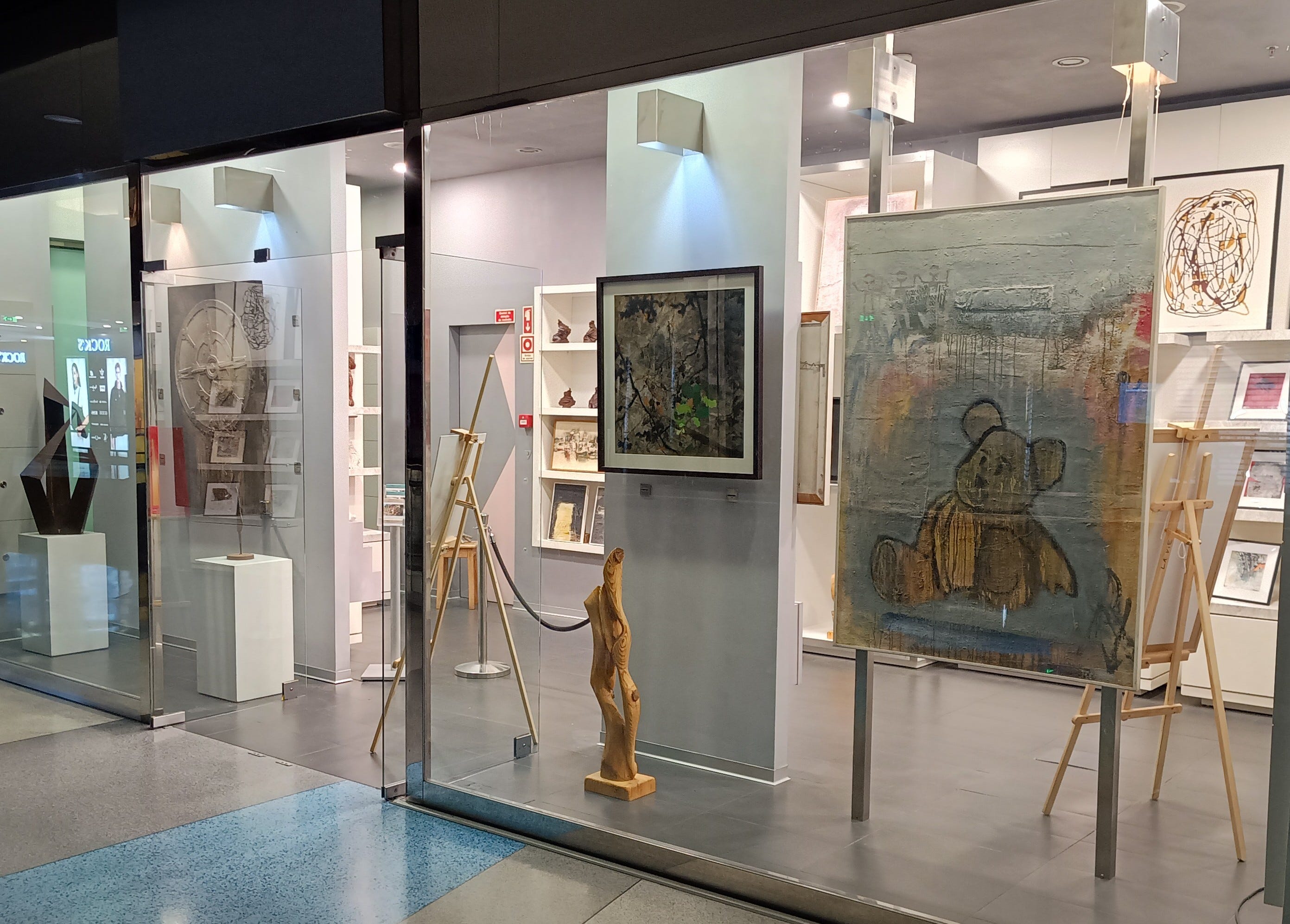
The art world has an oversupply of artists and a limited number of institutional platforms. The traditional trajectory - study art, produce work, find a gallery, has come under increasing pressure, intensifying competition for entry.
But entry is not the binding constraint. Attention is.
Collectors, curators, journalists, and galleries all operate under finite time and capacity. No organisational expansion removes this limitation. As galleries scale, the number of represented artists grows faster than the attention available to sustain them. The result is a structural divergence between representation and attention.
Visibility is therefore often mistaken for significance. In practice, it reflects how institutional attention is allocated.
The most visible artists are not necessarily those producing the most significant work, but those positioned within systems capable of concentrating attention.
The contemporary art world is increasingly shaped by a small group of global galleries, including Pace, Gagosian, Hauser & Wirth, and David Zwirner. These organisations operate on a scale that would have been difficult to imagine a generation ago: international branches, hundreds of employees, publishing arms, research departments, museum-scale exhibitions, and global fair schedules.
On paper, large rosters signal strength. But they raise a more fundamental question: how many artists can a gallery actively support, rather than simply represent?
Within large rosters, attention is structurally uneven. A small subset of artists receives the majority of exhibitions, fair placements, press coverage, and collector engagement.
This becomes visible at art fairs. Mega-galleries typically represent 100–150 artists, yet only 10–25 receive direct booth-level visibility at major fairs such as Art Basel. Even across a full fair cycle, only a fraction of a roster gains meaningful exposure.
Scale does not expand attention proportionally; it compresses it into a narrower group of artists.
Primary-market galleries derive roughly 60–85% of revenue from living artists, yet within that category a small subset accounts for a disproportionate share of sales. The result is a highly skewed distribution in which both income and attention are concentrated rather than evenly spread.
Despite Pace Gallery’s restructuring, there is little evidence of a broader reassessment of roster size across the mega-gallery sector. Rivals such as Gagosian, Hauser & Wirth, and David Zwirner have not followed with similar reductions, nor have they publicly endorsed the idea that large rosters are structurally unworkable.
Instead, the dominant framing remains that scale is not the problem but allocation is. Large galleries argue that attention can be managed through internal segmentation, specialist teams, and differentiated programming across artists. In this view, uneven visibility is not evidence of failure, but a normal feature of a diversified roster.
The result is a quiet divergence in interpretation. Where Pace’s move implies that attention breaks down under scale, its peers maintain that it can be organised within it. Yet in practice, both models arrive at the same outcome: attention remains concentrated among a small subset of artists, while the majority operate in a more limited field of visibility.
Galleries expand for reasons that go beyond immediate sales.
At a basic level, larger rosters diversify risk. Because the trajectory of any individual artist is unpredictable, galleries spread exposure across multiple practices in the expectation that a small number will generate most returns.
Roster expansion is also driven by long-term value creation. Emerging artists may become central to a gallery’s future business. Representation is therefore not only about present performance but future potential.
The demands of the international fair circuit reinforce this logic. Multiple fairs require continuous rotation across formats, price points, and geographies. Larger rosters provide flexibility and global reach.
Roster size has also become symbolic. Scale itself signals institutional strength and market influence.
Yet despite this expansion, sales remain highly concentrated. Galleries continue to add artists for strategic reasons while their economic reality remains anchored in a small core.
This tension is central to Pace’s restructuring. It suggests a reassessment of whether the benefits of scale still outweigh its costs. If attention is the true constraint, then roster expansion may produce diminishing returns: more representation without more support.
The real issue for artists is not securing representation at a major gallery, but securing a meaningful share of that gallery’s attention once inside it. Representation guarantees inclusion. It does not guarantee visibility.
For decades, the assumed career trajectory has been linear:
Small gallery → mid-tier gallery → blue-chip gallery.
The Pace restructuring suggests this progression is less stable than it once appeared. As galleries reorganise around the limits of attention, artists may need to think less in terms of prestige and more in terms of allocation. They need to start asking questions like:
How many artists does this gallery represent, and how is attention distributed across them?
What share of exhibitions, collector access, and institutional visibility can realistically be expected?
Am I a core focus, or part of a broader portfolio of competing commitments?
While roster reductions at a gallery such as Pace may appear to release artists into the wider market, there is no guarantee they will be absorbed by other mega-galleries. In practice, artists often face a more uncertain outcome: searching for new representation in a highly saturated field, moving to a smaller or mid-tier gallery, or, in some cases, failing to secure stable gallery support at all. Rather than being absorbed elsewhere, many are pushed into a more precarious search for representation or out of it altogether.
Solo exhibitions are becoming more unevenly distributed on a per-artist basis. Institutions are staging fewer shows overall, with longer cycles and greater pressure on resources. At the same time, gallery rosters have expanded, increasing competition for a relatively fixed pool of exhibition opportunities.
Even if the total number of solo shows remains stable, the probability of any individual artist receiving one declines.
The function of the solo exhibition is therefore shifting. It is less a mechanism for discovery than a consolidation of attention already accumulated through sales, representation, or institutional visibility.
A gallery representing ten or fifteen artists can devote significantly more attention to each practice than one representing over a hundred. It may build closer collector relationships, develop a deeper understanding of its artists’ work, and take greater risks on emerging talent.
Historically, many important artists were developed by smaller galleries before entering the blue-chip system. In practice, smaller galleries tend to develop artists in their early careers, while larger galleries absorb them once visibility and market traction are established. This dynamic places a structural limit on the growth of smaller galleries, which often lose their most successful artists at the point of breakout. Because revenue is highly concentrated among a small number of artists, these transitions can materially destabilise a gallery’s business.
Yet smaller galleries are not immune to expansion pressures. In 2025, primary market dealers represented an average of 29 artists, up from 23 in 2024. Even at this scale, concentration persists: 65% of sales are generated by the top three artists.
At the same time, demand is tightening. The average number of buyers per dealer fell to 57 in 2025, with the sharpest decline among the smallest galleries.
Even at the lower end of the market, attention is becoming more competitive.
This is not an argument that mega-galleries are in decline. They remain dominant institutions within the global art economy. But the Pace case reveals a more subtle shift: scale itself may have internal limits. The conversation is moving from market share to attention share.
There are likely far more artists producing meaningful work than the market currently registers. The constraint is not talent or production. It is institutional attention. If attention is the scarce resource, then the most effective galleries may not be the largest. They may be the ones that can concentrate it most effectively across the fewest artists. For artists, the real question is no longer who represents you but whether you are seen at all.
Related reading:
The Collapse of Small Art Galleries: Why the Artist Career Ladder is Breaking
10 Reasons Your Gallery Submission is Rejected
Further Reading:
For a structured approach to pricing, positioning, and navigating the art market, How to Price, Market and Sell Your Art is a guide to the business side of the art world for emerging artists.
- Belinda Levez
No posts
Comments
Nothing yet. Say the first thing.
Sign in to join the conversation.