
Home · Book · Start here · About · Pricing · Careers · Galleries · Archive . Collecting
Related Reading:
Corporate Art Leasing: A Practical Guide for Independent Artists
Studio Sales: How Independent Artists Sell Work and Build Sustainable Careers
The 14-Day Return Trap: A Guide to EU Return Laws for Online Artists
The Hidden Cost of Winning Art Commissions
Making original art is the core business for most visual artists. Original works are the most highly valued pieces that an artist produces, commanding premium prices. However their price point often puts them out of the reach of entry level collectors who may have the desire to purchase an artist’s work but lack the financial means to pay thousands of dollars.
For many artists, relying exclusively on original works can place a natural ceiling on income. You only have a limited amount of time and energy to create. Limited editions create an additional revenue stream from existing work. This gives you a way to diversify your income without diluting your primary artistic brand.
A limited edition is a predetermined, finite number of authorized reproductions or multiples of a work. Once the edition has been established, no additional saleable examples should be produced beyond the declared edition and any separately declared proofs.
A limited edition could be archival giclée prints on heavy cotton rag, bronze casts, or hand-pulled linocut prints that are numbered, and signed by the artist. Once the predetermined edition sells out, no more will ever be produced in that specific size, medium, or format
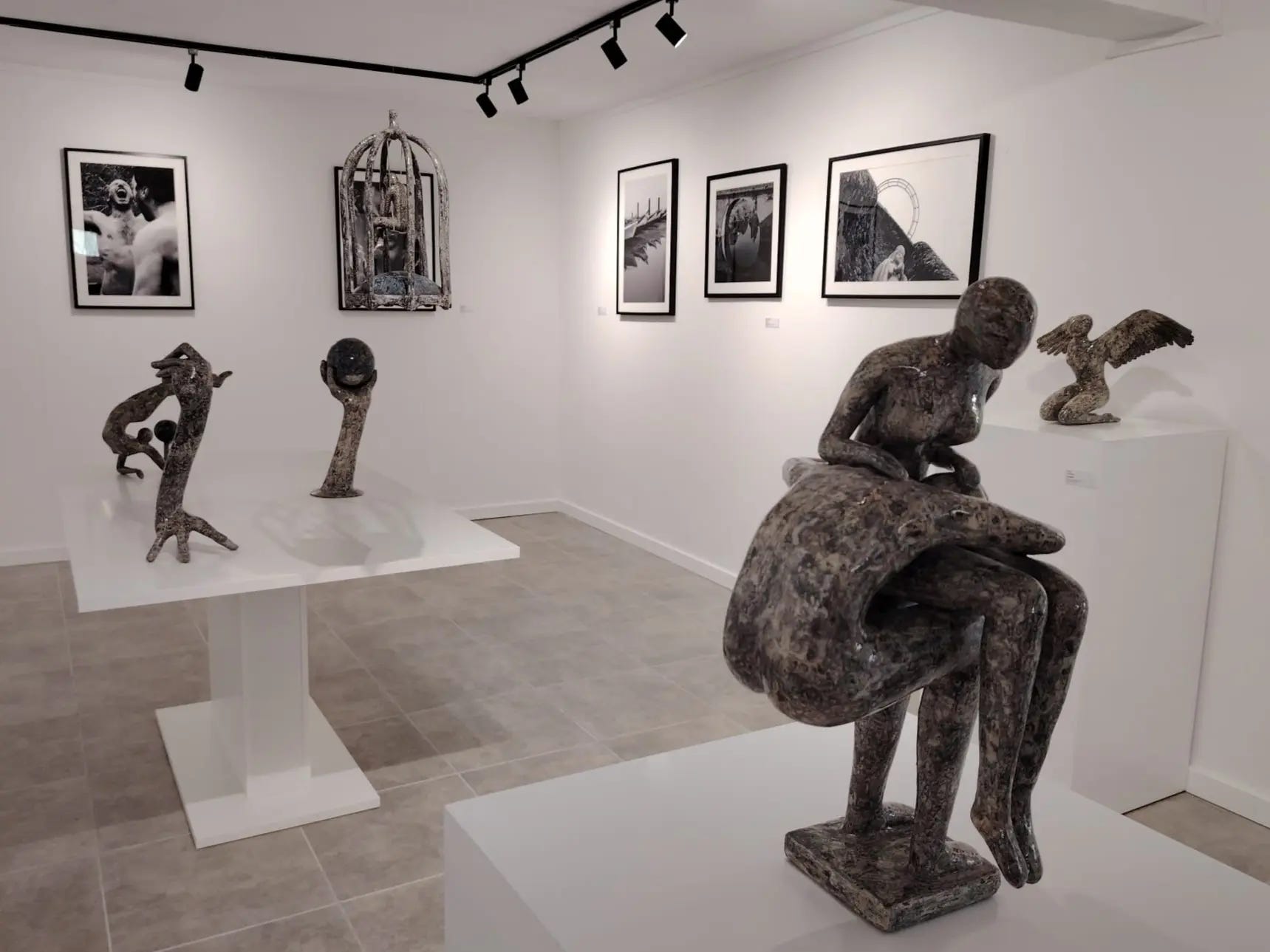
Photographs and flat images tend to work well. Works that are highly textured, three dimensional or with subtle surface qualities do not often translate well to prints. A good place to start testing the market is with one of your most popular images.
A giclée print is a high-quality fine art print made using specialized inkjet printers and archival inks on premium paper or canvas. Think of a giclée as the fine-art world’s premium reproduction method, much higher quality than a typical poster or mass-produced print.
A border is often left around the image to allow for signing and numbering. Artists may also decide to print on the entire sheet and sign on the image or on the back of the print. Artists should specify whether dimensions refer to the paper, image, or framed size.
Each print should be signed and numbered by the artist, and the edition should be documented in the artist’s records.
The prints are numbered in a fractional format (e.g., 1/50), where the bottom number represents the total global edition size and the top number represents that specific print’s exact sequence. So the fifth print will be labelled 5/50 and so on.
For a limited-edition fine-art print, the conventional placement is:
Bottom right: the artist’s signature, usually in pencil.
Bottom left: the edition number, such as 12/100 (print 12 of an edition of 100).
Bottom center: sometimes the title of the work, though this is optional.
Below the image: These markings are normally placed in the white margin rather than over the artwork.
Pencil is traditional because it is difficult to reproduce and provides a visible indication of authenticity.
For a giclée print, the artist may also add the year or a small publisher/printer mark.
If the print is on canvas with no margin, the signature may be placed discreetly in the lower corner of the image or on the reverse.
Because a passe-partout can cover the signature on the art work, it’s appropriate for fine-art prints, etchings, lithographs, and giclées when the mat is considered part of the presentation.
However, there’s an important distinction:. the signature should ideally still be on the print itself. A signature exclusively on a removable passe-partout can technically be separated from the artwork.
After the paywall, we look at how to determine the right edition size for your work, the common mistakes that can undermine an edition’s value, how to price limited editions effectively, and the psychology behind pricing decisions.
Comments
Nothing yet. Say the first thing.
Sign in to join the conversation.