
Home · Book · Start here · About · Pricing · Careers · Galleries · Archive . Collecting
Related Reading:
Studio Sales: How Independent Artists Sell Work and Build Sustainable Careers
The 14-Day Return Trap: A Guide to EU Return Laws for Online Artists
The Hidden Cost of Winning Art Commissions
Xochi Art Newsletter
Practical insights on the business of art for artists, collectors, and art professionals.
The traditional art market has trained creators to chase a single, definitive outcome: the outright sale. Artists are taught to wait for the one buyer who falls in love with a piece and purchases it. That’s exciting, but it’s also unpredictable.
Every artist has inventory. It grows gradually as unsold artwork accumulates. These are your finished, exhibition-ready pieces, artworks that represent hundreds of hours of labor, deep emotional investment, and significant material costs. Right now, that inventory is doing nothing but gathering dust and costing you money.
But what if those exact same canvases and prints could become a reliable source of monthly cash flow, all while finding an audience of hundreds of people every day?
Businesses want attractive offices, waiting rooms, and meeting spaces, but buying original art outright is expensive, and managing an art collection is another responsibility they would rather avoid. Many are reluctant to tie up thousands of dollars in a permanent collection when that capital could be invested elsewhere.
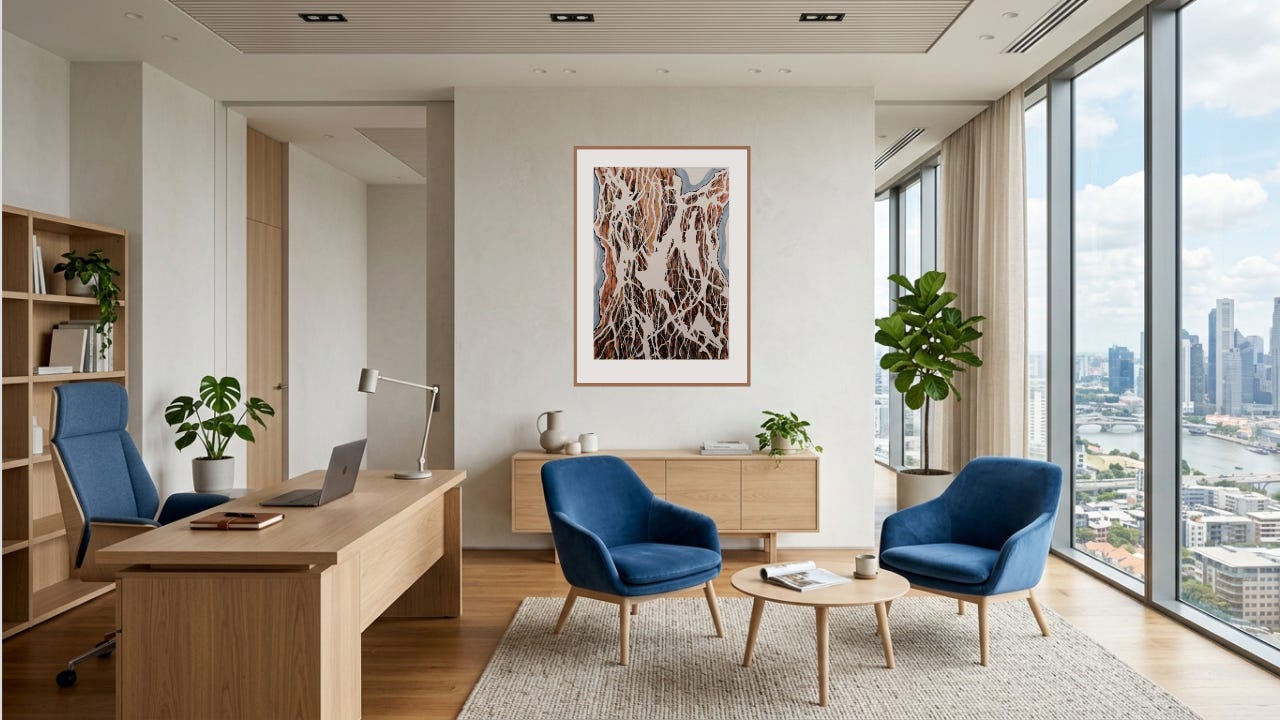
When a business purchases an original artwork outright, it is generally treated as a capital asset rather than an operating expense. Depending on the country’s tax laws, purchasing art may provide fewer immediate tax advantages than other business assets, making it a less attractive use of capital. Most businesses don’t mind spending a few hundred dollars each month to improve their workplace. They do mind spending $5,000 in one hit on something that isn’t essential.
Art leasing flips this model on its head. A single artwork can generate income multiple times instead of only once. Instead of hoping a painting sells, you retain ownership while earning recurring income by leasing to corporate clients.
Think of it as real estate for your creativity. Instead of selling the building, you are renting out the apartments. This model turns your stagnant inventory into active assets, providing a predictable financial cushion that allows you to create with less financial stress.
If the opportunity is so compelling, how do you actually find businesses willing to lease art? What kind of art do they want? What should you charge? Who pays for insurance? What belongs in the contract? And how do you turn a handful of unsold paintings into a dependable monthly income?
Subscribe to read the complete guide on pricing, contracts, insurance, finding corporate clients, building a leasing collection, and creating recurring revenue from artwork you already own.
Comments
Nothing yet. Say the first thing.
Sign in to join the conversation.