
By Adrian Ma
No one is morally perfect (or, let’s be honest, perfect in any other way). There is often a gap between what we do and what we think we ought to do. We act in ways we believe to be wrong, or fail to do what we believe to be right. Recognition of these failures—perhaps accompanied by feelings like guilt or shame—may spark a desire for moral self-improvement, but that process often turns out to be frustrating and non-linear. What does it take to bring our actions in line with our values? And how might that process be aided or hampered by our attention or moral emotions? At our latest Curiosity Café, moderated by Jesse Vriend and Zachary Grey, we discussed the experience of moral failure, the possibility of moral improvement, and the influence of social context on both. You can find a brief recap of our discussion below—along with details on our upcoming café on gaslighting.
By Sofia Panasiuk, Sophia Whicher, and Adrian Ma
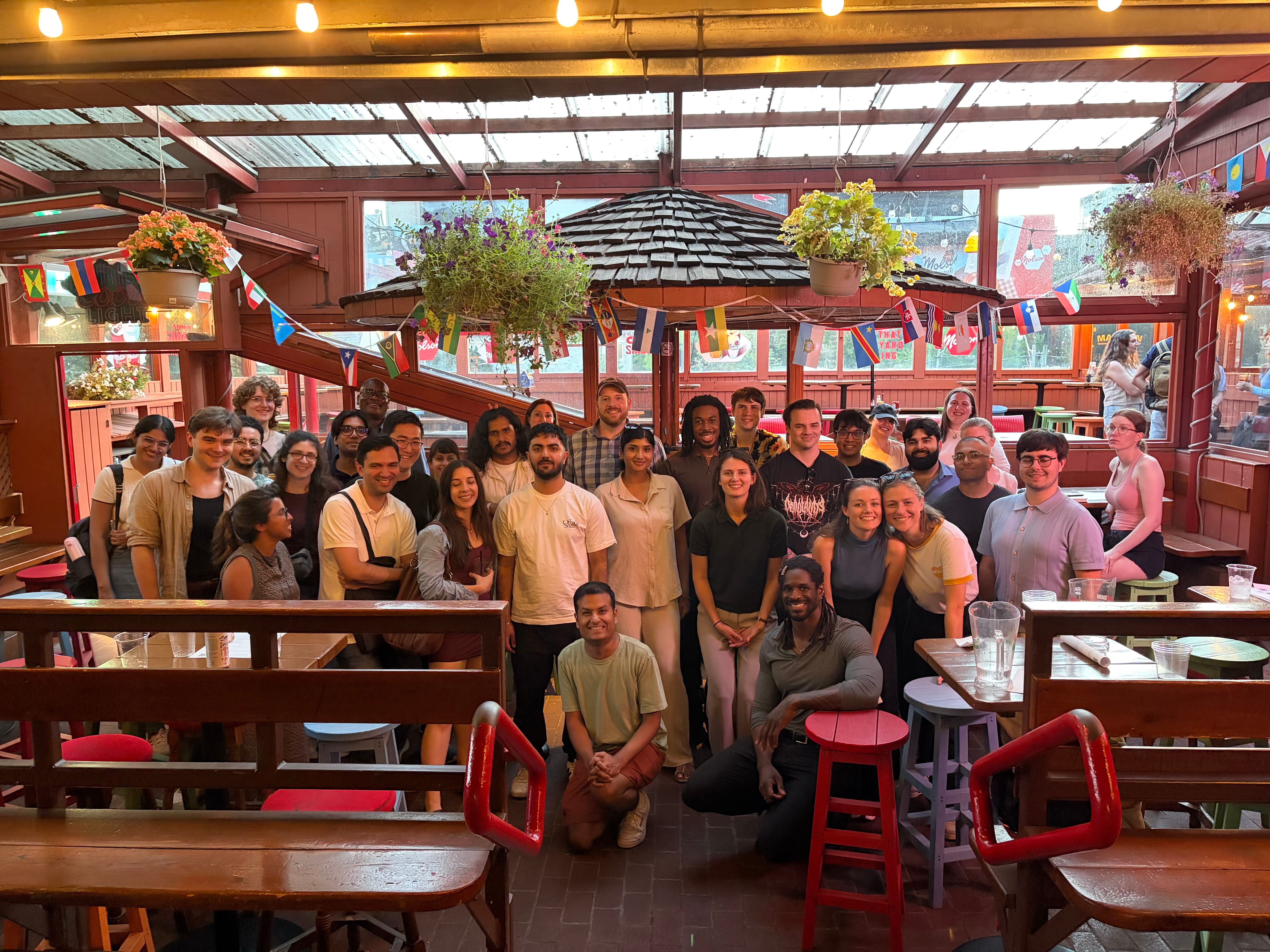
Our latest Curiosity Café, moderated by Jesse Vriend and Zachary Grey, explored the all-too-human experience of moral failure and our (often abortive and less than straightforward) attempts to address it. Here are some of the major questions we explored at the café—and some of the responses you gave:
In what areas of your life have you struggled to live up to your values? Does failure ever feel inevitable due to conflict between your values?
My moral failures in most cases are defined not by action but by inaction: they consist in my failure to do something I should, like checking up on a friend or speaking up against injustice, rather than in my doing something I shouldn’t.
Moral conflicts often arise within interpersonal relationships where parties hold different values or different ideas of what those values entail. It can be challenging in such cases to balance your desire to be accommodating towards the other party with the need to enforce your own boundaries.
It is baffling how we can continue to do things we know to be out of step with our values. For example, I firmly believe that eating meat and dairy is morally wrong, but this has hardly sufficed to make me a vegetarian or a vegan!
It is not always easy to determine which values are actually mine, or what my values even are.
As a neurodivergent person, I find it hard to distinguish between the values that are truly mine and the values that are merely part of the social code I learned to follow while I am masking.
Sometimes, it is unclear what values are expressed in my actions. Imagine all my friends are vegan, and I decide to become one myself. Do I do this because I value animal wellbeing, or because I value the sense of belonging I get from “fitting in” with my friend group?
It can be helpful to rank your values so you know which one to prioritize when they conflict. (Curiosity is at the top of my hierarchy.)
How does it feel to do something that doesn't align with your values? To what extent is guilt for this type of failure appropriate?
The more deeply we hold a value, the more guilty we should feel when we fail to practice it.
Guilt and shame are good in moderate doses. Just as reflexes are automatic movements that help us avoid physical harm, guilt and shame help us avoid moral failure.
However, rumination, or sitting in guilt or shame, is rarely helpful. It is better to acknowledge our mistake and move on.
Sometimes we should be hard on ourselves—it’s good that we have an internal mechanism that keeps us accountable! The problem, however, is that we are seldom taught how to sit with guilt and harness it productively. We are lacking in tools that help us deal with moral failure in a manner conducive to acknowledgment and change.
It is important, but difficult, to distinguish between guilt that says “I have not acted according to my moral values” and guilt that says “I have not acted as others tell me I am supposed to.” The two sometimes, but do not always, intersect.
How does it feel to fail by your own standards vs. external standards (societal, religious, familial, the stories you’ve been told)?
I have felt a lot of guilt for not conforming to entrenched ideas of what love and relationships look like (e.g., monogamy). While I know deep down that practicing nonmonogamy is not morally wrong, it can be hard to remember this when so many of the stories we are told about romantic love make monogamy a moral requirement. This can feel conflicting or confusing because the sense that I am doing something wrong will sometimes assert itself like a reflex, and I must then counter it by reminding myself that I should not feel guilty, that this guilt does not stem from a deviation from my own moral standards.
This is why community is so important: surrounding yourself with people who understand and value how you choose to, say, love, can help you unlearn the guilt you have internalized as a result of social norms.
I was a conscientious objector to fighting in a civil war, a decision that drew widespread condemnation. Prioritizing one’s own moral code over what one is told by external authorities to do often comes at a high social cost.
Morality evolves over time. History reveals that the labels of right and wrong often misfire: what is condemned may later be vindicated, and practices we widely take for granted may later be denounced.
Do you feel personally responsible for either societal moral progress or regress?
Yes! As we should. If we judge a society by the average of its members’ actions, thoughts, and motivations, then it stands to reason that every one of us has a role in shaping our society and bears some degree of responsibility for its moral successes and failures.
No. As individuals, our ability to influence moral progress or regress is infinitesimal compared to the power of large corporations and governments.
It depends on the society. In some countries it doesn’t pay to do the right thing, or you are deprived of a voice in larger, morally weighty decisions, which makes it easy to feel as though your potential to contribute to positive change is negligible. But in societies where individual choices are valued (e.g., a healthy democracy), your actions can feel more morally meaningful.
It is unproductive to feel guilty over something that is out of our control, like societal progress. This can lead to cognitive exhaustion and feelings of helplessness. It is better to focus on what is within reach.
But if we all follow this logic, we end up with the bystander effect: when responsibility is diffused, and we expect other people to help, we are less likely to intervene ourselves, thus preventing meaningful collective change.
Sometimes, we become morally complacent not by being a bystander, but by feeling as though our actions are meaningless drops in a huge bucket, or feeling that hypocrisy is inevitable (because we cannot simply stop participating in all immoral systems).
If you are interested in moral improvement, you can do worse than attend our next Curiosity Café. We can’t guarantee that attending it will make you a good person, but we can guarantee that missing it will make you a bad one. Thanks for reading.
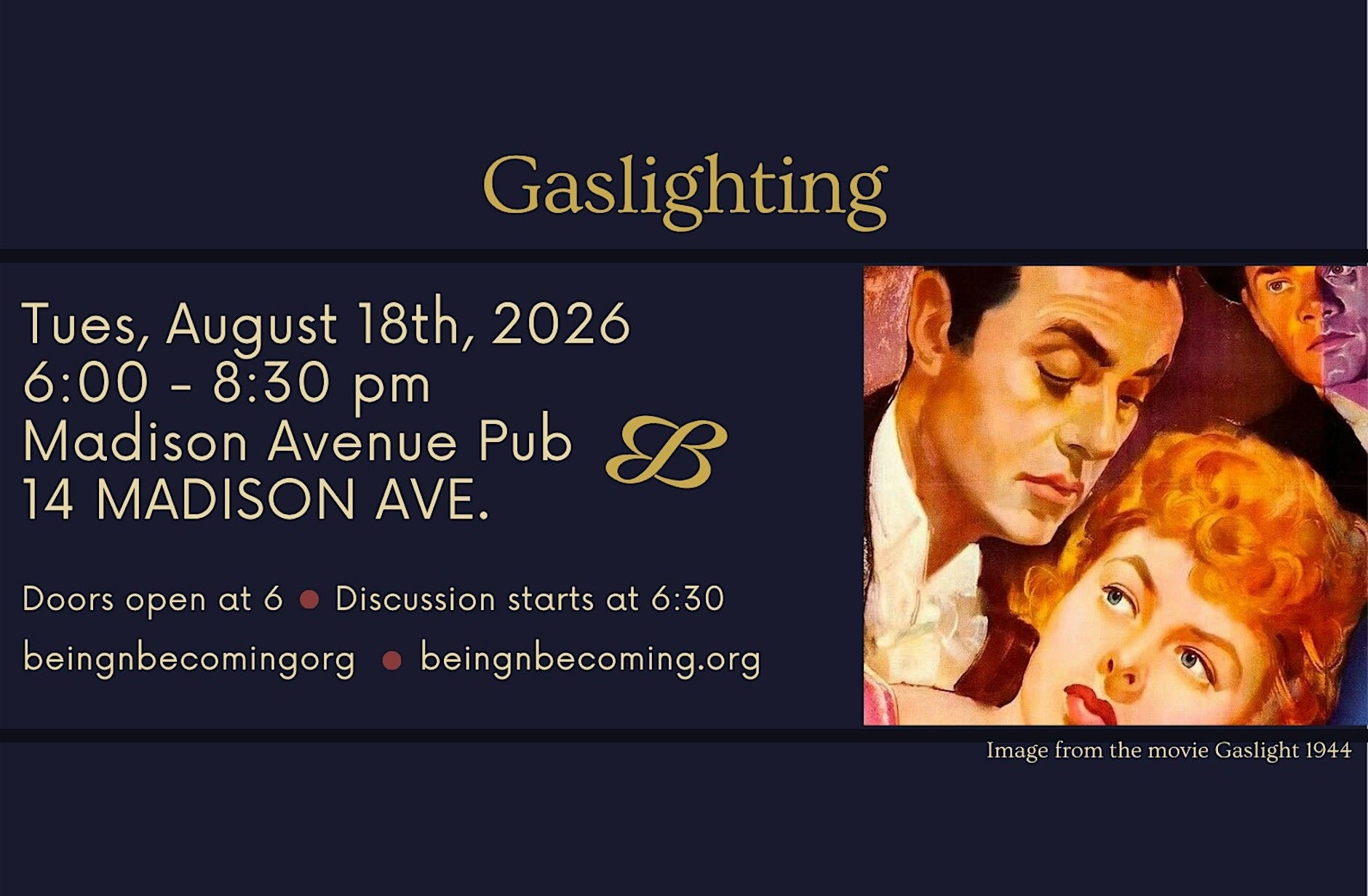
We will host our next Curiosity Café on Tuesday, August 18, from 6:00 to 8:30 p.m. at the Madison Avenue Pub (14 Madison Ave, Toronto, ON M5R 2S1). Come and hang out with us, grab food, and read through our handout from 6:00 to 6:30 p.m. Our structured discussion will run from 6:30 to 8:30 p.m. with a 10-minute break in the middle!
The topic of our next café is: Gaslighting
Missing the event description? Head over to our Eventbrite page! We’re trying to make the length of our newsletters a little less overwhelming.
If you have accessibility-related concerns, please visit our Eventbrite page—in the event description, you will find some accessibility-related information about the venue and the event.
We still have five free tickets available for our attendees. If paying anything at all is not financially feasible for you or our ticketing system presents some other barrier, please contact our Director of Community Programming, Sophia, at sophia@beingnbecoming.org. These tickets will be given away on a first-come, first-served basis, no questions asked! You can expect to hear back from her within 72 hours.
And now that you don’t have to be perfect, you can be good.
- John Steinbeck
Our mission is to present a diversity of perspectives and views. The views and opinions expressed in this newsletter are solely those of the individual authors and do not necessarily reflect the views or opinions of Being and Becoming. Being and Becoming disclaims any responsibility for the content and opinions presented in the newsletter, as they are the exclusive responsibility of the respective authors. If you disagree with any of those presented herein, and you feel so inclined, we recommend reaching out to the original author and asking them how they came to hold that opinion. It’s a great conversation starter.
Comments
Nothing yet. Say the first thing.
Sign in to join the conversation.