
Welcome to Being Animal. This newsletter explores the intricacies of human-animal relationships. Through personal stories, commentary on current events, and thought-provoking debates, I hope to challenge your assumptions and deepen your understanding of how animals are treated in our society. How we treat animals matters— for our own health, for our planet, and for our sense of morality and humanity.
I want to make the world a better place for animals. To do this, we have to change how we think about animals. This week, in recognition of Halloween and the impending election, I write about cats. You’ll see how it all connects below.
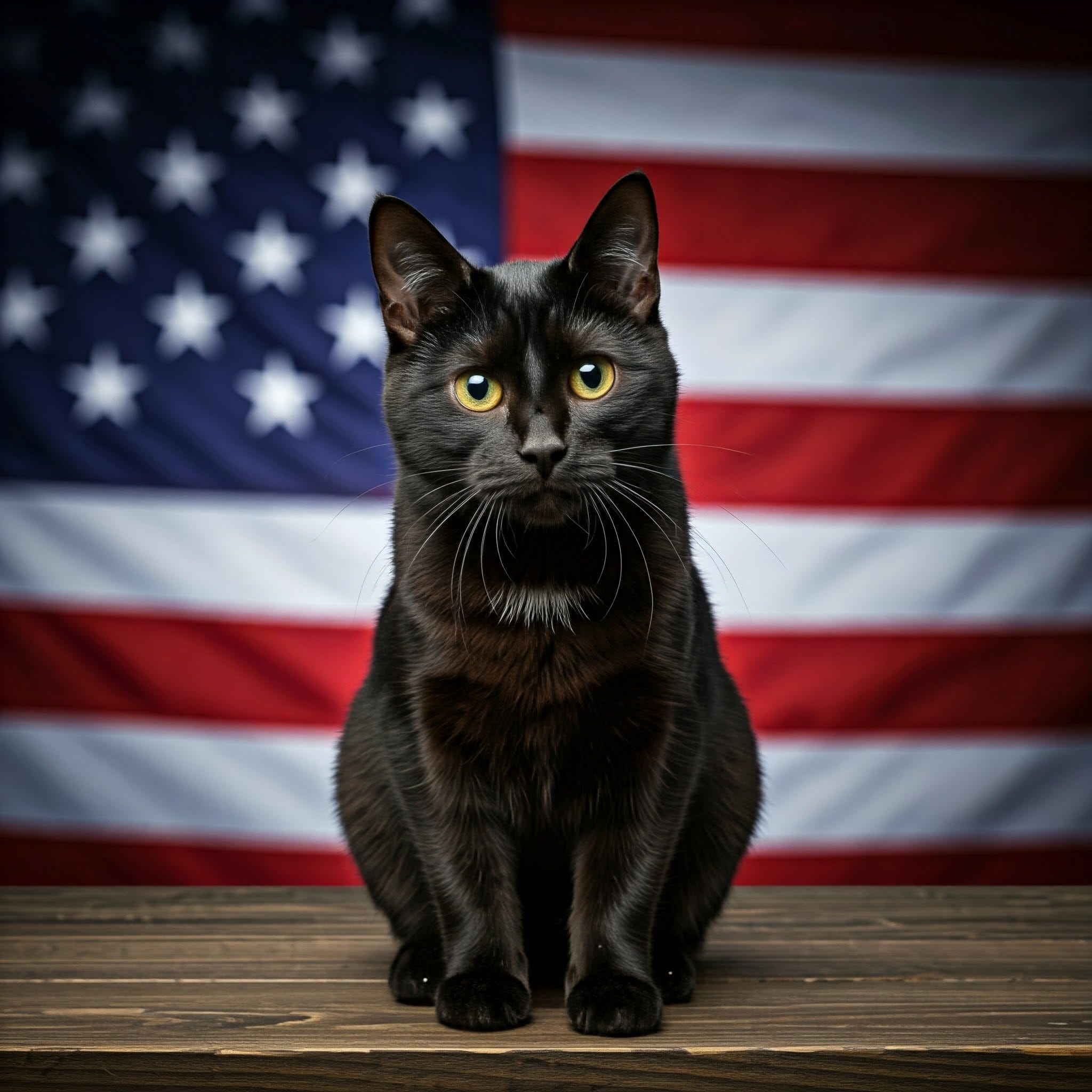
Cats have always held a special place in human imagination.
Ancient Egyptians considered cats to be representatives of the divine. They had traits that set them apart from other animals: intelligence, sharpness, and lithe power. It was a crime to kill a cat.
But in the Middle Ages, cats became associated with witchcraft and evil. Cats were assumed to be “familiars” of witches, and they often suffered from the same anti-witch fervor that many humans did. Cats were killed, tortured, and put on trial in an effort to control the devil’s evil forces. In Belgium, a festival called Kattenstoet developed out of this fear of cats: citizens gathered up cats and threw them—alive—off the top of the city’s bell tower. It was a celebratory affair.
Today, cats live somewhere in the middle. We still associate cats with Halloween, and cats show up in pop culture linked with witches and witchcraft all the time: Salem in Sabrina the Teenage Witch, Binx in Hocus Pocus, and Crookshanks in Harry Potter are all good examples. But many Americans also treat cats like harmless family members, letting them dominate the household with their weird antics, and then posting TikToks about them in an attempt to go viral.
Anyone who has a cat living in their house knows this to be true: cats have their own minds. They are unpredictable, insatiably curious, and sometimes devious. They give you just enough tenderness and sweetness to remind you why you feed them, rubbing against your leg or nuzzling your hand. But in the next moment, they’ll use your leg as a scratching post, digging in their claws with abandon (an actual thing that happened to me last night). They are not eager to please like dogs, flipping tricks on command for the promise of a small bite of food. Instead they demand a measure of respect for themselves. They look at you with piercing, unblinking eyes, making you wonder, with the tiniest shred of actual worry, what they’re thinking.
My wife recalls with unease a time when she woke up in the middle of the night with that undeniably eerie feeling that someone was watching her. She blinked her eyes open and looked up. Directly above her, balancing on our 3-inch headboard, was one of our cats. He just sat there, looking down at her, eyes open and flashing.
We started keeping our cats outside of the bedroom after that.
Cats are cunning and mysterious. They exude grace and independence. They don’t do what you expect, but they are recognizable in their particular method of movement and habit.
And interestingly, cats have long been associated with women.
My grandmother wrote about her experience as one of the only women in veterinary school in the 1950s, and explained that the male-dominated profession looked down on cats as patients, often conducting procedures without anesthetic and failing to provide life-saving care. The attitude she experienced in school was this: if women were going to be in veterinary medicine at all, they may as well treat the cats. “Gender discrimination and speciesism were correlated,” she wrote simply. The macho male veterinarians didn’t want to bother with cats, who were too feminine to matter. Let the women do this women’s work.
The vulgar euphemism “pussy” embodies all of this, too. The derivation of this word isn’t clear, but we use it for at least three things today: (1) a pussy cat; (2) slang for a woman’s genitalia; and (3) an insult describing a weak person, most typically intending to emasculate a man. From Donald Trump proudly declaring he could grab women “by the pussy” with impunity, to Puss-in-Boots cracking jokes as an animated cat in the Shrek movies, to the hot pink “pussy hats” that took over the liberal women’s movement in response to the 2016 election, we see all three of these definitions and usages at play today.
Maligning cats is a way to malign women, and vice versa.
The link between women and cats is political, too. J.D. Vance famously lambasted prominent liberals as “childless cat ladies” in 2021, a comment that made headlines this election cycle. Megastar Taylor Swift clapped back in her endorsement of Kamala Harris, reclaiming the term and signing off her instagram post: “Taylor Swift, Childless Cat Lady.”
When women were fighting for the right to vote in the early 1900s, cats became one symbol of the cause. The anti-suffrage movement—those hoping to keep women disenfranchised—often deployed images and cartoons of cats to highlight the supposed absurdity of women voting. Cats were associated with women in these advertisements; they were mocked as quiet homebodies, symbols of domesticity and femininity, not fit to participate in the rough-and-tumble world of the public sphere.
But women suffragettes reclaimed this imagery, turning cats into the mascot of the fight for the vote. Leaders of the movement had an actual cat, named Saxon, accompany them on their advocacy tour. And political advertisements and postcards showed cats with pins and signs promoting the right to vote. Both sides were using cats, highlighting different aspects of the creatures: the anti-suffrage movement highlighting the quiet, private way cats occupy space on the one hand, and the suffragettes promoting their feral, proud independence, on the other. One hundred years later, the pussy hat became our modern day version of this exact same phenomenon.
This is a spooky time of year. Halloween just passed, with dozens of humans dressed as cats parading down my street and across my feeds. Black cats adorned houses around my block, and they leapt across my TV screen for weeks in seasonal specials.
But it’s not just Halloween. Even more importantly, Election Day is Tuesday. And I think we should carry our metaphorical cat ears to the polls.
Cats are fierce and independent, cuddly when they feel safe, and don’t take crap from anyone. It’s why people have long hated them: they are smart, and they are impossible to control. Though humans have tried to dominate them by throwing them from towers, burning them alive, torturing them and cutting off their paws, and more, cats still survive and defy human dominance. Even more, they do so with an unbelievably serene and regal affect. We often joke in our household that we trained our dog, but our cats trained us. We tell our dog what to do, but our cats dictate their own lives in most ways that count. We simply oblige their wishes by cleaning their litter boxes and opening cans of food, we mere servants with opposable thumbs appeasing the resident feline royalty. They’ve really figured life out.
We all have some cat in us, as humans and as voters.
As humans, we are independent, thoughtful creatures. And as voters, we have power. That power may be quiet, but it is strong and ready to pounce. We are the cat on the headboard, staring down at the leaders in our country. We can show them that we’re watching, we’re judging, and we aren’t at all powerless. We are the ones in charge in our democracy.
Let’s lean into our inner cats. Those curious, independent, and unbroken creatures can provide a model for us as we contemplate our American reality and hope for a radically improved future. We don’t have to obey what we’ve been spoon-fed as well-trained citizens. We can demand the future we want by voting for it.
I’m voting for Kamala Harris because I believe in women’s rights, reproductive rights, LGBT+ rights, and environmental justice and protection. The Democratic Party isn’t perfect—I wish they would do far more to protect animals, for example—but there is a lot of good in her platform nonetheless.
And there’s something revolutionary about the thought of a woman president. It will subvert expectations and break with over 200 years of history telling us it’s not possible. What’s more cat-like than that?
See you at the polls, my fellow cats!
Comments
Nothing yet. Say the first thing.
Sign in to join the conversation.