
"What do I have in common with Jews? I have hardly anything in common with myself and should stand very quietly in a corner, content that I can breathe." January 8, 1914. Kafka's diaries and letters to his fiancée, Felice Bauer.
Oh, Kafka.
Anyone who has spent enough time inside your words knows that reading you leaves something behind, some kind of an ache, faint and spectral, a phantom limb the body still reaches for long after it is gone. Your words settle somewhere beneath the skin, leaving fragments of a self that feels both ours and strangely foreign. There is despair there, and disgust, and the quiet exhaustion of having looked too closely at the world. There is something accepted and something forever refused. But deeper still is the wound of betrayal, by human nature, by existence, perhaps by life itself. To read you is to enter, for a moment, that intimate exile and discover something unsettling: we recognize it, we ache for something we cannot name, something we may never have possessed, and yet its absence feels almost like a loss.
Beneath all of it, there is something deeper: a vast, almost bottomless pain, asking to be witnessed, recognized and acknowledged. I can smell it from the darkness of my writings and beneath every layer of my existence. In one of your letters you wrote: “Love is a knife which you turn within yourself.” I had carried that sentence somewhere deep inside me for years, long before I understood what it was asking me to know. One day, at university, a boy I had just met quoted that exact line to me and something passed through my body, a quiet shiver along my spine, delicate as an imaginary butterfly moving between two strangers and for one impossible second, we were no longer strangers. It was one of those rare, weightless moments I could have lived inside forever. I told him in return that I was going to marry him. And I did.
What all of it is trying to tell me all along: that sometimes we recognize the knife before we recognize the wound. That love arrives carrying both the unbearable tenderness of finding someone, and somewhere hidden inside it, the knowledge that anything capable of entering us that deeply will forever have the power to hurt us there.
You see only souls trapped inside the ruins of a shattered identity; and perhaps only those who have dared to breathe inside the unbearable questions of existence understand how love can become a blade. Because real love is not always a gentle thing. Sometimes it is a sword of light driven between the ribs, illuminating the wound as it enters, refusing to leave until every hidden grief has risen to the surface, until the body has nothing left to bleed but truth. Real love does not rescue you from the deepest, darkest pit. It descends into it with you, it sits beside you where language has failed, where hope has gone silent, where even your own name sounds like it belongs to someone you once knew. It does not reach for the light. It does not look away. It does not flinch.
Your writing is that pit, a depth so deep that, reading you, I sometimes feel the darkness acquiring weight around me, as though I am falling into some ancient interior place from which no voice should be able to return. And I, and perhaps, if my readers will forgive me for speaking on their behalf, we, recognize that darkness. Yes. We recognize it because some abysses are not discovered, but remembered. And sometimes another person’s words do not pull us out of them; they simply reach us at the bottom and whisper, I know. I have been here too.
My son taught me something recently. We were watching Spiderman, and it became one of those tender moments, a sweet, strange reversal when our children suddenly become our teachers. He was explaining to me that the story was much bigger than what appeared on the screen. “It’s not just what you see” he said, “there’s a whole existence out there, beyond parallel universes, there are different timelines.”
Did you know that? I didn’t. But something about the idea stayed with me, the possibility that somewhere beyond the life we can see, other versions of us are still walking, choosing, becoming. And suddenly I thought of you, of the alienation that breathes through your writing, of your endless questions about identity and belonging.
What strikes me is not that you escaped the gaze of the world. You understood it too well. You studied the eyes that looked at you until you could see what lived behind them, their judgments, their absurdities, their hunger to define what they could not understand. But you did not surrender your reflection to them. You looked back. And in that returning gaze there was something unmistakably yours: irony, tenderness, cruelty, sorrow, an intelligence sharp enough to expose the strange machinery of being human. You saw them almost too clearly, down to the smallest movements of their fear and vanity, and then you gave them back to themselves through your words. Perhaps that is what moves me most. You were wounded by the gaze, but you never allowed it to become your eyes.
Somewhere, in a parallel universe, on a different timeline, I am walking right beside you. Your Prague is my Boston. They only appear to be separated by decades, languages, clothes, architecture, accents, all the visible costumes history teaches us to wear. But beneath the beauty, beneath the cultivated intelligence, beneath the polished manners and the solemn buildings that make us believe we have become wiser, I feel the distance collapsing.
Your Prague and my Boston begin to feel like the same wound carried forward through time. History has changed its language, its faces, the clothes it wears, but something underneath remains painfully familiar: the exile, the suspicion, the loneliness of being seen not as a person but as an accusation. Perhaps that is why reading you never feels like reaching backward through history. There is no distance to cross. I simply open a door and find you there, in the same room, breathing the same questions, only on another timeline.

“I’ve spent the whole afternoon in the streets, bathing in the Jew-hatred. ‘Prašivá plemena’ — filthy/scabby breed — I heard them call the Jews today. Isn’t it the natural thing to leave the place where one is so hated?”( Letter to Milena Jesenská, November 1920)
Sometimes I sit in a café, tucked quietly into my corner, and watch people pass through the door, and suddenly a violent tenderness rises in my chest, an ache so immense it feels almost physical, an unbearable longing to collapse against one of them. To lay my head on the shoulder of a complete stranger, against the ordinary fabric of their coat, and weep. To weep with such weight that time itself might finally surrender and come to a halt. I want to do this every day: choose one nameless passerby from the endless river of people, look into the face of someone who owes me nothing, and whisper, Do you understand?
You ask if it is not natural to leave a place where one is so hated. Yes, it is natural. Especially when hatred has become so sophisticated that it has learned how to disguise itself as righteousness, to speak in the language of virtue and still wound with the precision of a knife. And yet I walk through this city, and sometimes I cannot believe how beautiful it is. Lakes holding broken pieces of the sky, enchanted forests dissolving into a thousand shades of green, water whispering its ancient language over stones; old, beautiful buildings keeping their secrets, carrying history quietly in their walls. A city overflowing with libraries and universities, with people who have read everything, studied everything, learned the names of every human tragedy, and still, somehow, learned nothing.
When I moved here, to Boston, fifteen years ago, I wanted to merge with this beauty. I wanted to belong to it so completely that one day I could walk down some ordinary street and find my own memories waiting there for me. Here is where I fell off my bicycle and broke my leg. Here is where my friends and I walked together, laughing until the evening disappeared around us. Here is where we kissed. Here is where we fought. Here is where life happened. I wanted that here. I wanted to make these streets alive with everything that was alive in me, with all my rivers, all the oceans moving through my veins. I wanted to pour my past into this place until there was no longer a border between there and here, until memory itself could no longer tell which country it belonged to, until the child I had been and the woman walking these streets now could finally recognize each other and say: This, too, is home.
I thought that if I loved this place long enough, if I left enough pieces of myself on its sidewalks, the past would eventually surrender to the present, the timelines would fold gently into one another. But I was wrong. I stand now with my eyes wide open before the unbearable contradiction of this city, forced to love its beauty while slowly learning to see what can hide behind it. Behind the ivy-covered walls of knowledge, behind the cathedral-sized libraries and their sacred silence, behind the polished halls of academia where intelligent people speak in careful, immaculate words about justice, humanity, liberation, and truth, I have come to feel something darker taking root: a moral decay so articulate, so elegantly educated, so beautifully dressed in the language of virtue that, for years, I mistook it for wisdom, we all did.
This beautiful place failed to become my home. This is a place where hatred is polite, footnoted, intellectualized, where contempt arrives dressed as scholarship and exclusion calls itself justice. And this is where the timelines begin to deceive me. I stand before a university in Boston, but somewhere inside its walls I see Prague; I see Germany; I see the same human ugliness rearranging itself across centuries. Different faces, different clothes, different words, but the same roles, the same certainty, the same ancient choreography of hatred. For a moment, I no longer know which universe I am standing in, or what year it is. Perhaps that is the cruelty of parallel timelines: history does not return looking exactly as we remember it. It changes its clothes, its language. You see it now: the Jew becomes the Zionist. No longer a swastika; now, a keffiyeh.
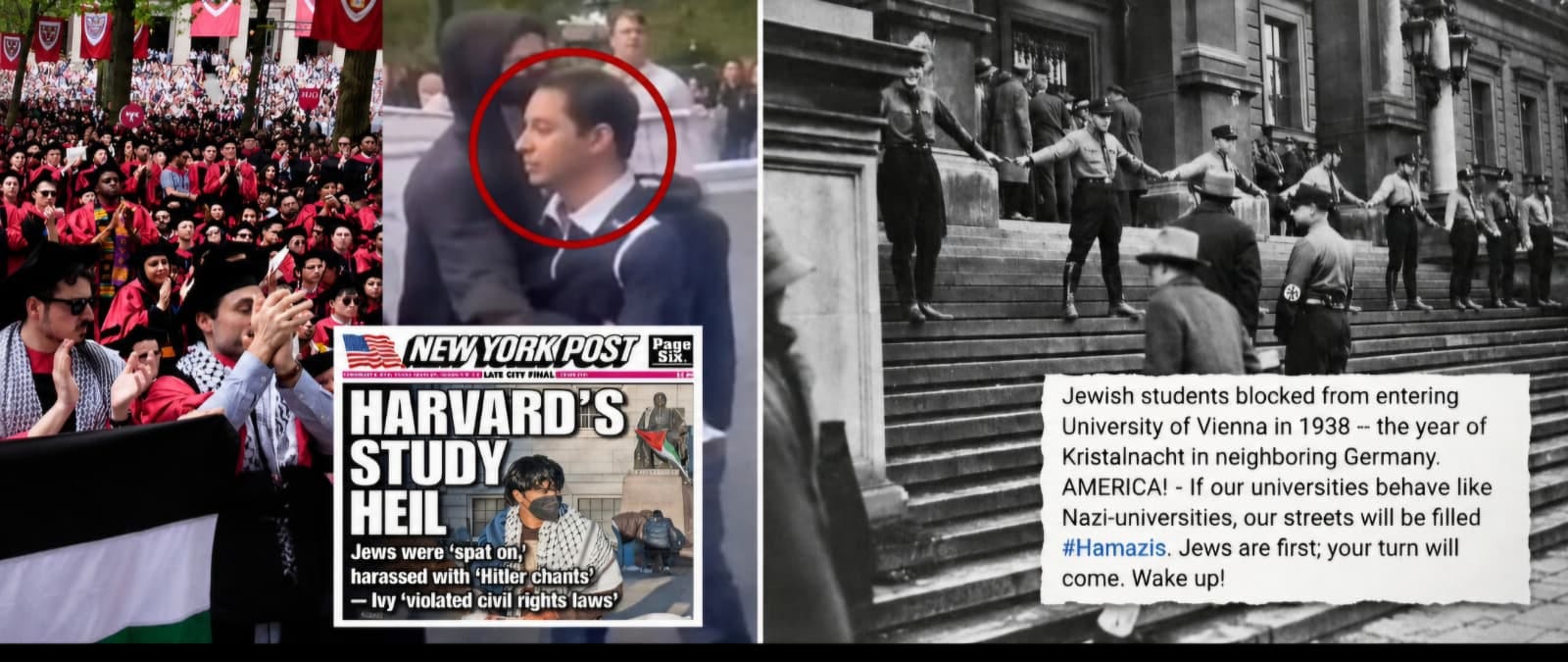
And forgive me, Kafka, for laying another sorrow beside yours, but I cannot escape the feeling that I have met something of the same human darkness you knew. And I know it in a way that science cannot explain: we are the same people meeting one another across centuries, different clothes, different languages, and different banners, explaining why this time is inevitable, and someone must finish the job.
You asked whether it is natural to leave a place where one is so hated. Yes. It is. And I will never judge anyone who leaves. I will take their hand and walk beside them for as long as they need me to. But I refuse. I refuse. For three years, inside this beautiful human ugliness called Boston, I have been called a Nazi. Baby killer. Fucking Zionist. Dirty Jew. I have lost friends. No, that isn't true. I lost all of them. And there is a particular kind of loneliness here that has no bottom. You do not simply sit inside it; you sink. You sink until loneliness is no longer the absence of other people but a place in itself, a black ocean, an existential death, a country with no shore. And still, somewhere beneath all that water, something in me refuses to drown.
I am not leaving. I am not running. I will stay here and fight, for as long as there is breath left in this incarnation of mine, against the ugliness I see hiding inside this beautiful city, against the ignorance of counterfeit intellectuals, against those who have mastered every language except the language of truth. I will fight with the only weapons I want to carry: my words. My memory. My truth. Until the end of our tikkun, whatever that tikkun may be. I do not know yet. Perhaps we are not meant to know while we are still living inside the question.
Years ago, I read something by Gershom Scholem, the great scholar of Kabbalah. He said that if one wishes to understand Kabbalah in our time, one need only read Kafka. And so I am reading you, Kafka, and I want to tell you, in the plainest words I know, what it feels like to be a Zionist Jew in Boston today:
Comments
Nothing yet. Say the first thing.
Sign in to join the conversation.