
It’s 9:15pm.
Kids are asleep.
The house is finally quiet.
You sit down.
And within 60 seconds
your hand has reached for the phone.
Not because anything needs checking.
Not because you’re expecting a message.
Because the quiet felt wrong.
Because stillness — actual stillness —
has started to feel like something
your nervous system doesn’t know
how to be in anymore.
That’s not personality.
That’s not introversion or extroversion
or being “bad at relaxing.”
That’s a nervous system
that has been taught —
by dozens of small daily habits —
that its own experience
is something to escape.
Here’s what a Stanford psychiatrist spent years documenting.
Modern anxiety isn’t primarily a response to circumstances.
Most people experiencing chronic anxiety don’t have objectively harder lives than people who don’t. The income, the job, the family situation — these aren’t the primary drivers.
What is driving it is something far more daily and far more invisible.
Tiny habits — repeated hundreds of times across every week — that are teaching the nervous system one consistent lesson:
When something feels uncomfortable, escape immediately.
Do that enough times and the nervous system stops being able to distinguish between actual danger and ordinary discomfort. Both feel like emergencies. Both produce cortisol. Both demand relief.
And the relief — the scroll, the snack, the series, the busyness — doesn’t fix anything.
It confirms it.
It tells the nervous system that the discomfort was real, that it was right to sound the alarm, and that it needs to sound the alarm even earlier next time.
The anxiety isn’t happening to you.
It’s being trained.
By habits that feel completely normal.
A mom in my community messaged me last month after reading something I’d written about cortisol.
“I realised I haven’t sat in a quiet room without doing something for longer than two minutes in about three years,” she said.
“I didn’t notice it was happening. I thought I was just staying on top of things.”
She wasn’t behind on things.
Her nervous system had forgotten how to be still.
That’s not the same problem — and it doesn’t have the same fix.
What You’ll Learn:
→ 6 daily habits that are quietly building anxiety — reordered by how much damage they do
→ Why four of them look like productivity, rest, or self-care
→ The habit doing the most damage to your nervous system’s ability to regulate itself (paid section)
→ The one replacement that begins reversing the pattern within a week (paid section)
→ Read time: 5 min
If you do ONE thing from this post — read to the end of the free section first.
The habit that matters most for where you are right now
will probably announce itself before the paywall.
6 Daily Habits Quietly Spiking Your Anxiety
Reordered by damage — starting with the most invisible.
Busyness is the most socially accepted form of emotional avoidance available. And it’s doing more damage to the nervous system than almost anything else on this list — precisely because it’s rewarded. You call it ambition. You call it being productive. Everyone around you calls it impressive.
But the schedule has become armour.
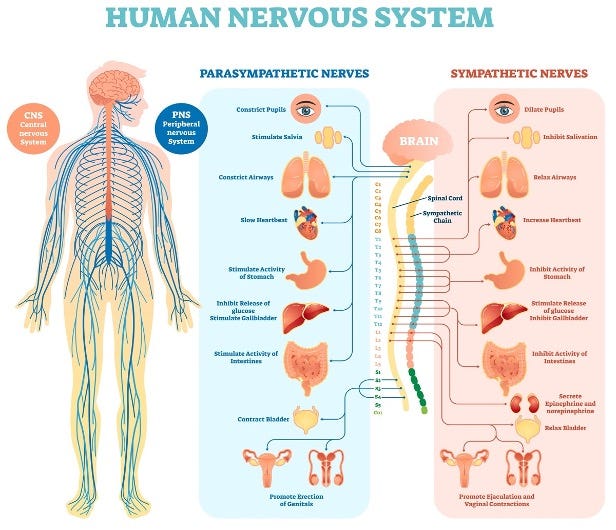
What lives underneath it is a nervous system that hasn’t been genuinely still in years. And a nervous system that is never still cannot regulate. It can only run. The HPA axis — the body’s stress response system — stays partially activated throughout every packed hour. Cortisol stays slightly elevated. The sympathetic system stays slightly engaged. Not enough to feel acutely anxious. Enough to make genuine rest impossible when the busyness finally stops.
Permanent busyness
→ HPA axis stays partially activated throughout the day
→ cortisol never reaches its natural low
→ sympathetic nervous system maintains low-level engagement
→ genuine rest becomes physiologically unavailable
→ when the busyness stops, the anxiety that was being outrun arrives.
The Sunday afternoon that should feel restful but produces a low-grade dread. The holiday that doesn’t relax you until day four — because the first three days are just the anxiety catching up. The evening after the kids are in bed that should be quiet but somehow isn’t. That’s not who you are. That’s what happens when the nervous system has been using busyness as a lid — and the lid gets removed.
This habit produces a specific and particularly damaging pattern. Not anxiety as an acute feeling that comes and goes. Anxiety as a permanent baseline — the state the nervous system operates from when nothing is actively happening.
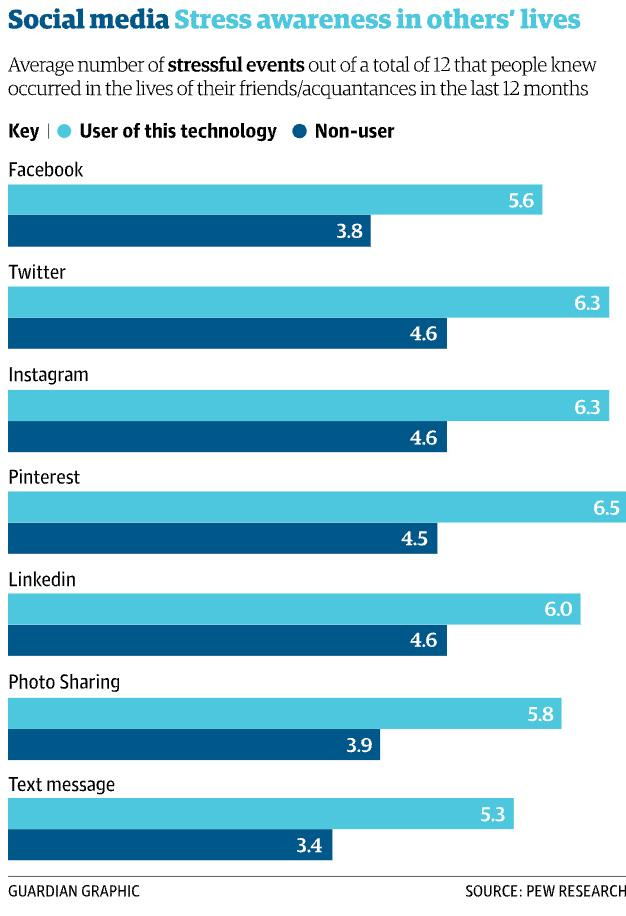
The threat detection system in your brain — the amygdala — cannot distinguish between a danger in your immediate environment and a danger on a screen. Every piece of outrage content, every crisis headline, every conflict-driven social media post activates the same ancient survival circuitry that a physical threat would activate. Feed it that input continuously across a day and it recalibrates. The amygdala’s threshold for what constitutes a threat shifts downward. What previously required genuine danger now requires only the memory of danger — or the anticipation of it. The nervous system stays in a permanent state of low-grade alert. Not because anything is wrong. Because it has been trained to believe threats are more real than safety.
Continuous threat-activating content
→ amygdala recalibrates threat detection threshold downward
→ ordinary stimuli begin registering as potential threats
→ cortisol elevation becomes chronic rather than episodic
→ anxiety shifts from feeling to baseline operating state
→ nothing has to be wrong for the nervous system to feel like something is.
The parent who checks the news at 7am and arrives at breakfast already slightly on edge. The evening scroll that means lying awake at 11pm with a cortisol level that should have dropped two hours earlier. Not because today was bad. Because the brain spent 14 hours being told to stay alert.
Boredom barely exists anymore. Every gap — every queue, every lift, every 90 seconds at a red light — gets filled with a screen. And the elimination of boredom is producing a specific loss that most people experiencing chronic anxiety never connect to it.
Lembke’s core finding is precise: the pain-pleasure balance in the brain requires friction. A nervous system that never sits still — that never freely imagines, wanders, or rests in its own experience — loses its ability to generate rest from the inside out. The capacity for internally generated calm disappears. And with it goes something larger: the ability to anchor in deep meaning, purposeful vision, the sense of being connected to something beyond the immediate moment. These are not philosophical luxuries. They are neurological functions that require the mental space boredom provides — and that space has been systematically eliminated.
Boredom eliminated
→ no recovery phase between stimulation inputs
→ default mode network suppressed
→ internally generated rest capacity disappears
→ nervous system requires external input to feel regulated
→ ordinary stillness becomes uncomfortable
→ discomfort in stillness registers as anxiety.
The two minutes before the kettle boils. The 90 seconds in the school pickup queue. The moment after sitting down before anything has started. These are not voids to be filled. They are the exact windows the nervous system needs to begin the internal regulation that anxiety is the absence of.
It feels like rest. It feels like a brake after a hard day. The body is horizontal. The kids are asleep. The day is done. This should be recovery.
It isn’t.
Emotionally intense content — crime dramas, conflict-driven series, anything that keeps the viewer in a state of not knowing what happens next — activates the threat response continuously across the viewing window. The cortisol that was finally beginning to drop from the day re-elevates in response to fictional threat. The nervous system cannot distinguish between a real emergency and a screen emergency. It responds the same way to both. The result: the hour of Netflix that was supposed to allow the cortisol to fall keeps it elevated until midnight. You can’t sleep. You can’t settle. You feel nothing the next morning. Not because you watched something bad — because your nervous system spent its supposed recovery window still receiving the signal that something was wrong.
Emotionally activating evening content
→ cortisol re-elevation during supposed wind-down window
→ melatonin production suppressed
→ deep sleep architecture disrupted
→ HPA axis still partially activated at midnight
→ next morning starts with cortisol already above baseline
→ the day begins already behind.
The series that reliably keeps you up until 1am even when you intended to sleep at 10:30. The next morning that starts foggy and flat before anything has happened. That’s not the late night. That’s a nervous system that was handed stress for two more hours at the exact moment it needed signal that the emergency was over.
Before habits 5 and 6 — I want to ask you something directly.
You’ve just read the four habits that build anxiety most invisibly — the ones that look like productivity, information, entertainment, and rest while they quietly dismantle the nervous system’s ability to regulate.
But here’s what I’ve learned working through this with people individually:
One of these is always doing more damage than the others.
For some parents it’s the busyness — the schedule that became armour so gradually they didn’t notice it had.
For others it’s the evening content — the series or scroll that makes sleep impossible without understanding why.
For others it’s the boredom avoidance — the inability to sit in a gap for 60 seconds that’s been building for years.
Which one landed hardest for you just now?
Reply with your honest answer.
One sentence is enough.
I read every reply personally and I’ll respond with the specific thing that applies to your situation — not generic advice, something that fits the pattern you’re actually in.
Reply now. I’m reading.
Habits 5 and 6 are the ones most directly eroding the nervous system’s ability to regulate itself from the inside.
Habit 6 especially — because it’s the one Lembke identifies as the most powerful single driver of chronic anxiety in people who aren’t in objectively difficult circumstances.
And after both habits: the exact replacement for each one — not a willpower-based intervention, a specific behavioural swap that the nervous system accepts as an alternative signal.
Comments
Nothing yet. Say the first thing.
Sign in to join the conversation.