
We’re in the summer doldrums and my own garden’s looking a tad peaked. I'm working on plans to ensure a better late-summer showing next year. (Note to self: that bed that looked so sunny in February is in fact surrounded by trees. With leaves.) Meanwhile, for a booster shot of inspiration, I paid a visit to Hillwood Estate, Museum & Gardens in next-door DC.
Hillwood is the former estate of Marjorie Merriweather Post, an heir to the Post Cereal fortune. You may have heard of Marjorie’s other little property down in Florida: Mar-A-Lago? She apparently had more money than she knew what to do with, so in addition to building fancy estates, she collected priceless baubles like Fabergé eggs. I’m not particularly interested in the estate’s buildings or their gilded contents – a little too “let them eat cake” for my taste – but I do enjoy strolling the lovely gardens.
Hillwood’s 13 acres are grounded in a horticultural sensibility that prized ornamentation and the collection and display of exotica. In recent years, though, there's been an effort to address ecological concerns by removing invasive plants and adding more indigenous species, including the creation of a discrete native garden dedicated to educating the public on biodiversity, wildlife habitat and sustainable gardening techniques. (This garden is not only discrete, it’s discreet – as in, hidden behind the parking lot. More on that below.)
Here are a few of my favorite late-July native finds at Hillwood.
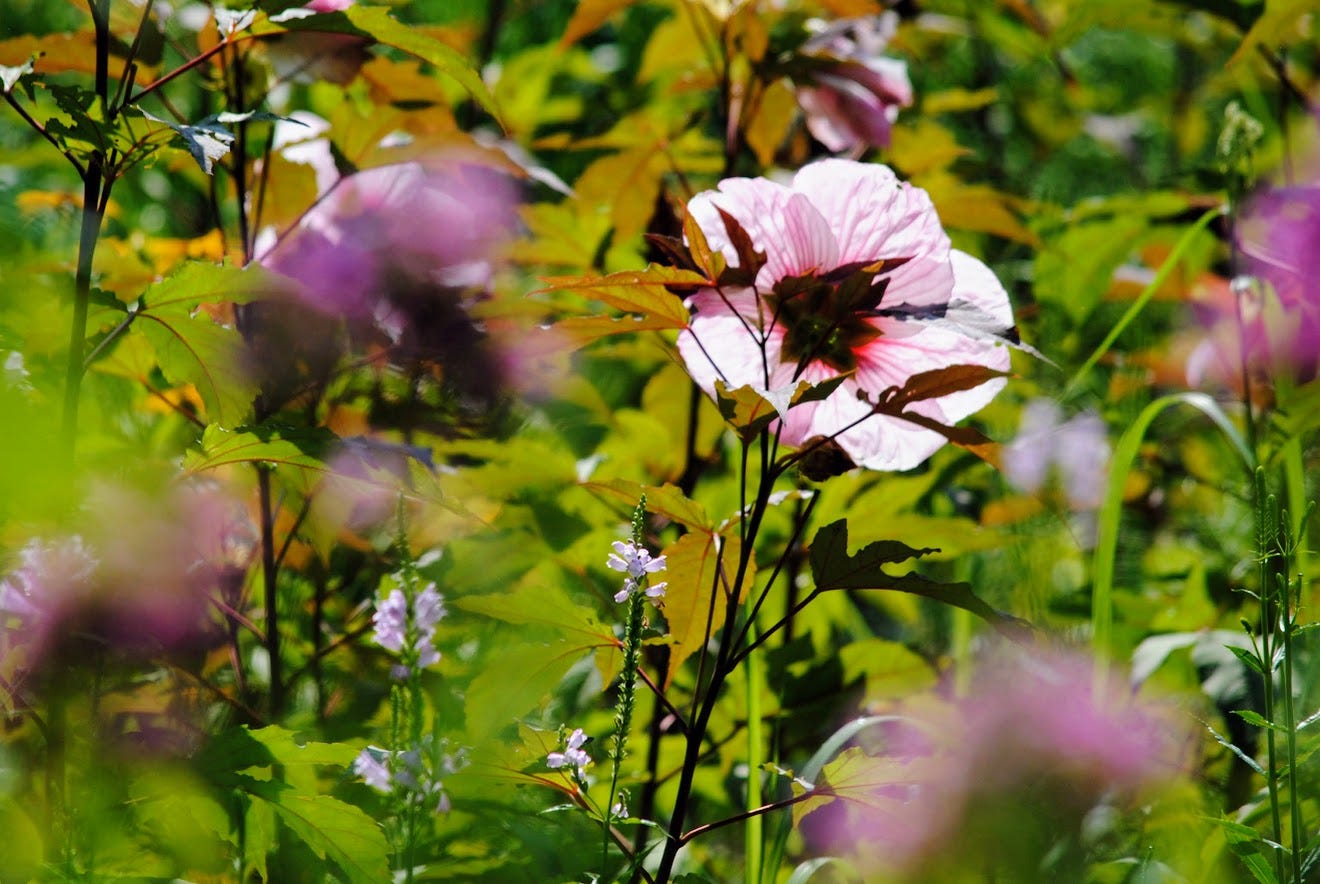


As hoped, I did draw inspiration from my Hillwood visit. Among other things, I’m definitely going to add some oakleaf hydrangeas to my decidedly partly-shady yard.

But I also came away with a big fat wish: that influential institutions like Hillwood would do far more to showcase indigenous species and sustainable landscaping practices. Stop tinkering at the margins. Stop checking the “environmental stewardship” box by creating out-of-the-way native plant ghettos. Instead, take natives mainstream in your landscapes and show the rest of us what’s possible. Go big. Native plants are every bit as beautiful as their non-native peers AND they’re critical to the health of our planet. There’s really no comparison.
As we design and tend our own gardens, we face many of the same choices as Hillwood’s landscapers. Are we concerned only with esthetics, or can we combine beauty and functionality? As Braiding Sweetgrass author Robin Wall Kimmerer points out, “You don’t have to be complicit in our culture of destruction.” Why not choose to be constructive?
May Sinéad O'Connor rest in peace.
If you live in the DC vicinity and could use assistance with sustainable landscaping, visit Bees’ Knees Design. I’d be happy to help you.
Comments
Nothing yet. Say the first thing.
Sign in to join the conversation.