
If I've learned anything from the landscape professionals and experienced amateurs around me, it's that gardens are always works in progress. They're never perfect or “finished.”
Those of us who care about supporting biodiversity and climate resilience try to create gardens that are in ecological balance, which means they can sustain themselves with relatively few interventions from us humans. “Relatively” is carrying a lot of weight in that sentence, though. There's no such thing as an install-and-ignore landscape.
Ya Gotta Keep Weeding
There are two main reasons for this. The first is that we're carpeted in invasive species. And by “invasive” I don't mean merely an aggressive plant that we might observe expanding its territory inconveniently in our own yards. An invasive plant is a non-native species that is capable of spreading rapidly, causing ecological or economic harm, or threatening human health. They typically have few natural predators to keep them in check. Some release chemicals in their leaves or root systems that inhibit other plants from growing near them. They escape cultivation in our yards, get established in wild areas, outcompete native plants, form monocultures and destroy wildlife habitats.
So even if an invasive plant appears to be well-behaved in our own yard, we should assume it can and will escape to wilderness areas — through bird-digested berries or wind-borne seeds — and disrupt entire ecosystems, whether we can see that happening or not.
Sadly, even if we all got religion and eradicated the invasives in our own yards tomorrow (which would be a HUGE improvement so please do it!), there's no stuffing Pandora back into her box. Invasives are everywhere, so vigilant garden management will always be required to keep them under wraps. Translation: ya gotta keep weeding.
Change Gonna Happen
The second reason gardens are never “done” is that nature evolves. Sounds obvious, right? But somehow as a culture we've disassociated gardens from nature, treating them instead like outdoor decoration that is ours alone to arrange.
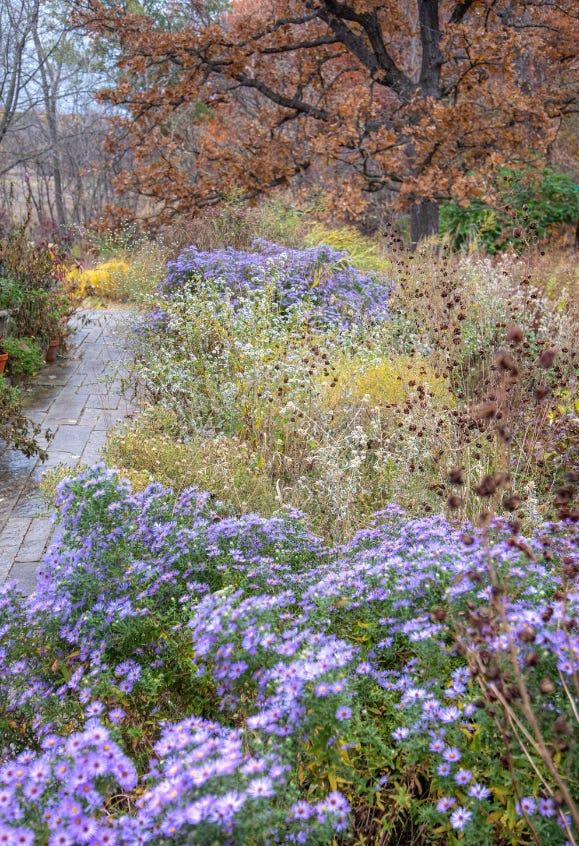
Consider that much of the land East of the Mississippi fervently aspires to be a mixed temperate forest. If you took humans and invasives out of the equation, that's what this patch of the continent would return to. Ecological succession is the process by which the mix of species and habitat in an area changes over time. Gradually, these communities replace one another until a “climax community” – like a mature forest – is reached, or until a disturbance – like a fire – occurs.
Our yards and gardens are no exception to this imperative of succession. If you left your mid-Atlantic petunia bed to its own devices, within a few years it would be full of shrubs; and within a few decades it would be a multilayered forest. Translation: change gonna happen.

A corollary to the phenomenon of succession is the inherent dynamism of plant communities. Inevitably in any diverse garden, species will ebb, flow and rearrange themselves. Some plants are more robust or longer-lived than others. Some are natural spreaders, others are more introverted. Some will thrive amid the quirks or extremes of the season's weather, others will sulk. Some are tastier to herbivores than others. So again, no matter how meticulously we may design our landscapes, change gonna happen.
This is not to say that our only role, as ecologically-minded gardeners, is to be passive bystanders to natural succession and dynamism. It's perfectly legitimate to decide you want your meadow to stay a meadow, or that you want your pugnacious blue mistflower to coexist with, rather than overtake, your self-effacing butterfly weed. That's where responsible management comes in, including trimming, deadheading, “Chelsea chopping,” cutting back, dividing and thinning.
Editing a garden is one thing. But expecting it to remain static and airbrushed from season to season, never mind year to year, is to gravely underestimate nature.
So Why Not Embrace the Fluidity?
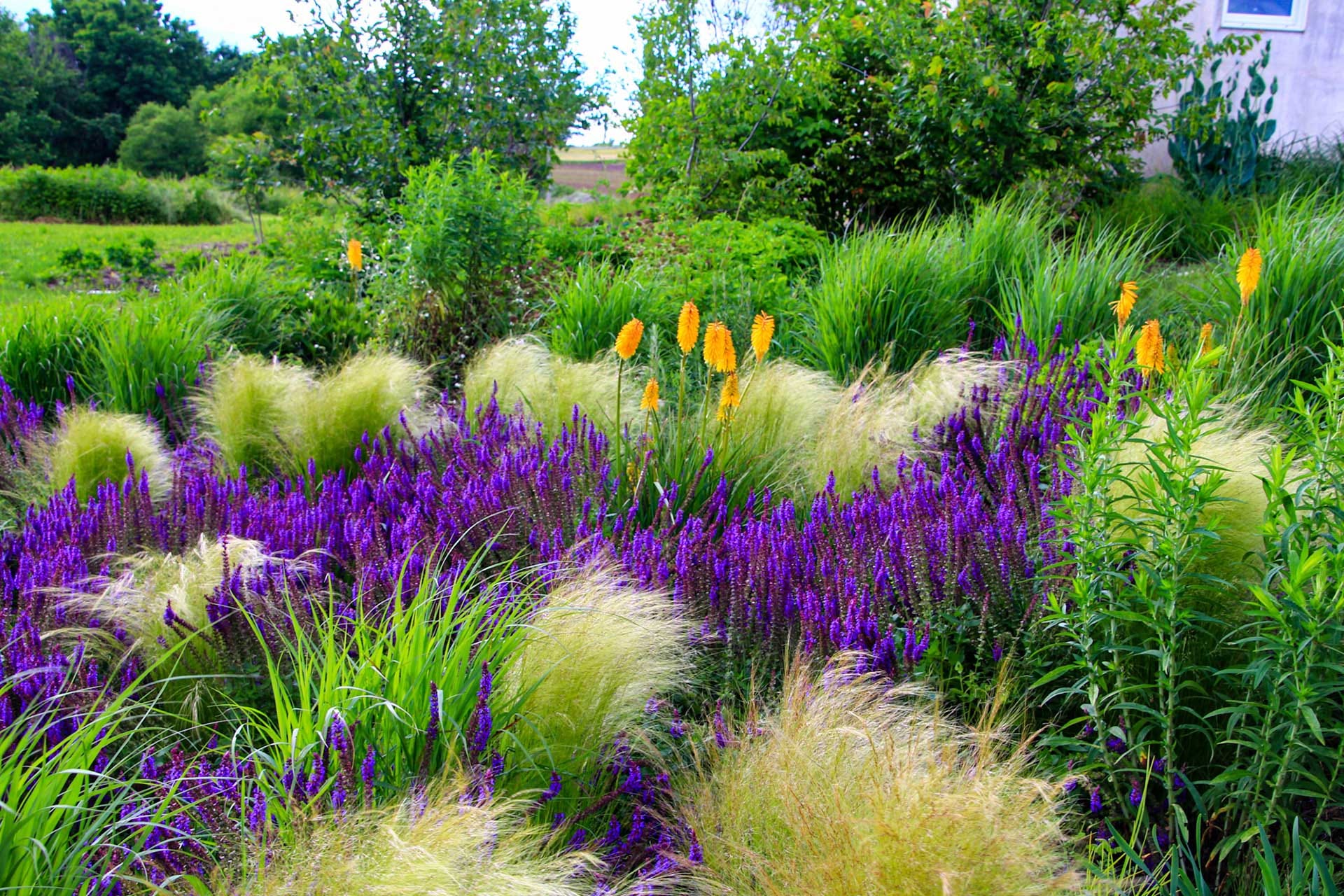
Paradoxically, there's something freeing about all of this. Unless you've chosen to let invasives or succession have their ways, you’ve got to do some degree of mucking around in your garden. And change gonna happen anyway.
So why not embrace the imperfection and unpredictability? You'll make some bad decisions. You'll plant some combos that sounded good but ended up looking atrocious. You’ll put things in the wrong place. You'll deadhead when you should have divided. You’ll kill stuff. Some plants will ghost you without so much as a farewell text. Others will start to form an empire. Guests you've never met before will show up uninvited.
I have done and experienced all of these things. And cursed myself for each one! But I'm learning that the experts I admire most treat these “mistakes” as their core curriculum. They got good at what they do by experimenting, failing, learning, and experimenting some more.
As I talk to neighbors, friends and clients about their landscapes, I often sense a fear of failure. Their hope is to arrange things just so, then find and follow the rulebook for keeping it that way. More useful than an instruction manual, though, might be permission to just… well, muck around and find out. It’s what the pros are doing, after all, and it’s much more fun than the alternative.
If you live in the DC vicinity and could use assistance with sustainable landscaping, visit Bees’ Knees Design. I’d be happy to help you.
No posts
Comments
Nothing yet. Say the first thing.
Sign in to join the conversation.