
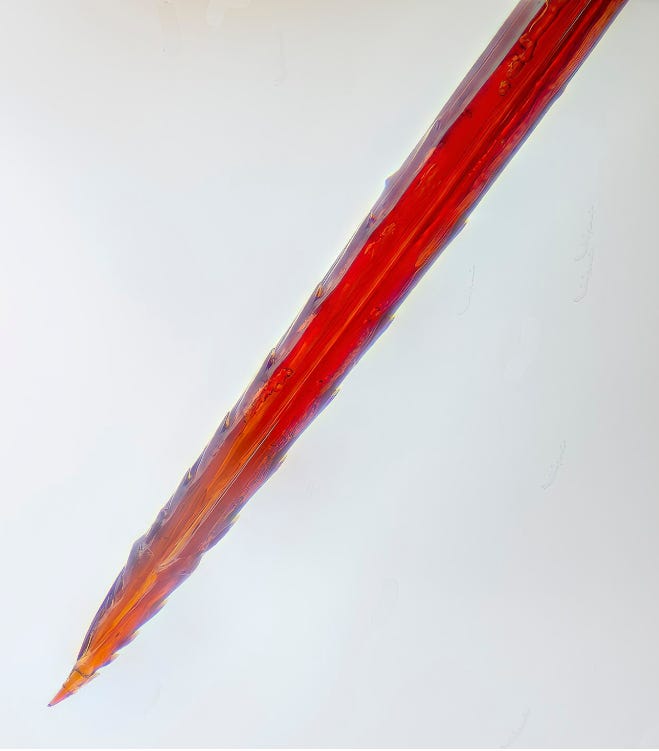
The bee sting began as an ovipositor. An ovipositor is an egg-laying tube, a structure found across many insect orders, used to deposit eggs into soil, plant tissue, or a host animal.
In the lineage of stinging wasps (Aculeata), this structure was already associated with venom delivery for defence and prey immobilisation. When the bee lineage diverged from predatory wasps around 100 million years ago and switched to a pollen-based diet, the ovipositor was no longer needed for inserting eggs into hosts or plant tissue. Egg laying itself remained, but it now happened in prepared brood cells rather than by injection or drilling. Evolution repurposed it.
If you enjoy science-rich explorations of bee biology, you can subscribe to receive future chapters as they are published.
The bee sting is a modified ovipositor. This is why only female bees can sting: only females have the anatomical structure from which it developed. The male bee, the drone, has no ovipositor and therefore no sting. He is, defensively, entirely unarmed.
The sting was not designed for you. It was not designed at all, in the purposive sense. It was a reproductive structure, redirected.
The honeybee worker sting is barbed. This is the structural detail that makes everything else about honeybee stinging unusual and ultimately fatal for the bee.
When a worker bee stings a vertebrate, the barbs catch in the elastic skin and prevent the sting from being withdrawn cleanly. As the bee attempts to pull away, the sting, the venom sac and associated abdominal tissue are torn from her body. The bee flies away. She will die shortly after, typically within minutes to hours, from abdominal rupture.
This is not a sacrifice in any intentional sense. The bee does not choose to die for the hive. She attempts to sting and cannot disengage. The fatal outcome is a consequence of anatomy, not decision.
Here is the thing that is often overlooked: the sting continues working after the bee has gone.
The detached venom sac does not simply empty. The muscles around it continue contracting for up to a minute, pumping venom through the embedded sting. If you remove a sting quickly after being stung, you reduce the total venom dose. If you leave it, the automated delivery continues without a bee attached.
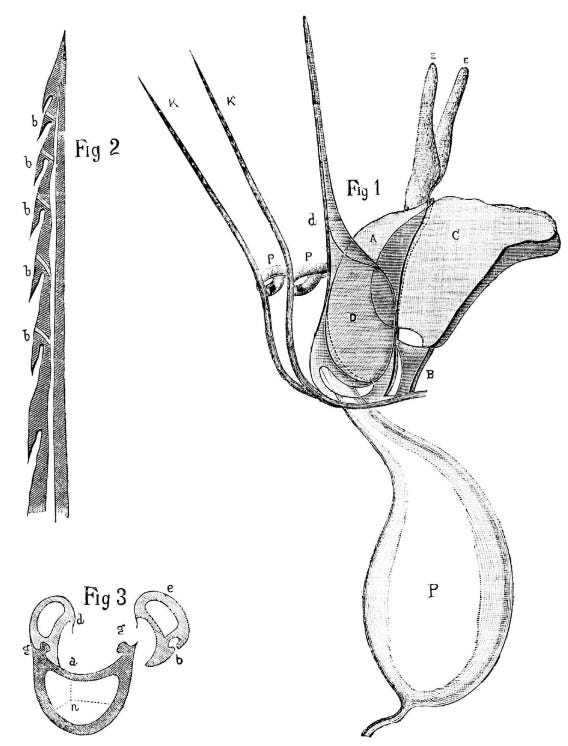
Alongside the venom, the sting releases alarm pheromones, primarily isoamyl acetate, along with other compounds such as 2-heptanone. These chemicals recruit other bees to the location and trigger defensive behaviour. The dead bee is not simply a casualty. She has become a signal. Her torn abdomen is an alarm system, broadcasting chemical distress coordinates to every other bee inrange.
The weapon is not the physical barb. The weapon is the pheromone broadcast. The sting is a communication device that happens to also deliver venom.
The Bee’s Body is a paid essay series on Bees & Beyond exploring the real biology of bees, at the level most books never reach. Paid subscribers get all four articles in full.
Bee venom is a complex mixture and understanding its components explains both the immediate pain and the longer-term immune responses it can produce.
The major component by weight is melittin, a small protein that disrupts cell membranes. Melittin is responsible for the sharp, burning initial pain of a sting. It inserts itself into lipid bilayers, the structural layer of cell membranes and compromises their integrity. It has been studied experimentally for its potential effects on cell membranes in antimicrobial and cancer research contexts.
Phospholipase A2, the second major component, breaks down phospholipids in cell membranes and amplifies the inflammatory response. It is also one of the primary allergens responsible for anaphylactic reactions in sensitised individuals. Histamine, present in smaller quantities, contributes to local vasodilation and itching, but plays a smaller role than the enzymatic components in overall pain and inflammation.
The pain is not random or incidental. It is chemically engineered to be memorable. An animal that is stung and learns to avoid bee nests in future is an animal that will not disturb the hive again. The venom is, in this sense, a precisely composed educational intervention.
Beyond the paywall: why queens can sting more than once, how the worker’s fatal sting evolved, what defensive behaviour is actually communicating and why smoke works on bees at all.
Comments
Nothing yet. Say the first thing.
Sign in to join the conversation.