
The dream of opening a brewery captured the imagination of many would-be entrepreneurs over the last 15 to 20 years. Beyond quitting day jobs, the romanticized vision likely included showing up to a crowded taproom or brewpub, chatting up the staff and mingling with regulars. The priorities included exciting beers, often food, but always great hospitality. For most, that’s how things started out: simple.
As the industry grew, so did the opportunity and, in turn, the expectations. The natural progression for most founders became packaging their beers, distributing into more bars and stores in their home market, and eventually expanding across state lines. Thanks to a tidal wave of hype and excitement, many quickly ran up against their capacity, presenting an opportunity to invest in larger production facilities to truly go for it. And a lot did. The taproom remained, but as one piece of a much more complex puzzle.
With occasional exceptions, the door to this model is mostly shut, and it is increasingly difficult to make the economics work for local brewers. There are more brands than ever competing for less space. According to BA Staff Economist Matt Gacioch, 33% of new breweries in 2015 were categorized as distribution-focused models - either microbreweries or regional breweries. That number in 2025 is just 9%.
According to the 2026 Midyear Report from the Brewers Association, 54% of survey respondents reported production growth, up from 49% at the same survey in 2025. Some of the newest and most successful breweries today are finding success by getting back to embracing those original visions where hospitality is the number one priority: smaller, direct-to-consumer taprooms that make their own beer, serve it right over the bar, and might not even think about selling through independent distributors…ever. My BrightBev business partner Jeff refers to this as “The Parisian Cafe Model.”
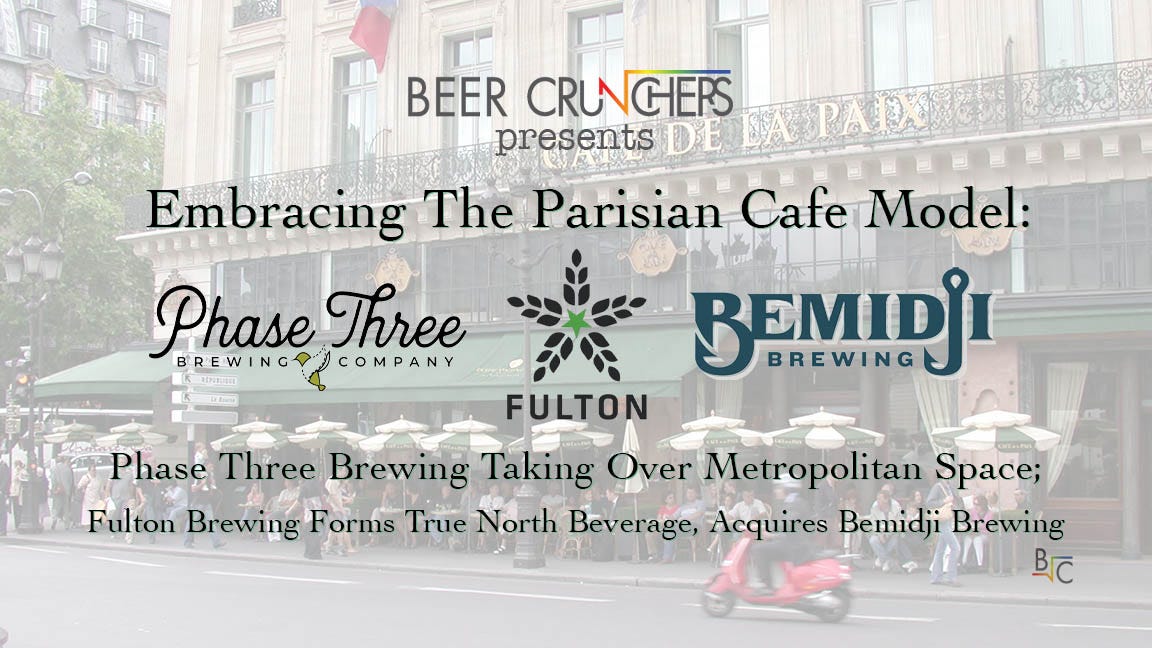
A Parisian cafe is a neighborhood restaurant/bar/coffee shop often associated with France’s largest city, but the concept exists all over France and Europe. It’s a relatively small place where people go because it’s close by, familiar and reliable. In a word: it’s theirs. One day they might stop in for a coffee and read the newspaper. The next day they may meet a friend for lunch, or have a glass of wine in the evening.
If you’ve visited Paris, you know that these cafes are on every corner, and that they endure not because they are massive scale operations, but because they’re woven into the community’s fabric. In beer, The Parisian Cafe Model isn’t about how many barrels these more modestly-sized breweries can crank out. Instead, it is reliant on a steady stream of regulars in a limited space. It’s a lower ceiling, but also a much higher floor.
Comments
Nothing yet. Say the first thing.
Sign in to join the conversation.