
A lot of time goes into each issue. I’m reading annual reports, 10-Ks, shareholder letters, old interviews, books, and meeting transcripts, then trying to connect the dots in plain English. The goal is to better understand great businesses, capital allocation, and the lessons Buffett and Munger were learning in real time
10-K Deep Dive: Nike ($NKE)
10-K Deep Dive: Roblox ($RBLX)
10-K Deep Dive: Intel ($INTC)
October 24th, 2011
“Dear Fellow Shareholders,
The Internet is transforming video entertainment, stream by stream, consumer by consumer, nation by nation. Our opportunity is to be one of the leaders of this transformation with the best streaming video subscription service on the planet. The last few months, however, have been difficult for shareholders, employees, and most unfortunately, many members of Netflix. While we dramatically improved our $7.99 unlimited streaming service by embracing new platforms, simplifying our user-interface, and more than doubling domestic spending on streaming content over 2010, we greatly upset many domestic Netflix members with our significant DVD-related pricing changes, and to a lesser degree, with the proposed-and-now-cancelled rebranding of our DVD service. In doing so, we’ve hurt our hard-earned reputation, and stalled our domestic growth. But our long-term streaming opportunity is as compelling as ever and we are moving forward as quickly as we can to repair our reputation and return to growth.”
Looking back today, this paragraph reads almost like a turning point in the company’s history. Netflix is essentially a pure-play streaming business, but that wasn’t always the case. In 2011, the company attempted to separate its DVD-by-mail service into a new entity called Qwikster, a decision that triggered a massive customer backlash and caused the stock to collapse by 80%. Qwikster is not just one of the worst business names of all time; it’s nearly as foolish as Michael Eisner’s $5.5 billion purchase of the Fox Family assets. Who else remembers getting these red Envelopes?
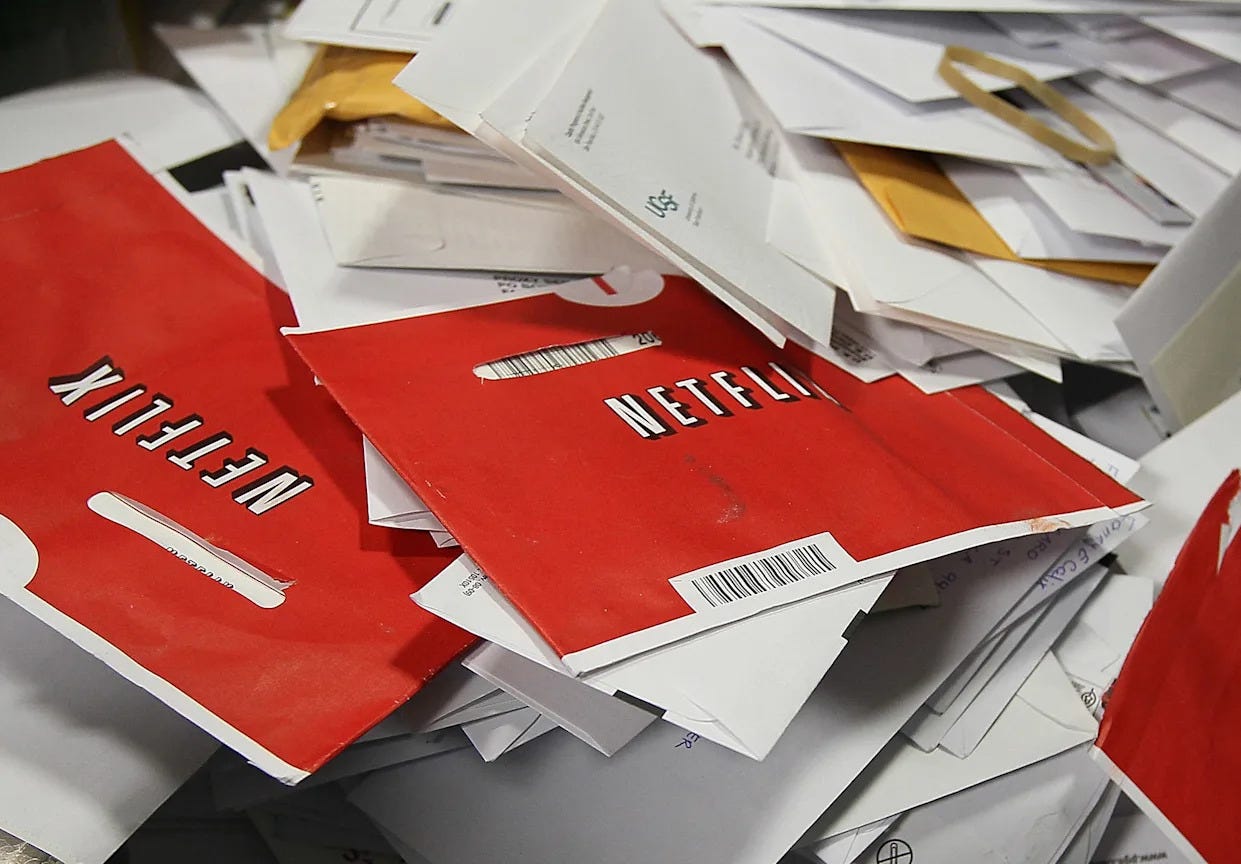
Fast forward to 2026, and the DVD business has disappeared, and the company derives most of its revenue from monthly membership fees.
With that history in mind, let’s look at where the company stands today.
I usually review the revenue segments at this point, but since everyone is quite familiar with the business, let’s get down to business, shall we?
Welcome to Becoming Berkshire. If you are new here, we study Warren Buffett, Charlie Munger, Berkshire Hathaway, and the businesses that shaped one of the greatest investing stories ever told. We also break down 10-Ks and annual reports to understand how businesses really make money, how management allocates capital, and what separates great companies from average ones. Subscribe for free and join thousands of investors following the journey.
The most recent shareholder letter shows just how far the company has come since those early streaming days.
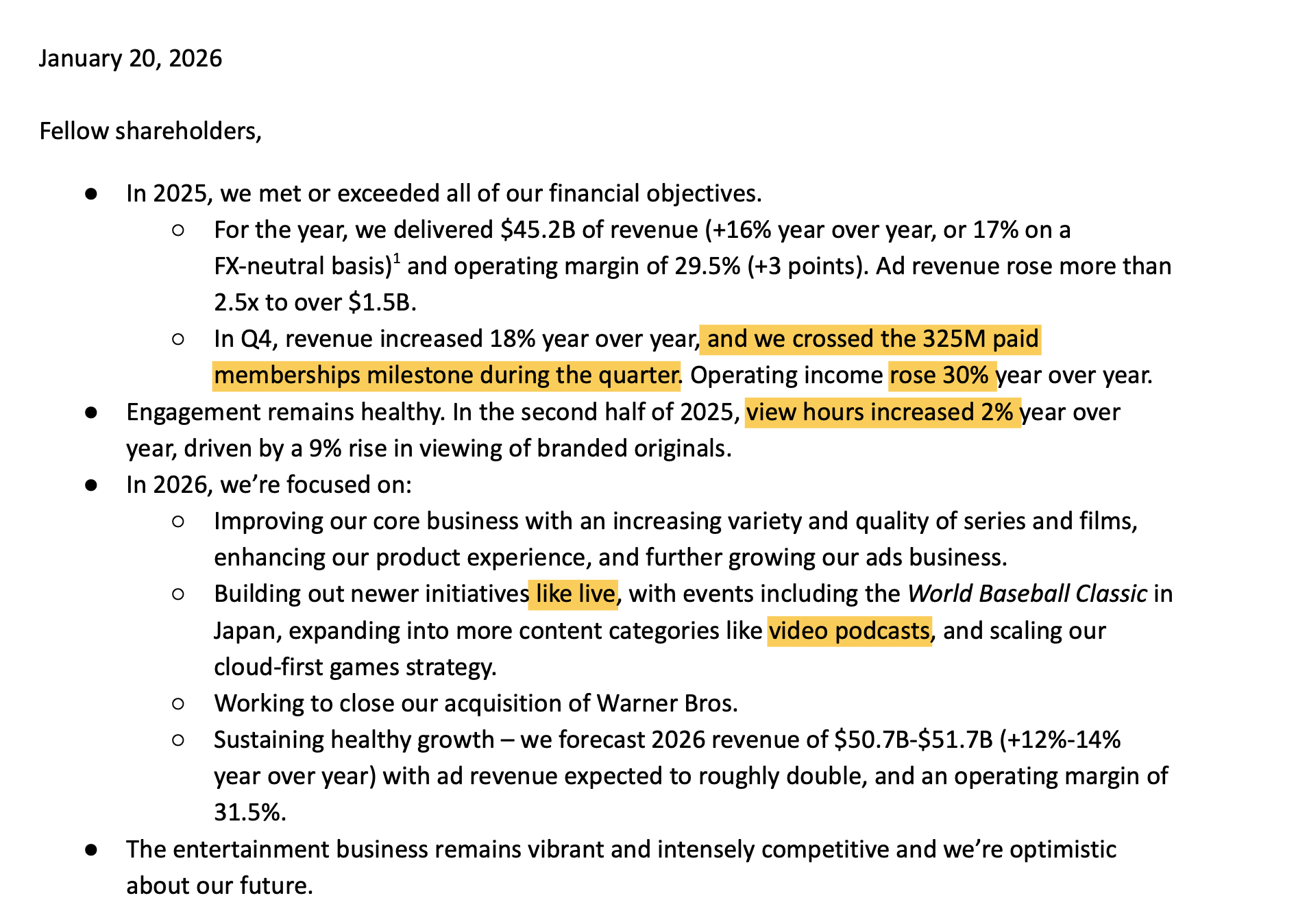
Netflix crossed 325 million subscribers in 2025, which is an incredible number. But what I found more interesting was the increase in viewing hours and the growth in branded originals. View hours increased 2%, while viewing of branded originals increased 9%. To me, that suggests Netflix is still taking market share, and customers are relying less on licensed content.
Another thing that immediately jumps off the page is profitability.
A decade ago, no one would have guessed that Netflix would have an operating margin of 29.5%. Before the release of House of Cards in 2013, a true classic, Netflix primarily licensed content from other studios. From what I recall, House of Cards was their first major hit. This development caused concern among investors because producing original content is highly capital-intensive, and it appeared Netflix would need to invest billions to transform its operating model. Where would the company be if it had listened to its investors and had licensed only other studios’ content? A wonderful example of why management should not always give in to the crowd's complaints.
And now you have ad revenue of $1.5 billion, which has more than doubled, and management expects it to roughly double again in 2026.
Of course, none of this works without content that people actually want to watch.
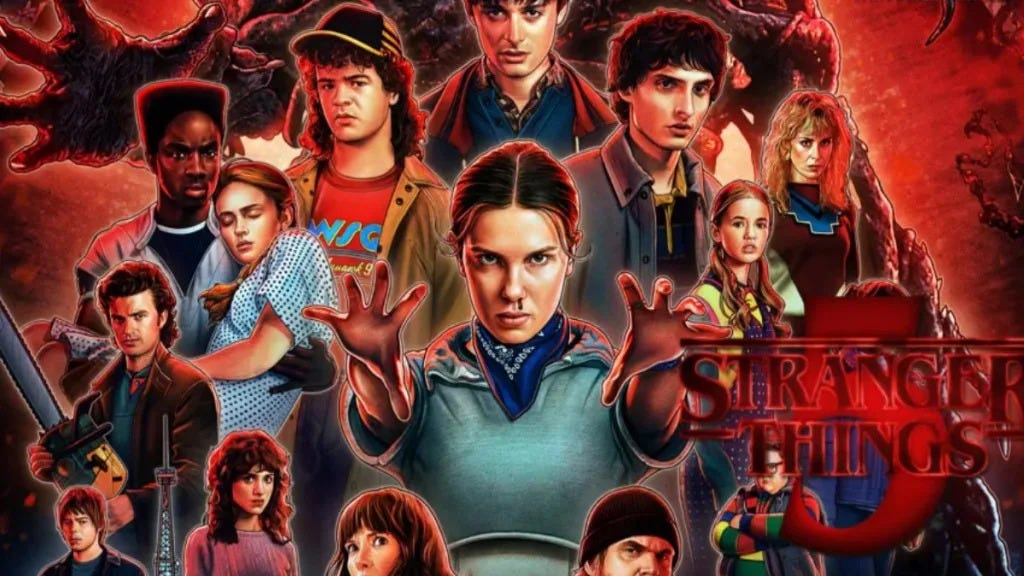
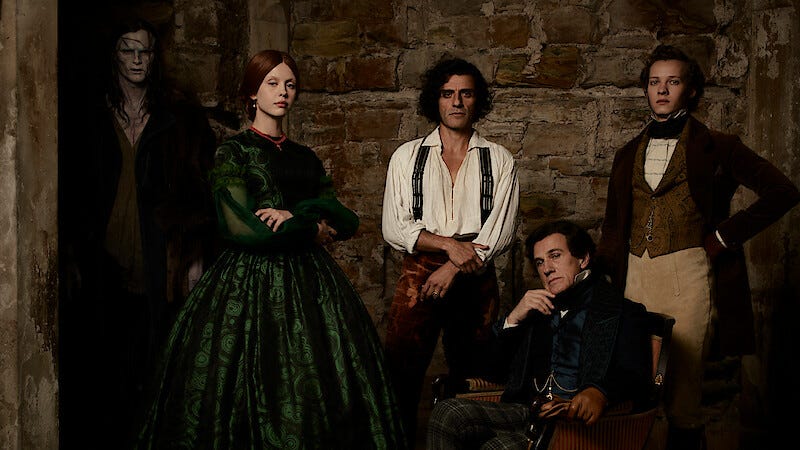
The letter highlighted some of the platform’s most popular hits, including Stranger Things, which generated approximately 120 million views, making it one of Netflix’s biggest franchises; Emily in Paris Season 5, with around 41 million views; and Guillermo del Toro’s Frankenstein, which exceeded 100 million views.
Now let’s move from the shareholder letter to the financial statements.
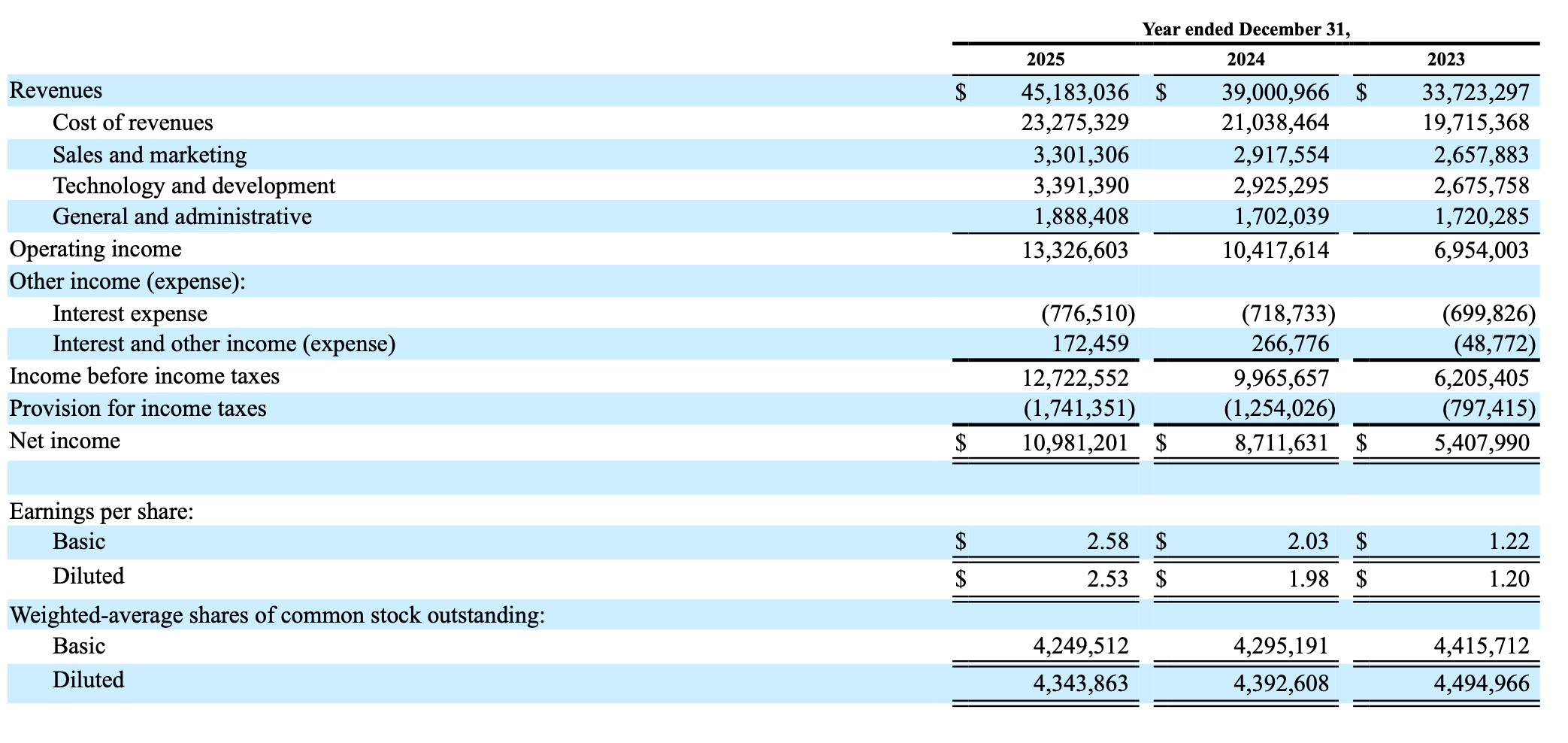
Netflix ended 2025 with $45 billion in revenue, up 16% year over year. This remarkable growth highlights its strong market position. A mid-teen percentage increase on such a large revenue base demonstrates significant pricing power.

I was also surprised to see the cost of revenue as a percentage of revenue decrease during an inflationary period, which really underscores Netflix's scale.

Revenue increased by 31% over the past two years, but more importantly, operating income surged 91% since 2023. With operating income growing three times faster than revenue, the return on capital expansion is becoming evident.
It’s uncertain how many more people can sign up for Netflix, suggesting the land grab has largely concluded. Now, Netflix is using a different strategy, as reflected in its high operating income.

Net income came in at nearly $11 billion, up from $5.5 billion in 2023. The days of funding growth with debt are long gone. The business has become self-sustaining, and Netflix is firing on all cylinders. They are expanding margins, reducing costs, becoming more global, and buying back shares.
And this shift didn’t always look so obvious.
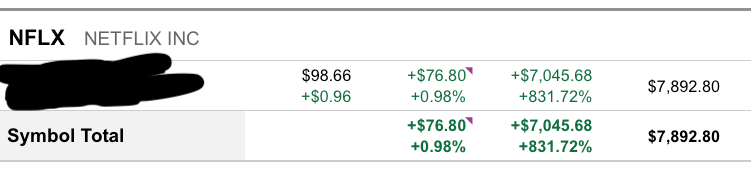
I’ve held Netflix shares for a while, but had to sell some to cover living expenses while in law school. I remember being very interested in the company in 2016. An analyst on a podcast explained how content costs are spread out over time, and he suggested that eventually, the high costs could jeopardize the entire business plan. That observation scared me at the time, especially as a young, inexperienced investor. I should have gone with my gut on this one.
Something I will never do again.
Comments
Nothing yet. Say the first thing.
Sign in to join the conversation.