
Disney was the first stock I ever purchased back in 2014; it was mainly the reason I got into stocks, as I desperately wanted to own a piece of the Company during my adolescence when I first visited the park. However, since then, Disney has been a terrible investment, significantly underperforming the market.
But if you look at Disney's history, the company has gone through decade-long stretches when it has returned very little to shareholders, only to deliver market-beating returns over the next decade. That said, the market is always looking to the future; therefore, the stock's performance history is irrelevant. What’s important is how the business is doing and whether purchasing the stock today would gain us market-beating returns in the future.
The Company, as it stands today, is broken down into three segments:
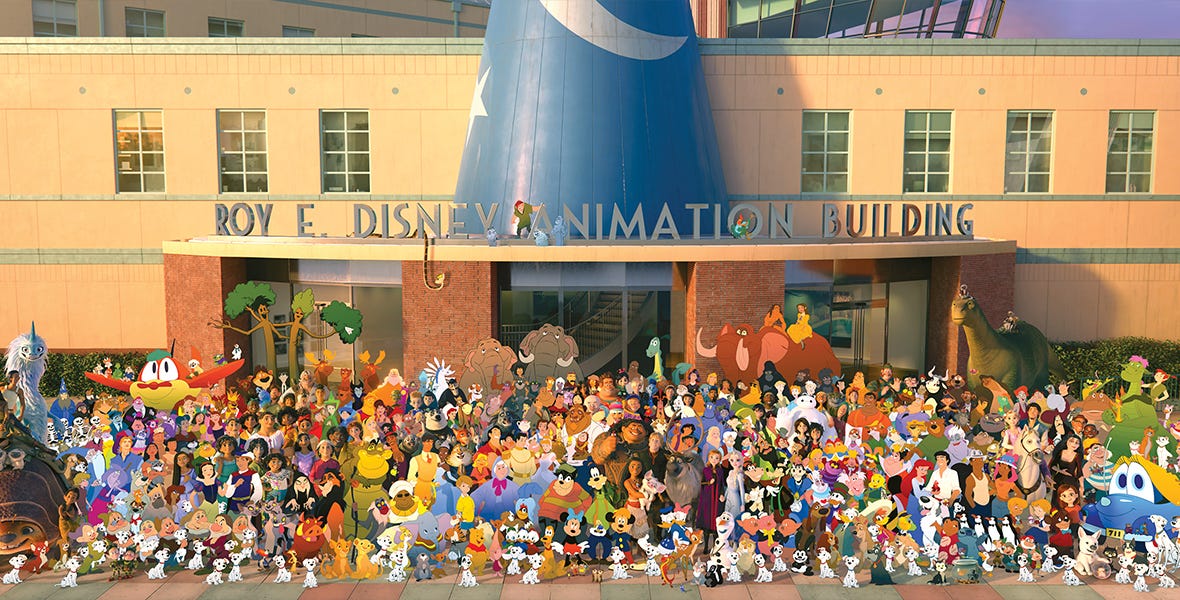
The Entertainment division is the content machine. It includes the linear networks, streaming, advertising, theatrical releases, and the licensing of its content.
In my opinion, this is the most important segment because it creates the flywheel. Although it does not have to be the most profitable segment, it creates the franchises that eventually flow through the parks and merchandise.
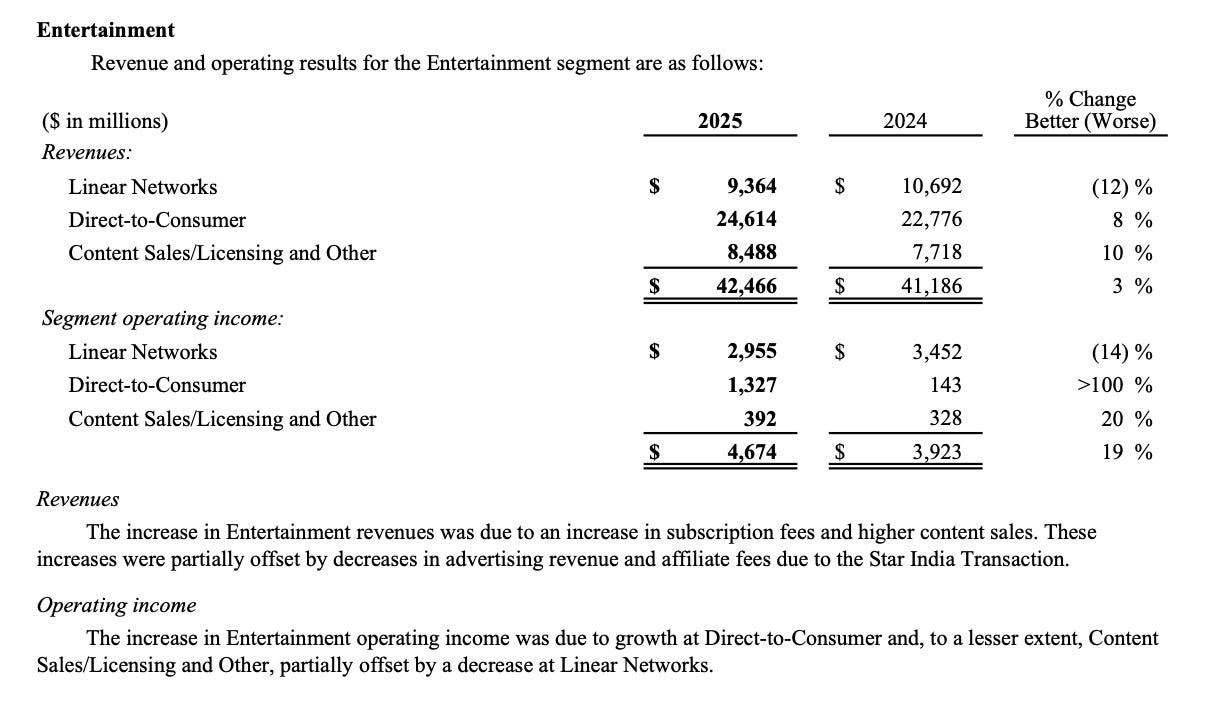
For 2025, revenue increased 3% in this segment, while operating income rose 19%, which is exactly what we want to see.
However, it is the Linear Networks that have historically been the determinant for Disney. During the peak pre-streaming years, before 2018, cable networks generated roughly $23–24 billion in revenue and $7–8 billion in operating income.
That said, I do have to make clear that this is not apples-to-apples with today’s Entertainment or DTC business, since ESPN, which played a very large role in the old linear network economics, is now included in the Sports segment. But still, this is a lot of room to cover for the DTC division.
Still, once DTC reaches $5–6 billion in operating income, nobody will care much about Linear Networks. And speaking of DTC, I don’t believe Disney gets enough credit for going from losing billions of dollars in streaming to ending 2025 with $1.3 billion in operating income.

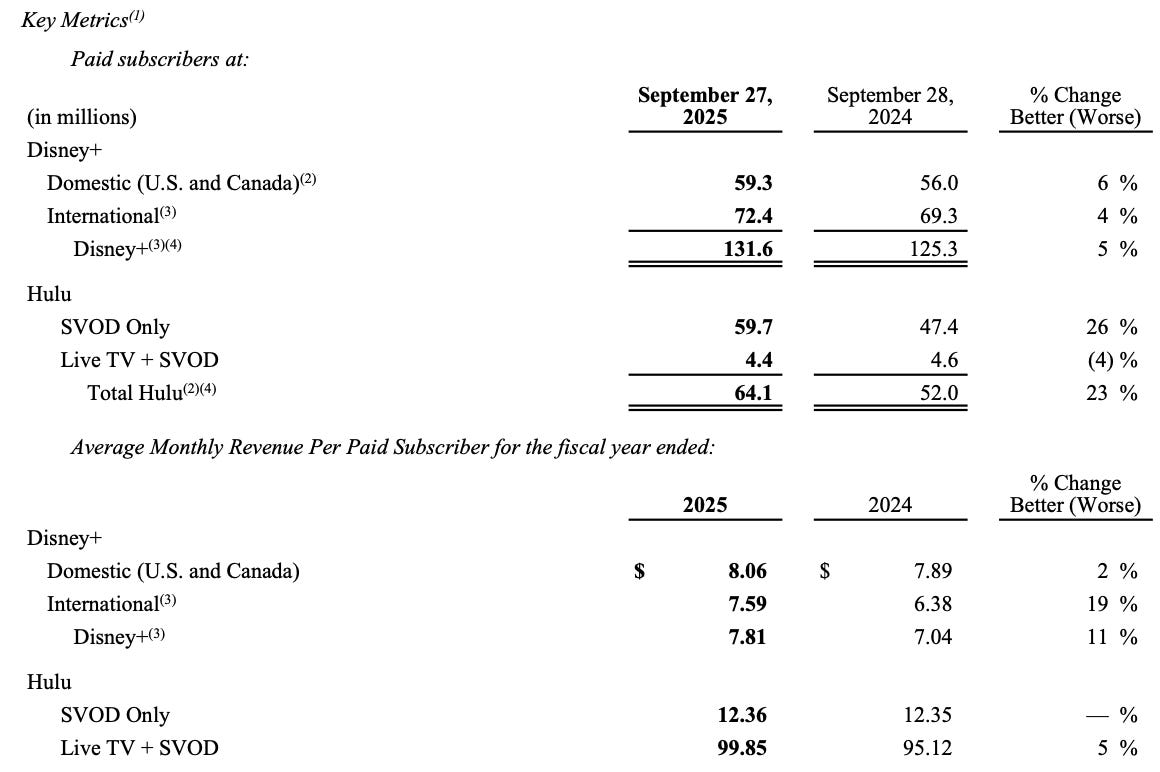
Disney’s streaming business not only became more profitable in 2025, but also increased total subscribers by 5%. Disney+ ended the year with 131.6 million paid subscribers, while average monthly revenue per paid subscriber rose 11% to $7.81.

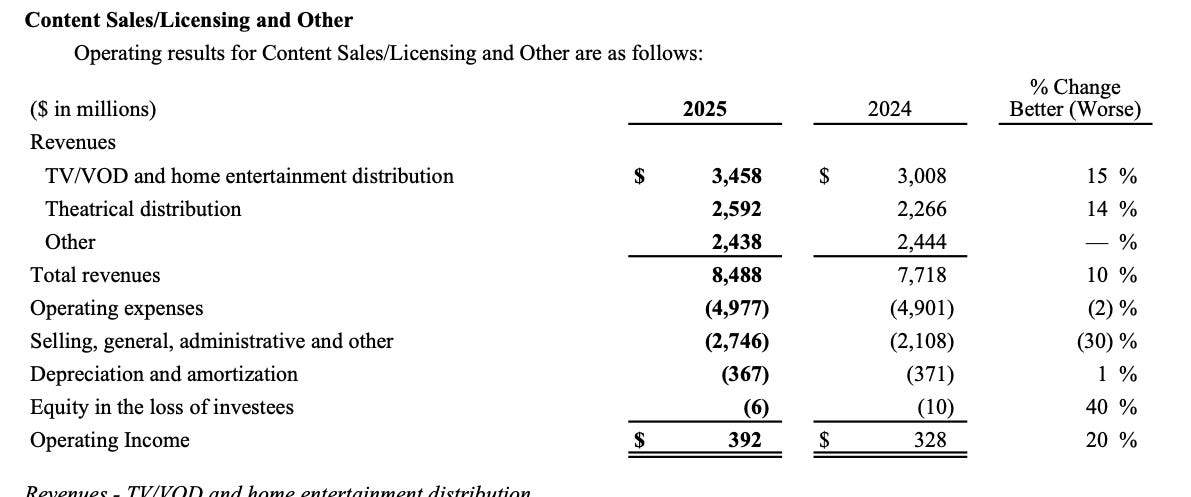
One interesting nugget is that TV/VOD and home entertainment distribution generated almost $1 billion more than theatrical distribution. So much attention is given to the box office, but people rarely talk about the distribution window between theaters and Disney+. Avatar: Fire and Ash is a good example; the film was released in theaters on December 19, 2025. It then moved to digital purchase and rental platforms like Amazon Prime Video, Apple TV, and Fandango at Home on March 31, 2026, before finally coming to Disney+ on June 24, 2026. In other words, Disney gave the film roughly 102 days in theaters before the digital window, and about 188 days from theatrical release to Disney+. That is important because it shows there is a meaningful period between the box office run and the streaming debut, where Disney is still monetizing the film through TVOD and home entertainment.
The Sports segment generates revenue primarily from affiliate and subscription fees.
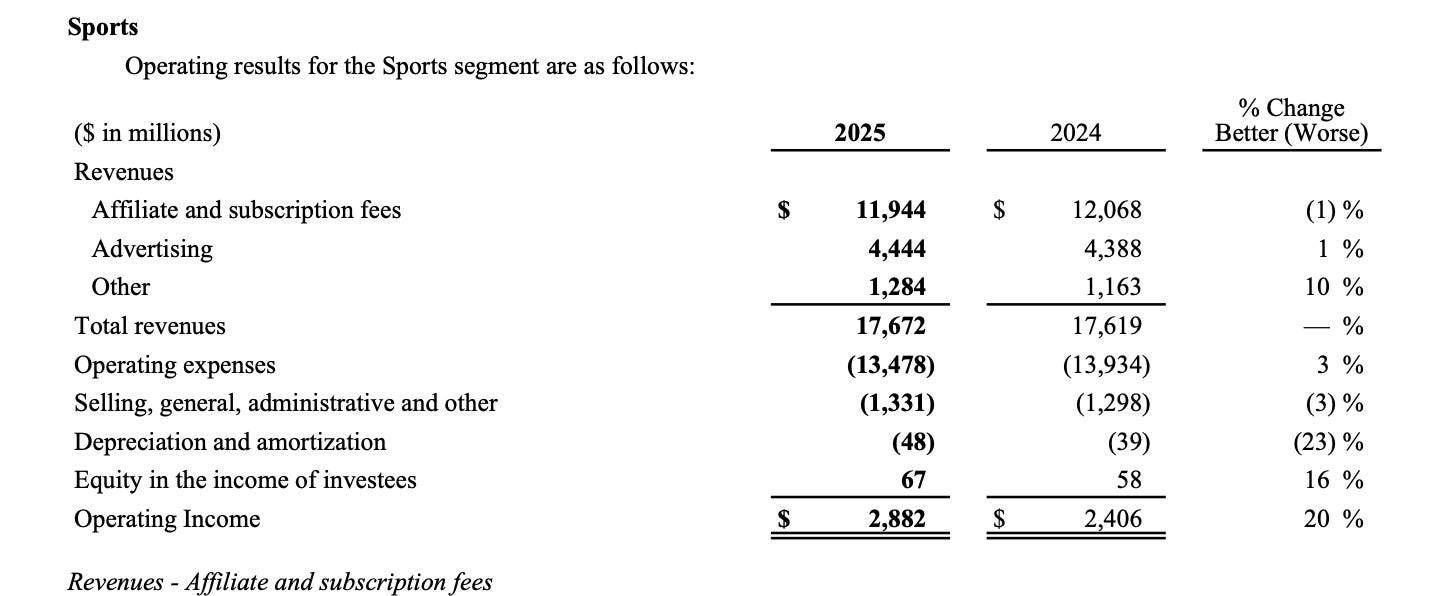
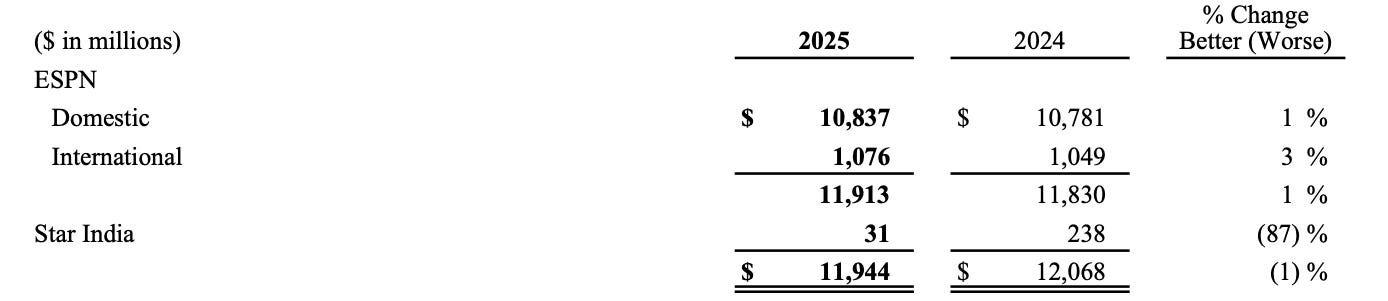
Sports generated $17.7 billion of revenue, mostly flat from the prior year. However, the real highlight was operating income increasing 20% to $2.9 billion. I also like that they break out ESPN revenue, and it is nice to see that it remained stable over the last year.
Welcome to Becoming Berkshire. I’m studying how Berkshire Hathaway was built, one investment, one business, and one decision at a time. Subscribe for free to follow along, or become a paid subscriber if you want to support the research, writing, and time that goes into this project.
Disney’s Experiences segment generates revenue from its parks, resorts, hotels, cruises, vacation club properties, consumer products, and branded merchandise.
Disney today operates 57 resort hotels, 8 cruise ships, and 12 theme park gates across its global resort destinations. Disney Cruise Line is also in expansion mode, with 5 more ships planned by 2031, bringing the fleet to 13 ships.
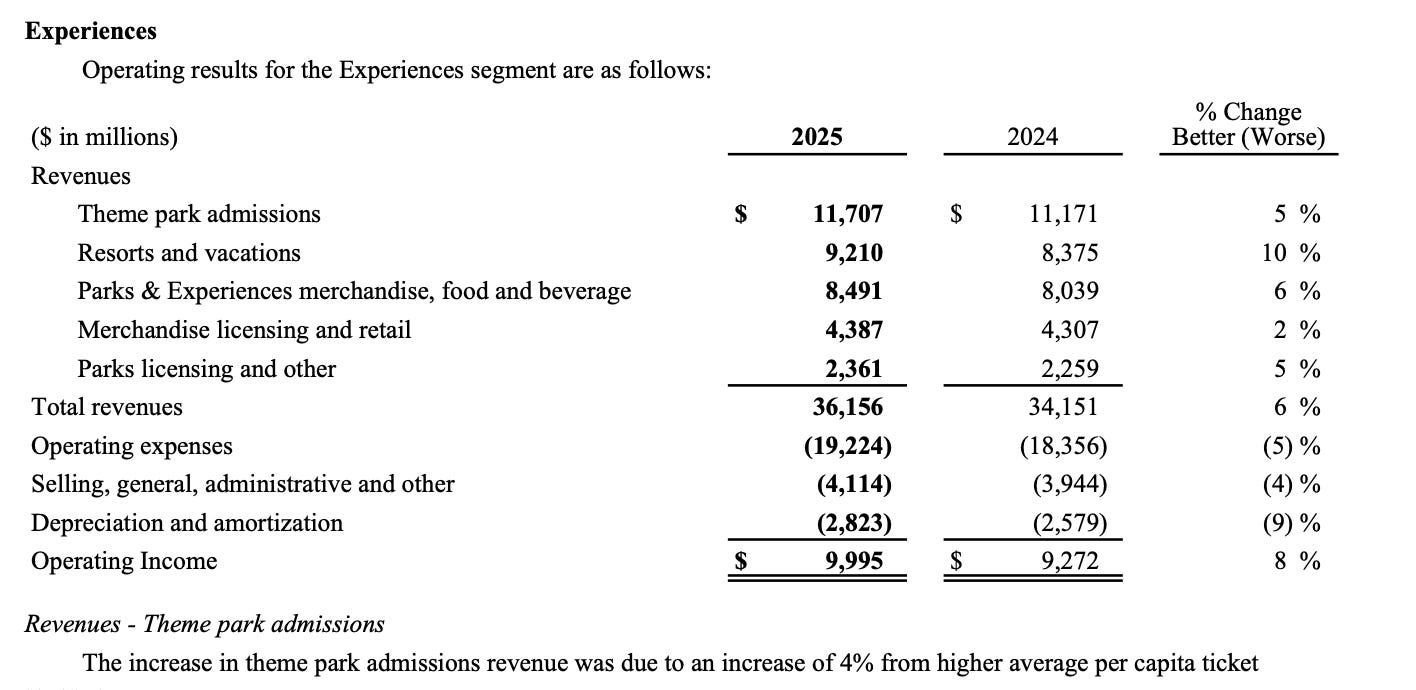
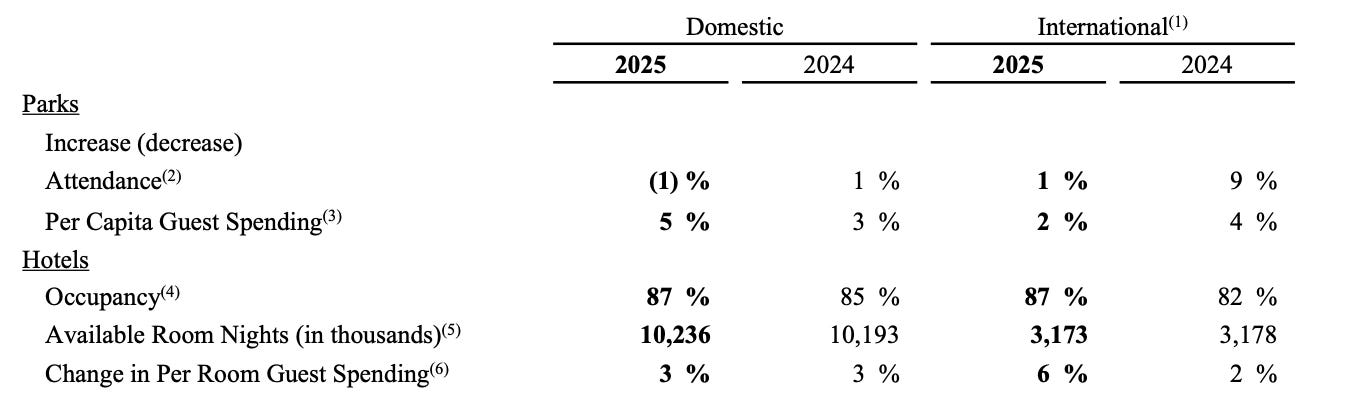
In 2025, Disney’s Experiences revenue rose to $36.2 billion from $34.2 billion in 2024, up 6%. Operating income increased to $10.0 billion from $9.3 billion, up 8%.
Theme parks were up 5% to $11.707 billion, resorts and vacations were up 10% to $9.210 billion, and merchandise and retail increased 2%.
Per capita guest spending was also up 5% domestically and 2% internationally.
Comments
Nothing yet. Say the first thing.
Sign in to join the conversation.