
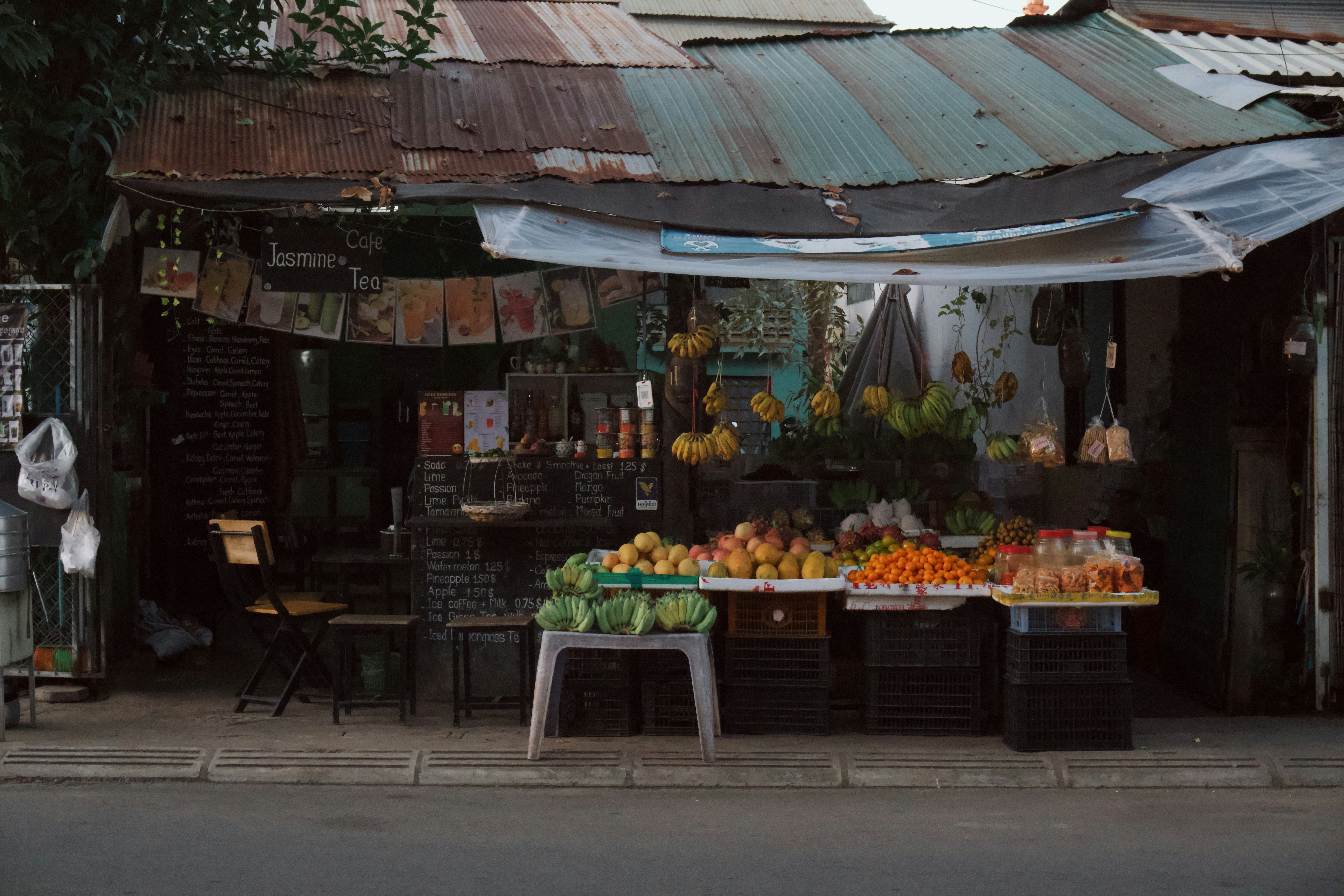
The shop was the size of a generous closet. It sold cigarettes, Fanta, and phone time by the minute. I had just been dropped off there after crossing the Thai/Cambodian border and hitching a long ride into town. Everything felt sharp and new.
Behind the counter, a woman politely tried to help me. She didn’t speak much English; I didn’t speak Khmer. She handed over a laminated price sheet that was cloudy from years of fingerprints. A tune I didn’t know crackled through a small radio.
She passed me a receiver tethered to its base by a coiled cord, the plastic worn smooth where other palms had gripped it. I dialed the number I’d written in marker on the inside of my wrist, the simplest filing system I knew.
It rang three times. Then my friend Jill picked up.
“I’m here!” I said. “I’m in Siem Reap.”
She asked where I was. I described the shop as best I could, and Jill said she’d come.
Outside, I sat on a red plastic chair that bowed slightly under my weight. Cars and motorbikes rattled by in clouds of powder-fine dirt. A boy pedaled past with a crate of baguettes balanced on the back of his bicycle. I had arrived, and no one knew it but me and Jill and the woman inside the shop with her tinny radio.
That was during my yearlong backpacking trip in 2010, which is not ancient history, but when it comes to travel, it might as well be a different universe.
I had an iPhone in my pocket. It just didn’t work. I hadn’t unlocked it — I was worried about the warranty, and I didn’t know which market stall could do it without completely frying it.
So I used the phone to connect to wifi when I could find it, mostly to Skype with my husband back home. The rest of the time it stayed silent in my bag. Without a local SIM it was just a bad camera/iPod.

So much of how I traveled back then came down to trust. Trust that I’d written down the number correctly. Trust that someone would pick me up. Trust that if they didn’t, I would figure something else out.
Every time I showed up in a new country, it was the same deal. I arrived clutching handwritten lists of guesthouses and addresses, then asked around. My fingers were always crossed.
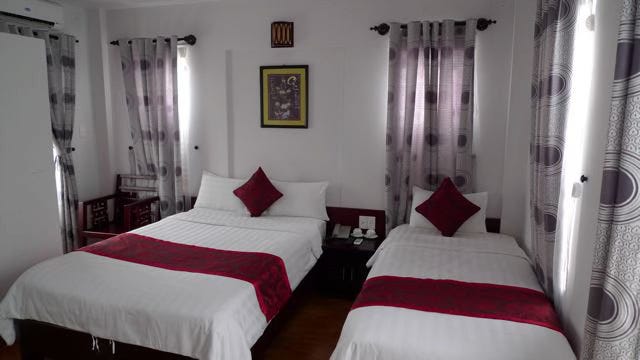
I know people who traveled in the ’70s and ’80s, and I love their stories about writing letters to guesthouses weeks in advance and waiting for confirmation by mail. Entire trips unfolded with only a guidebook, a train pass, and a hefty dose of hope.
By comparison, the early 2000s were a hybrid moment — one foot in that older world and one in the digital one. The internet existed, but it mostly stayed behind in internet cafés. I consulted it, took notes, and then stepped back into the day without it.
Once I was on the road, I simply showed up.
I learned to read a street the way I read a book, looking for tone, subtext, texture. I asked strangers questions and put faith in their answers. I followed hand-drawn maps or info plucked from bulletin boards, where people left notes like classified ads:
Going to Kampot on Thursday, looking for 2 to split a tuk-tuk. — Jake
Lost: blue rain jacket, rooftop Wednesday morning. Sentimental. Please leave at front desk.
Free bike tour of Malacca, 6 p.m. daily. Meet at fountain.
Those bulletin boards were their own kind of social network. If you weren’t there to read them in time, the moment expired. The person left. The jacket stayed gone. Presence was required or you missed out.
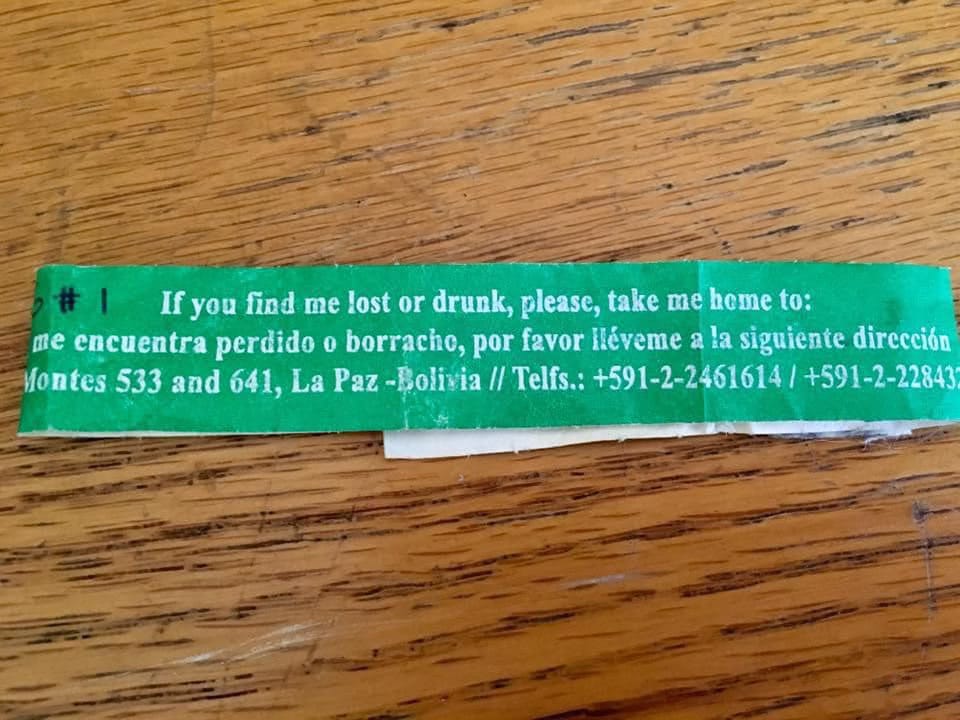
That was also how you learned where to go. Not from an algorithm but from a guy named Marcus who’d just come from where you were headed. He’d rip out the relevant chapter from his Lonely Planet, hand it over, and circle the places worth your time. Skip this cafe. Don’t believe the bus schedule. There’s a chill hostel on this corner.
Before the trip itself, there was research of a different kind. Besides the guidebooks, which were passed from traveler to traveler, there were online forums — like the BootsnAll boards or the Thorn Tree (RIP) on Lonely Planet’s website.
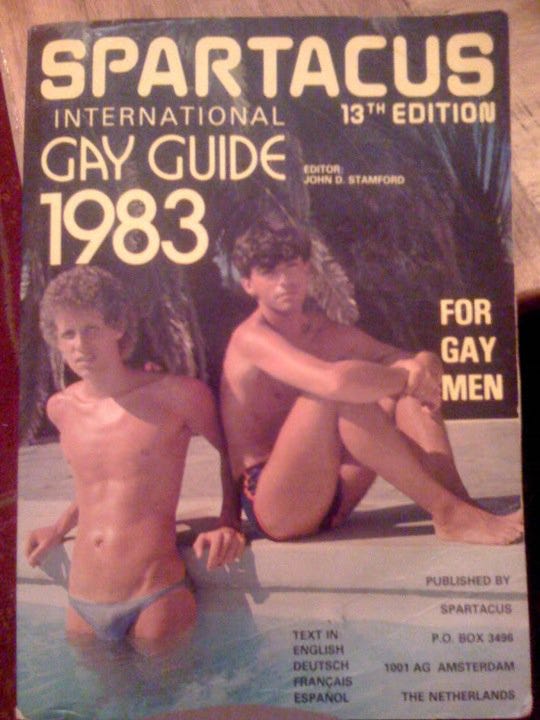
The posts were detailed, earnest dispatches about border crossings and guesthouse prices and whether the night bus took 12 hours or was more like 16. I read them in internet cafés that charged 50 cents an hour, copying details into a notebook because I had no way to carry the internet with me once I stepped outside.
Instagram technically existed in 2010 — it launched that October — but it was little more than a handful of people photographing their lattes. There were no influencers. That concept didn’t exist yet.
There were travel bloggers, though. Most of them were genuinely wonderful, and I had the good fortune to cross paths with some of my favorites, like Simon and Erin, Jodi, and Johnny Vagabond.
I’ve been thinking about those days a lot lately. I recently binged the first few episodes of Love Story, about John F. Kennedy Jr. and Carolyn Bessette, and it got me wondering why the ’90s and early 2000s have taken on a hazy, almost mythic sheen. Not just for travelers, but for everyone.
The nostalgia isn’t subtle. It’s in clothes and music, in the renewed affection for film cameras, landlines, and print magazines. It’s the way people romanticize old footage of parties full of gesturing hands and upturned faces, no screens in sight. It’s the Labubu I saw wearing a Nirvana tee.
It’s also in the surge of fascination with JFK Jr. and Carolyn. Their story is undeniably tragic, but the fixation goes beyond the two of them. Watch old footage of them walking through Manhattan and what stands out is how present everyone seems — people talking, gesturing, moving through the city without the sense that the moment is being constantly documented.
And then you notice the absence of phones. These two exist only inside that frame, not across a thousand private accounts. (Did you know there are only 11 seconds of Carolyn speaking on video? I don’t think that would be possible today!)
That’s what we miss. We are nostalgic for the way moments once existed without being endlessly recorded, catalogued, or shared.
In many ways, the ‘90s weren’t better. But I think we’re longing to move through the world without being endlessly mirrored back to ourselves. We want things shared from one person to another, not processed through a screen.
This came with some inconvenience, for sure. Being unreachable can be annoying. Not having information was frustrating. But there was freedom in it too, and the quality of the experience was richer.
You could arrive quietly. There was no pressure to convert your experience into proof for someone else. You didn’t have to optimize your time in a place, check off a list of must-dos, compress Bangkok into a 30-second reel detailing the perfect itinerary.
Perfect sucks.
My most vivid memories from that time aren’t about the things I saw. They’re from the unplanned hours spent in conversation or simply enjoying the moment.
• Sitting on a wooden platform along the river in Vang Vieng, Laos, with a group of people I’d known for just three days. A candle in the center of the table, melted down to a nub. Tiny insects hurling themselves into the flame. We watched them for a long time, saying nothing, because nothing was competing for our attention.
• A night on South Africa’s Wild Coast, so dark it felt prehistoric. Women from the village arrived with drums. They played and we danced until the stars blurred. The music lasting exactly as long as it lasted, then stopping. No documentation, no replay.
• In Buenos Aires, a whole afternoon that slipped its leash. A café found by accident. A conversation that started at dinner and stretched past midnight. An after-hours show in a warehouse where we surrendered to sweat and noise.
This is what I mean when I say the quality of experience was richer. It wasn’t that the world was more beautiful then. It was that we were more available to it.
Listen, the infrastructure of distraction is real. I’m not going to pretend that keeping your phone in your bag is a simple act of willpower; these devices are engineered with the most sophisticated attention-capture systems ever built. I’m not immune to it either.
But what gives me hope is that a more vibrant world remains within reach. Everything that made travel feel so spontaneous and alive in the ‘90s and early aughts is still out there.
The river in Vang Vieng still exists. There are still strangers on overnight buses with better information than any app. You can visit coastal places where the sky is dark enough to get drunk off of stars. I bet Marcus is in a hostel dorm somewhere right now.
But this requires a decision about what kind of traveler you want to be. Will you under-photograph and over-experience? Will you put the device away for as long as you’re able and let the destination surprise you?
The candle will still burn into a puddle of wax. You have to be willing to watch.
No posts
Comments
Nothing yet. Say the first thing.
Sign in to join the conversation.