
This week, I kept thinking about what happens when the government gives someone a status, a label, or a right—and how different that can be from actually feeling like you belong.
In one piece, I wrote about immigrants being visibly marked by ankle monitors and what happens when government suspicion follows someone into work, school pickup, the grocery store, and the rest of their daily life. In another, I wrote about my own experience becoming eligible for citizenship at eighteen but not understanding until years later that voting was something I was meant to participate in.
They are very different stories, but I kept coming back to the same question: Who gets to feel like they belong here, and what teaches us that we do?
Support independent immigrant-led media that centers immigrant identity, dignity, and belonging by becoming a free or paid subscriber.
There is a difference between being legally included and actually feeling that you have a place in a country.

An immigrant can be allowed to remain in their community while being required to wear a device that publicly marks them as someone under government surveillance. A naturalized citizen can have the legal right to vote without anyone ever teaching them how elections work or helping them see themselves as a voter.
Both raise questions about belonging that go beyond what the law says.
What happens when the systems around us tell us, directly or indirectly, that we are still being watched, evaluated, or treated as outsiders?
And what does it take to move from simply having rights to actually believing those rights belong to us?
For immigrants, belonging is shaped by more than citizenship papers or immigration status. It is also shaped by whether we can move through our communities with dignity, whether our voices are taken seriously, and whether we are treated as participants in American life rather than people standing outside of it.
Each piece approached belonging from a different direction. Here’s what I published this week in case you missed something, or want to return to a conversation that stayed with you:
How electronic surveillance turns immigration enforcement into public stigma—and creates profit from the people being watched.
An ankle monitor does more than tell ICE where someone is.
Because these devices are already associated with criminal punishment, they can change how an immigrant is seen by employers, neighbors, strangers, and even their children’s communities before anyone knows the circumstances of their immigration case.
I looked at the growing use of electronic monitoring, the stigma that comes with making surveillance visible, and the private companies making money as these programs expand.
The question I kept returning to was simple: If people are already complying with immigration requirements, what problem is this level of surveillance actually solving?
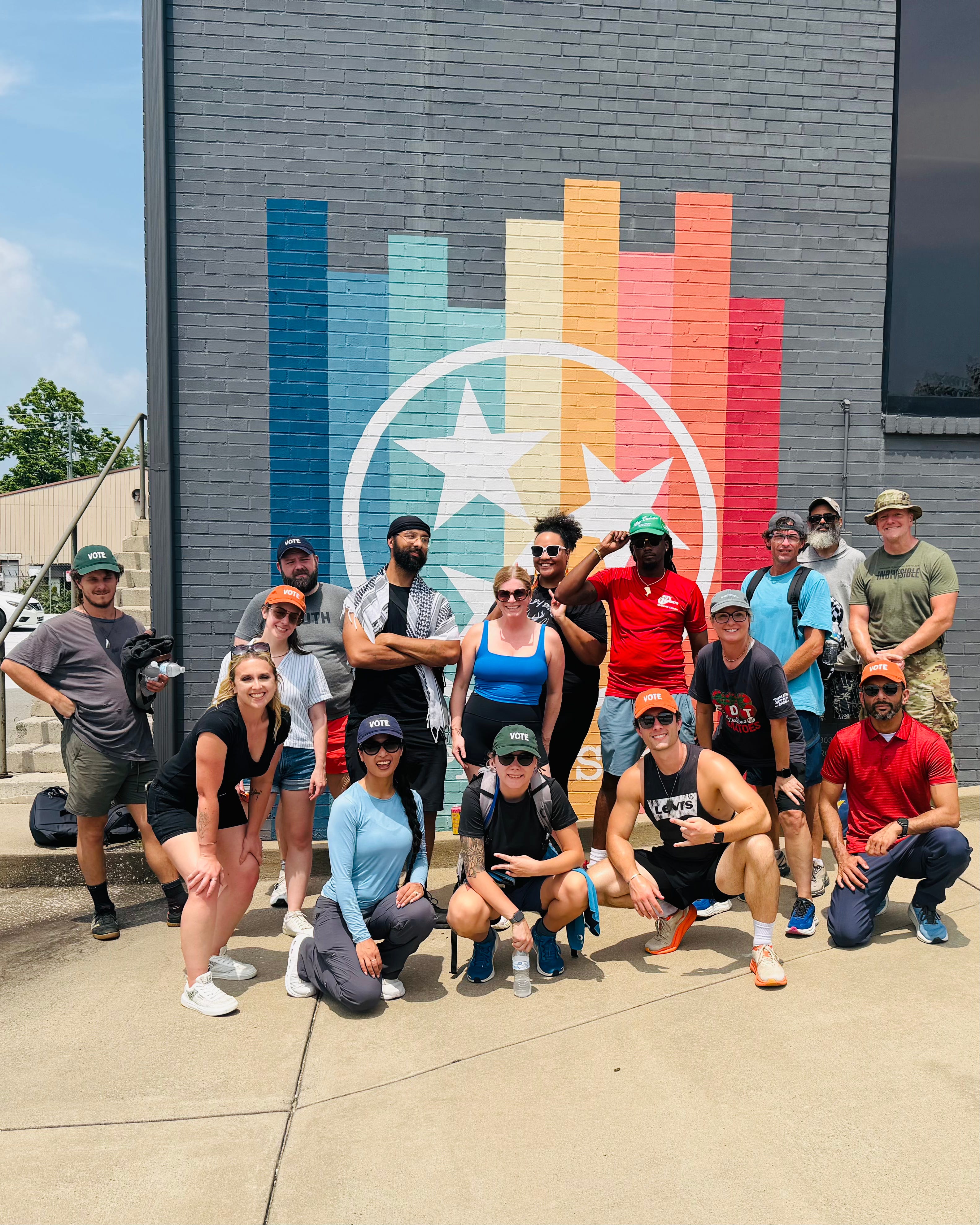
I came to America at five, became eligible for citizenship at eighteen, and did not begin voting until my twenties.
I spent most of my childhood in America, but politics never felt like something I was supposed to participate in.
Even after becoming eligible for citizenship at eighteen, I did not immediately become a voter. No one had taught me how local elections worked, why primaries mattered, or how much of everyday life was decided further down the ballot.
For years, I felt embarrassed that I had not understood it sooner.
Now I see it differently.
Legal eligibility and civic belonging are not the same thing. A country can give you a ballot without ever teaching you that your voice belongs on it.
That experience is part of why I joined 1000 Miles to Memphis, a 36-day, 1,000-mile solidarity march focused on voter registration and civic engagement.
Because registering people is important. Helping people see themselves as participants in democracy matters too.

A welcome can open the door. Belonging lets us walk through it without leaving our language, culture, or identity behind.
Some of my earliest lessons about becoming “American” came from children laughing at my accent and making fun of my eyes.
I learned early that being allowed into a space did not necessarily mean I could show up there as my full self.
In this piece, I explore the difference between adapting to a new culture and feeling pressured to erase the parts of ourselves that make us different. Immigrants should be able to learn new languages, embrace new traditions, and become part of American culture without treating where we came from as something we need to leave behind.
Being welcomed says, “You can come in.” Belonging says, “You do not have to disappear now that you are here.”
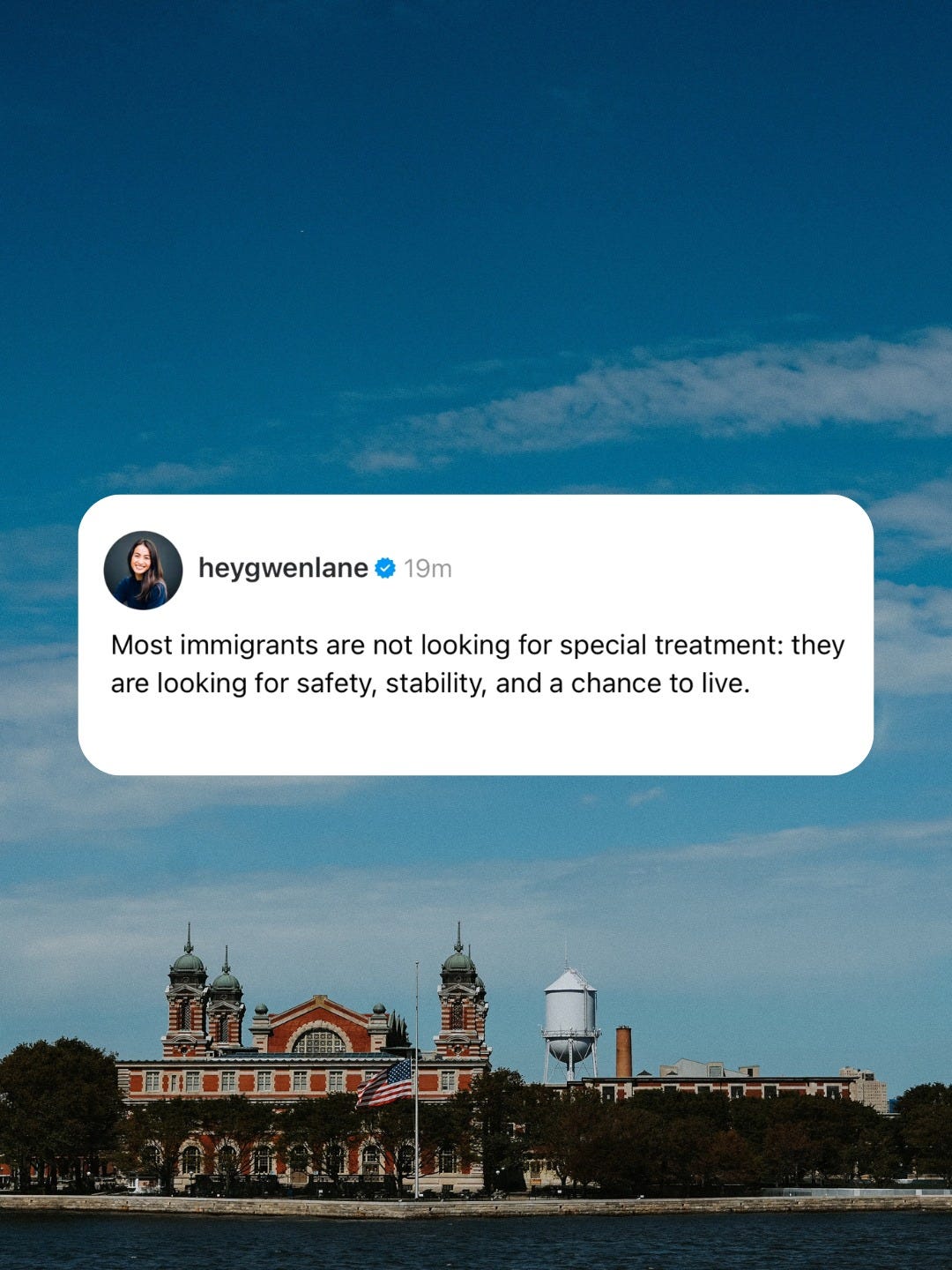
Most immigrants are looking for the same things most people want: safety, stability, opportunity, and the chance to build a life.
Too often, immigration conversations reduce people to policies and headlines. This post was a reminder to look beyond those debates and remember the people, families, and lives behind them.
Can we stop reducing people to how they entered a country?
This post sparked agreement around a simple point: a person’s humanity, dignity, and worth should never be defined by their immigration status or the circumstances of how they arrived.
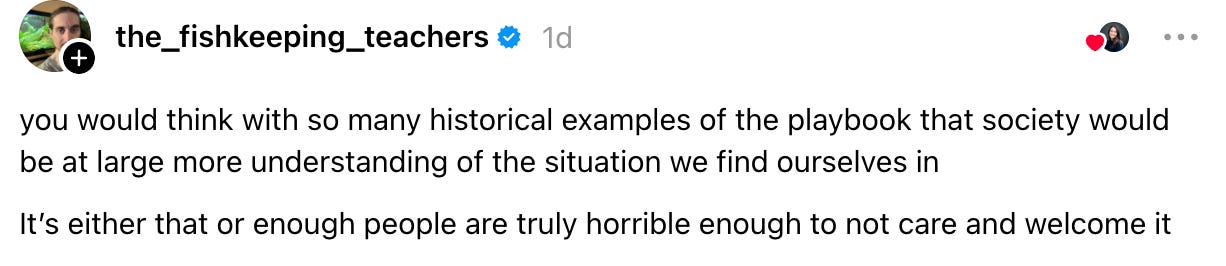
“You would think with so many historical examples of the playbook that society would be at large more understanding of the situation we find ourselves in.It’s either that or enough people are truly horrible enough to not care and welcome it”
— David Harrison Greis, @the_fishkeeping_teachers on Threads
This stayed with me because it points to something we have seen before: dehumanization does not happen all at once. It becomes easier when we reduce people to labels, immigration status, or the way they entered a country instead of seeing the human being first.
I keep coming back to the difference between being allowed to belong and actually feeling that you do.
Citizenship can give you the right to vote. A country can allow you to live, work, raise a family, and build a life within its borders. But none of those things automatically create belonging.
Belonging happens when you know your voice matters. When you are seen as a participant rather than a problem to be discussed. When you do not have to prove that you deserve to be here before you are treated as fully human.
That is the question I’m carrying into next week: What would change if we stopped asking people to prove they belong and started building a country where they already know they do?
Independent media only exists when readers choose to support it. If you believe immigrant stories deserve more complexity, beauty, and humanity, please subscribe to Beauty of Belonging.
A free subscription will bring new essays, profiles, interviews, and community stories directly to your inbox. Upgrading to a paid subscription will help support the time required to research, write, interview, edit, publish, and grow this work.
Paid support allows Beauty of Belonging to remain guided by its readers and its mission—not by advertisers, political campaigns, billionaires, or algorithms. You are helping create space for stories that might otherwise be ignored, flattened, or told without us.
You are helping build a publication where immigrants do not have to perform trauma or exceptional success to be seen. A place where beauty and injustice, ambition and rest, cultural pride and personal freedom can exist in the same conversation.
Please subscribe, and if you are able, upgrade to a paid subscription. Your support will help turn Beauty of Belonging into a lasting home for fuller immigrant stories.
Your support means the world. It means we are more than welcome here.
Gwen Lane is a Filipina American immigrant, writer, founder, and cultural commentator behind Beauty of Belonging—an independent publication exploring immigrant identity, beauty, ambition, cultural power, and what it means to feel at home. Subscribe, share, and upgrade to a paid subscription to support independent immigrant-led media that centers immigrant identity, dignity, and belonging.

As an alternative to a paid subscription, you can make a one-time contribution to support Beauty of Belonging at any amount, from $1 and up. Your contribution helps fund independent immigrant-led storytelling, cultural commentary, and fuller stories about identity, dignity, and belonging.
No posts
Comments
Nothing yet. Say the first thing.
Sign in to join the conversation.