
Welcome to BROTHER BEASTUS 𖤐 GRIMOIRE!
This is a special issue on pandemics: how to live through them and what the future might be for the one we’re currently in.
No one likes to talk about pandemics; it’s unpleasant. Plus, it’s a symptom of pandemics themselves that everyone will want to deny it and move on—especially after the worst of it. That’s just how the human psyche works during pandemics in Western societies.
This zine is a place where I occasionally try to tackle serious issues—especially ones that might have a place in a brother’s or friend’s personal grimoire.
I believe living through a pandemic should be in everyone’s practical grimoire—for obvious reasons now (and more pandemics are expected in humanity’s near future).
Let me share what’s in my grimoire on pandemics….
I’m Mark, the creator of Brother Beastus, and I came of age, as a gay man, during the transition to the so-called post-AIDS era in the late 1980’s and early 90’s in the US.
You never forget your first pandemic (although lots of others will).
Mine was the “lucky” first generation that knew what AIDS was, what caused it, and how to protect ourselves and each other. It took a long time just to get there.
Of course, none of us had lived through a pandemic before. My generation of gay and queer men had to find our own way for several reasons: Many of our older gay brothers, our predecessors and community leaders, died. We knew something had to be done to fight AIDS, but we didn’t know how to do it. We lost many, many of our contemporaries along the way.
It’s one thing to have the knowledge and tools to end a pandemic and quite another for society to adjust its behavior to this knowledge. That’s what we contended with.
I, along with my generation, had to learn about pandemics the hard way, and I personally made a lot of mistakes. But I learned from them and changed.
I want to share this knowledge in the hope that people can learn from the hard-earned history of AIDS, humanity’s last global pandemic.
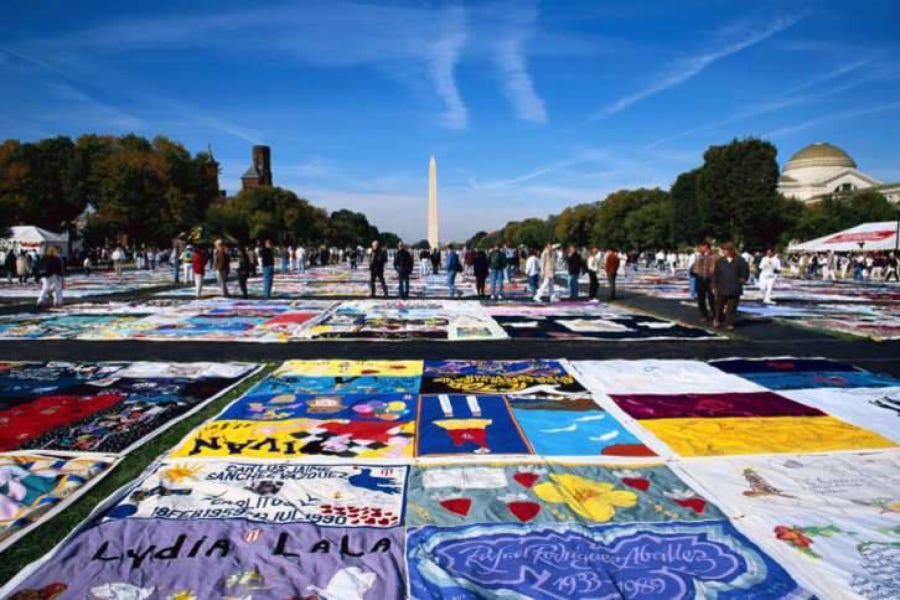
CoVID-2019 and AIDS are different in important ways. Of course, every pandemic in human history has been unique in its general characteristics and in its toll in human suffering.
However, the last two global pandemics, CoVID and AIDS, are similar in one fundamental way: the primary and strategic strength of the disease is that the person becomes highly infectious well before they develop symptoms.
That’s what makes both diseases very difficult disease to fight. It’s likely what makes CoVID-2019 a global pandemic rather than a “mere” epidemic.

There are two major phases of every pandemic. The emergency phase is when the disease emerges, it’s identified, and effective treatments are successfully developed. For AIDS, this took phase took most of the 1980’s. Thanks in large part to AIDS research, this phase was much shorter for CoVID. We are the lucky benefactors of that research.
The post-pandemic, or post-CoVID, phase is often the more difficult stage because it’s more about human behavior and society than about science. This is about changing behavior and moving political will at a societal level with the mission of controlling and eradicating the disease. That’s the phase we are entering.
Telling individuals how to protect themselves in the emergency phase is very different than helping communities change in the post-pandemic phase.
We know what we need to do, but as a society we need the practical know-how to actually do it. That’s in part because it takes time for treatments to advance and for worldwide distribution of disease-fighting knowledge and technology to control the disease, and this takes a lot of time, cost, and political will.
It is the difference between knowing what society needs to do and actually doing it. It means that we now have all the tools necessary to get ourselves out of this mess, but there are still huge hurdles to overcome.
Those hurdles are mainly about us as human beings. It’s fundamentally about community and our innate human social ability to care for each other. We literally have to get billions of people to work together to end this.
Ultimately, humanity will establish a new normal, which (sorry) may or may not be much like the old normal. But we still have a lot of work to do to get there. It ain’t over until it’s over.
You’ve probably already noticed that some people have had unexpected and even completely irrational reactions to the pandemic.
That’s surprisingly typical.
Even if they or their loved ones haven’t been infected or otherwise directly affected by the virus, the trauma and the stress of the pandemic is so pervasive in society that it can affect almost anyone.
The US is well on its way to surpass the death toll of all the wars in American history. That is seriously traumatic to a nation.
We need compassion for ourselves and others.
It often feels like the apocalypse, but it isn’t the end of the world. The world will go on. The question is how and what will it be like. People have very different ways of coping in a pandemic. Some will seem weird and mysterious to others. Just let them be.
What I remember about growing up gay while AIDS emerged, was that no one really understands the trauma of a pandemic as it’s happening. It was only afterwards that we understood how crazy it all was. But the craziness does end. As it was happening, we didn’t have much time to think or feel because we were in an emergency.
The trauma of pandemics reminds us life has always been about survival. That’s why life is genuinely precious. As humans, we may psychologically need to deny this truth, but it makes it no less true.
Pandemics have a sort of societal amnesia built into them. Societies want to forget them—so we often do. I think the trick to getting out of this hell-loop is to genuinely grieve our losses. We need to acknowledge and accept before we can truly move forward—while also maintaining the memory of this particular pandemic as a warning to the future. Think of the wisdom earned from our suffering as a gift to the future.
Every pandemic makes you think nothing like this has ever happened before— but it has. That’s both reassuring and damning. We humans have a strong psychological need to think these kinds of disasters can’t happen, but they most certainly can and do happen.
Sometimes people don’t think fire is hot until they put their hand in the flame. They have to learn the hard way. The same goes with pandemic denial; some people will not change until people they know start dying.
There will be a new normal. There is no going back. Sorry! Time and culture just don’t go in reverse.
With such a contagious pandemic in such a connected world, the pandemic won’t end until almost all of humanity cooperates to finally end this. This is a gargantuan task that should not be underestimated.
Our societies still don’t quite have a sense of how big and difficult this will be. Knowledge alone isn’t enough to change denial.
It doesn’t matter who you are. It doesn’t matter how “good” or “bad” you are. It doesn’t matter how much you care for someone; you can be just as easily infected by a beloved friend as by a stranger. It doesn’t matter how much money you make or where you live. It doesn’t matter if you slipped up only once or that you were feeling exhausted and out of sorts. The virus will still infect you — if it can. You don’t have to believe in a virus 🦠; it believes in you.
In the case of CoVID, the behaviors that matter most are vaccination, masking in crowds and indoors, and improving indoor ventilation.
Fully funding public health. When you take care of public health, leaders can spend time addressing the serious knock-on effects of the pandemic.
Not breathing on each other. It’s just gross.
If we have any congestion or just don’t feel well, wearing a mask. (Think of protecting others from colds, flu, and worse.)
Washing our hands. (Studies show that half of people don’t wash their hands after using the bathroom.)
Society would be wise to follow the pandemic’s science experts but also the wisdom we can learn from survivors of previous pandemics.
Cleaning our cellphones and TV remote controls regularly. They’re pathogen magnets in a good year!
Invest where Covid-19 outbreaks keep happening. That’s where it matters. That means investing in schools, long term care, child care, food processing plants, and prisons. Raise standards and raise the minimum wage for workers to a living wage for these and all essential occupations.
Looking out for our neighbors and communities by fixing the politics of our dysfunctional democracies.
Installing better, high volume ventilation systems that clean viruses, pollutants, and other pathogens from the air in workplaces, schools, and other indoor public places. This is also good preparation for the next respiratory pandemic.
Changing public behavior often takes a long time; look how long it took to change public smoking. CoVID won’t be different; it will take time.
What curtailed the AIDS pandemic was not technology. It was not the cure or the vaccine that saved us. (The AIDS cure and vaccine never came; they still aren’t here yet.)
It was changed behaviour at a societal scale.
It was genuine community.
It was a bunch of put-down people who realized that their lives were on the edge and who had had enough.
It was about everyone grieving together at an incalculable loss. But then turning that energy into change for the better.
My heart ❤️ goes out to the post-CoVID generation of young people now entering adulthood during a pandemic. You are the first ones to grow up and be completely immersed in the Age of CoVID.... You are today’s young adults like I was a young gay man when AIDS emerged. I want you to know that you might feel alone in this pandemic, but you’re not. You can make it through.
Stress can be deadly, and pandemics are super stressful. It’s vital to de-stress. That may mean exercise like going for a walk and taking a break from worry and overthinking perhaps by meditating for a short bit.
The idea is to give both your body and mind a break. ‘A sound mind in a sound Body’ is ancient wisdom about how interconnected our bodies and minds are.
Anxiety is fear: Face your fears, make friends with them, and then let them go.
It also means finding ways to continuing living and growing despite the pandemic. Do what you can both for yourself and your community, and then let it go. Stress and worry don’t help and can actually hurt.
Do what you can — and no more. Taking a break if and when you can may be vital to your survival.
Despite the hype to the contrary, most people want to do the right thing but don’t know how or even what that is most of the time. Someone just has to show them!
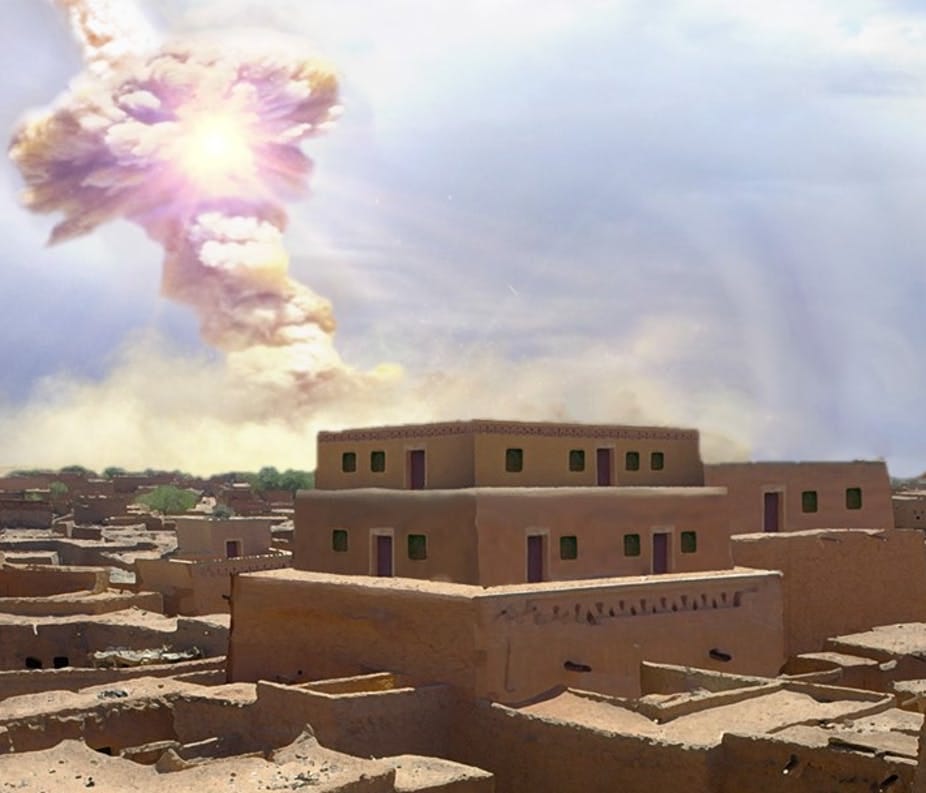
Massive Asteroid Airburst over the Middle East about 3600 years ago may have inspired the story of Sodom & Gomorrah, a 15 year study reveals. The airburst was a thousand times as powerful as the Hiroshima nuclear bomb and spread Dead Sea salt all over the land in the region making it fallow farm land for 600 years. <Artnet: An Ancient Middle Eastern City Destroyed by a Meteor May Have Inspired the Bible’s Tale of Sodom and Gomorrah, a New Study Says>
Akhtya Follow-up: Both recordings mentioned in the last issue shot right to the Top 3 on the Brother Beastus blog: ‘INVOCATION’ & ‘NECROMANTIAE DAEMONIUM.’ Thank you!
In America: Remember The stunning photo of the 2021 flag installation, in the CoVID story above, took 30 hours to photograph. <National Geographic: The epic COVID-19 memorial on the National Mall, in one stunning photo. (Apple News)>

Photographer Stephen Wilkes, and Lenny Christopher, his assistant, were elevated 45 feet for a total of 30 hours to photograph the flag installation on the National Mall in Washington, D.C.

LOL of the Week
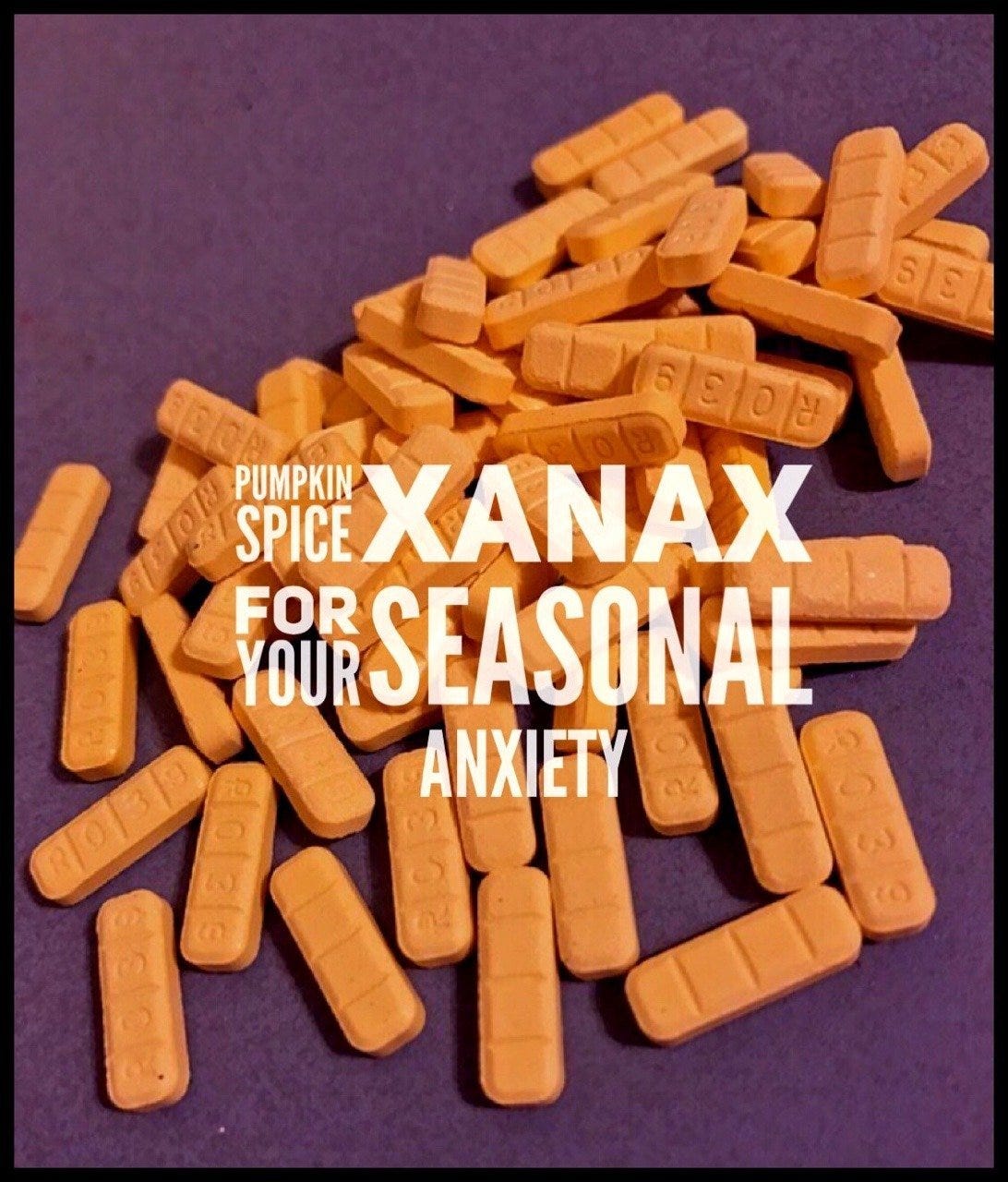
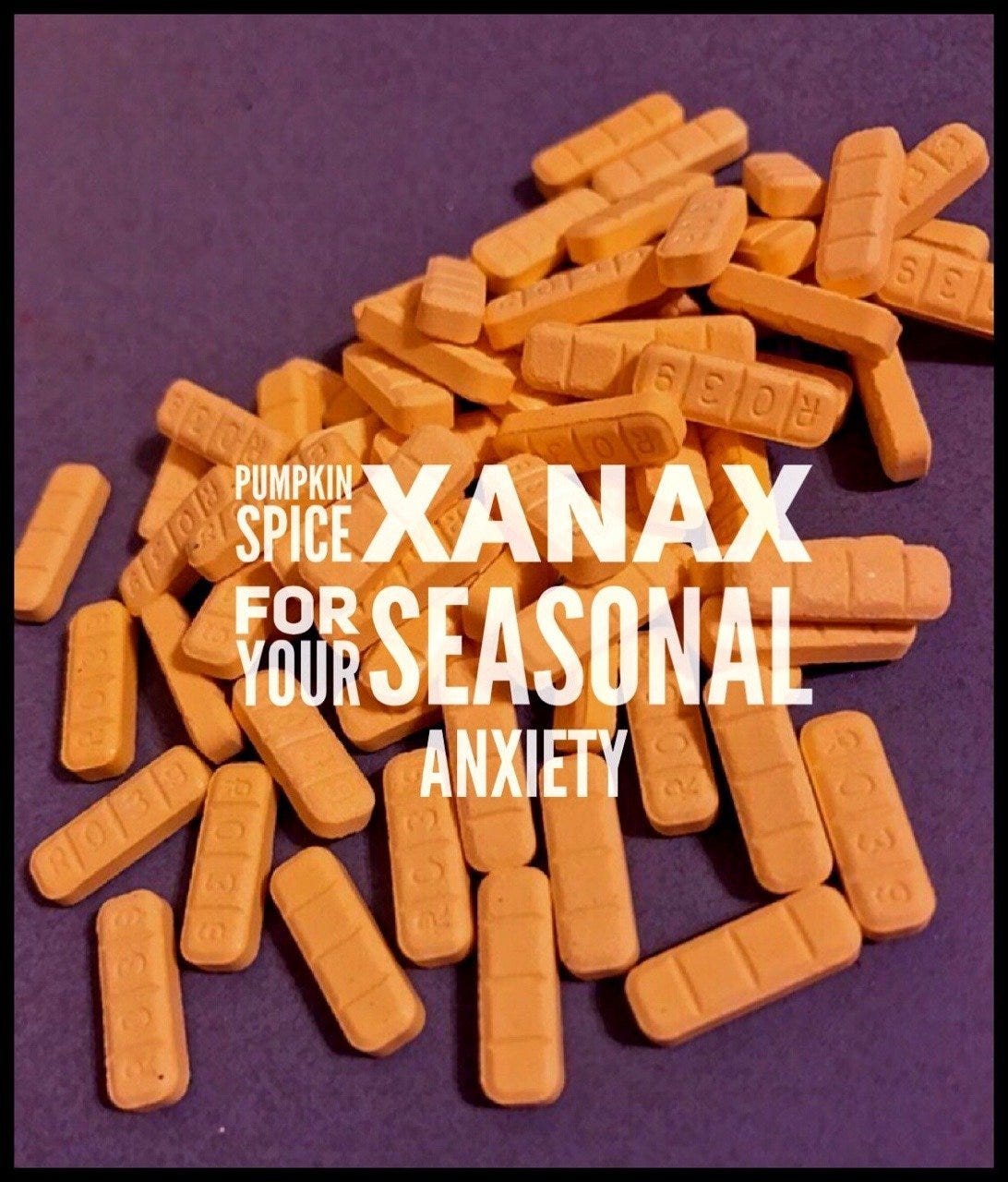
Pumpkin Spice Xanax for your Seasonal Anxiety
Podcasts used in the production of this issue:
Never Stop the Madness: episode 493 (21 Sep 2021)
Housenation UK with Lee Harris: episode SP71 (19 July 2021)
𖤐𖤐𖤐
Please enjoy the Dark Moon 🌑 this Wednesday and stay safe everybody!
From my grimoire to yours…. Infernal Blessings!
BROTHER BEASTUS 𖤐 SINCE 2016
Comments
Nothing yet. Say the first thing.
Sign in to join the conversation.