
Inevitably when you’re leading a team through difficult terrain you make mistakes. Maybe you’ve made a navigation error. Maybe you pushed too hard and someone’s struggling. You then have this choice in front of you: do you blame conditions, do you shift responsibility, or do you stand up and say, “My bad, my mistake, let’s sort it”?
That’s where real leadership begins.
But here’s what I’m learning as a dad, as a husband, as someone trying to follow Christ in a world that doesn’t make it easy: taking responsibility for our actions isn’t just about being a good leader. It’s about being a good man. And it’s one of the most powerful things we can teach our kids.
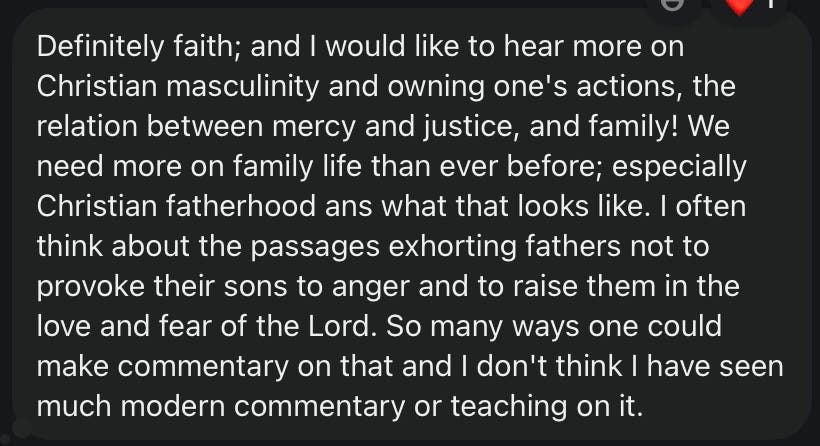
The Masculinity Nobody Talks About
There’s a lot of noise out there about what masculinity should look like. Some of it’s helpful, some of it less so. We get told to be tough, to be soft, to be alpha, to be sensitive – and it can be confusing trying to figure out which version we’re supposed to be.
But here’s what I keep coming back to: real strength isn’t about never showing weakness. It’s about having the guts to own your mistakes, the humility to ask for forgiveness, and the backbone to do the right thing even when it costs you.
Jesus flipped tables in the temple when justice demanded it. He also washed His disciples’ feet. He was fierce and He was tender. He was strong enough to be gentle and gentle enough to be strong.
That’s the model. Not some caricature of masculinity that’s all bravado and no heart, or all softness and no spine. We need both. Our families need both.
Mercy and Justice in the Same Hand
One of the hardest balances in fatherhood – and in life, really – is knowing when consequences are needed and when to extend grace.
I think about this constantly with my kids. They mess up. They push boundaries. Sometimes they need to face the cost of their choices. But they’re also learning. They’re growing. They need room to fail without being crushed by it.
There’s this brilliant tension in Scripture between mercy and justice, and it’s not accidental. God is both perfectly just and perfectly merciful. And somehow, we’re called to reflect that in our own families.
Justice without mercy is harsh and cold. It breaks spirits. It makes kids afraid to try anything because the penalty for failure is too high.
But mercy without justice? That’s chaos. That’s a kid who never learns that actions have consequences, who grows up thinking they’re the centre of the universe and the rules don’t apply to them.
We need both.
The Provocations We Don’t See
Here’s where I’ve had to do some hard self-examination: the Bible says fathers shouldn’t provoke their children to anger. Seems straightforward, right? Don’t be a tyrant. Don’t be unreasonable.
But I’ve realised it’s subtler than that.
I provoke my kids to anger when I hold them to standards I don’t hold myself to. When I tell them to control their temper while I’m losing mine over something trivial. When I demand respect but don’t show it to their mum. When I’m on my phone ignoring them and then get irritated when they don’t immediately respond to me.
That’s provocation. And it’s devastating because it teaches them that authority is about power, not about service. That leadership is about “do as I say, not as I do.”
We can’t lead our families to places we won’t go ourselves. We can’t raise our kids in the love and fear of the Lord if we’re not walking that path with everything we’ve got.
Building on Bedrock
So what does this actually look like in practice? What does Christian fatherhood look like on a random Tuesday when you’ve had a rough day and you’ve snapped at your kid over something stupid?
I’ll tell you what I’m learning, though I mess this up regularly:
Lead by example. Always.
Your kids don’t need another lecture. They need to see you living what you believe. Working hard. Keeping your word. Treating their mum with respect and love. Controlling your temper. Admitting when you’re wrong. Praying when things are tough. They’re watching everything. Make sure what they see is worth following.
Build your family on values, not feelings.
Discipline isn’t about emotion – yours or theirs. It’s about upholding the standards that make a family strong. Respect. Honesty. Hard work. Kindness. When these get violated, there are consequences. Not because you’re angry, but because these things matter. The boundary holds whether you feel like enforcing it or not. That consistency builds security.
Show them what repentance looks like.
When you mess up – and you will – own it. Quickly. No excuses, no justifications. “I was wrong. I’m sorry. I’ll do better.” Then actually do better. Your kids need to see that strong men apologise, that owning your mistakes isn’t weakness, it’s strength. And they need to see you change, not just say words.
Demonstrate grace in action.
When they fail, when they’re truly sorry, show them what mercy looks like. Not in words, but in how you respond. Fresh starts. Clean slates. Forgiveness that doesn’t keep a tally. They’ll remember how you handled their worst moments far more than your best speeches about grace.
Put in the work nobody sees.
Get up early. Pray for your family. Work on your own character when no one’s watching. Build the disciplines that make you steady when life gets hard. Your strength in the storm doesn’t come from nowhere – it comes from the daily, unglamorous work of building yourself into someone who can weather anything.
The Weight and the Privilege
Fatherhood is heavy because we’re trying to pass on everything we’ve learned. The hard-won wisdom. The values that have held families together through generations. The lessons that took wise people before us years of pain and struggle to figure out.
We carry the weight of generations. The good and the bad. And our job is to pass on the good – the values, the character, the faith, the grit – whilst learning from what didn’t work and doing better.
Every generation that has to start from scratch is at a massive disadvantage. If we don’t pass on what we know – about character, about resilience, about what actually matters in life – then our kids have to relearn everything the brutal way. They’ll make the same mistakes we made. Fight the same battles we fought. Spend years figuring out truths we could have taught them in an afternoon.
That seems like poor strategy to me.
But here’s the paradox: whilst we need to pass on wisdom, we also need to let them fail. Actually, we need to encourage them to fail. Young. Often. In controlled ways.
Because failure isn’t the opposite of success – it’s the only route to it. Every single successful expedition, every summit reached, every difficult thing I’ve ever accomplished has been built on a foundation of failures. Things that didn’t work. Routes that dead-ended. Decisions that nearly killed me.
I’d rather my kids learn to navigate failure at fifteen than at thirty-five with a mortgage, a family, and no practice at getting back up. At fifteen, the stakes are lower. The falls hurt, but they’re survivable. They learn that failure isn’t fatal. That you can dust yourself off and go again. That resilience is built through falling down and choosing to stand back up.
By thirty-five, if you’ve never learned to fail well, that first real setback can flatten you. You’ve got no muscle memory for getting back up. No proof that you can survive hard things. And now the stakes are higher – you’ve got people depending on you, responsibilities that don’t pause whilst you figure yourself out.
So we don’t beat them up when they fail. We create space for them to learn that failure is just data. It’s feedback. It’s the teacher that success never is.
Make failure your friend early, and it’ll serve you your whole life. Avoid it, protect yourself from it, and it’ll ambush you later when you perhaps can’t afford the lesson.
This dual responsibility. Passing on hard-won wisdom whilst also creating space for them to build their own resilience through failure is nuanced. But as we are learning everything in life is. Justice and mercy. Gentleness and strength. Wanting to shield and protect the most precious people in your life, and also needing to prepare them to survive and flourish in the world on their own two feet.
But we’re not doing this alone. We’ve got a Father who’s perfect at this, who extends grace when we blow it, who picks us up when we fail. And somehow, He trusts us with these little souls. These kids who are watching us, learning from us, becoming who they’ll be because of how they see us show up.
That’s terrifying. And it’s also the greatest privilege we’ll ever have.
The Training Ground of Home
Everything I’ve learned about resilience, about pushing through hard things, about leadership – it all gets tested and refined at home. The expedition is the easy bit. Coming home and being present, being patient, being the dad and husband we’re called to be? That’s the real test.
We don’t get to be one version of ourselves in public and another version at home. Our families see the real us. And that’s exactly as it should be.
So we train. We work on being quick to listen and slow to speak. We practise humility. We build the muscle of self-control, of patience, of putting others first. Not because we’re naturally good at these things (I’m definitely not), but because this is the work that matters most.
This is where mercy meets justice. Where strength meets tenderness. Where the rubber hits the road on everything we say we believe.
The Long Game
Our kids won’t remember every fun trip or adventure. But they’ll remember if we were present. They’ll remember if we owned our mistakes. They’ll remember if we loved their mum well. They’ll remember if what we said on Sunday matched how we lived on Monday.
They’re watching us learn to integrate faith and life, to hold mercy and justice in the same hand, to be strong and gentle, to be leaders who serve.
And when we get it wrong – because we will, often – they’ll watch us own it, apologise, and try again tomorrow.
That’s the model. Not perfection. Not having it all sorted. Just men who keep their word, who own their mistakes, who build their families on solid ground, who lead by going first.
We’re all learning this together. All trying to be better fathers, better men, better reflections of the Father who’s never failed us.
The weight is heavy. But that’s exactly why we build ourselves strong enough to carry it.
Keep going. Stay steady. Lead by example.
Never Give Up
BG
Comments
Nothing yet. Say the first thing.
Sign in to join the conversation.