
Every August since 2011, Black Philanthropy Month has sought to reframe philanthropy from “wealthy elites saving you-know-who” to “communities can and do organize their own capital too.” Launched globally by Dr. Jacqueline Bouvier Copeland, it’s a diaspora-spanning movement and community. Over 19 million people across 60 countries, sharing cultures of giving and making serious change. And in the U.S., the 28th of August is recognized as Give 8/28, a national day of Black giving tied to historically significant milestones.
While Black Philanthropy Month is about Black philanthropy, it isn’t only for Black people. Everyone who is interested or curious can learn from it, support it, give to good organizations through it, or simply recognize the traditions it brings into view. I'm especially keen to see its presence in Europe this year.
It's not you, and even if it is, you’ll never be able to prove it. The world of philanthropy, after all is built on relationships. So, mind your words, be a team player, and don't take things personally. Just go along with the way things are.
Ask any leader of color, at any stage of their nonprofit career, if they've ever heard some variation of this. I'm going to bet they have. And not simply because I've been on the receiving end of the same advice.
I'm a person of color working with, and adjacent to, philanthropy in different forms. Even after decades of experience, I can still point to three truths.
Philanthropy, structured and operating as we know it, is still a largely white field.
Even when people of color manage to enter the field as professionals and advance as leaders, we’re not always respected as experts, peers, or innovators.
No matter how hard we follow the rules laid out for us, we often end up with crumbs, not a true slice of the pie.
Leaders of color are often told to grow thicker skins and greater muscles to weather the challenges that come philanthropy. And to be grateful for whatever we receive. Even if it means dealing with lesser access to power, lower attention for causes, and a lighter level of support.
That’s before the second guessing, microaggressions, and gatekeeping that erode trust and scar our spirits. The practices are so routine and ingrained, they’re not even worth calling out by name.
There are, for sure, foundations speaking loudly about “justice,” “equity,” even “decolonizing philanthropy” and "dismantling capitalism". But the reality often feels hollow. Grand pronouncements without financial commitments. All this while trying to figure out what is being dismantled, uplifted, and centered as opposed to simply being refitted and redecorated.
And even for the intermediaries and support networks aiming to do more with donors and funders, the roadblocks are daunting. More dialogue than movement. Bureaucracies, political attacks, and disincentives to speak up and stick necks out.
Rarely is the focus on black wealth without it being positioned or framed in comparison or opposition to “regular”or " traditional” or " normal” philanthropy.
Certain political forces and media interests still to this day insist on labelling passionate Black voices as “angry” or “troublesome” for daring to ask how wealth is built and distributed. And for challenging who decides what becomes a priority and who has a say in solutions that wealth generates.
Even in good-hearted foundations, even with generous donors, even with the best advocates and activists and allies, there is unconscious bias baked into the lexicons and processes of philanthropy.
The data on racial funding gaps, the numbers on professionals serving as grantmakers and professionals, and on philanthropic and donor’s along with candid stories of leaders of color who fear speaking out, make it clear: the system still fails us.
I know I’m ranting in an already vocal and visible space in which others are communicating all of this more vocally and visibly and vibrantly than I ever can. But I reinforce the basics that need repeating from my end this month especially.
It’s honestly well past time to stop confusing charity and philanthropy. Charity means giving immediate relief for a problem. Philanthropy means working for long-term social change. When applied to Black communities, for all the fucked up reasons that things get confused, Black people and communities have been denied proper respect as changemakers, instead of passive receivers of aid.
Over the centuries, networks of benevolent lodges, fraternal societies, church collections, burial societies emerged. All precursors to “philanthropy,” built by and for Black communities out of necessity. Because no one else would,or could, do so to the degree needed.
Black communities had been practicing different forms of collective resource mobilization for generations, often under conditions of exclusion and necessity. What later became professionalized philanthropy frequently gave formal institutional language and structures to practices that Black communities had already been using to survive, build power, and create their own institutions.
Mainstream philanthropy often defines a “big bet” as a multi-million-dollar grant to a large, established organization to study or address a problem. When Robert F. Smith eliminated the student-loan debt of the 2019 Morehouse College graduating class, he directed an extraordinary amount of philanthropic capital toward individuals, removing a major economic burden rather than funding another intermediary program. In that sense, his gift offers a striking modern echo of earlier Black benefactors who used their resources to purchase freedom for themselves and their families, providing people with an immediate, unencumbered start.
Or consider every Black family that supports its church, community nonprofit, mutual-aid effort, or struggling neighbor with what little it has. We shouldn’t let the whitewashed narrative of “big philanthropy” erase these traditions of Black giving. Black Philanthropy Month was created in part to bring those deep roots into view—and to push the conversation beyond billionaire foundations.
Honest confession: I have never been particularly comfortable with identity politics— both denying them or relying on them. I am Black. I am proud to be Black. I know what it means to move through a complicated and chalenging world as a Black man.
But I also value my individuality too much to play nice with somebody else’s expectations of what a Black professional is supposed to be. I have deliberately leaned into that defiance for most of my adult life.
I always knew from an early age that I wanted to work across philanthropy, civil society, social enterprise, strategy, storytelling, culture, history and ideas.
I have never want to be put into a box and told what to say, think, do, care about, believe, look like, or aspire to as a Black individual. I have too many interests. Too many goals. Too many contradictions. Too many dreams. Too much curiosity. Too much life outside whatever category someone else has decided should explain me.
And that has not always gone particularly well in the philanthropic realm.
I have been called too uppity. Too arrogant. Too detached. Too intense. Too passionate. Too idiosyncratic. Too much of a know-it-all. Too much of a maverick. Too stubborn. Too accommodating. Too inclusive. Too quiet. Too loud.
I have been treated as though my passion and independence was a character flaw.
And at other times, I apparently have not been angry enough, progressive enough, ideological enough, or sufficiently aligned with the people and spaces I was told I was supposed to belong to.
Too engaged for some people. Too detached for others. Too complex. Too emotional. Too complicated. Too vocal. Too diplomatic. And, depending on the room, somehow still not the ”right kind” of Black.
I have lived and worked across countries and cultures. The older I have gotten, the more expansive my ambitions and interests have become. And the harder it has sometimes been to escape being “othered”.
I have never wanted my professional life reduced to one identity, one issue, one political vocabulary, or one approved way of being Black.
But refusing the box does not mean people stop trying to put you in one. Sometimes it seems to make them more determined to figure out which box you belong in. That has been one of the contradictions of my experience in and around philanthropy.
I have never wanted to be admitted into the world of family offices, wealth managers, advisors and intermediaries because I am Black. I wanted to be admitted because I was good at what I did, I’m enthusiastic about moving good ideas from overlooked and underheard sources, and because I’m ambitious and audacious as a changemaker.
I wanted my experience, intelligence, imagination, judgment, ambition and actual lived experience to count. I wanted to walk into a room as a whole person rather than as somebody’s idea of a Black professional.
And yet I have repeatedly found myself being judged against expectations I never agreed to. And it all comes from surviving decades in a framework largely influenced by politics, privilege and power dynamics that involved too many gatekeepers and competing agendas. And fundamental conflicts over wealth as a personal asset versus community good.
I have spent a lot of my life refusing to become smaller and more acceptable simply because a particular room would be more comfortable if I did. That refusal is part of who I am. It is also part of why my relationship with philanthropy has always been complicated.
Working in advocacy, working with nonprofits, working through philanthropy on any level involves trade-offs. But what’s traded, and how much it costs, will always land differently in America for whites and non-whites.
I’m not going to pretend it’s easy to accept. But that's the choice you make when enter the field. And it gets tougher, and knottier, and thornier the higher up you go. Assuming there's a place for you. Because so much is at stake for the people and communities you serve. And the donors and funders you'll engage. Again, assuming there's room for you.
My anger towards fundamental unfairness and disparities in the world are real. It comes from lived experience, both professionally and personally.
But I also know philanthropy matters to me. I care about enabling change, not merely disrupting statuses quo. I believe society and community as a whole gain from Black Philanthropy Month. I hold the same to be true when we honor other philanthropy awareness movements driven by women, Native Americans, AAPIs, Latino and Hispanic, LGBT+, people with disabilities young people, seniors, people with migration backgrounds, faith communities, and more.
We should have as many months for recognizing giving as possible. We need to expand what “philanthropy” even means.
We can push for funding models that value community wisdom over paperwork. We can insist on accountability from funders – after all, as trust-based philanthropy leaders say, funders ultimately answer to the communities they claim to serve. We can spread stories of Black generosity beyond the usual suspects, highlighting grassroots coalitions as much as headline donors. We must remember that for every well-documented foundation, there’s a whole history of giving that’s gone unrecognized. That history is ours now – a legacy we carry forward.
This is where I need to widen the lens a little. Because I am not only Black. I am Black, male, Gen X, Southern, American, and I have spent the better part of a decade now living and working outside the United States.
I have been living and working as a Black person in Central and Eastern Europe for a long time now. I have had the experience of being the American in the room, the Black person in the room, the outsider, the foreigner, the person who does not quite fit whatever local category people were expecting me to fit into.
And over that decade I have watched many of the same arguments I watched in the United States play out here too: racism, xenophobia, classism, nationalism, questions about democracy and civil society, fights over human rights, arguments about capitalism and whether it can or should be reformed, dismantled, redistributed, decolonized, transformed, or simply endured. And honestly, the last year has made all of that harder to ignore.
Watching what has happened back home in the United States, while I have been away from the places I still think of as home, has been unnerving. Watching related political winds blow across Europe and elsewhere has been disorienting. And then watching what happens to actual communities in places that are already under-resourced has been distressing and disheartening entirely.
Because while people are having very sophisticated conversations about decolonization and dismantling capitalism and dismantling the patriarchy and changing power and rewriting systems, there are children and young people who still need services.
Families still need support. Women still need economic equity. Older people still need support. rural communities still need livelihoods and health resources. LGBT+ still need security and acceptance. Arts and cultural organizations still need money. PWDs still need fairer infrastructure. That we even have hunger and housing and education weaponized goes beyond the anger I can muster. And we all need more legal protections and safeguards against systems increasingly governing our lives that we aren‘t in a position to inform or influence.
Civil society needs infrastructure. People dealing with racism and xenophobia still need somewhere to turn. Organizations doing vital work are still expected to scrape together enough money to keep the lights on while everybody else has another fascinating conversation about what philanthropy ought to become. At some point that disconnect becomes very hard for me to tolerate.
And maybe part of the reason is that so much of what gets practiced abroad has been learned, consciously or unconsciously, from models developed in the United States and other wealthy Western countries. We export our ideas, our terminology, our structures, our definitions of what counts as professional, accountable, legitimate, sustainable, scalable. We export the language and sometimes the assumptions along with it. But we do not have to keep doing that. Especially now.
Global perspectives are shifting. The story of Black giving now acknowledges diaspora flows as well. Researchers note that countries in Africa lead in cross-border philanthropy – meaning African diaspora sources are fueling development at home. Imagine if we saw how much capital actually moves from Africa and other parts of the Black diaspora into communities here. It’s a reminder that philanthropy isn’t a one-way street or some Western monopoly; it’s embedded in cultures worldwide, often in ways that conventional grantmaking overlooks. No apologies, just accountable optimism.
The dismantling of USAID, the political shifts in the United States, the pressures on democratic institutions, the rise of authoritarian and xenophobic politics in different parts of Europe and elsewhere — all of this should at least make us question the assumption that the American model is somehow the finished product that everybody else should inherit. What if it isn’t? What if we actually looked globally?
What if we paid much more attention to traditions of giving that predate the modern American foundation model by centuries? What if we took seriously mutual aid, collective giving, religious giving, community support, diaspora giving, informal giving, cooperative traditions, family and neighborhood networks, giving circles, social enterprise, investment, and all the other ways people have historically made resources available to one another? What if philanthropy stopped being synonymous with grants?
And what if we stopped treating the tax deduction as the intellectual center or moral core or ethical layer of the story? I am not saying tax incentives are irrelevant. Of course they matter. Wealth, taxation, redistribution, regulation, endowments, donor-advised funds, foundations, public policy — all of these things matter.
But philanthropy is bigger than the mechanisms by which wealthy people receive tax advantages while giving some of their money away. It always has been. And I would like us to become much more honest about that.
I want to know how much giving is moving across borders and across communities from the Global South. I want to know more about philanthropy flowing from Africa to the United States, to Europe, and elsewhere. I want to know what other diasporas are doing with their resources across borders, including people whose identities cannot be reduced to single nationality or ethnicity or heritage or whatever neat category a funder claims to need to measure impact.
There is Black wealth in all kinds of places, in all kinds of forms, held by people of very different classes, histories, nationalities, cultures, professions, and political perspectives. I want to see that reality recognized.
I also want to see Black philanthropy talked about as more than the philanthropy of the very wealthy. And certainly more than the report that’s been sporadically given when its most convenient or opportune for companies and foundations to step in.
Black people have always given. Black communities have always moved resources. People built institutions when institutions excluded them. People created mutual-aid societies. Churches supported communities. Families supported each other. Neighbors helped neighbors. People pooled money, time, labor, knowledge, relationships and influence because survival required it. That’s philanthropy too.
And Black philanthropy matters whether the philanthropic establishment acknowledges it or not. It mattered before anybody coined the current terminology. It matters now. It will matter whether or not another foundation issues a statement about inclusion, equity, belonging, diversity, anti-racism, decolonization or any of the other words currently circulating through the sector.
I would like to see more Black leadership talent actually nurtured and developed back home. I would like to see more durable support for Black-led and Black-founded nonprofits and social enterprises. I would like to see a much more serious conversation about community wealth and the resources that are created by, held within, and responsive to majority-Black communities as well as Black communities that are minorities within larger populations.
And I would like all of us in and around philanthropy to get much more comfortable with the fact that Black communities are not a singular thing. And not a passive recipient. And certainly not an afterthought.
Neither is Black wealth. Neither is Black giving. Neither is Black philanthropy. There is no reason for all of it to be forced into a handful of American institutional categories just because those are the categories that philanthropy has gotten comfortable using.
And that’s why having a global lens on Black philanthropy opens up more resources and greater possibilities.
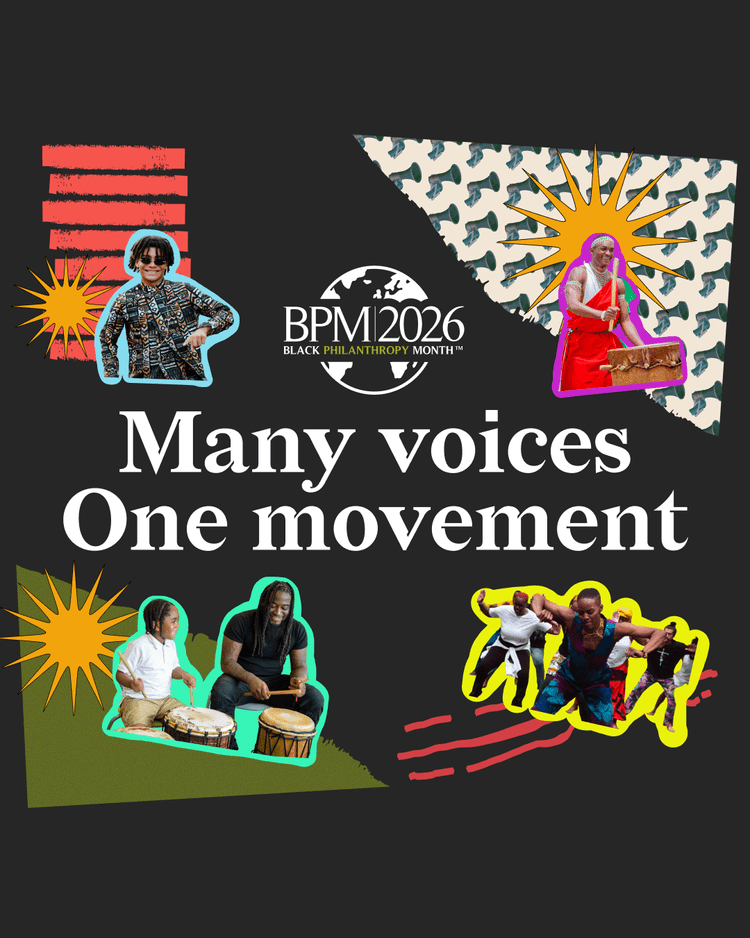
I come from a Black community with which I am still and always will be connected. I grew up around Black influences, often under the supportive but watchful eye of Black leaders and authority figures. I encountered different forms of individual and communal Black wealth that carried its own language and communicated its own value independent of what the majority society acknowledged. And I grew up without being forced to subscribe to a singular intellectual worldview, professional existence, or personal identity of blackness.
That challenge to be open-hearted and open-minded came courtesy of many people and communities over time. It’s not something you can teach or enforce. It’s something I genuinely believe you have to grow yourself by choice and not mandate. And yet, I also believe as a human being, there is an obligation to others. Messily and imperfectly done, but it’s always there. If I want the benefits of being part of a community and a society.
I can care about human rights globally and civil society in any local context I’m connected to. All without having somebody else’s politics placed on me, and without the need to perform according to a script laid out for me. I can believe profoundly in inclusion while still being deeply suspicious of the ways institutions sometimes turn identity into another set of boundaries. And after a decade of actually living and working abroad, I have become even less interested in pretending that any of us can be reduced to a single category.
Which is part of why I find the growing interest in and support for Black philanthropy encouraging. Not because identity is everything, but because identities and affiliations are a currency now. And the fight over which identities matter, which are dangerous, and what affinities flow from identities are too potent to ignore.
We’ve gone well past merely labels assigned to others. Were witnessing very real conflicts around the identities consciously and purposefully chosen by people themselves— with real consequences. And more than ever before, were seeing the embrace of identities something that are richer and more complex
There is enormous value in finally having society recognize what Black people and Black communities have created, built, funded, protected and sustained without requiring that recognition to become yet another box. Or another form of exploitation and extraction.
This is the liminal space I actually live and work and exist in now as a social impact consultant. Sometimes working with wealth directly. Sometimes working through what wealth has spawned. Sometimes aiming to help resources create or build upon wealth.
This space is not always racialized. But it is never neutral. And my issues before I entered this space remain unresolved and unsettled. I'm still standing between what I was once denied, and what I still refuse to be reduced to.
It is from that space that I now remember many stories of Black philanthropy I've learned and carried forward. Tales of those who had far less patience for tidy categories than the institutions of their were willing to give her. I now wonder if I'm brave enough to be just as impatient with what philanthropy offers in my time.
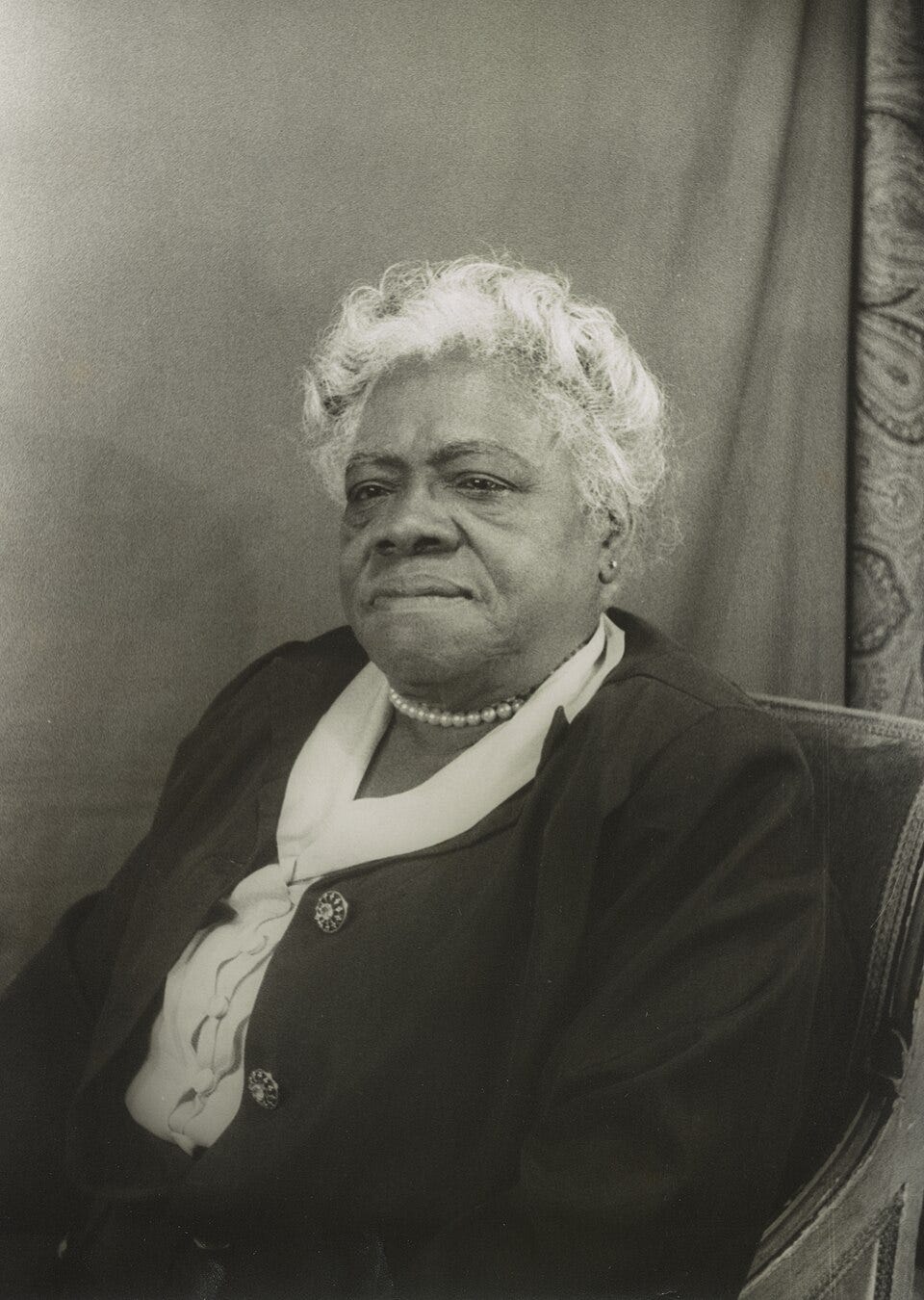
In July 1875, Mary McLeod Bethune was born into poverty in Mayesville, South Carolina. The 15th of 17 children to two former slaves, she was the first in her family born into freedom after the Emancipation Proclamation.
Bethune’s mother worked relentlessly after emancipation for her former owner until she saved enough money to purchase five acres of land. It was on their own land that her father and brothers built the cabin Bethune herself was born in.
By age nine, she was laboring in cotton fields as a sharecropper. When she got the chance to attend a one-room mission school miles away, she was the only child in her family allowed to go. Every single evening, Bethune walked home and literally taught her parents and siblings everything she had learned that day in reading and math. She eventually earned a scholarship to Scotia Seminary in North Carolina, and became one of the few women to study at the Moody Bible Institute in Chicago.
In 1904, Bethune founded the Daytona Normal and Industrial Institute for Negro Girls with only USD $1.50 to provide education to just five girls. She rented a small house for USD $11 a month, using discarded wooden crates and boxes from a dump for desks and chairs. She handmade ink from elderberry juice and pencils from charred wood.
Within just two years, enrollment exploded from the original five girls to 250 students. To fund this rapid expansion, Bethune, her students, and their parents baked and sold sweet potato pies and ice cream locally.
The Daytona school merged with the Cookman Institute for Men in 1923. It officially became the coeducational Bethune-Cookman College in 1931. Today, Bethune-Cookman University remains a highly respected Historically Black University (HBCU)—and it stands as the only HBCU founded solely by a woman.
In 1935, Bethune founded the National Council of Negro Women, and nine years later, she co-founded the United Negro College Fund. She went on to serve as a national advisor to President Franklin D. Roosevelt, directing the National Youth Administration.
She also co-founded the Central Life Insurance Company of Florida, and owned capital stock in the Afro-American Life Insurance Company. Her influence and entrepreneurial acumen enabled her to direct her money, energy, and resources straight back into the institutions she created . And she was able to purchase a modern home for her parents back in South Carolina.
By the end of her life in 1955, she had achieved immense national prominence. She wrote a spiritual and moral legacy for Black Americans in an essay titled "My Last Will and Testament," which was published in Ebony magazine just a few months after her death in August 1955.
In it, she wrote
I would not exchange my color for all the wealth in the world, for had I been born white I might not have been able to do all that I have done or yet hope to do.
[….]
Faith, courage, brotherhood, dignity, ambition, responsibility—these are needed today as never before. We must cultivate them and use them as tools for our task of completing the establishment of equality for the Negro. We must sharpen these tools in the struggle that faces us and find new ways of using them. The Freedom Gates are half ajar. We must pry them fully open.
If I have a legacy to leave my people, it is my philosophy of living and serving. As I face tomorrow, I am content, for I think I have spent my life well. I pray now that my philosophy may be helpful to those who share my vision of a world of
Peace, Progress, Brotherhood and Love.
Most of the capital Bethune raised during her lifetime went directly toward keeping the institutions she founded fully funded. In her final year she raised funds to establish her home, The Retreat, as a foundation to secure educational scholarships, host interracial devotional retreats, and preserve history.
While it is common for major estates left to institutions to spark family disputes, Bethune’s family actively protected and championed her choices. She intentionally distributed her means to ensure her philosophy would outlast any bank account. She made clear that she was leaving behind a spiritual and philosophical inheritance rather than a material one. She died rich in influence, rich in real estate dedicated to the public good, and entirely secure in her purpose.
Her family understood that her life’s purpose was to belong to the public, and they proudly stepped into the role of being custodians of that legacy rather than fighting over material assets.
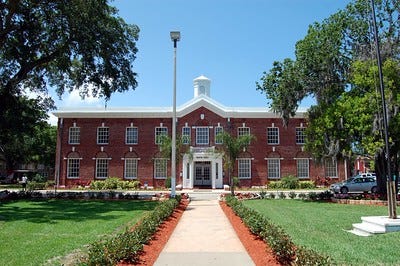
In America, Black homes and communities statistically give away a higher percentage of their income/wealth to charitable causes than any other racial group. The factors are myriad, but the reasons are not hard to figure out. It’s driven by a deep sense of accountability and communal love rather than excess disposable income. It is woven into family structures and religious traditions that are passed down generationally, making it permanent.
The traditions of communal giving, savings clubs, and collective pool systems were brought over by enslaved Africans from West African cultural practices. Because these practices survived the Middle Passage and the trauma of chattel slavery, they exist independently of any Western legal or financial framework. They predate the systems now trying to suppress or co-opt them.
Giving is not a tax-deductible afterthought; it is an act of resistance and a mechanism for survival. When formal systems (banks, governments, insurance) completely fail or actively harm any community, pooled resources are the safety and security. And you cannot snuff out the lifeline people rely on to stay alive and free without causing greater harms more widely.
We may never know the true scope in terms of numbers because so much giving is informal, decentralized, and relies heavily on interpersonal trust rather than a paper trail. This can, however, inspire thoughtful and meaningful action to identify ways of making those systems more accessible and sustainable if they are preferable to what’s being sold as necessary for philanthropy to truly register.
Instead of creating more tools that do the same thing, maybe we do indeed need to pay attention to the tools that routinely fall outside the rarified space philanthropy has become. And give those tools the authorship and authority they deserve.
Attempting to erase this history is self-defeating because it ignores the fundamental baseline of how Black communities survived every major era of oppression. The giving is the foundation. Philanthropy matters because resources matter.
I say all this as I communicate now with family and friends about the DAFs they only recently discovered they hold. And have never used. Without telling them where to encourage the funds to go, I’m simply advising them on what they can do with them, what they can tell their friends, neighbors, colleagues and other community members. If they choose to pass the word along to their community about yet another asset we can use for collective good.
During Black Philanthropy Month, and beyond, I don’t need philanthropy to be pure. I don’t need it to be American. I don’t need it to look like a foundation. I don’t need it to be perfect. I just want more people, communities, institutions and movements to have more ways of making more resources available for things that otherwise might never receive them.
In the wrong frame of mind, this month could too easily become one of grudges and grievances. I’m resisting the urge to spill the tea on the specific institutions, funders, donors, and actors in the broader philanthropy space where my own professional and personal experiences are not positive. My history is what it is, and it should not taint this month of celebration, reflection, and progress.
But I am also not going to become silent just because I have personal journey through the philanthropy world that has often left me frustrated, disappointed, excluded… and, honestly drained and spent.
My reckoning with myself this month involves people who were positioned to open doors for me, but who did not. Professionals who advanced, and yet did mighty fine work to block my own entrance. Some funders and institutions moved forward on promises, while I removing my name and work from the opportunities.
And the times where I ensured my own exclusion do not escape my scrutiny. Taking a stance or calling out behaviors that simply crossed a line. Bringing the wrong energy or mindset to the work. I own my missteps while I remember my own largely unpleasant experiences. I know some of those histories will never be resolved. I don’t need to pretend otherwise in order to participate in this conversation.
It’s not something I often explore as a consultant. But from time to time those triggers are there. And I’m made aware of them more often than is comfortable at times. Especially as a person of color, who carries a responsibility for guiding others through the same systems that once penalized me.
And with dark irony, I note I often have better success now as a foreigner abroad with many of those same systems than I did domestically. I can only hope this warping of realities does not inhibit legitimate progress in the field. I hope very much for legitimate support to continue to flow towards many good groups that honestly deserve and need it. Eespecially now.
I keep open the option that there’s reconciliation. Not forgetting. Not pretending the past didn’t happen for me and other Black professionals within America’s philanthropy sectors who have been burned and burned out by our experiences. What I can do is look at what comes next and hope that other people do better where I did not get the chance to. And I still believe the current and emerging base of professionals and donors can.
At a time when history, diversity, inclusion, belonging and truth are under assault, there is still a legacy of Black giving that continues to exist. Under greater strain and rising pressure. But it’s still there. And any attempt to contain, ignore, or erase that important and active legacy is a self-defeating and futile endeavour.
I don’t have the means or ability to solve much of what’s wrong in the world today. I’m constantly uncertain most days whether my voice or presence can even do anything that others are not actively trying to do against tremendous odds. I am increasingly listening and learning more from those who are better at building the tools, platforms, practices and systems through which more good things can actually happen.
I’ll lean into my irritation with philanthropy as it has played out during my lifetime, and turn it into something productive, constructive, and collaborative.
I still believe philanthropy matters. Not because philanthropy is a noble institution that should be protected from criticism. Not because foundations deserve endless patience and infinite lifecycles. Not because wealthy people are automatically wise stewards of anyone’s future.
But because this activity, done as a community, is transformative, nourishing, and replenishable. People deciding that something matters enough to put their time, money, influence, skills, relationships or attention behind it is something encouraging and inspiring.
I want to move beyond the usual definitions of wealth and giving and the assumptions and motions they conjure. I want the vocabulary of philanthropy to expand without become more off-putting in it's jargon and buzzwords.
I want Black philanthropy to be recognized for what it has always been and what it can still become. I want to see even the more esoteric to philanthropy paying at least a cursory nod to this realty at some point during the month of August. Maybe they’ll begin to do more regularly throughout the year.
I want more circles growing and expanding. I want the current standard bearers to have a bit of the weight they're carrying lifted off their shoulders and the burdens borne more widely.
I want the barriers to giving lowered and ultimately removed. Because giving matters. It always has and always will. And maybe that is where I have landed after all these years.
I want philanthropy to remember that it exists for something beyond itself. I hope that, one day, philanthropy will be as diverse and expansive as it can be. And that all givers and giving will finally get the respect and space they deserve. And the possibility that we can do better. Including me…

On BE4SI, we’re talking nonprofits/NGOs, social enterprise, philanthropy, civil society, and social impact— filtered through U.S. and Central/Eastern European lenses. We’d be honored to have you as a subscriber! ⚡
Enjoyed our read? Drop a tip to help us stay 100% independent and ad-free! 🫶🏾
Word of mouth is essential to our growth. Please share us with others. 💫
Comments
Nothing yet. Say the first thing.
Sign in to join the conversation.