

Last month, you’ve likely heard or even seen live the historic achievement of four astronauts orbiting the Moon for the first time in 50 years. Artemis II marked the second mission from NASA’s ambitious program to have a permanent presence to the lunar surface. Collaborating with 67 other nations that signed the Artemis accord, the shared goal is to establish a permanent lunar base by 2030, a new priority set by Trump’s administration :
My Administration will focus its space policy on achieving the following priorities […] establishing initial elements of a permanent lunar outpost by 2030 to ensure a sustained American presence in space and enable the next steps in Mars exploration
President Donald J. Trump
Unlike the Apollo program, NASA has decided to forge strategic partnerships with commercial entities to make this vision a reality. These commercial partners mainly consist of publicly traded companies, whose important role will be discussed in this article.
We might assume that because the Artemis program is primarily funded by taxpayers, it’s challenging to profit from it. But this is false! In fact, over half of the components and systems that enabled the four astronauts to launch, orbit the Moon, conduct scientific experiments, and safely return to Earth last month were designed and manufactured by publicly traded companies, not by the government! And as investor, this means you can benefit from this economy!
And you may not be aware yet, but several of the companies that you invest in your portfolio may have played an important role in making Artemis II a successful mission, even if they aren’t labeled as “space stock”, like GoPro ( GPRO 0.00%↑ )…
Let’s deep dive…
When we think of a “space company,” we often think of rockets and satellites. However, it is much more than that. Components like solar panels, reaction wheels, and star trackers are what make any mission possible long before communication is even established.
Who would have thought a device to track stars could be so important?!Mark my words, I strongly believe that this tiny device might be the pillar of the space economy. Satellites and spacecraft use star trackers to identify the positions of stars and calculate a highly precise 3D orientation. This data is essential for spacecraft to maintain their attitude (3D orientation) and ensure that solar panels remain pointed toward the Sun and communications dishes are aligned with Earth.
No star trackers, no space missions.
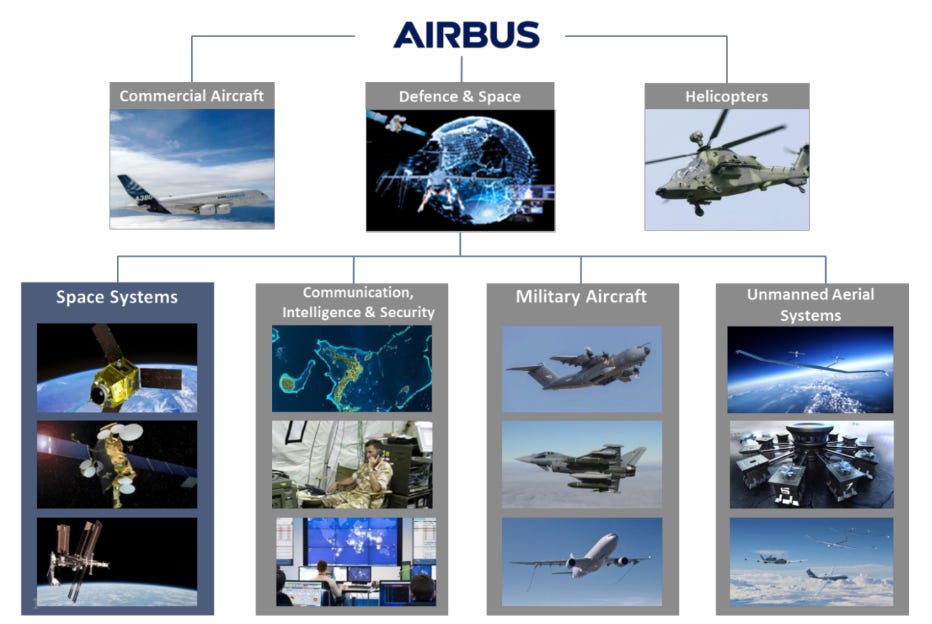
The Orion capsule for Artemis missions does not use star trackers from a publicly traded company but from a private entity named Jena Optronik, a subsidiary of Airbus Defense and Space ( EPA: AIR ) and leader in high-accuracy sensors.
…Or at least the Orion capsule does not use star trackers from a publicly-traded company just yet!
A particular aspect of space companies is that each build their own expertise and a publicly traded company would rather acquire companies specialized in a specific technology than consume cash on research & development to get to that level of expertise. Acquiring a company turns out less expensive down the road than developing new technologies. If a new acquisition can also help companies to sell more, this is even better!
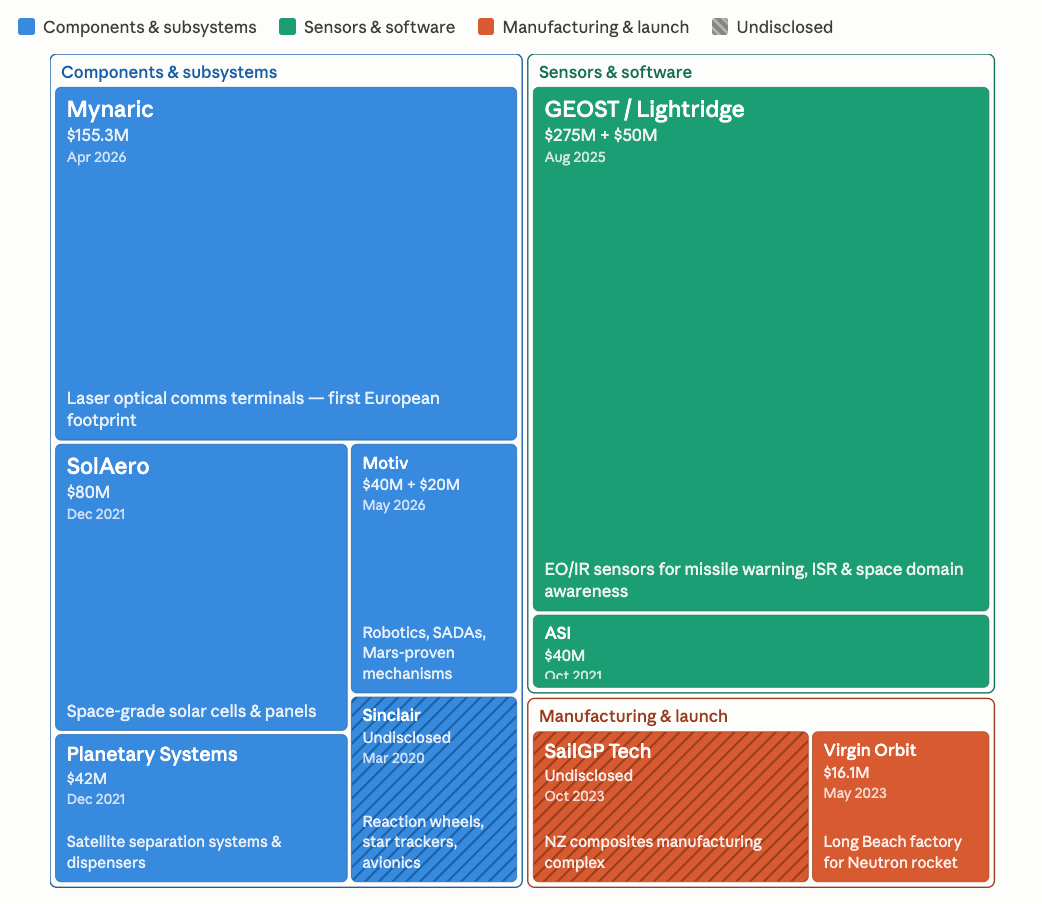
A good example is Rocket Lab ( RKLB 0.00%↑ ) that is announcing the acquisition of new space companies now almost every quarter. As part of a $500 million contract for the Space Development Agency (SDA) to manufacture 18 satellites, they previously used Mynaric, a German company with expertise in optical inter-satellite links, as a supplier. One day, Mynaric found itself on the brink of bankruptcy. Rocket Lab could have lost their supplier, but instead they chose to acquire the company to not disrupt its supply chain and at the same time to enhance their vertically integrated suite of space systems. This also allowed Rocket Lab to have a presence in Europe.
Optical communication is not the only product in Rocket Lab’s space systems inventory. The company is also selling star trackers and reaction wheels, radios, space software, separation systems, solar panels and has recently added electric propulsion to their inventory.
I was mentioning that no missions can happen without star trackers, but in reality, what matters most is power, as star trackers obviously need power. That is especially true for crewed missions, where power is required for life support systems. While communication follows in the hierarchy of needs, it is not the most fundamental need. For example, when the Artemis II crew passed behind the Moon, they lost contact with Earth for 40 minutes, but they still had power and were able to conduct scientific experiments.

On deep space missions, power is primarily generated using radioisotope thermoelectric generators (commonly known as nuclear generators). L3harris (LHX 0.00%↑ ) just announced on May 15 that they have finalized the design of a next generation nuclear-based power source for future NASA deep space missions.
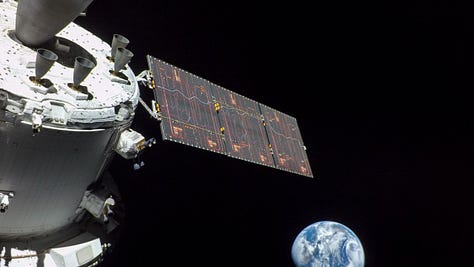
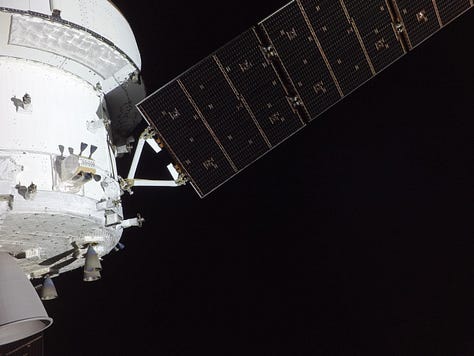
For Earth-to-Moon missions, no need for nuclear generators as the sun can still emit enough light for power to be generated through solar cells. On the Orion capsule, the four solar arrays were produced by Rocket Lab!

In January 2022, Rocket Lab acquired SolAero Holdings Inc. for $80 million to add solar solution to their space systems inventory. SolAero had been since 2001 one of the world’s leading manufacturers of highly-efficient radiation-hard solar cells and solar panels for space application. This acquisition has brought to Rocket Lab new expertise and a new base of customers.
Without this acquisition, Rocket Lab wouldn’t have solar solutions in their space systems inventory and therefore solar panels on the Orion capsule wouldn’t be those from Rocket Lab.
Having diverse revenue streams, as seen in companies like Rocket Lab, has become fundamental for a space company to survive. It’s easy for agencies to fund a rocket program or an ambitious project; they fund it through taxpayers, but for a company, when you do not have enough capital, the only solution you have is to first IPO, then raise capital and dilute shareholders. And raise and dilute again until you can’t anymore. This paragraph is literally the story of Astra Space (previously trading under the ticker $ASTR).
There is now unfortunately a proven track record of publicly traded space companies filing for bankruptcy only because they focused exclusively on building one thing e.g. an operational rocket ( $ASTR ) , a launch pad ( $MAXQ.NE ), etc. Without vertical integration, which leaves them reliant on external suppliers, and with no diverse products or services to sell than what their focus is, their only recourse when they need more cash is to dilute shareholders until facing either a delisting (when a reverse stock split is no longer an option) or ultimately a Chapter 11 filing.
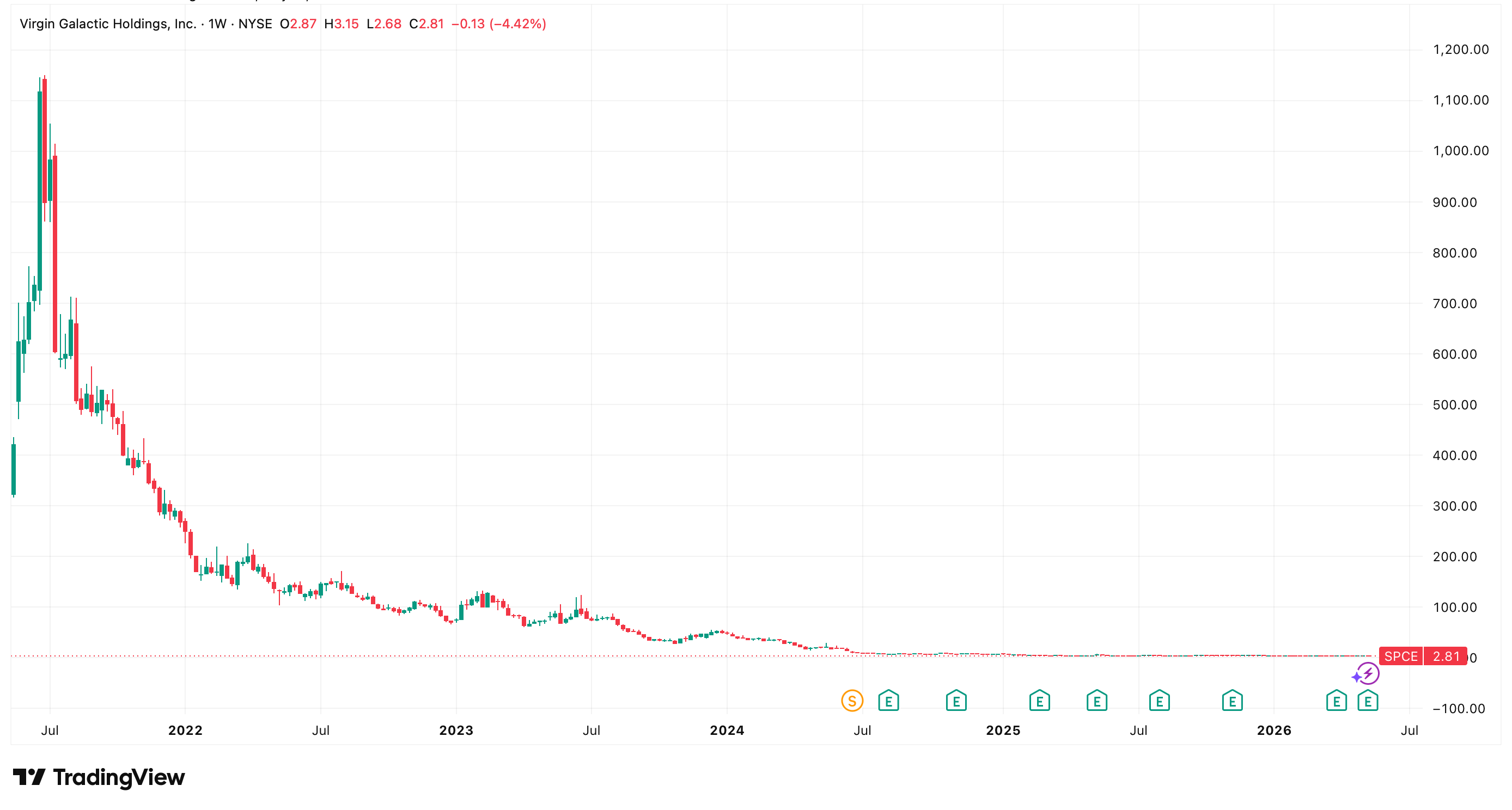
A good example of this is Virgin Galactic ( SPCE 3.33%↑ ). They paused their commercial spaceflights in June 2024 to focus on the development of its next-generation Delta-class spaceships. With no other revenue streams (commercial spaceflights has been their only source of revenue) and the constant need for capital to develop their next spaceship, their only solution has been to dilute shareholders.
It is through strategic acquisitions to expand its space systems inventory that Rocket Lab could generate enough revenue to fund the Electron and Neutron rocket programs without having the need to dilute massively its shareholders. Research and development for a new launch vehicle is extremely cash-intensive because of how iterative the process is, so a publicly traded space company’s best solution to avoiding massive dilution and maintaining its reputation to shareholders is to sell more products and services. And to sell more, the first step is achieving vertical integration and the second step is to sell from its own supply chain. Rocket Lab understood this from the start by acquiring smaller space companies in specific domain like lasers, reaction wheels, solar solution, etc., to get that expertise but also to sell to a more diversified customer base.
Rocket Lab is no longer among the only few space companies that is vertically integrated and claims to be an end-to-end space solution. RDW 0.00%↑ and LUNR 0.00%↑ are also two other publicly traded companies acquiring as many players as possible to reduce supplier reliance and diversify their revenue streams. While neither has to fund a highly expensive rocket or other ambitious programs, this diversification is particularly useful for mitigating risk. Much of the high-revenue portion of the space industry currently comes from government agencies and this is funding that can be cut or delayed at any time. By selling space systems components to companies it is still possible for these companies to generate revenue in the event that a program or funding is delayed or canceled.
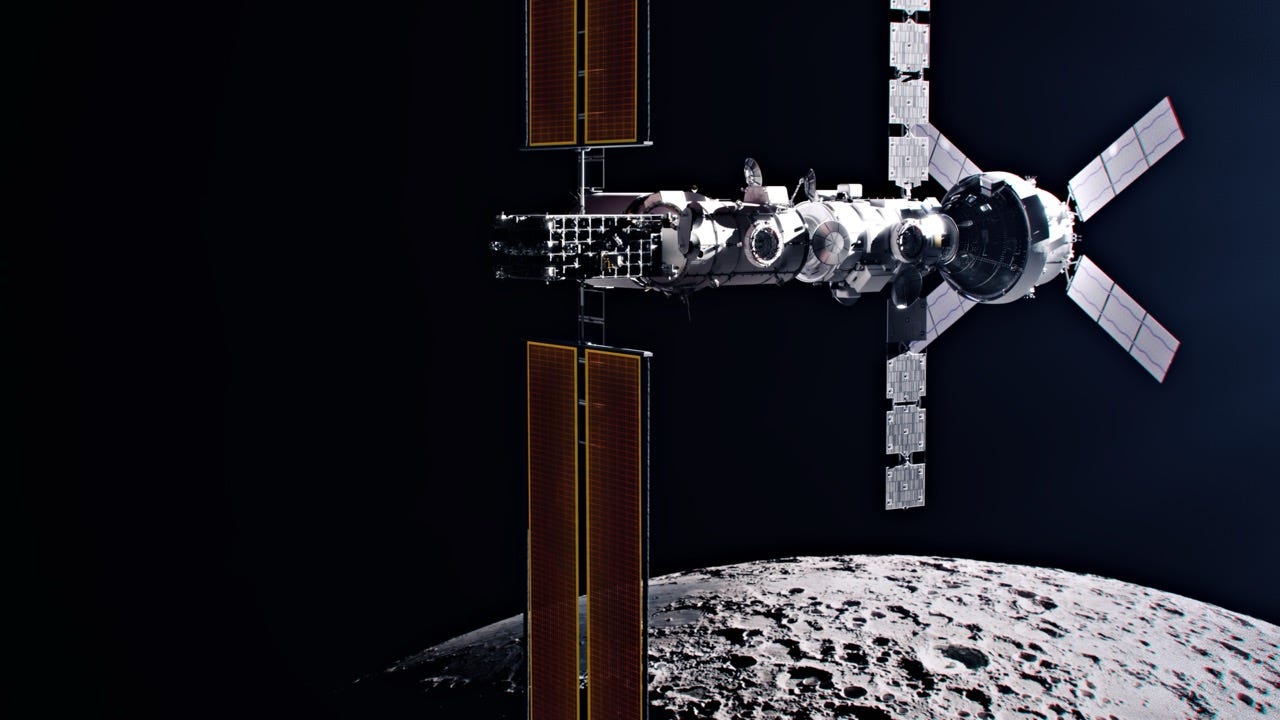
During NASA’s Ignition event just a few days before the Artemis II mission, the agency announced to pause the Gateway program to focus instead on establishing a permanent lunar base. With the International Space Station set for decommissioning in 2030, the next space laboratory was originally intended to orbit the Moon aboard the Gateway; however, that laboratory will now be located on the lunar surface. This shift leaves billions of dollars in contracts paused indefinitely or repurposed.
MDA Space ( MDA 0.00%↑ ) is contracted by the Canadian Space Agency for $1 billion to build the Canadarm3, the robotic arm for the Gateway. During their May 7 earnings call, the chief executive, Mike Greenlay, said to “continue discussions with the Canadian Space Agency on redefining the Canadarm3 robotic systems that will be required to support this new and exciting phase of moon exploration.”
One risk factor that I have learned the hard way as a space stock investor for the past three years is the extent to which a company’s backlog and revenue depend on government contracts versus commercial customers. You can find this data typically through quarterly reports. I often call this metric the commercial-to-government (CG) ratio. The higher the ratio, the more diversified the company's revenue streams. Let me explain…
Most of the time in the space sector, companies generally have less capital to deploy than agencies or other government entities. Because task orders from these government entities are generally substantial, a space company therefore needs a higher volume of commercial orders and from multiple companies to counterbalance.
When a company has a commercial-to-government ratio of 0.5 to 1, that implies a diversified base of commercial customers and is therefore less risky than a company with a CG ratio of 0 to 0.5, where one task order on pause could easily have serious impact on the business.
Back to space systems.
On the Orion capsule’s solar arrays made by Rocket Lab, there were GoPro ( GPRO 0.00%↑ ) cameras installed, yet another publicly-traded company! Four specialized, modified GoPro cameras were mounted on the Orion spacecraft’s solar array wings, where they captured high‑resolution views of the spacecraft, Earth, and the Moon. National Geographic has also equipped the Artemis II crew with GoPro cameras to document daily life on the mission from inside the spacecraft.
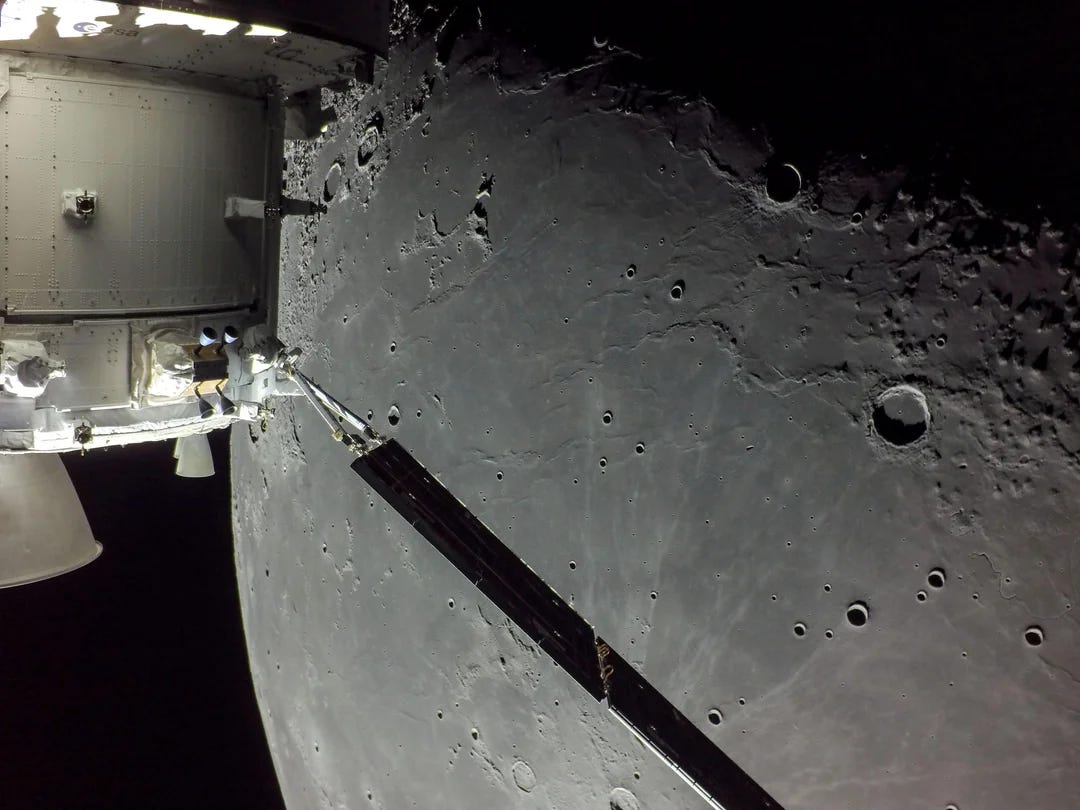
GoPros were not the only cameras aboard Orion. 11 internal and external inspection and navigation camera from Redwire ( RDW 0.00%↑ ) to record 4k video, 12MP images and livestream of both the inside and outside of the vehicle were also installed.
More components like the barometric altimeter, the inertial measurement system, the GPS receiver and displays and controls inside the capsule and the flight software were produced by Honeywell ( HON 0.00%↑)
On a larger scale, the Orion capsule itself was designed and assembled at the Kennedy Space Center by Lockheed Martin ( LMT 0.00%↑ ), serving as prime contractor for NASA. Under the Orion Production and Operations Contract (OPOC) awarded to Lockheed Martin, NASA committed to ordering a minimum of six and a maximum of 12 Orion spacecraft.
The service module that provides power and propulsion was provided by the European Space Agency, with Airbus Defense and Space ( EPA: AIR ) acting as the prime contractor and with companies from 11 countries supplying spacecraft-specific parts made for the spacecraft.
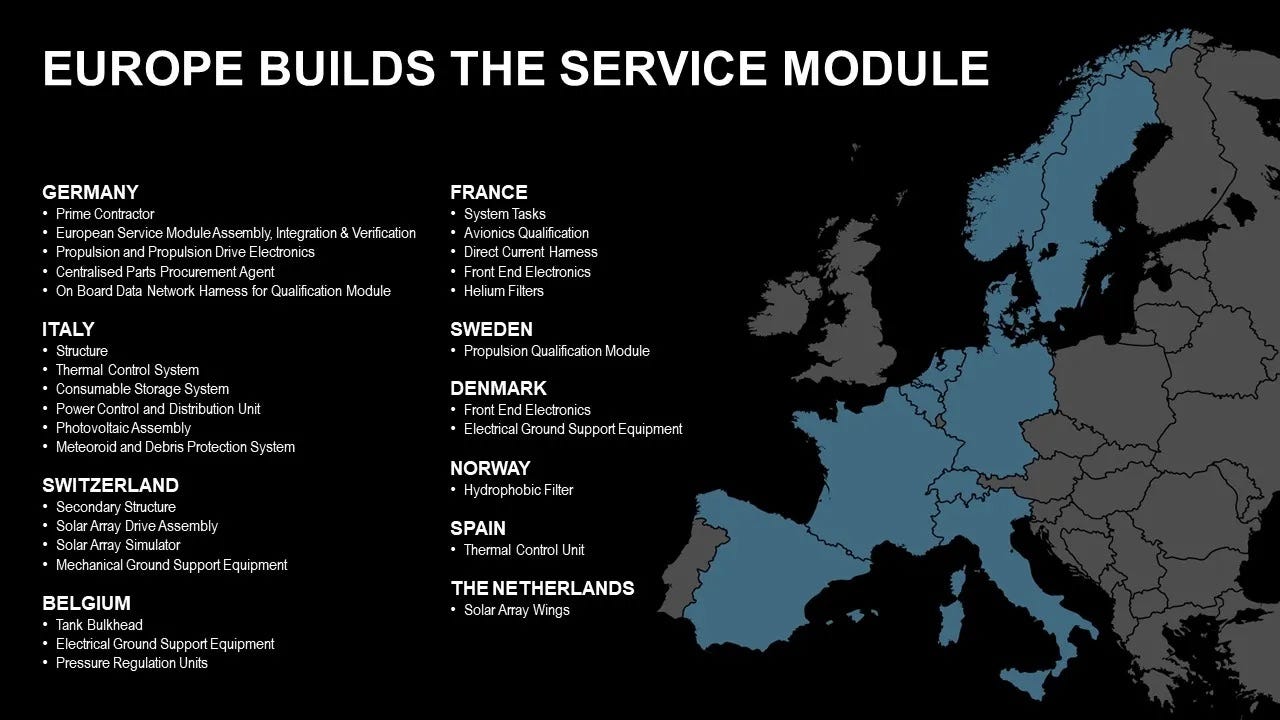
What I just covered was just for the capsule and the service module, and as you can see, there are already tons of publicly traded companies that are involved. Now adding companies contracted by NASA like Amentum ( AMTM 0.00%↑ ) to assemble the Space Launch System (SLS) rocket and to transport it to the launch pad, Northrop Grumman ( NOC 0.00%↑ ) that supplied the twin solid rocket boosters for the SLS rocket, and many more. As an investor, you can definitely take part in this growing economy.
If you cannot choose which stock to hold, there are now a few ETFs like NASA 0.00%↑ and ORBX 0.00%↑.
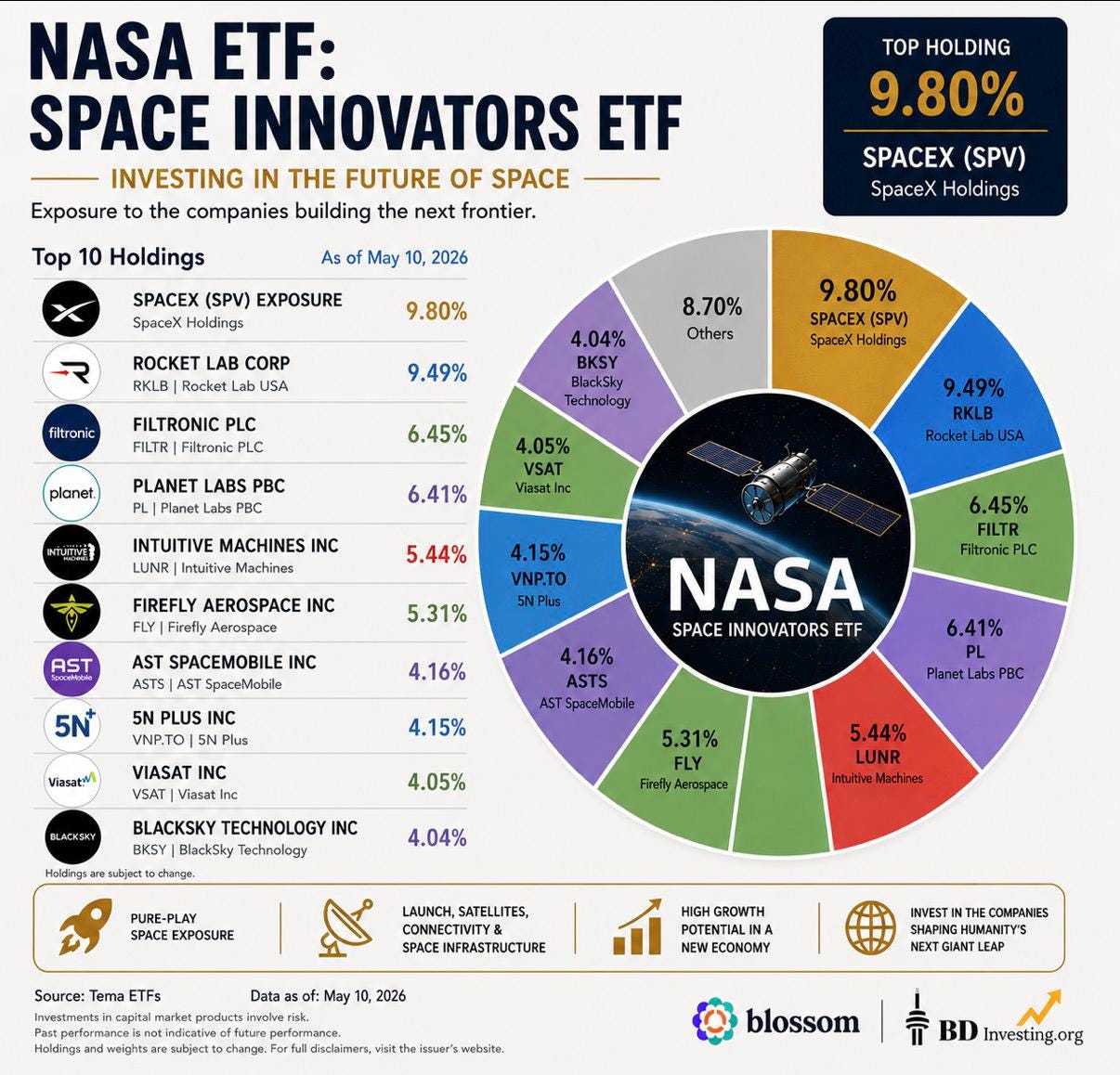
If these companies can build together the vehicle and its systems to safely bring a capsule around the Moon and back to Earth, these missions wouldn’t be possible without a lunar infrastructure. Let’s discuss that!
But before diving in, did you know you can follow my portfolio, trades and insights for free on Blossom?

The lunar infrastructure groups power generation, communication & navigation, surface mobility, in-situ resource utilization, landing sites & radiation-shielded habitats, and support sustainable human presence and activity around the Moon and at its surface.
Comments
Nothing yet. Say the first thing.
Sign in to join the conversation.