
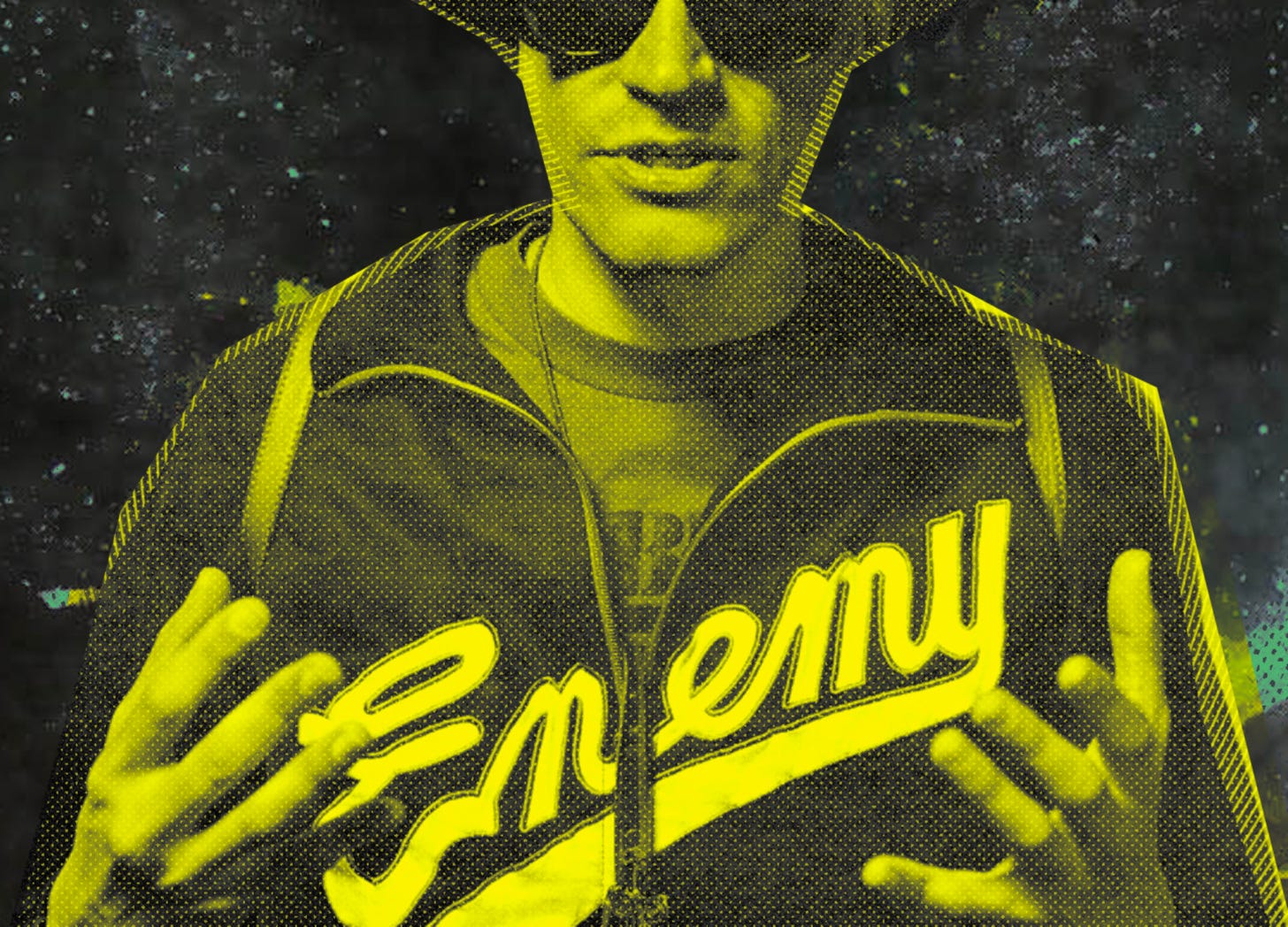
On April 1st, 2024, I woke up with sense of inevitably of what had happened. I’m sure we all get these ominous premonitions from time to time, but refuse to acknowledge them. We just shove them to the back of our minds with the howling monkey and backwards-speaking garden gnome.
On the internet I’m a mainly a lurker. I watch from afar, but this one time I wish I said something. The latest pillory was against Ed Piskor. Probably worst pile on I’ve seen. All the details are out there for the uninitiated, no need to rehash them here. It’s all over now anyway.
There’s never an effort to understand the complexities beyond the screen in these situations—the crossed wires, human frailty, all that jazz. The Mob just wants their pound. In this case it was to confirm their pre-judgments about the quirky cartoonist who wore his sunglasses indoors. And it wasn’t even about justice for those they claimed to defend. The Mob’s actions harmed everyone involved.
I’m helpless against a mob of this magnitude. Please share my side of things. Sayonara.—Ed Piskor
I opened my laptop and there it was on facebook.com. Ed Piskor’s goodbye note. I knew it wouldn’t be long before it was all confirmed. I hoped I was wrong. I wasn’t.
I had an account on another website, twitter.com. Not even double digit follower-count yet from what I remember. I opened it years ago for the day when I would start making comics again. Eternally-aspiring artists, you know the drill. I kept it active by posting memorial photos whenever someone I respected died. Kim Jung Gi. Aline Kominsky-Crumb. Pee-Wee. Morbid shit, I know.
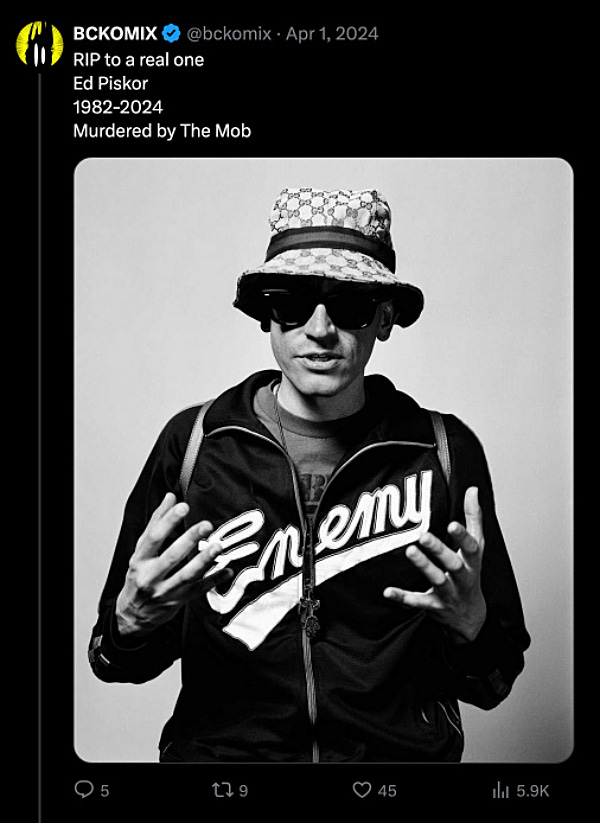
I added Piskor to the timeline. But this time it was different. Something had to be added to the standard memoriam. I couldn’t bottle this one up. I was gonna blow.
RIP to a real one
Ed Piskor
1982-2024
Murdered by The Mob
I got a few reply guys. One took umbrage at my use of Murdered. Other tweets criticized people for using the word Mob. Seems it was too much artistic license to use Murdered by The Mob to describe a hoard of people robbing a man of his reason to live.
Another reply accused me of pretty bad taste (usually the case) and of using Piskor to further my own agenda. Not sure what agenda he was suggesting. People were trying to make this into some culture war bullshit, but it never really stuck. Too many from all sides jumped into the fray in the thick of it.
There were the usual suspects, the call-out cohort in comics. Piskor was successful in this tough industry, and they had petty grievances with him, often under some political guise. They were just ready for an opening. But also eager to join the pile on were some anti-woke culture grifters warrior YouTubers who love drama and could never avoid misery they could monetize.
To name any of these people would be like summoning demons from the Necronomicon, giving them more attention than they deserve. Piskor mentioned those in the industry in his note because they were in his purview, ignored the others because he never suffered fools in his periphery.
Personally, I believe any of his attackers that are genuinely remorseful deserves a path to absolution, but that’s more than they were ever likely to give Piskor. After his death there were imaginings that if he would have just stuck around, he could have made a come back. But Piskor knew the game, he knew the optics. He knew explanations or apologies never got anyone anywhere in these situations.
For his worst attackers, the truly shameless, the ones not even looking for redemption, they’d better watch out. Looks like that Gypsy curse is working it’s way around, some clowns really losing it out there.
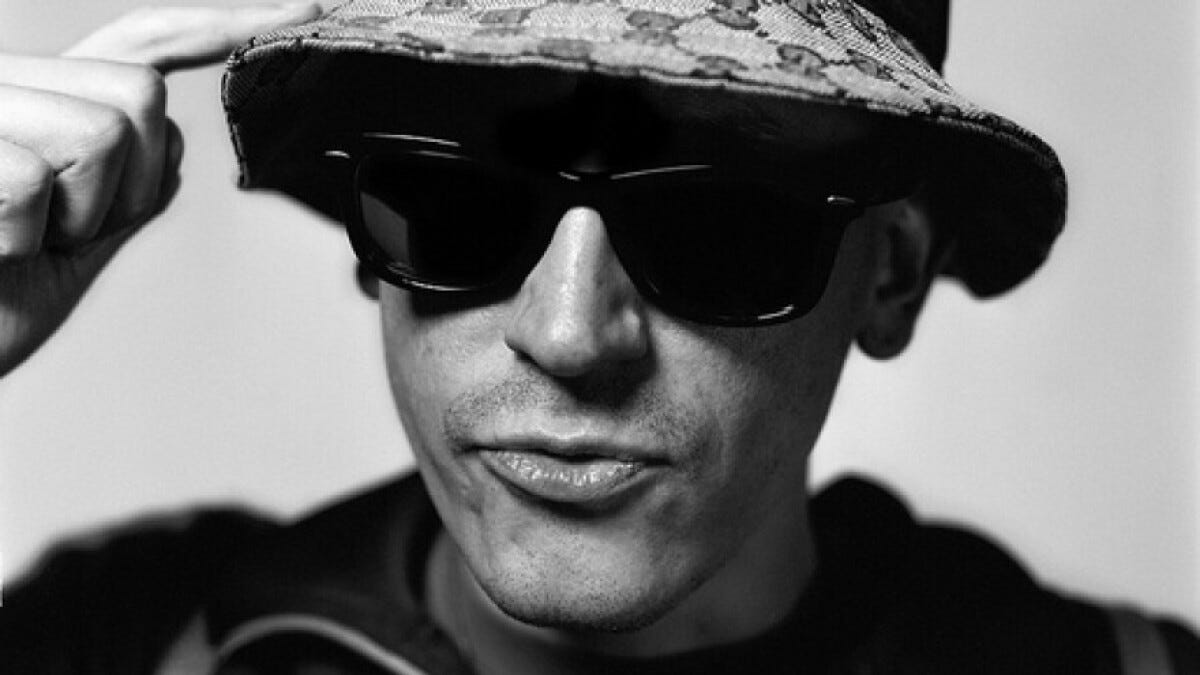
Ed Piskor was a character, typically dressed in a bucket hat, baseball cap (often Public Enemy or Pittsburgh Pirates), black button up or hoodie. He had strong opinions about comics and business in comics. He used the wrestling term jobber to describe artists satisfied just taking their paycheck from the big two. He cut promos when it was time to keep it real on another creator.
Piskor was a throwback to the old days of comics, where the creators could be as much characters as the ones in the books. Those who made it into the public consciousness were larger than life, like the aviator and turtle-neck wearing Jim Steranko, cigar-chomping Jack Kirby, and bombastic Stan Lee. All those figures of yore embodied comics
Piskor was larger than life and comics were his life. This was seen as a detriment after his death, as some argued his identity was too linked to being a cartoonist. But this was yet another ploy for The Mob to relieve themselves of responsibility. What happened to Piskor was not a work-life balance issue, it was his entire livelhood and art career being taken away overnight issue. A person, especially an artist, is often defined by what he does. This is human nature. Someone cannot be severed from what they do without grave consequences.
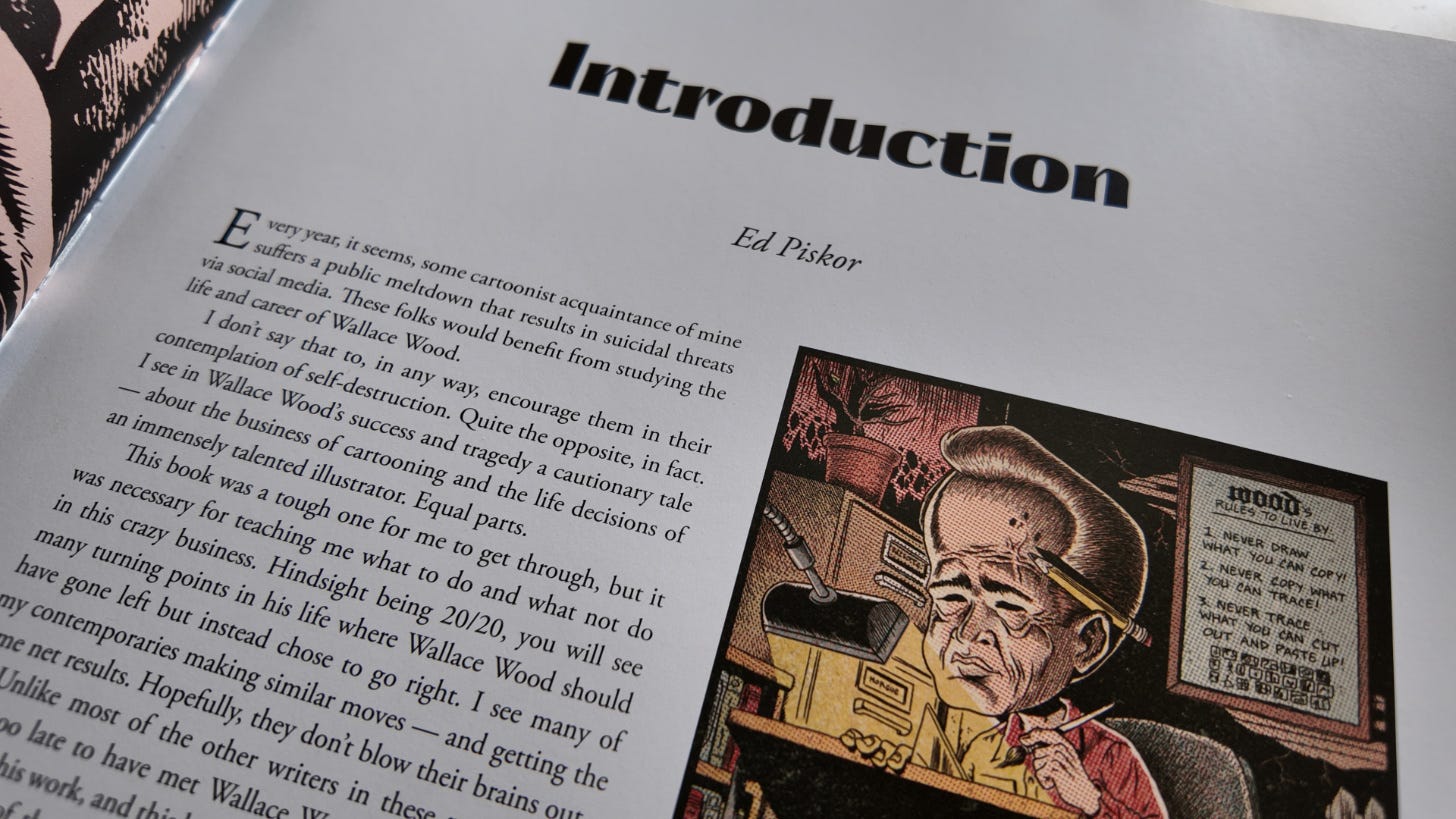
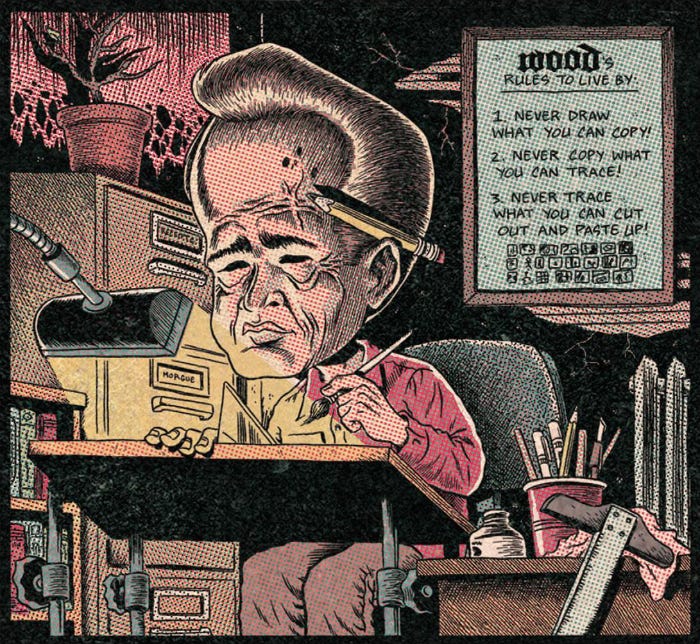
There are a lot of odd, prescient things in Piskor’s comics, Cartoonist Kayfabe commentaries, and writings. Odd things, foreshadowing things. There are too many to mention. But one thing did especially resonate with me, and that was Piskor writing the introduction to Fantagraphic’s The Life and Legend of Wallace Wood Volume 2.
It’s a morbid reminder that Piskor is part of a tragic tradition in comics. Jack Cole, Gray Morrow, and Jack Jackson (Jaxon) were among cartoonists who took their own lives. And the legendary Wallace Wood. I recall more than once Piskor mentioning his intimidation when he first saw Wood’s work in 90s reprints. He saw Wood as the high bar for an aspiring comic book artist.
So I was somewhat disappointed when I began to read Piskor’s introduction. I was going through an infatuation with Wood’s work and expected the entire text to pay unbridled reverence to the man’s art. Instead Piskor dedicated the first part of his introduction to Wood’s wayward career:
I see in Wallace Wood’s success and tragedy a cautionary tale—about the business of cartooning and the life decisions of an immensely talented illustrator. Equal parts.
This book was a tough one for me to get through, but it was necessary for teaching me what to do and what not to do in this crazy business. Hindsight being 20/20, you will see many turning points in his life where Wallace Wood should have gone left but instead chose to go right.
In retrospect I can see exactly what Piskor was talking about. Even though there was a lot to admire about Wood’s artistry and work ethic, his career was not the blueprint to follow. He gave up the highest page rate in the industry at Mad magazine ($200), left drawing Daredevil at Marvel, and a number of other questionable moves until he ended up drawing hardcore porn to pay the bills in his final years (not that he didn’t get a kick out of it).
But the entire story is more complicated. Wood had debilitating headaches that were the likely reason he left Mad (despite being angry over changes), and he left Daredevil after getting fed up with Stan Lee’s bullshit (over not getting proper writing credit and payment). It’s true that Wood had a cantankerous, unpredictable personality, but it’s also true that he sought greater creative freedom and ownership at a time when it wasn’t readily available (the zine witzend being his key shot).
Fortunately, Piskor did get around to Wood’s art in his introduction. But in retrospect it’s a somber read:
As a lifelong student of comics, I tend to be most fascinated with a cartoonist’s juvenilia and the work that he or she does toward the end of their career. The periods where cartoonists do their most well-known works are always dissected and reprinted to death. But I need to see their early stuff for evidence that, if I work my ass off, I, too, can grow and become better. I need to see their late period stuff for clues, perhaps, to what I might be doing in my own waining years.
I hope my late period work will be a fraction as good as the stuff you’re about to see. So go on, turn the page …
Piskor’s art leveled up in his last two projects, Red Room and Switchblade Shorties. It would have been interesting to see how his work would have developed, both in craft and content. Thanks to the progress made by independent creators throughout the 80s and 90s, Piskor had more options for creator owned and driven projects than Wood, as well as more leverage at the negotiating table. But there is one hellish ordeal Wood never had to deal with—the Mob of the internet.
Piskor’s deep dive into cultural rabbit holes is what I found absorbing about his comics. Besides being unpretentious and well crafted in a world of encroaching digital slop, Piskor’s work best captured the Xennial, early-internet sensibility of going all-in on a subject. There was the exploration of grindhouse splatter and dark internet lore (Red Room), early hacker culture (Wizzywig) and the entire X-Men canon encapsulated (X-Men: Grand Design).
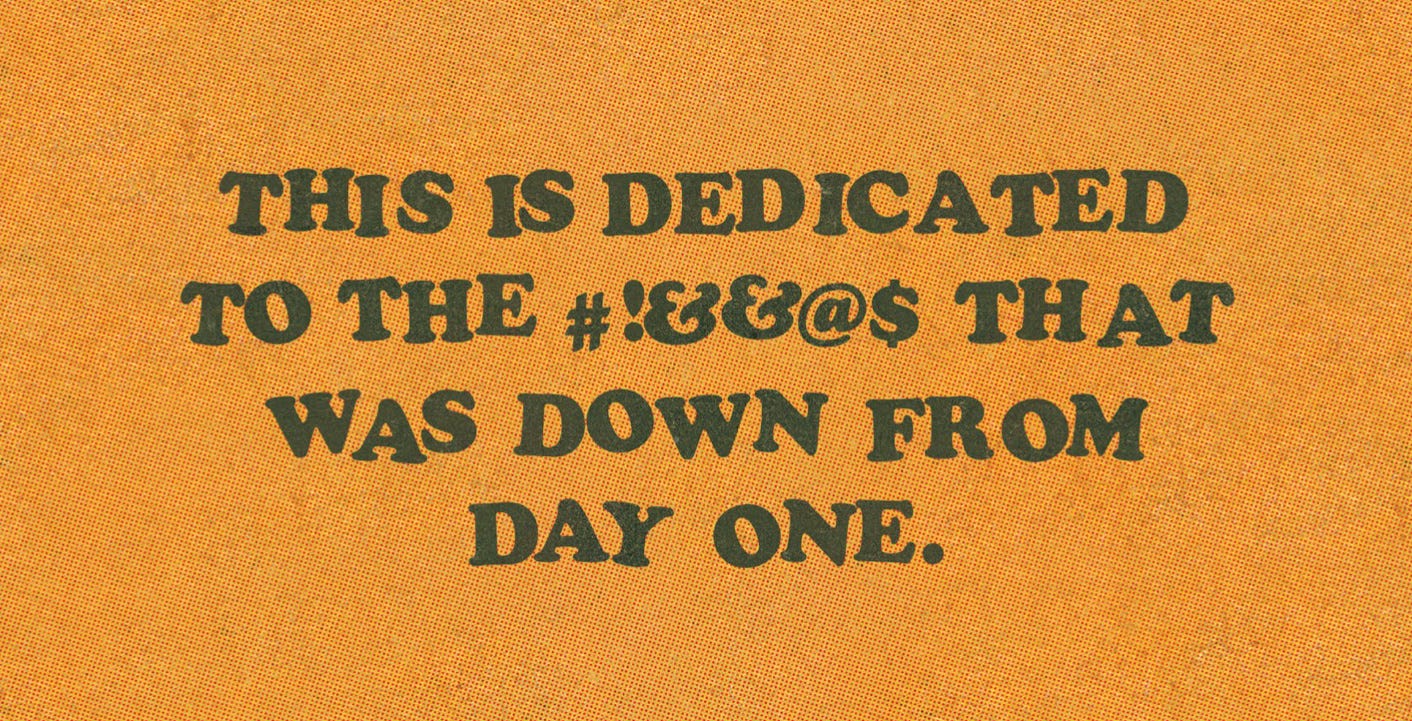
But it was his love letter to hip hop that put him on the map, and drew him the most pointed criticism, more than Red Room funnily enough. Hip Hop Family Tree began as a feature on the online zine Boing Boing, its first printed edition was published by Fantagraphics in 2014. It became a best seller and won him an Eisner award. But the book, along with his b-boy persona, earned Piksor the monicker culture vulture among some of his fellow comic creators. The criticism made him sound like a skeezy 1950s music producer stealing lifetime royalties from a destitute doo-wop quintet. There was even criticism over a grawlix in the introduction of the book. I wonder how many even realized it was a Dr. Dre lyric?
Even taken on its own merit the culture vulture argument always seemed like a stretch in Piskor’s case. The book came from an earnest love of hip hop, as his close deejay friend Skeme Richards and others could attest to. I only bring all this up to give context and illustrate some of the petty carping floating around Piskor. His detractors didn’t emerge from a vaccum, which gives some context to what later happened. It’s hard to read intent, how much was rooted in resentment over Piskor’s success. But that Hip Hop Family Tree was targeted is telling, as it’s the most emblematic of that success.
After Piskor’s death among the eulogies was Chuck D’s.

Like Piskor, I was a working class kid who dreamt of making comics. Unlike Piskor, I never did much about it. Mostly drifted through life, ending up in odd jobs. I even stopped reading comics after a while. Piskor would probably have some strong words about that, in the spirit of read more comics, make more comics. He would’ve been right.
Then COVID happened. The world order may have upended, but I was able to breath. I finally had the time to get back to drawing for myself. And while I drew Cartoonist Kayfabe kept me company. The channel was instrumental in getting me back into comics. My bookshelf is much heavier thanks to the Kayfabe Effect, where the channel covered a must-have book and viewers rushed to buy it before the price shot up.
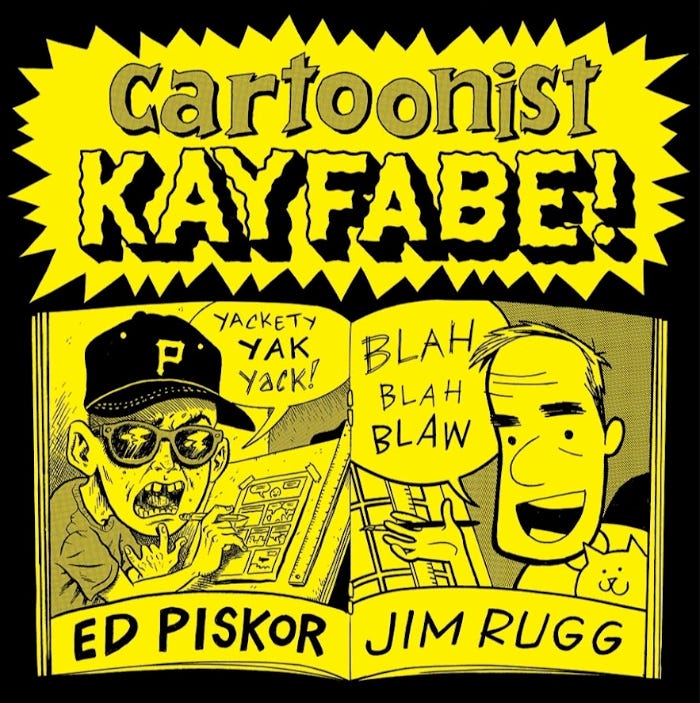
Cartoonist Kayfabe began in late 2018. Piskor co-hosted the channel with fellow cartoonist Jim Rugg (Street Angel, Afrodisiac, The P.L.A.I.N. Janes, Octobriana 1976), two knowledgable pros digging deep on the minutiae of comics—history, process, and business. The two had on air chemistry and balanced each other out, Piskor’s bombast to Rugg’s moderation (when Rugg got riled up, like in the case of Frank Miller’s All Star Batman & Robin, you knew shit was getting real).
It often seemed that Cartoonist Kayfabe was on the internet but not of the internet, that it spiritually belonged to the analog world of newsprint (and baxter paper) and bin-filled comic shops. Nostalgia was part of the appeal. But it would be reductive to call it a time capsule. Piskor and Rugg were always positive about the future possibilities of comics, and current opportunities for cartoonists due to the internet.
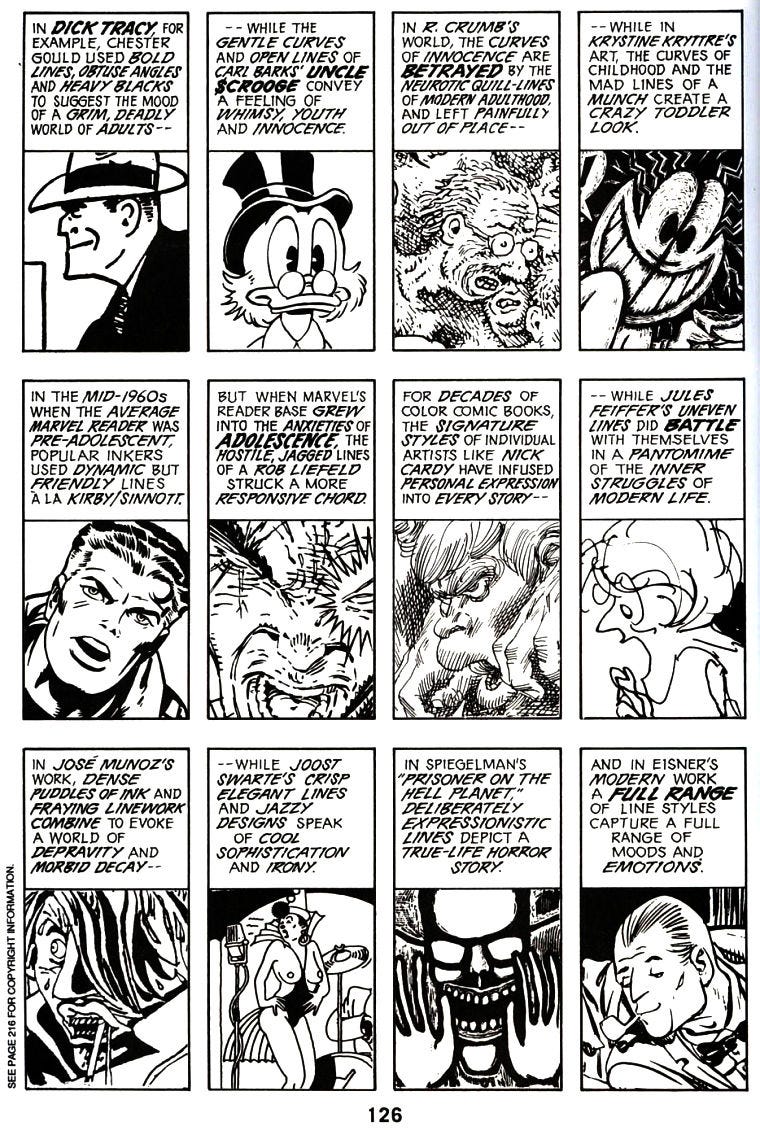
In the earliest episodes the hosts began to delve into Wizard magazine (which covered the 90s comics scene), pouring over each issue like scholars dissecting the Dead Sea Scrolls. But by the time I got into the show they were covering a wide variety of comics, from classic strips to manga. It’s that eclectic approach that I dug. Coming across the page in Scott McCloud’s Understanding Comics displaying the stylistic differences of Gould, Barks, Crumb, Liefeld, Eisner and others, Piskor exclaimed, “This is the greatest page in fuckin’ comic history, man! This page is Cartoonist Kayfabe!”
Cartoonist Kayfabe wasn’t above a baity thumbnail or confrontational title to get viewers in the door, they were on YouTube after all. But once in, they covered the medium with a precision and depth rarely found on the platform. And what made viewers stick around was Piskor and Rugg’s camaraderie. As shoot interview guest, illustrator R. Kikuo Johnson, put it:
The pretext of the show is Wizard and nostalgia for 40 year old men but the text of the show is cartoon craft and...you know, I love it. But the subtext of the show is adult male friendship and I feel the love when I turn this on and I love watching you guys banter. I love you guys like laughing about arm hair on wolverine and that just made me...like the company that you guys provided.
A buddy genre comic channel, something positive in the swamps of the internet. To its credit Cartoonist Kayfabe avoided internet bloodsports and engagement farming that plagues some sectors of YouTube. Any drama mostly consisted of age-old feuds in the pages of brittle industry mags. But of course drama eventually found its way to the Kayfabe. As an old internet proverb goes, this is why we can't have nice things.
Or maybe we can.
After Piskor’s death Rugg followed his wishes to post the rest of the unreleased videos and keep the channel up. Cartoonist Kayfabe has over 1,800 videos. Most are worth many re-watches, a wealth of comic knowledge. And Piskor’s spirit animates the entire channel, he lives on within it.
No posts
Comments
Nothing yet. Say the first thing.
Sign in to join the conversation.