
This is the final installment of my analysis of Alan Moore’s Writing for Comics, here is part I and part II. If you like what you read here and want more articles on the art of cartooning, subscribe!
On Alan Moore’s Writing for Comics (cont.)
On Chapter Three: World Building; Place and Personality
Exposition and How Not to Do It
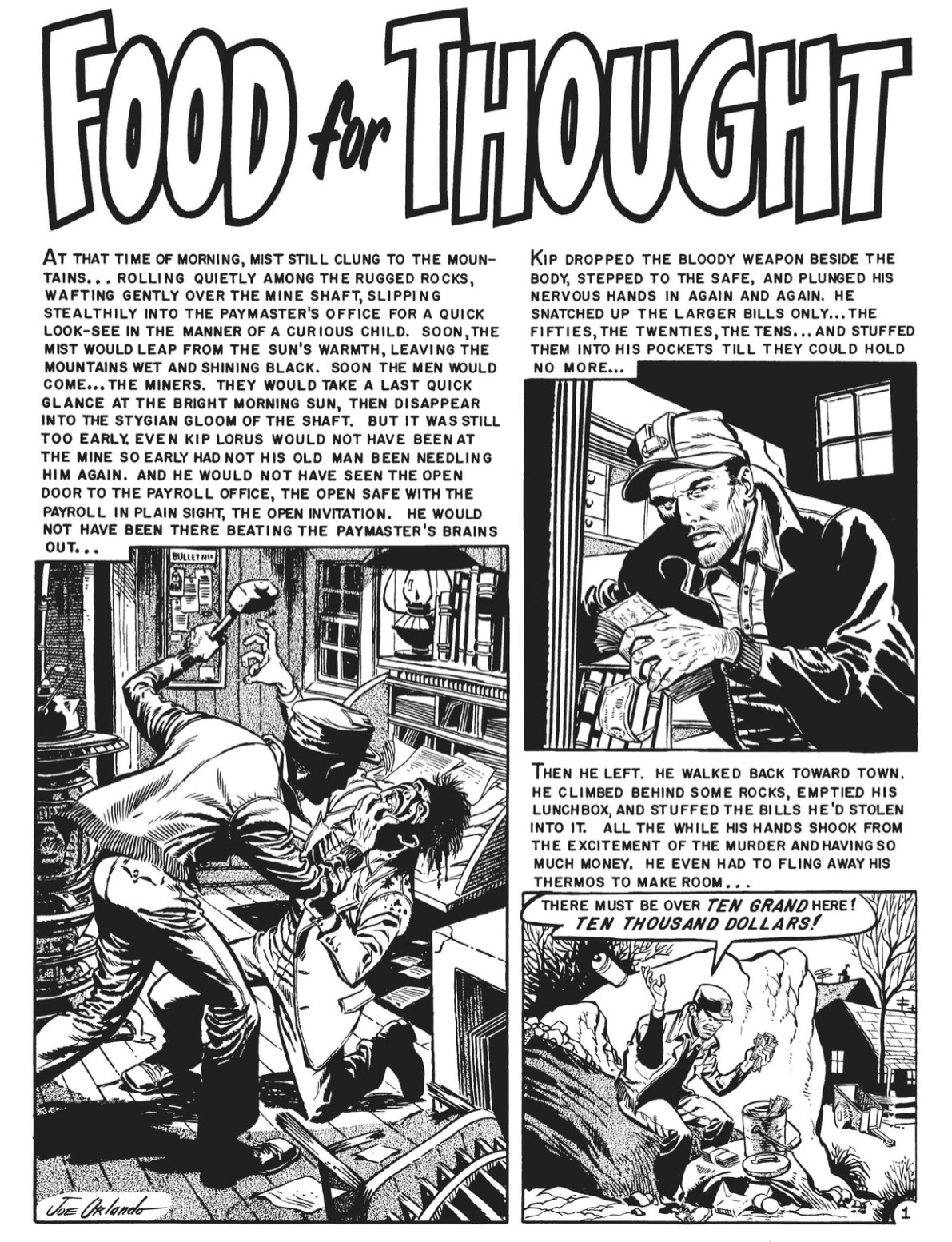
Moore is not a fan of exposition, he wants you to avoid introducing your world through caption boxes and descriptive dialogue. That’s the way it was typically done in the Golden and Silver Age. EC Comics often took this to an extreme. Though EC had the best art during that era the comics were basically illustrated stories until Bernard Krigstein and Harvey Kurtzman breathed solid sequential storytelling into the mix.
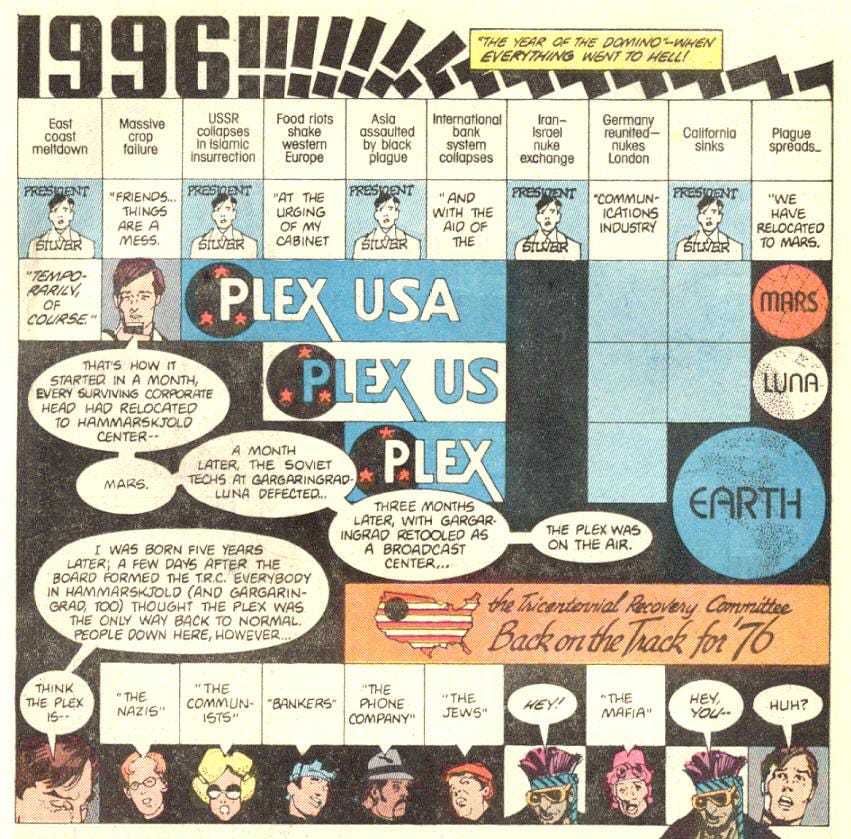
Moore endorses the now well-known method of show, don’t tell. The problem with descriptive captions is they’re redundant in visual storytelling. In the case of world-building show, don’t tell involves naturalistic introduction of environmental elements. Moore uses Howard Chaykin’s American Flagg as an example. Chaykin worked out the brand names, TV shows, fashion, and political issues of his world. The he threw the reader in, having them catch flashes of TV shows, snippets of the news, and glimpses of advertising, revealing this world and its history experientially.
World-building naturally lends itself to writing a world bible. Moore writes that he came up with a mass of information before getting into the meat of the story of V for Vendetta. This works best as background information of the world and its characters, not always needed to be revealed in the story. As Moore puts it:
… we get a sense of a completely realized and credibly detailed world where things are still going on off-panel, even if the story isn’t focusing on them.
The revealed information can be weaved into the story naturally, avoiding info-dumps. Is there a such thing as too much world-building? Only if it becomes a form of procrastination, or if it weighs down a story with excessive lore before getting to the meat of the narrative. There are also types of stories (surrealism, wacky cartoons) that benefit from spontaneity or stream of consciousness. Jim Woodring’s Frank comes to mind, which is a finely crafted work of cartoon surrealism. Though it contains such an evocative world I’m sure Woodring did a good bit of world-building, even if it was just between his two ears.
A Real Place
Moore then writes about tackling a place that already exists, and his example hits close to home, as much of Moore’s Swamp Thing takes place close to where I grew up in southern Louisiana. Swamp Thing drops many names of small towns rarely covered in fiction but I know well from childhood.
On his research, Moore wrote:
When I started writing Swamp Thing I read up on Louisiana and the bayou as much as I had time for and managed to glean a just-about functional working knowledge of its plant and animal life, and general makeup.
I know that water hyacinths form a thick sheet upon the top of the water and make it appear to be solid ground … I know that alligators eat rocks, believing them to be turtles, and then are unable to digest them. This is why alligators have such shitty tempers.
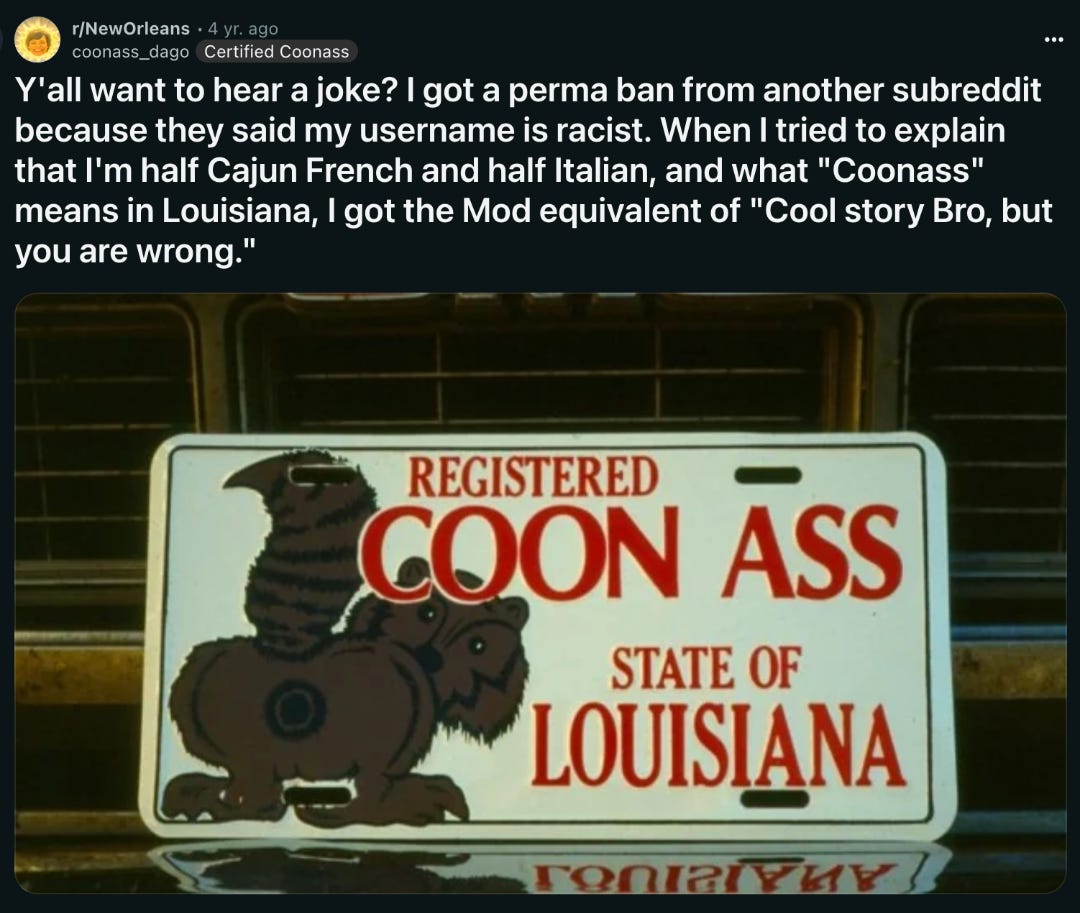
Moore learned numerous Cajun names and even came across the local slur coonass. Coonass causes some bewilderment among non-locals, who often confuse it with another slur, coon. But coonass refers to Cajuns. As Moore discovered Cajuns often wear the slur with pride with bumper stickers and license plates bearing the name. He placed one on a car in Swamp Thing #30.
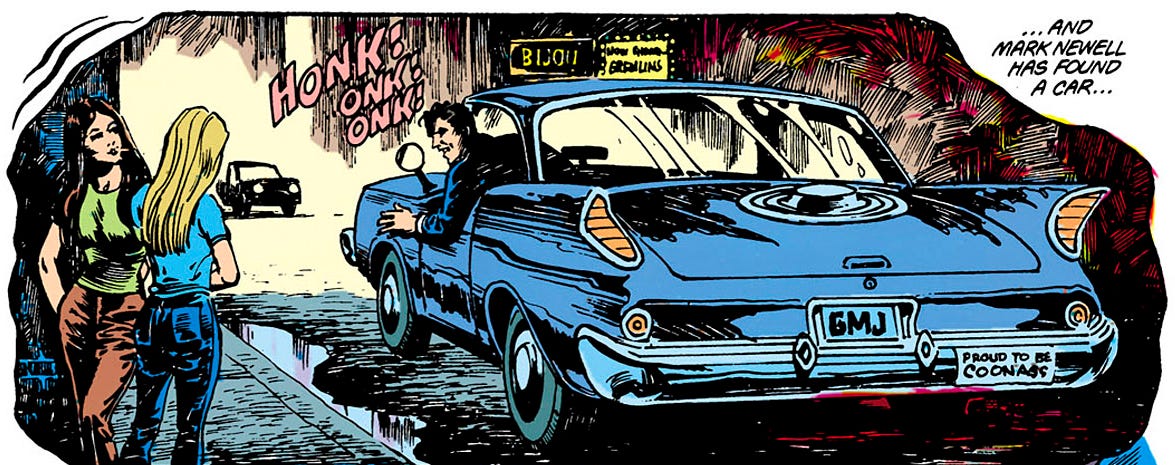
Moore’s effort in capturing Louisiana was admirable for someone who had never been to the place, especially since he wrote his Swamp Thing run before the internet. But naturally there were slips, as I pointed out in a previous article, an issue used the term county instead of parish, and as every local knows in Louisiana we have parishes due to the state’s French-Spanish-Catholic historical ties (in fairness it may have been a miscommunication on the artist’s part).
But the difficulty of giving a fictional portryal of a real place a sense of authenticity does bring up an interesting point: If you’re an independent creator and want to ground a story in a real place, wouldn’t it make sense to use somewhere you know well? Many literary authors wrote books about places they lived in (or like Faulkner, fictional places based on where they lived).
A Psychological Landscape
Moore also touches on the emotional and atmospheric reality of a place, using Gotham City in its various incarnations to illustrate his point. This is the psychological landscape of a world, where the location is like a character in the story, or reflects the characters’ own mental states. Much of David Lynch’s work is also good example of this, going even to other dimensions to explore the shadow sides of his characters.
Character-driven Comics
To start off his discussion of characterization, Moore calls comics a “retarded bastard medium.” I thought that was a funny and apt description, though I’m still trying to decipher it. A bastard child of pulp and newspaper comics, and retarded due to the subject matter? Makes sense.
Back on topic, good characterization is what drives good stories. Fans might nerd out over clever plots and intricate world-building, but captivating characters keep readers hooked. It’s what made the Marvel titles spearheaded by Stan Lee so engaging. I’ve heard Lee’s stories described as soap operas (with heroic exploits mixed in), but that’s not necessarily a bad thing if you’re thinking in terms of addictive storytelling.
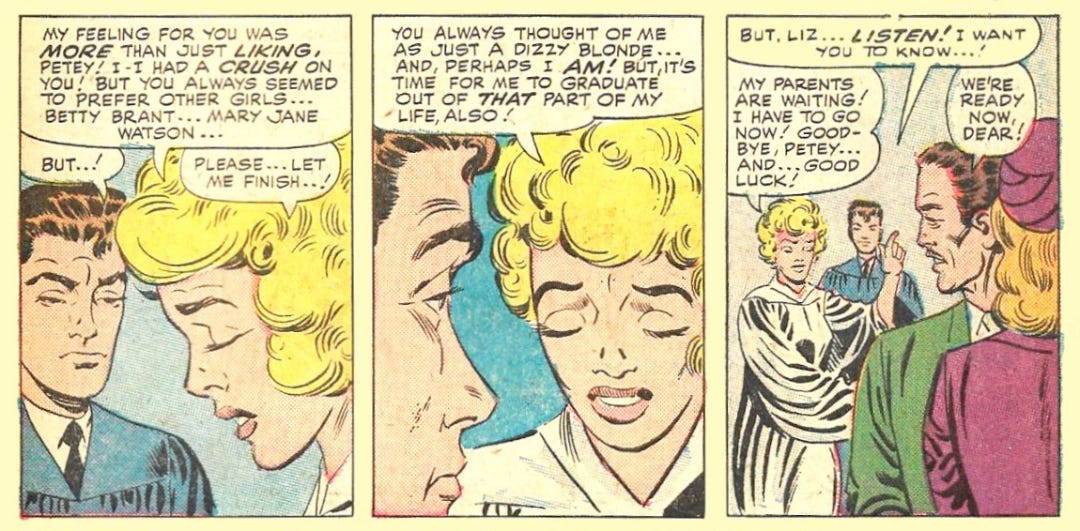
Moore breaks down the history of characterization in comics into basically two stages of evolution:
The Golden Age began with one-dimensional characterization: “This person is good” or “This person is bad.”
During the Silver Age, Stan Lee introduced two-dimensional characterization, such as “This person is good but has bad luck with girlfriends,” or “This person is bad but might reform and join the Avengers.”
In Moore’s view this two-dimensional characterization never evolved much in comics when he was writing the text in 1985, despite characters becoming “more extreme, brutal, bizarre or neurotic.” He might generalize a bit, but I do agree that characters in comics have generally been written more as archetypes (which still have great narrative power) than fully-fleshed characters. Moore argues for characters that can’t easily be described in 15 words.
He gives the obvious advice to study real people when developing characters. A common tip, but I often wonder how many aspiring writers take it to heart, or just absorb the common archetypes they enjoy in popular media. I find a good character writer is essentially a self-taught psychologist, observing human behavior and motivation.
On Chapter Four: The Details; Plot and Script
Plot, Plot, Plot, Plot, Plot, Plot
I have a confession to make, I’m not really into plot. Not that I’m anti-plot, but my attention to it only goes so far as to how it functions as a framework for ideas and characters. I’d honestly rather read a random series of events with interesting characters than some clever plot with boring characters. Then there’s the cartoon/comic as a stream-of-consciouness, psychedelic experience. Crumb made up a lot of his early comics as he went along. Ralph Bakshi’s movies are criticized for their lack of plot or narrative, but can be enjoyed as anarchic spectacles.
It turns out Moore doesn’t seem especially excited by plot either, which may explain why I was instinctively drawn to his guide on writing. On elaborate plots filled with dozens of characters Moore writes:
Pick up an average current comic and put it to your ear and you can almost hear the process at work: Plot, plot, plot, plot, plot, plot … it sounds like someone wading through mud and it very often reads like it, too.
You might be someone excited by a good plot, the series of events that typically lead to a satisfying climax. There are many masters of plot worthy of study (Tarantino is one to study in film, genre fiction is filled with them). Unsurprisingly, writers like Tarantino drive their plots with interesting characters. Moore is still instructive in regards to plot, because despite being a more thematic writer, he’s capable of writing a good plot (Watchmen being one key example).
Moore does acknowledge that there are stories where plot is the most important thing, where the skilled execution of twists and turns is what keeps readers engaged. He points to science fiction and the horror stories of EC Comics with their gruesome shock endings. He makes clear that the plot is there to enhance the central idea of the story. And a strong plot needs to incite a stronger reaction than “So what?”
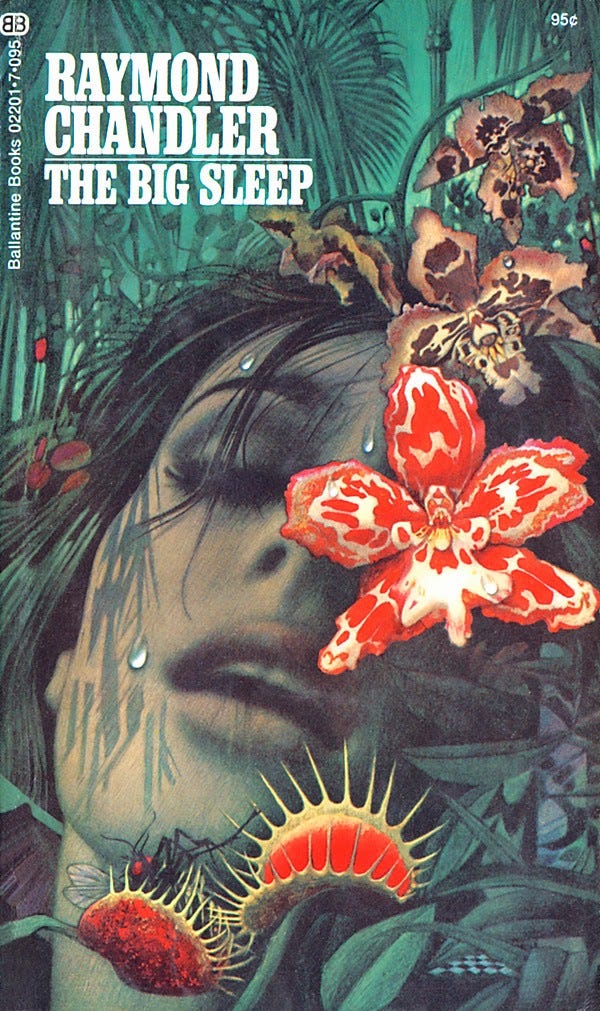
One of the more evocative examples Moore points to is the hardboiled detective fiction writer Raymond Chandler’s novel The Big Sleep. Though plotting was Chandler’s strong point, he utilized it for a specific purpose: to navigate his moral protagonist through a murky underworld filled with treacherous characters. His clever plotting is a mechanism to explore character motivation and ideas.
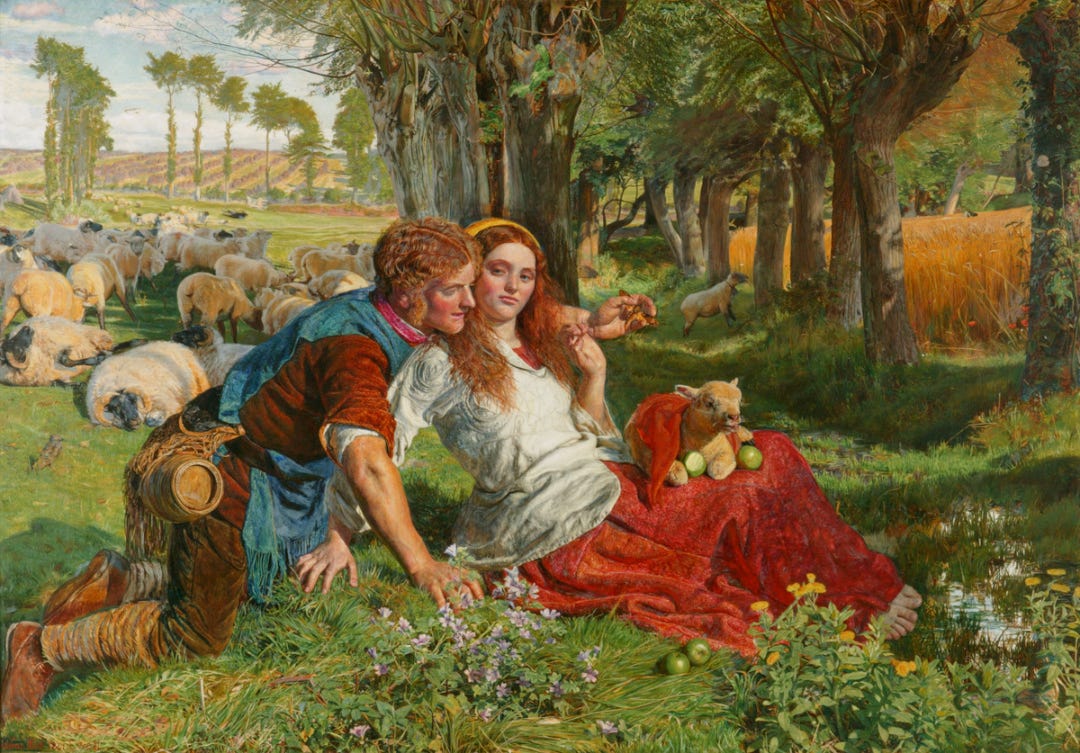
Moore uses the Pre-Raphaelite painting The Hireling Shepherd by William Holman Hunt to explore the temporal dimension of plot. He waxes over infinite past/future possibilities involving the couple (over lengthy paragraphs, admittedly not my favorite part of the book, get to the point, Al!). He concludes that if we add the dimension of time, a single possibility can travel a thread, and this thread is a narrative. The job of the author is to pick the the most interesting thread and that narrative becomes your plot. For example, the thread I pick for The Hireling Shepherd is that the couple has kinky sex, and then another woman comes along, and … (redacted)
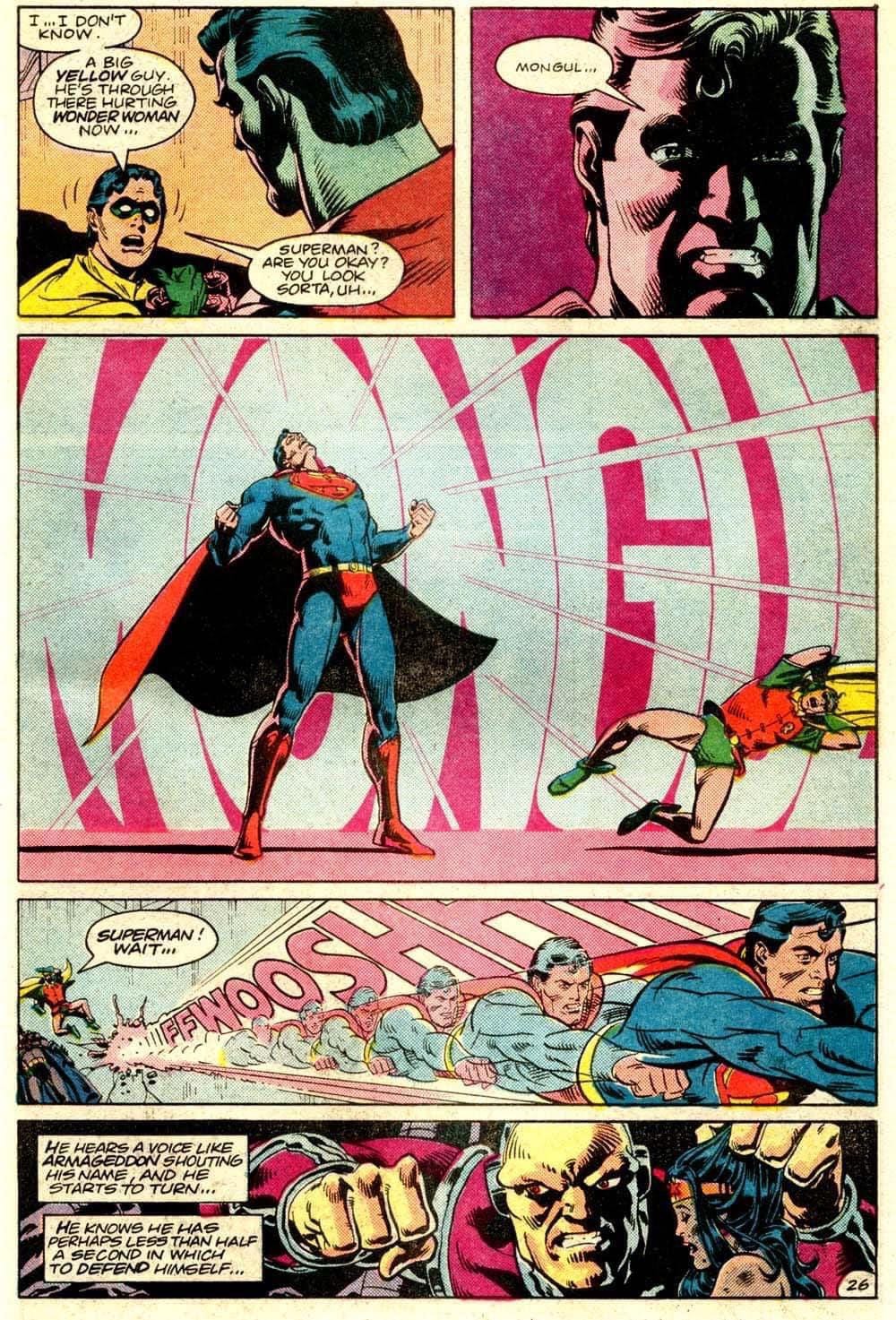
Worth the price of admission (and the book is very affordable) is Moore’s multi-page, detailed breakdown of writing Superman Annual #11. Simplified for brevity, the steps of his process include:
Coming up with the idea, in this case it’s to explore how people fixate on imagined possibilities of the past and future. What could have been?
Then Moore chooses the plot that best gets his idea across, in this case a telepathic parasite that feeds Superman an illusion of what could have been if Krypton never blew up.
He then determines how to present that plot (and idea) within the restrictions of the book, such as the book being 40 pages.
Moore then takes a piece of paper and writes the numbers one to 40 down the left-hand side.
He then works out all the details of the story by sketching the scenes. This goes back to the idea of visual writing that began this series. In Moore’s words:
Also, an ability to think visually will allow you to plan the inclusion of numerous small subliminal elements that will greatly enhance the reader’s peripheral enjoyment of the story.
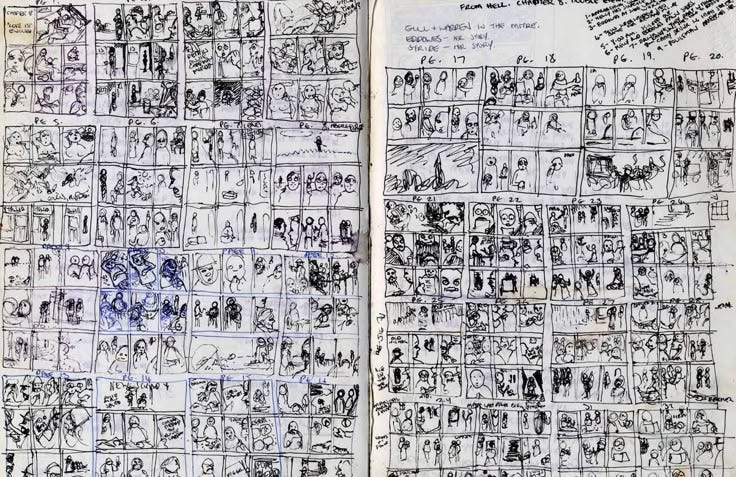
I was able to track down some of Moore’s thumbnails for From Hell, and they remind me of Harvey Kurtzman’s layout process when working with other artists like Wallace Wood. Again, is it any surprise that the best comic writers are often artists?
On Afterwords
The postscript of the book is Moore reflecting on the first four chapters fifteen years later. He still agrees with the substance of what he wrote, but explains that it reflected where he was at the time as a burgeoning writer.
Moore spends this time talking about the trials of being an established writer: not falling into a stylistic rut, continuing to experiment, not obsessing about reputation, and not going for the easy money (easy for Alan Moore to say). Take risks. Fear nothing.
To interject played out generational politics, though Moore is a boomer, this is all a very Gen-X sensibility. Don’t sell out, man. At one point he even recommends deliberate sabotage. It can be a formula for uncompromising art, but might not be the best fit at a time when most artists are just hoping to make a living. That being said, if an artist with ideas isn’t commiting to work that aligns with their vision then existential crisis and eventual burnout is likely.
What Moore himself wants to desperately avoid is being the comic book equivalent of the airport novel writer. He talks about the trap of falling into an identifiable style and avoiding clichés. He explains that he quickly abandoned the transitory devices and elaborate prose he wrote about in the earlier chapters. He feared that he would fall into self-parody if he repeated himself.
Which brings us to now, where Moore’s influence has spread throughout the industry. Though he was eager to criticize the tropes of the Golden and Silver Ages and reinvent his own practice, elements of Moore’s more subversive superhero comics have now also become well-worn clichés among other writers (What if super heroes were sociopathic assholes?). Moore acknowledged as much:
I despaired of the effect that Watchmen had had on the comics industry, because what I’d hoped that people would take from it was the approach to storytelling, the worldview, the approach to reality as a web of co-incidences and chance remarks. But I think what they took from it was ... Rorschach. What they took from it was, ‘This guy’s really violent, and he’s psychopathic, therefore let’s make all the characters violent psychopaths.’
As Moore pointed out a the beginning of the book, comics doesn’t need more people that write like Alan Moore. He encourages fresh thinking and exploration in order to write comics in new and relevant ways.
Moore ends by saying that he would probably write another postscript to Alan Moore’s Writing for Comics around 2020. Still waiting!
Thanks for reading BCKOMIX! Subscribe for free to receive new posts and support my work.
Comments
Nothing yet. Say the first thing.
Sign in to join the conversation.