
BCKOMIX covers comics, art, and culture, and will also delve into the process of making comics! If you like what you read here, subscribe:
The challenge with making comics is that it doesn’t just involve learning one skill, but several skills (complicated by the fact that drawing is a multi-faceted skill in itself). This is further compounded if, like me, you aspire to go the auteur cartoonist route and do everything yourself (with the exception of coloring, which I’ll be outsourcing to someone with a much better color sense than me—my wife).
But there’s one thing that’s always been an afterthought for me, the writing. And I’m sure I’m not alone. Most aspiring cartoonists are drawn to the medium through the art, and our initial ideas are often informed by what looks cool (not a bad place to start, really). Especially if raised on a steady diet of capeshit (a term I use endearingly).
Some may dismiss themes and symbolism as highfalutin’ shit for the alt-lit side of comics. Some may be satisfied with conflict and revenge (fair enough, both gave movie scriptwriters plenty of mileage). but I suspect most want to put more meat on those bones. That’s when it’s time to look at how the big dawgs do it!
In 1993, after some harsh criticism of his own writing in the early issues of Spawn, Todd McFarlane brought in a stable of respected writers for issues #8-11. With the ever-entrepreneurial McFarlane, it was likely more of a publicity move (and way to wave his newly-extended dick around) than any deep reflection on his creative deficits. Naturally, he picked heavy hitters: Alan Moore, Neil Gaiman, Dave Sim, and Frank Miller.
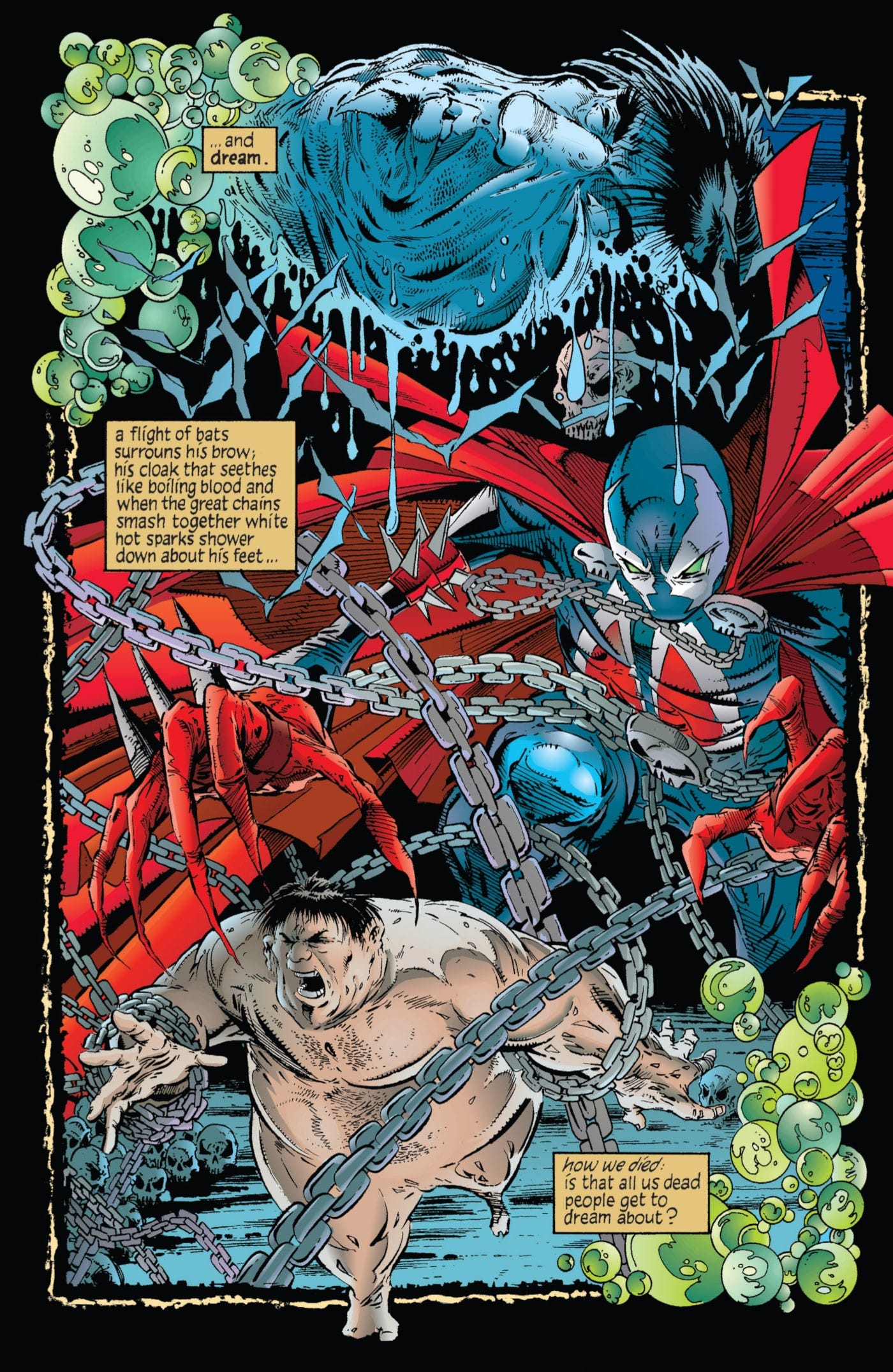
Besides being big names, they had something else in common:
Frank Miller drew many of his own comics.
Dave Sim drew his magnum opus Cerebus (with help from background artist Gerhard starting on issue #65).
Neil Gaiman sketched.
Alan Moore started off with and has since dabbled in drawing his own comics.
So many of the most impactful comic writers also have some capacity to draw. No surprise there. The original incarnation of “the cartoonist” was a strange hybrid creature with opposable thumbs, able to both draw and come up with ideas for the newspaper tabloid pages. This was before the assistants came in and division of labor was eventually codified in mainstream comics. But you can say a cartoonist was originally a “writer who draws” (or vice-versa).
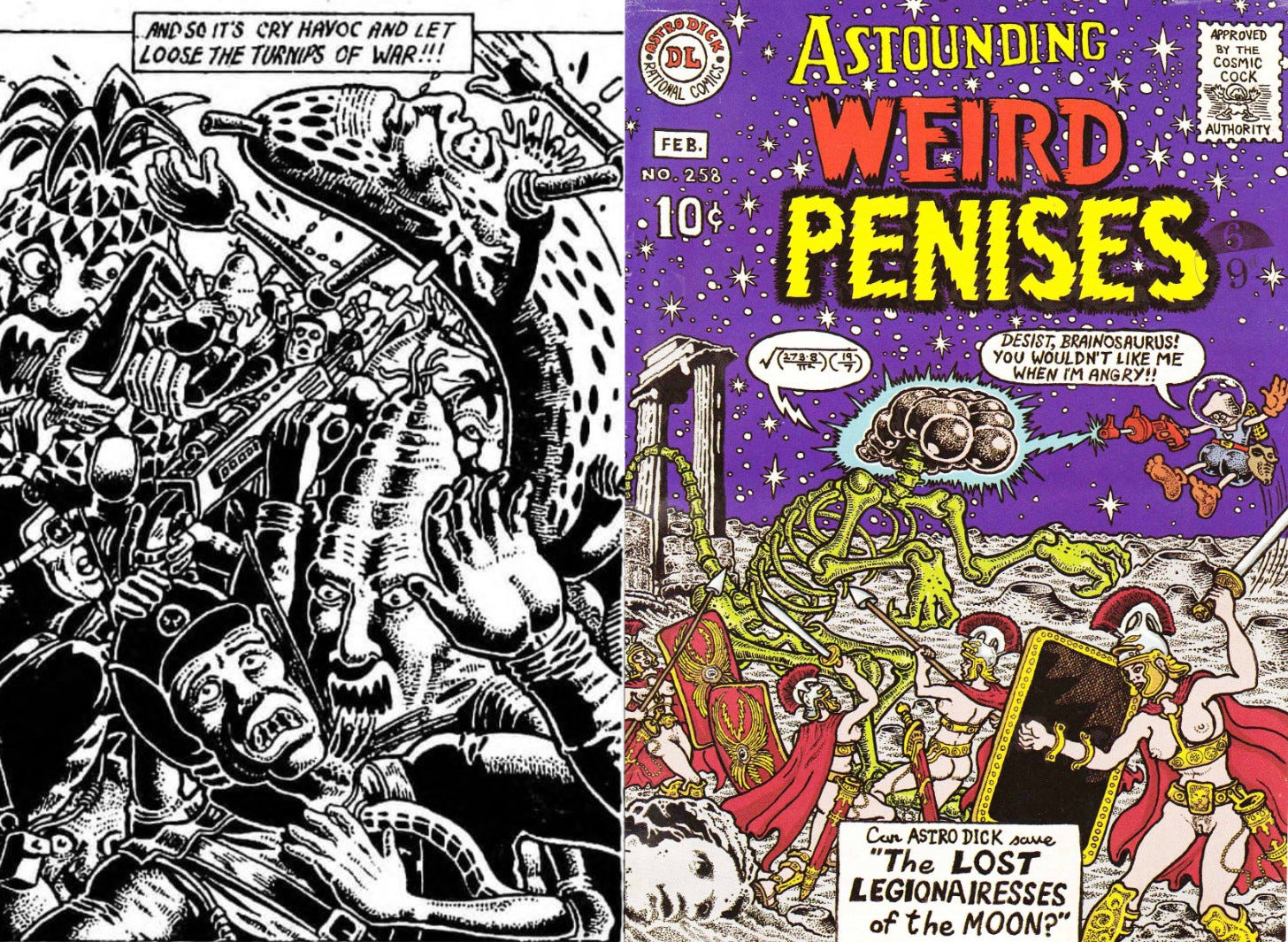
So what was my point … oh yeah, in starting their writing journey, it makes sense for cartoonists to study writers who have an inherent understanding of this visual medium, or “writers who draw” (though not stopping there, studying all kinds of writers helps). To me Alan Moore is a curious example of this, his own drawing style rooted in underground comix (and they’re quite good, he once drew a mini-comic called Astounding Weird Penises, proving he wasn’t above some dick jokes), and literary influences such as Lovecraft and Faulkner. This understanding of the entire process likely led to some of the best collaborations in comics—with Bissette and Totleben on Swamp Thing, Dave Gibbons on Watchmen, and Eddie Campbell on From Hell. Under Moore artists always played to their strengths.
And fortunately for the rest of us, he wrote a book on his chosen craft, Alan Moore’s Writing for Comics. It’s short (48 pages), the majority of it taken from an essay in 1985 from the British fanzine Fantasy Advertiser. It was written while Moore was working on Watchmen, which no doubt influenced his thought process here. I’ll be going through the book, encapsulating what I found the most helpful, inserting my own thoughts when applicable, and disagreeing with Moore when I can’t help it.
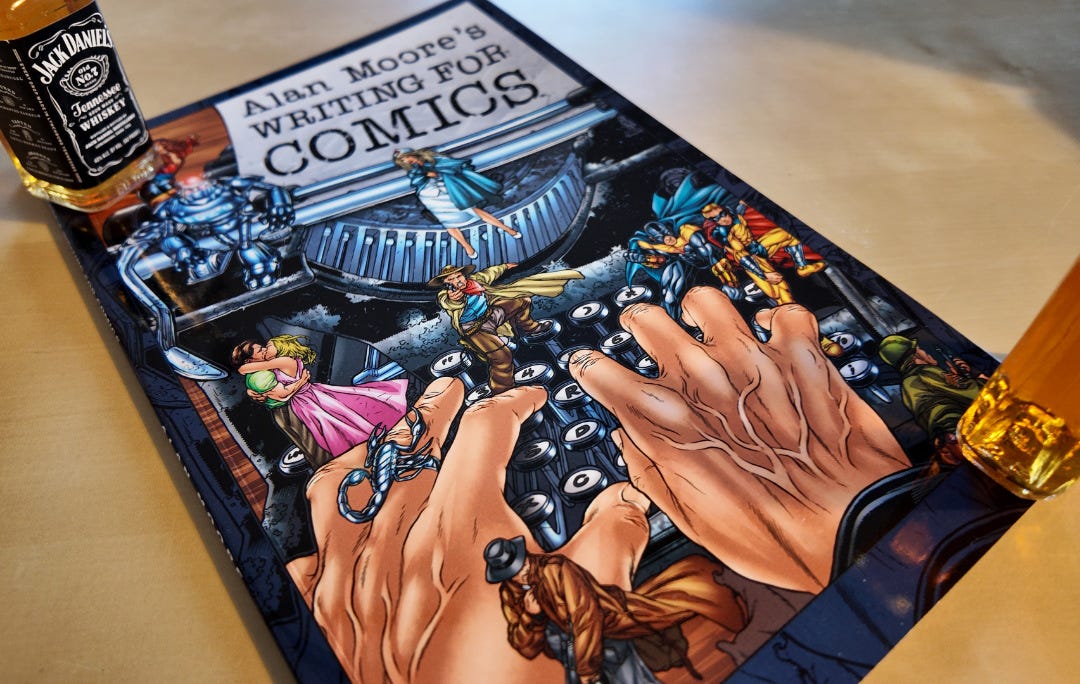
From the outset of the book, Moore makes it clear that he doesn’t want to write a formulaic instructional book, as in How to Write Comics the Alan Moore Way. I do think he’s a little hasty to take a shot at How to Draw Comics the Marvel Way. Though designed to impart a house style, I do think there is more to that book than—as Moore suggests—making 50 John Buscemas. Still, this gives the impression of where Moore is headed in his book, in his words, “how we might actually think about the craft of comic writing, rather than a list of detailed specifics.”
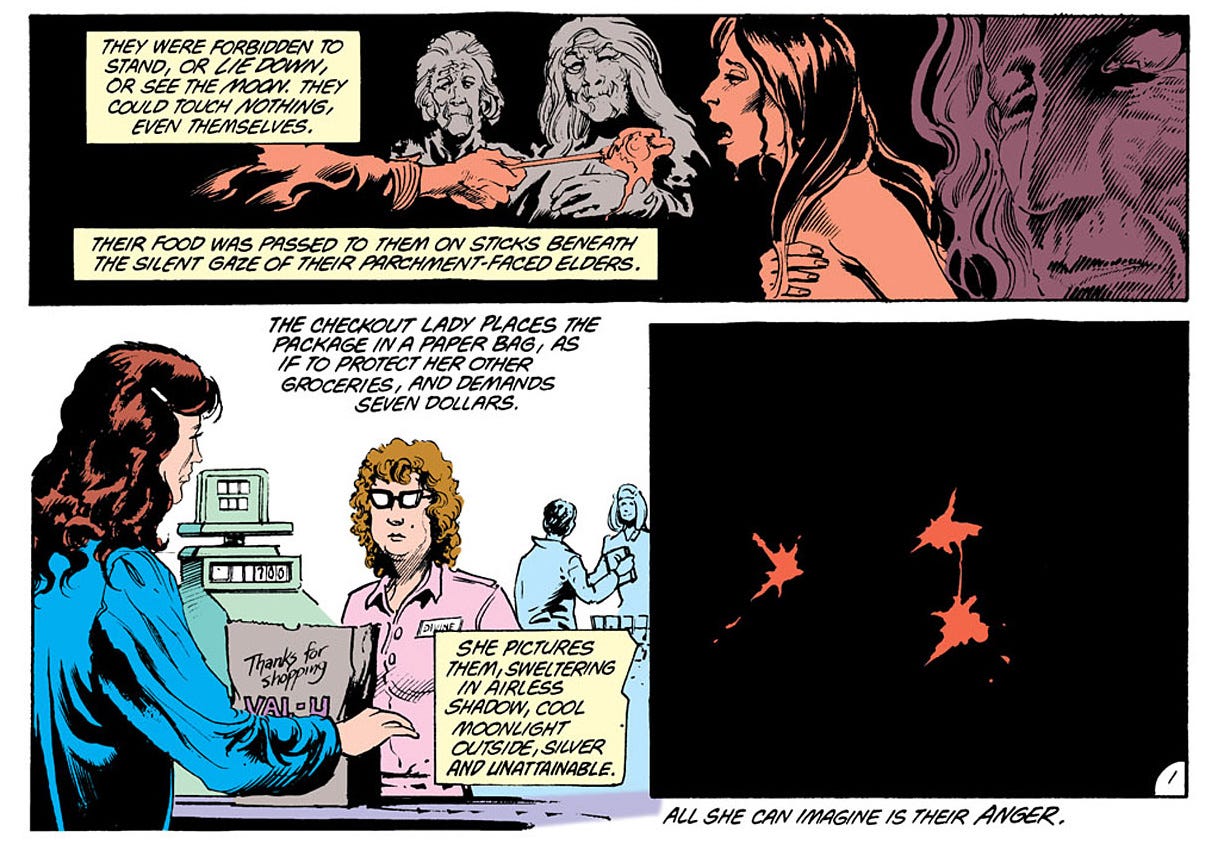
To cut to the chase, to Moore the story is about the idea, which is different from the plot of the story. He uses as an example, issue #40 of Swamp Thing, The Curse, the plot being about a woman who moved to the site of an old Indian lodge and then became possessed of a spirit that changes her into a werewolf. But really the story is about, “the difficulties endured by women in masculine societies, using the common taboo of menstruation as the central motif.” (Don’t @ me, bros, it’s Moore’s idea!)
Moore allows that the idea doesn’t have to be a deep or profound one, some types of ideas he points out:
The “What if…” scenarios found in much science fiction, such as, “What if it were possible for human beings to live on the sun?”
Idea of everyday life as an object of worth and fascination, Moore uses Harvey Pekar and Eddie Campbell as examples (this is one of my favorite, under-appreciated categories of comic writing).
It can be silly or frivolous, even based off a single gag (The Ren & Stimpy Show comes to mind, where an episode can be based off an absurdist idea like being rubber nipple salesmen).
Where to get ideas? Moore says:
If forced by threat of torture to give a concise answer, I’d probably say that ideas seem to germinate at a point of crossfertilation between one’s artistic influences and one’s own experience.
This is where my favorite practicable advice in the book lies:
There is no substitute for practical experience, and if you want to write about people you ought to put down that comic book and go out and meet some of them rather than studying the way that Stan Lee or Chris Claremont depict people.
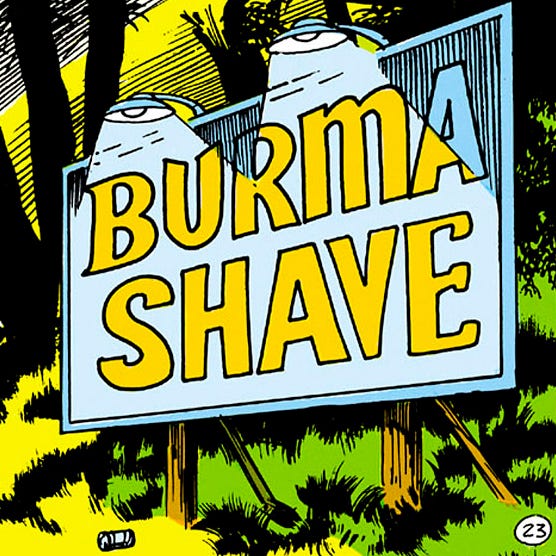
Moore then goes into detail about studying one’s own behavior and others, and developing a coherent angle upon life and reality. Towards the end of the chapter, he also acknowledges that a story doesn’t always have to start with an idea, but could work its way from a device such as a panel progression. He discusses how he wanted to incorporate the carefully spaced and rhyming Burma Shave billboards that once ran along American freeways into a story, a rhyme that culminated in a billboard rather than a caption box. He eventually worked this into the final pages of Swamp Thing #26.
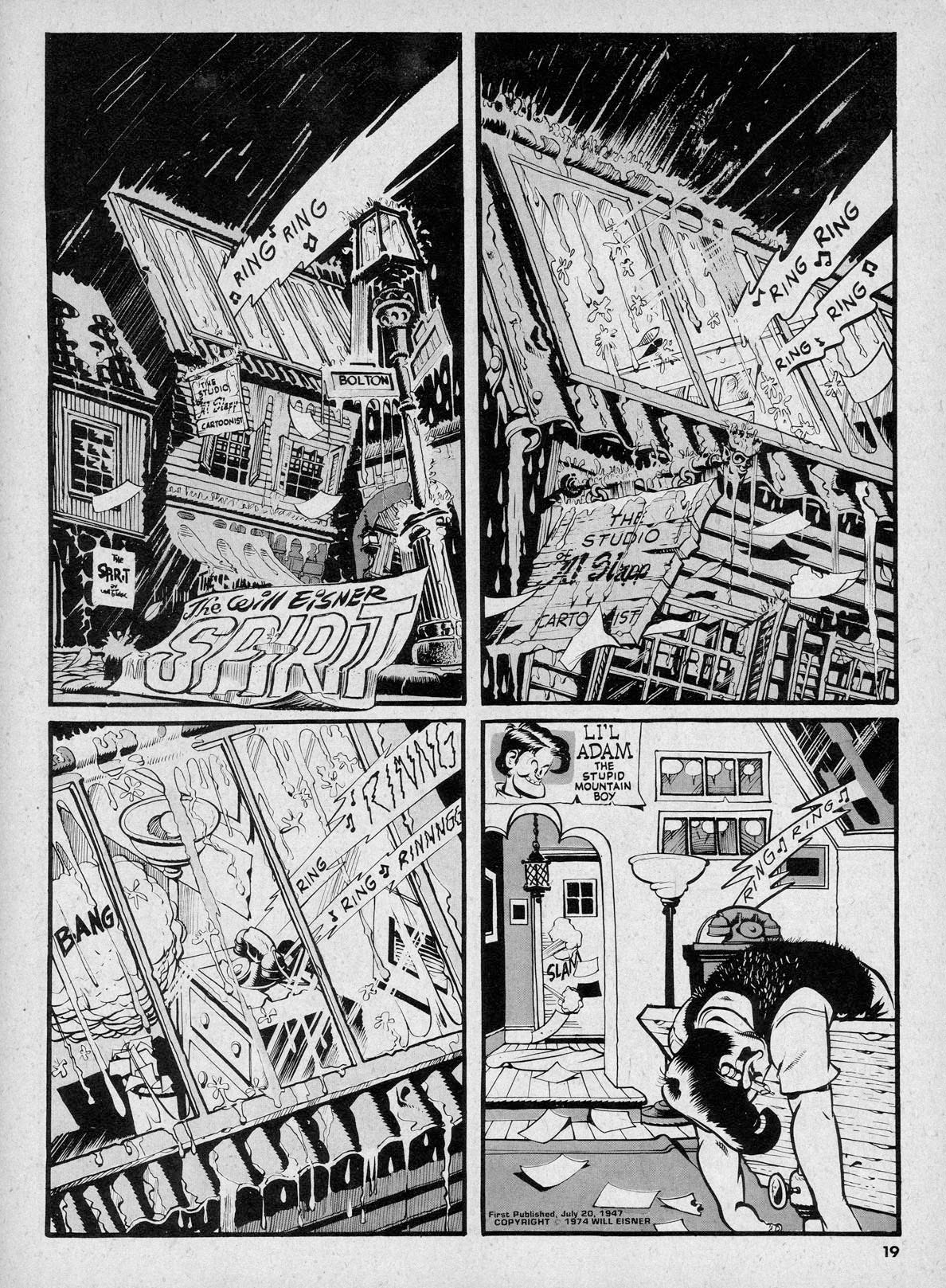
Earlier in the chapter, Moore discusses adapting to changes, and considering comics’ broader possibilities. All good. But then he points out cinema’s influence on comics, and creators absorbing older cinematic influences (like Orson Welles) through classic comics like Will Eisner’s The Spirit. He also asks:
Why must the literary values of comics be determined by the values of 30- to 40-year-old pulp fiction, whatever the merits of that pulp fiction may be?
I found this curious, because I’ve always sensed a strong pulp influence in Moore’s work. Even when playing with and subverting older tropes (the much discussed “deconstruction”), I see Moore as part of a lineage going back to the pulp roots of the comic book. Of course his influences are much broader than that, but I think he’s playing his role as a radical here by asking that question at all.
The answer is: No, comics don’t have to be determined by pulp. But I think we’re now at the vantage point where it pays to go back and investigate and re-evaluate a lot of that earlier work (and comics’ cultural forebears).
Maybe the question made more sense in 1985, when comics felt more constrained by certain expectations. Moore makes the point that stories have to be useful, to not fall into escapism or nostalgia (something I could be accused of looking at my Xitter feed). I do think there’s a place for both, but I do agree that stories need to be relevant to resonate. Just recycling simplistic Golden/Silver age tales of good and evil wouldn’t work.
Where Moore loses me is when he’s dismissive of the formalistic qualities of older comics and the media that influenced them. He proposes: Instead of absorbing Welles via Eisner, why we aren’t we looking at (then) contemporary pioneers like Nick Roeg, Altman, or Coppola? (To update I would say Gaspar Noe or the Safdie Brothers.)
I would say look everywhere—regardless of time or place—where there’s quality to mine for influence. It’s not as if all cinematic approaches or artistic techniques are on some evolutionary progression where the older ones are inherently worse or more unimportant than later ones (the opposite may be true in many cases).
In the current moment the problem isn’t that formal traditions are constraining comics, it’s that in an accelerated cultural landscape many young creators are cut off from their origins. Budding artists are concerned about AI replacing them by vomiting a bastardized pastiche of sources, but how many are aware of the rich inspirational wellspring of their own art form to begin with?
This is the first part of a three part series. Next up: Storytelling, world building, and plot.
No posts
Comments
Nothing yet. Say the first thing.
Sign in to join the conversation.