
Is it better to deliver health facts directly, or to begin with a question that sparks curiosity? BCFG’s research led by BCFG Team Scientist Erika Kirgios (a Wharton PhD graduate and Professor at the University of Chicago) offers new insight into this question. Our paper in Management Science investigated the effectiveness of Q&A-style messaging across two large field experiments in Ghana and Michigan (41,395 total participants) and an online ad campaign reaching more than 900,000 users.
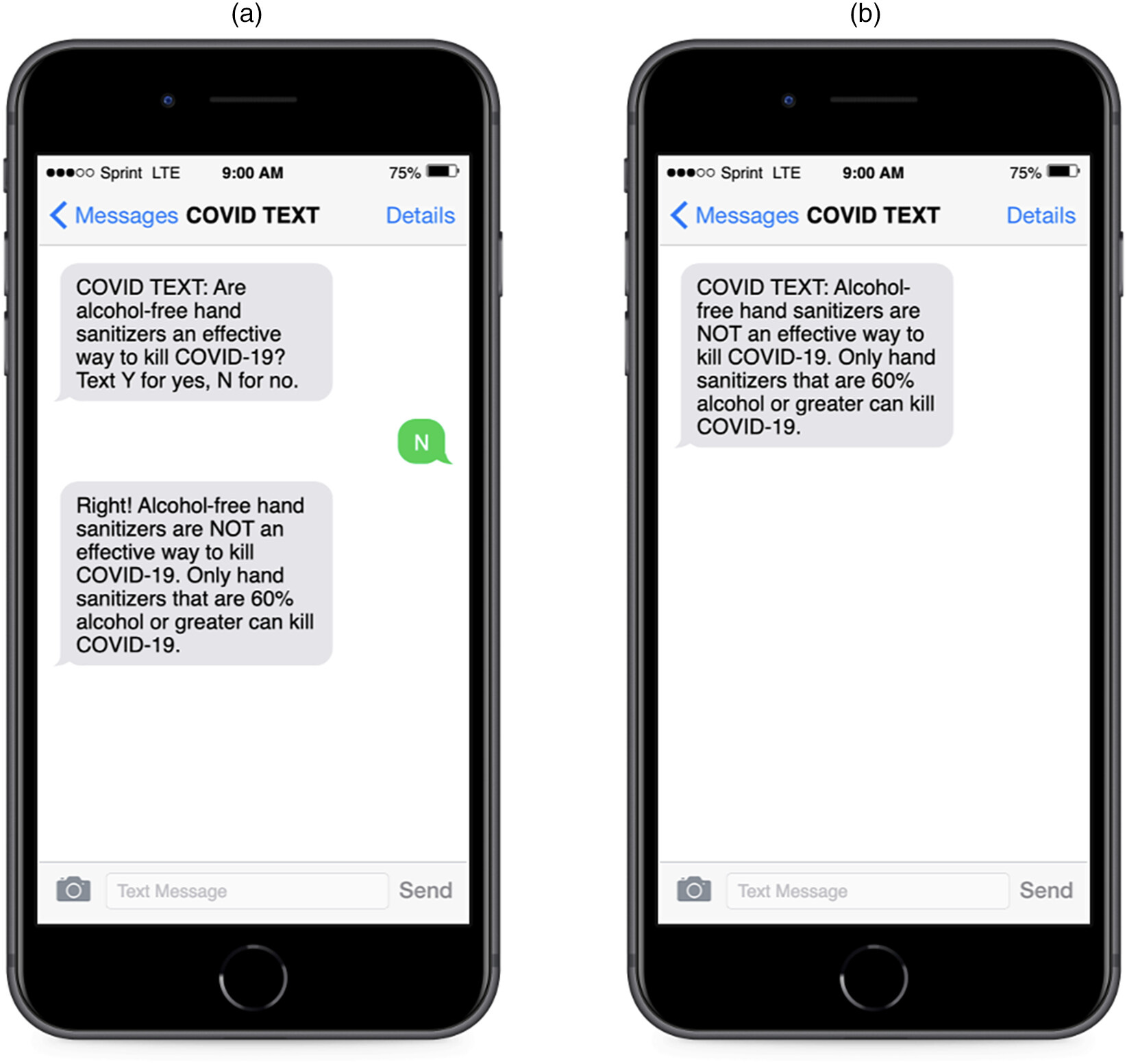
What did these experiments test?
Across three large experiments, this research tested whether sharing health information in the form of a question, followed by an answer, would increase engagement and behavior change more than sharing the same information via direct statements.
In field experiments in Ghana and Michigan, the research team evaluated whether Q&A-style messaging could boost information seeking (for example, learning more about mask wearing), self-reported adherence to recommended health behaviors, and information sharing with others.
In a follow-up Facebook ad experiment, the research team also tested whether public health ads using the question-then-answer format would produce more cost-effective engagement (as measured by clicks to a CDC website) than ads directly stating the same facts.
What were the key takeaways from the research?
Q&A-style messaging can be a light-touch, low-cost way to increase health engagement, likely because beginning with a question helps spark curiosity. As compared to providing health facts directly, Q&A-style messages boosted topic-specific information seeking in Ghana and in Michigan. Q&A-style messages did not, however, increase engagement with general COVID-19 information.
Texts that asked a question first led to a 1.3-percentage-point (4%) increase in self-reported adherence to recommended public health behaviors in Michigan (compared to direct statements).
Q&A-style ads on Facebook were more cost-effective, generating 9–11% more unique clicks per dollar than direct statement ads.
Who contributed to this project?
Co-authors on this project included BCFG Co-Directors Katy Milkman and Angela Duckworth (Penn), BCFG Team Scientists Dean Karlan (Northwestern) and Susan Athey (Stanford), as well as Molly Offer-Westort (University of Chicago) and Mike Luca (Johns Hopkins).
BCFG co-hosted a virtual keynote event with the Center for Health Incentives and Behavioral Economics featuring MIT economist, MacArthur “Genius” Award Winner, and John Bates Clark Medalist Amy Finkelstein. The title of Amy’s talk was: “Facts and Fallacies: Rethinking US Healthcare.” Watch the recording.
Don’t miss our next virtual keynote featuring Emily Oster—Brown University economist, New York Times Bestselling Author, CEO of ParentData and one of Time’s 100 Most Influential People of 2022—on January 28 at 12 p.m. ET.
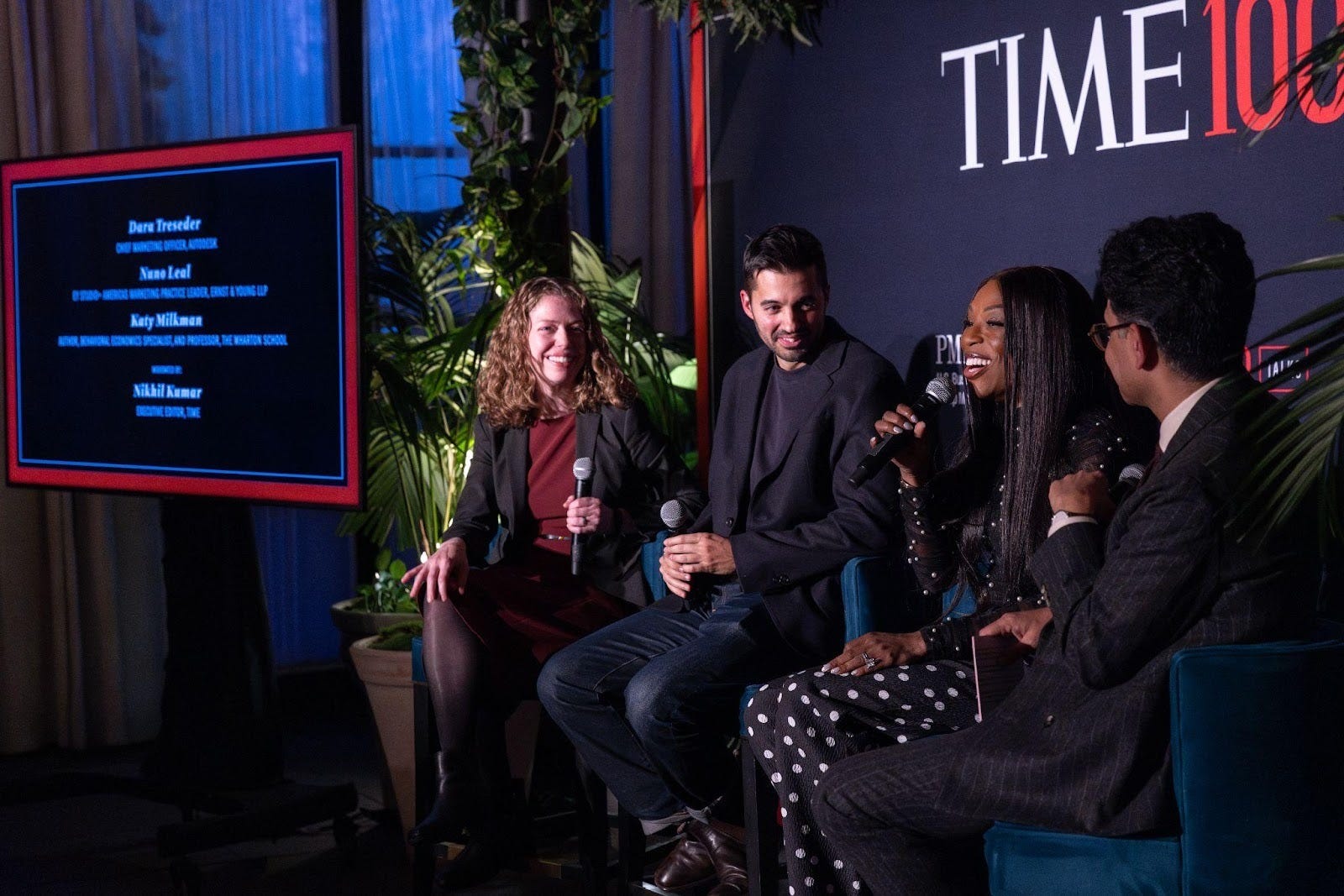
BCFG Co-Director Katy Milkman shared insights about the science of change as a featured panelist at the November TIME100 Talks event on Culture, Choice, and Change in New York City. Learn more about the event and the insights shared by our co-director and her fellow panelists in this Time article.
October’s season finale of the Choiceology podcast (available here) focuses on self-control and features one BCFG Co-Director (Katy Milkman) interviewing the other (Angela Duckworth) about the topic. As a special bonus, Charles Schwab created a video accompaniment to this podcast, which features a film of Katy and Angela’s complete interview. On the podcast and in their filmed conversation, Katy and Angela discuss why willpower alone often falls short, and how changing your environment can support better choices.
Why Following Your Dreams Isn’t Enough, featuring Team Scientist Robb Willer, Hidden Brain
How to Spend Your Time and Money Better, featuring Team Scientist Richard Thaler, The Happiness Lab
Why Humblebragging Is Never a Good Idea, featuring Team Scientist Övül Sezer, Speaking of Psychology
Don’t forget to follow us on social media, where we share new research, job postings, and more: LinkedIn / X / Facebook / BlueSky
No posts
Comments
Nothing yet. Say the first thing.
Sign in to join the conversation.