
The Star of David, known in Hebrew as the Magen David (“Shield of David”), is today one of the most recognizable symbols of Jewish identity. It appears on synagogues, gravestones, memorials, and at the center of the Israeli flag. To many people, it feels ancient and timeless — as if it had always represented Judaism.
Yet the story of this symbol is far more complicated.
Its journey leads through medieval magic, Christian churches, Prague’s Jewish ghetto, Zionism, and ultimately the tragedy of the Holocaust. Surprisingly, Prague and the broader Central European environment played a major role in transforming the Star of David into the symbol we recognize today.
Historian Gershom Scholem, one of the most important scholars of Jewish mysticism, argued that the history of the Star of David must be understood through two parallel developments: the history of the hexagram as a geometric symbol used across many cultures, and the gradual process by which it became associated with King David and Jewish identity.
The six-pointed star, formed by two intersecting triangles, was originally far from being an exclusively Jewish symbol. Long before it became associated with Judaism, the hexagram appeared in many different cultures and religions.
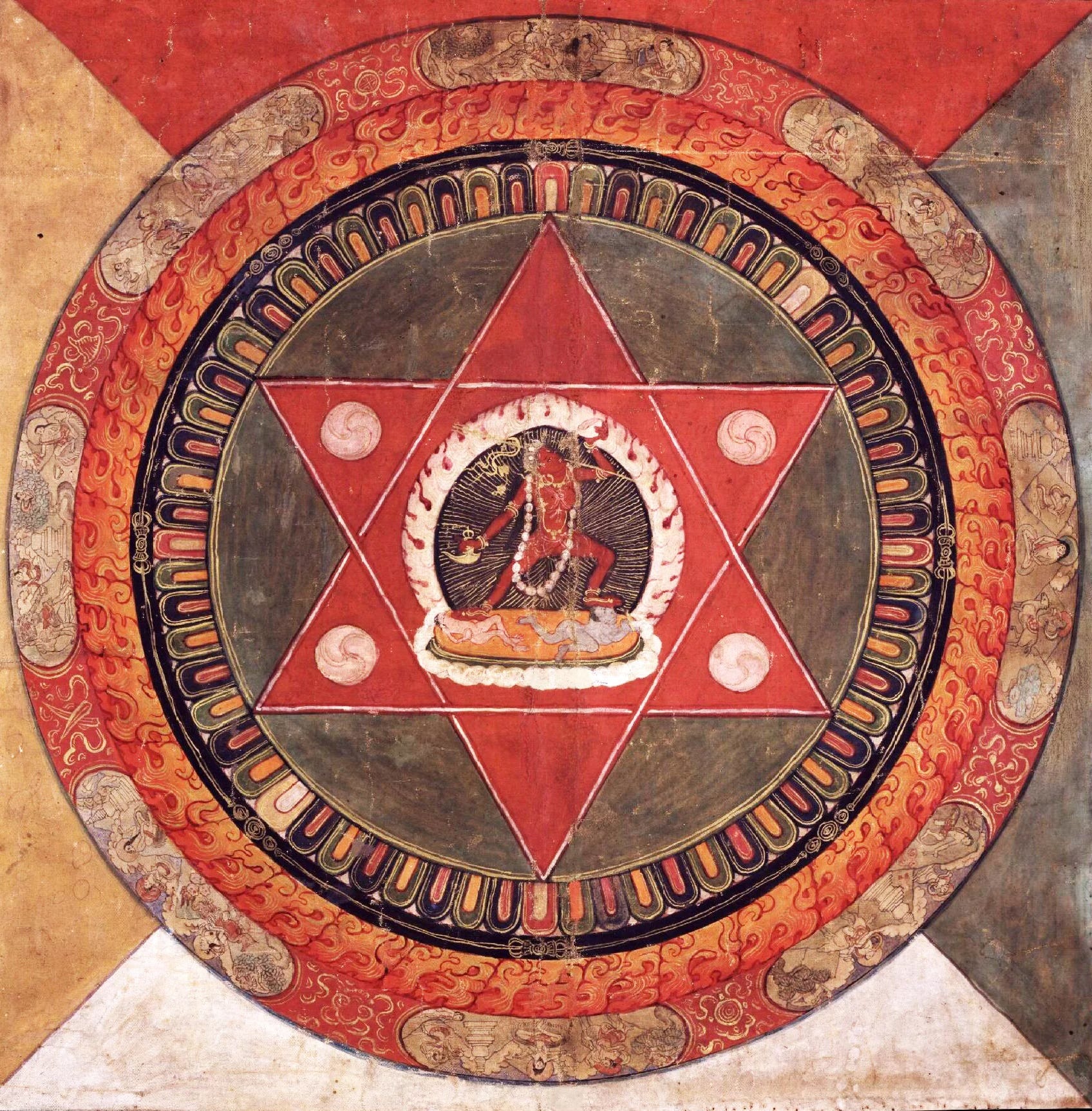
In Hindu tradition, it was connected with the goddess Lakshmi and ideas of harmony and prosperity. In Buddhism, it functioned as a meditative symbol associated with inner balance and peace. In medieval Europe, the hexagram also appeared in Christian churches as a decorative motif, especially in Romanesque and Gothic architecture.
The symbol became particularly important in medieval alchemy. The upward triangle represented fire and the male principle, while the downward triangle symbolized water and the female principle. Together, they expressed harmony created through the union of opposites.
The hexagram also appeared in Islamic decorative traditions and even on the flag of Morocco before the modern era.
What is striking, however, is that early Jewish religious texts say almost nothing about it. The symbol does not appear in the Torah, the Talmud, or classical rabbinic literature as a central symbol of Judaism.
The earliest documented Jewish use of the hexagram dates back to the late Kingdom of Judah around 600 BCE, where it appeared on a seal belonging to a man named Joshua ben Asayahu. Even then, however, it seems to have been purely decorative.
For centuries, the symbol appeared only occasionally in Jewish settings. One well-known example can be found in the ancient synagogue of Capernaum, where the hexagram appears alongside other decorative symbols, including the swastika, without carrying any specifically Jewish religious meaning.
In fact, the symbol was surprisingly rare in medieval synagogues and Jewish ritual objects.
Some Jewish thinkers even viewed it as a foreign element within Judaism. The nineteenth-century scholar Jakob Reifmann famously described the hexagram as “a weed in the vineyard of Israel.”
Over time, many attempts were made to give the symbol an ancient Jewish origin. Some connected it to King David, others to the Bar Kokhba revolt, Kabbalah, or the mysticism of Isaac Luria. According to Gershom Scholem, however, most of these theories were later legends rather than historical reality.
Instead, Scholem argued that the real origins of the “Shield of David” should be sought in Jewish magical traditions.
In medieval Jewish communities, amulets and protective symbols played an important role. Geometric figures such as the hexagram and pentagram were believed to protect against demons, illness, evil spirits, and fire.
At first, the hexagram and pentagram were often used interchangeably. Only gradually did the terminology become fixed, with the pentagram becoming known as the Seal of Solomon and the hexagram becoming associated with the “Shield of David.”
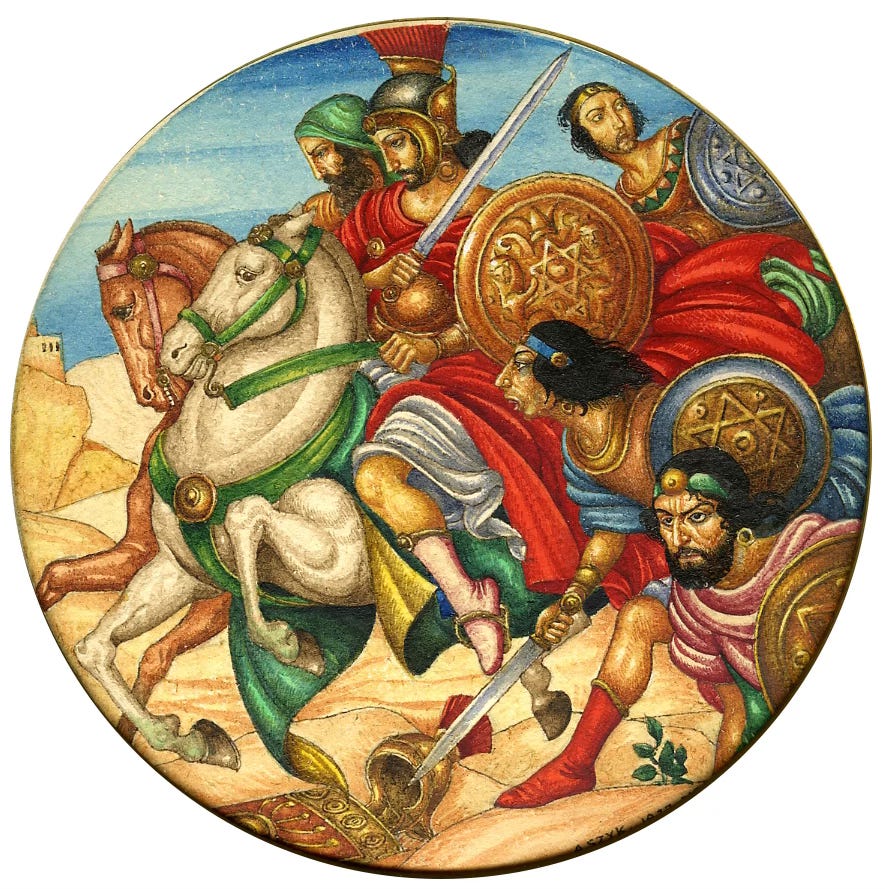
The connection with King David likely emerged sometime around the early medieval period. A possible early example appears on a tombstone from sixth-century southern Italy, where a hexagram was placed beside the name David.
Jewish magical texts later described the Shield of David as a powerful protective sign. According to some legends, King David’s shield contained sacred inscriptions capable of defending him in battle. These stories helped strengthen the symbol’s mystical reputation.
For centuries, however, the hexagram functioned primarily not as a symbol of Judaism itself, but as a magical and protective emblem.
The decorative simplicity of the hexagram helped it spread widely across Europe and the Mediterranean world. It appeared on printers’ marks, communal seals, manuscripts, and ritual objects.
Jewish printing houses played an important role in this process. In the late fifteenth century, printers in Lisbon and Constantinople already used the hexagram as part of their visual identity.
In Prague especially, the symbol gained remarkable prominence.
Already in the early sixteenth century, the Shield of David appeared on Hebrew books printed in Prague, often alongside symbols such as lions, crowns, or the Levite jug. In some books, the hexagram was displayed directly beside the emblem of the city itself, suggesting that it already held a special status within Prague’s Jewish community.
Few cities played a more important role in the history of the Star of David than Prague.
Within the narrow streets of Prague’s Jewish ghetto, the symbol slowly evolved from an ornamental motif into a public emblem of Jewish communal identity. According to historical tradition, Emperor Charles IV granted the Jews of Prague the privilege of carrying their own banner in the fourteenth century. Although historians debate the exact origins of this tradition, the existence of the famous Prague Jewish banner itself is unquestionable. The banner, preserved today in the Old-New Synagogue, featured a large Star of David and became one of the earliest known examples of the symbol representing an entire Jewish community.
Historical records show that Prague’s Jews carried this banner during ceremonial processions welcoming kings and emperors. In 1527, for example, the Jewish community was ordered to greet Emperor Ferdinand I with the banner decorated by a large Shield of David. Another remarkable feature of the Prague banner was the image placed inside the star: the so-called Jewish hat.
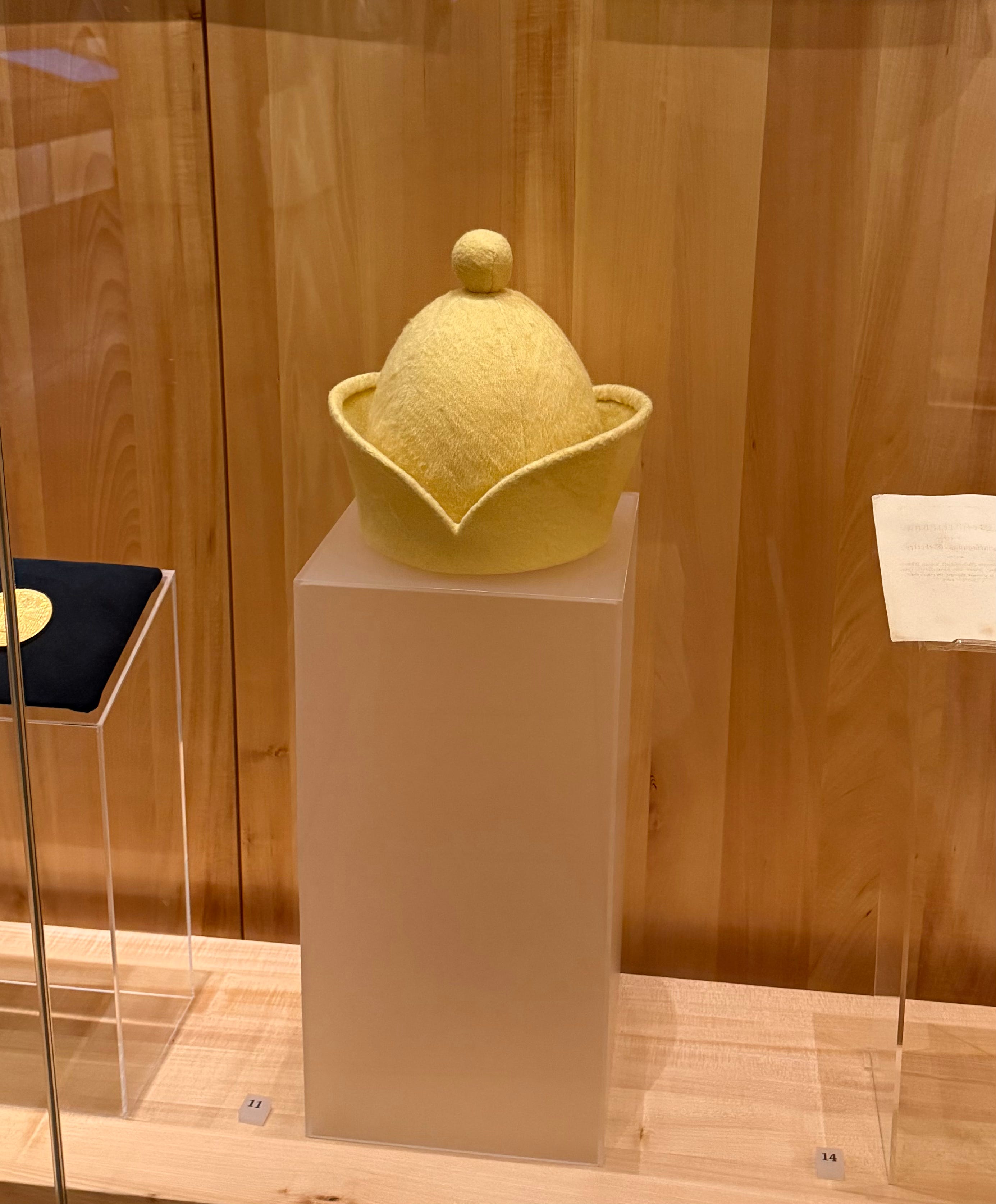
This hat had originally been imposed on Jews by medieval authorities as a mark separating Jews from Christians. A decree issued in Prague in 1349 required Jews to wear distinctive clothing and head coverings. Yet over time, the Prague Jewish community incorporated this symbol into its own communal identity — a fascinating example of how a mark of exclusion could later become absorbed into collective memory and tradition. The long history of the Prague banner suggests that the Jewish community consciously embraced the Shield of David centuries before it became universally recognized as a symbol of Judaism.
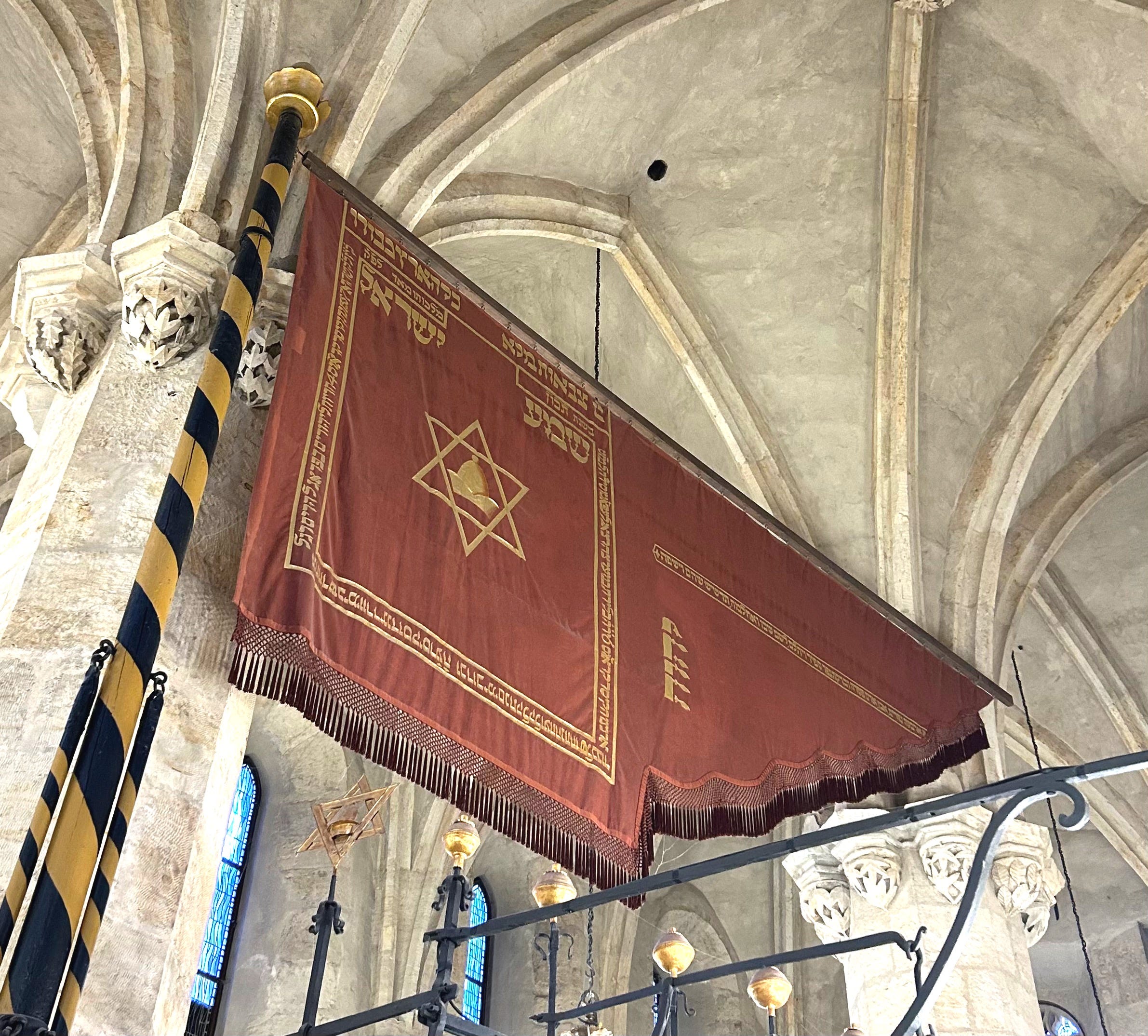
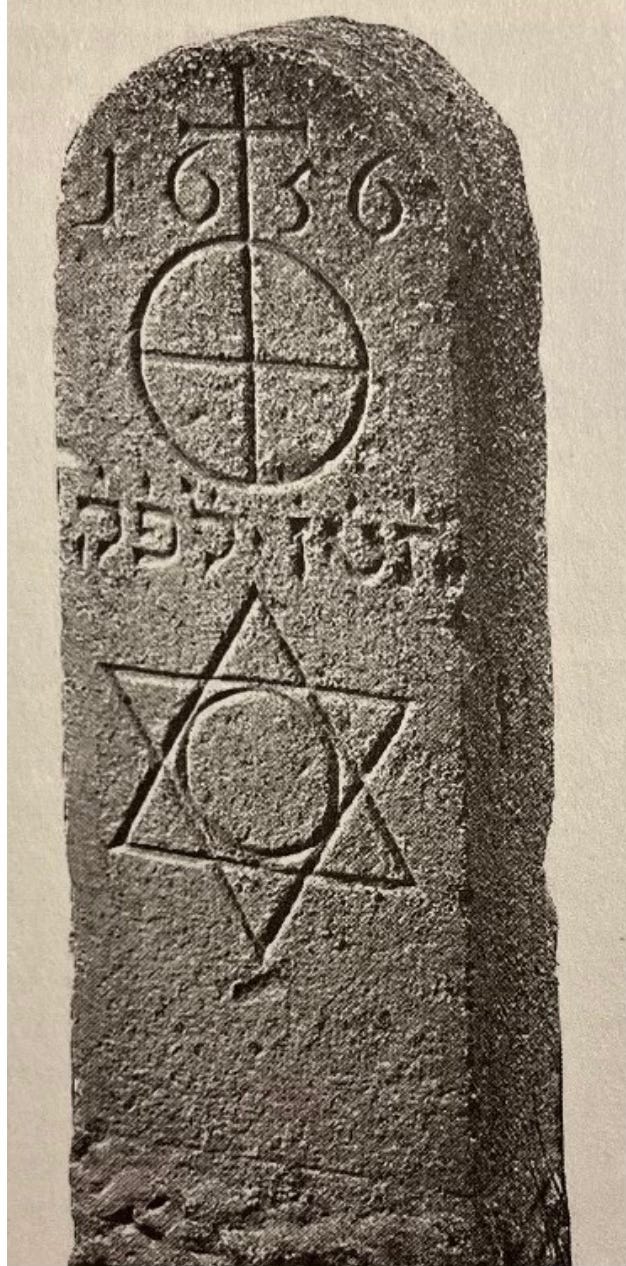
From Prague, the symbol gradually spread across Central Europe. Jewish communities in Vienna, Moravia, Germany, and later Amsterdam adopted the hexagram on seals, synagogues, and communal buildings. In Vienna, boundary stones separating the Jewish quarter from the Christian district displayed both a cross and a hexagram of equal size — one of the earliest examples of the symbol visibly representing Judaism in contrast to Christianity. The spread accelerated after the expulsion of Jews from Vienna in 1670, when many Jewish families relocated to Moravia and other parts of Central Europe, carrying their communal traditions with them.
The greatest transformation came during the nineteenth century. As Jews across Europe gained civil rights and greater public visibility, Jewish communities searched for a representative symbol comparable to the cross in Christianity or the crescent in Islam. Architects building monumental synagogues increasingly used the Star of David as a visible expression of Jewish identity.
At the same time, the symbol still retained traces of its older magical meaning, especially in Eastern Europe, where many observant Jews continued to view it primarily as a protective sign rather than a national or religious emblem. The rise of Zionism gave the symbol an entirely new meaning.
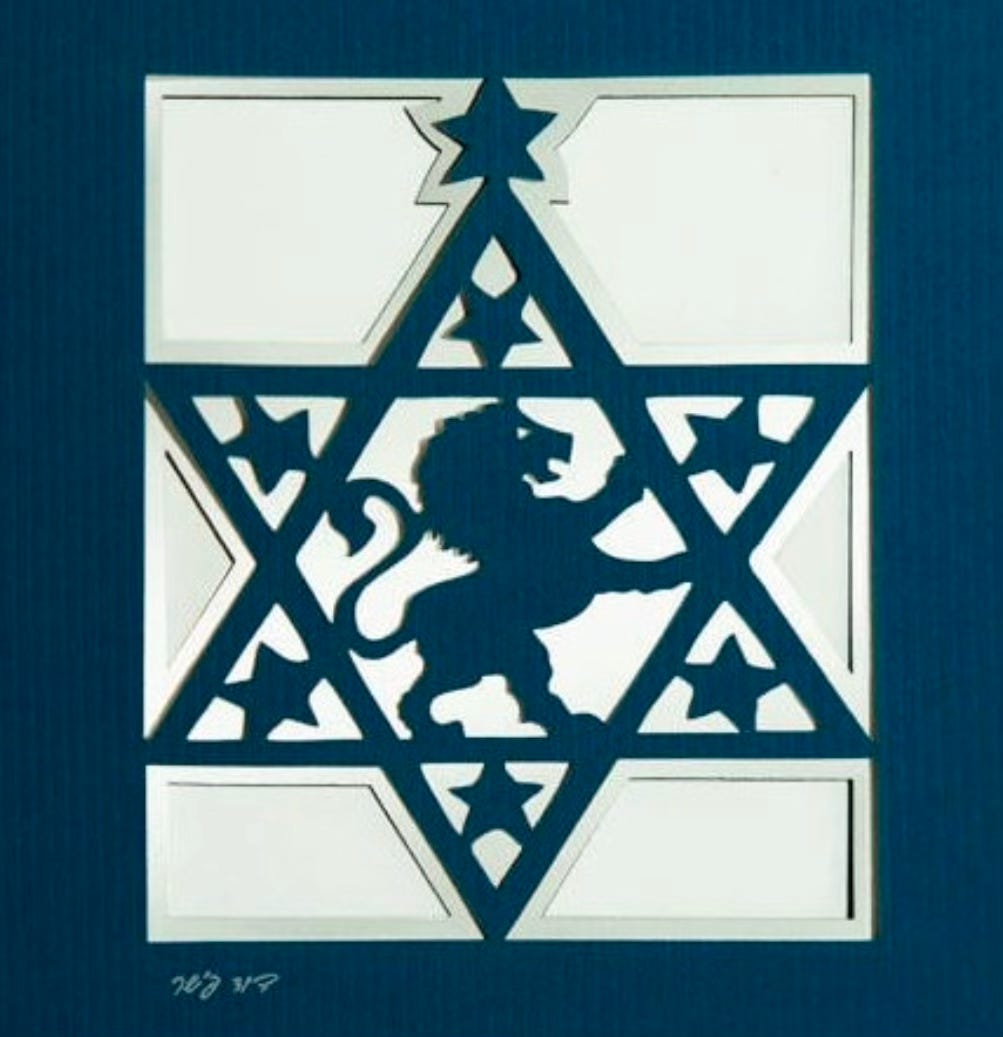
In 1897, the Star of David appeared on the cover of Theodor Herzl’s journal Die Welt and soon became the emblem of the Zionist movement. Unlike the menorah, it was not strongly connected to one specific religious doctrine. It could therefore represent not only faith, but also nationhood, collective memory, and hope for the future.
Then came the darkest transformation of all. The Nazis forced Jews across Europe to wear the yellow Star of David as a mark of humiliation, exclusion, and persecution. A symbol that had once represented communal identity became associated with suffering and genocide.
One of the most haunting ironies of this story concerns the German-Jewish architectural historian Alfred Grotte. In the 1920s, he wrote that the Star of David had become for Judaism what the cross was for Christianity. Two decades later, Grotte died in the Theresienstadt ghetto, forced to wear the same symbol on his chest. Yet history transformed the symbol once again.
After the establishment of the State of Israel in 1948, the Star of David became not only a reminder of destruction, but also a symbol of survival and renewal.
The story of the Star of David is therefore not the story of an ancient and unchanging symbol. It is the story of how symbols evolve together with history itself. From magical amulets to Prague’s Jewish quarter, from Zionist congresses to the yellow badges of the Holocaust, the journey of the Star of David reflects centuries of Jewish memory, struggle, and survival.
And in many ways, part of that journey began in Prague.
— Julie Mathauserová, senior educator at Bat-El Institute.
One of the goals of Batel Institute is to support young voices interested in Jewish history, memory, and the lesser-known stories connected to Central Europe.
This article was written by Julie, a young researcher I have had the pleasure to mentor through her growing interest in Prague’s Jewish heritage and symbolism. I believe one of the most meaningful parts of historical work is not only preserving memory, but also encouraging a new generation to continue asking questions and searching for deeper connections within history.
Her article explores the remarkable journey of the Magen David from Prague’s Jewish ghetto to becoming one of the most recognizable symbols of Jewish identity in the world.
— Yvonne Penkavova
References:
SCHOLEM, Gershom. Davidova hvězda. Praha: Nakladatelství Franze Kafky, 1995.
HRUBÝ, Dan. Pražské příběhy. Praha: Pražské příběhy, 2025.
DORNEY, Chris. Symbol Židovské obce v Praze, Česká republika. 2018.
KLASANOVA, Lyudmila. Dharmodaya: The Source of Reality [online obrázek]. 2017.
SZYK, Arthur. Simon bar Kokhba [ilustrace]. 1927. In: Wikipedia: Simon bar Kokhba.
HRUBÝ, Dan. Pražské příběhy. Praha: Pražské příběhy, 2025, s. 123. [obrázek].
FISHER, David. First Zionist Congress Symbol [laser-cut paper artwork].
No posts
Comments
Nothing yet. Say the first thing.
Sign in to join the conversation.