
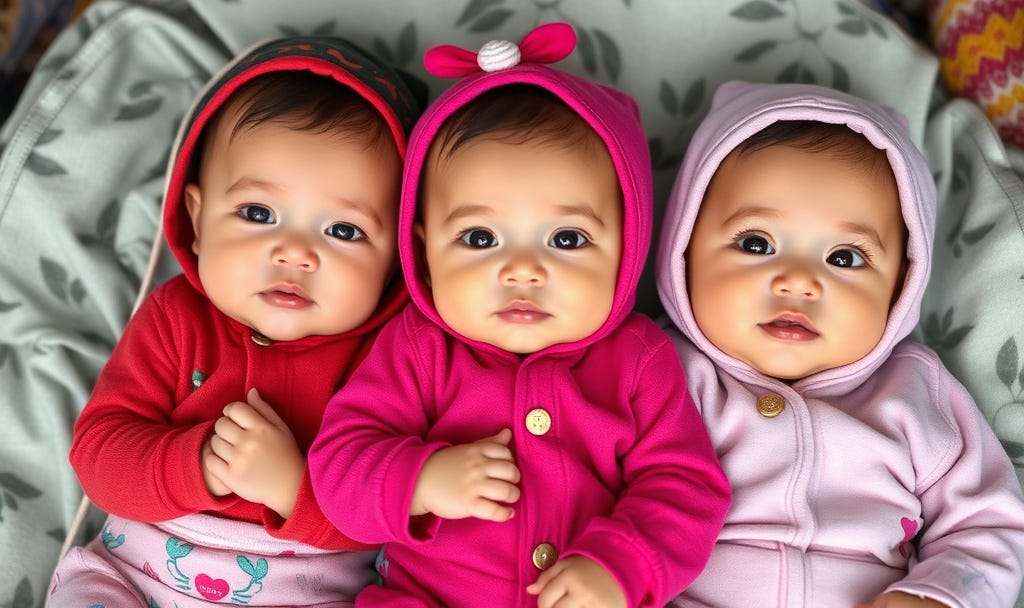
Ideally, the U.S. Supreme Court’s decision in favor of birthright citizenship would feel more like a victory than a save. But the fact that such a fundamental constitutional guarantee was under threat by an executive order is so scary, I can just manage a sigh of relief.
That’s also because three justices voted otherwise. And a separate ruling on the same day by the same court sends a contradictory message about our rights to live as our authentic selves without prejudice or persecution. Reversing orders from two federal appeals courts, the Supreme Court gave states the green light to block transgender girls and women from being on female sports teams.
Appeals courts in West Virginia and Idaho had ruled such bans discriminatory, agreeing with the two trans athletes who sued over them. Both had claimed such laws violated the 14th Amendment’s Equal Protection Clause and Title IX, which prevents sex discrimination in education. One was a West Virginia middle-schooler who was barred from the girls’ track team at age 11 under such a state law. Now 15, she took estrogen and medicine to delay puberty. The other was an Idaho university athlete, who was prevented from competing on the women’s track team. But faced with backlash, she withdrew her case.
Donald Trump’s U.S. Justice Department helped the two states defend their bans.
Such laws have been rationalized as protecting girls born female who are at a disadvantage competing against males’ physical strength. But any such advantage can be suppressed by hormone treatments. Schools and colleges could do hormone tests. Instead, under these laws, students have at times been subjected to humiliating strip searches to determine their birth gender.
But the larger issue here isn’t athletics or place of birth. It’s federal government interference with established constitutional rights. On citizenship, Congress has failed to fix a broken system that leaves too many immigrants with no way to get status or citizenship. That has opened the door to Trump’s inerference in trying to exclude populations he doesn’t value.
He has similarly weaponized gender identity. In his fist term, he signed an order banning trans people from the armed forces. By executive order and threatened funding cuts, he made schools dispense with teaching what he calls “gender ideology.” His administration also ended 300 programs at the National Institutes of Health, some studying LGBTQ health issues.
Republican-led states followed in 2020 by passing athletic bans. More than 745 anti-trans bills were introduced in state legislatures last year alone. Twenty-seven states including Iowa have them.
Consider the extent of political energy focused on one population in relation to its size. Trans people make up only 1% of the U.S. population. Trans student athletes account for less than 0.002% of those on college teams. But the issue has given this president a way to distract attention when the news doesn’t favor him. From the war on Iran to high prices to his connections to the late sex offender Jeffrey Epstein to E. Jean Carroll’s court victory against Trump for sex abuse, Trump has used distractions to change the conversation
Societies evolve through education, experience and exposure. For example, studies find that when transgender students use locker rooms and bathrooms aligned with their gender identity, they don’t pose safety risks to other women or girls. But when they’re denied such access, they themselves face the risk of assault and abuse.
In 2015 I interviewed some local high school students about their transitions from female to male. One, a 16-year-old rising senior at Valley High School, said he first bridged the subject with his mother at age 8 but she didn’t quite hear him. He tried several more times until she got it, and then she supported him. At 15, he changed his name and gender pronouns and started dressing in boys’ clothes. His mother said she was struck by how much happier, stronger and at peace he became.
He said he never felt rage or dysphoria over his gender assignment at birth. But when he started living as a male, he found euphoria.
Everyone deserves that chance.
As we approach America’s 250th birthday, let’s celebrate how far we’ve progressed from a country where people could legally be owned like chattel, and husbands could legally rape their wives but gay people had to live in secrecy or risk losing jobs, housing and children. Let’s celebrate all those who inspired and fought for advances in understanding and laws. Let’s welcome the babies whose parents found their way to America and stay on because they still embrace the dream. And let’s get reinvigorated for the work that lies ahead to protect or reclaim our rights.
Because from the countries we inhabit to the bodies we occupy, everyone deserves to feel belonging.
I’m a proud member of the Iowa Writer’s Collaborative. Click below for the full roster.
No posts
Comments
Nothing yet. Say the first thing.
Sign in to join the conversation.